
What Are the Mechanical Properties of GR5 Titanium Foil
- Gr5 Titanium Foil
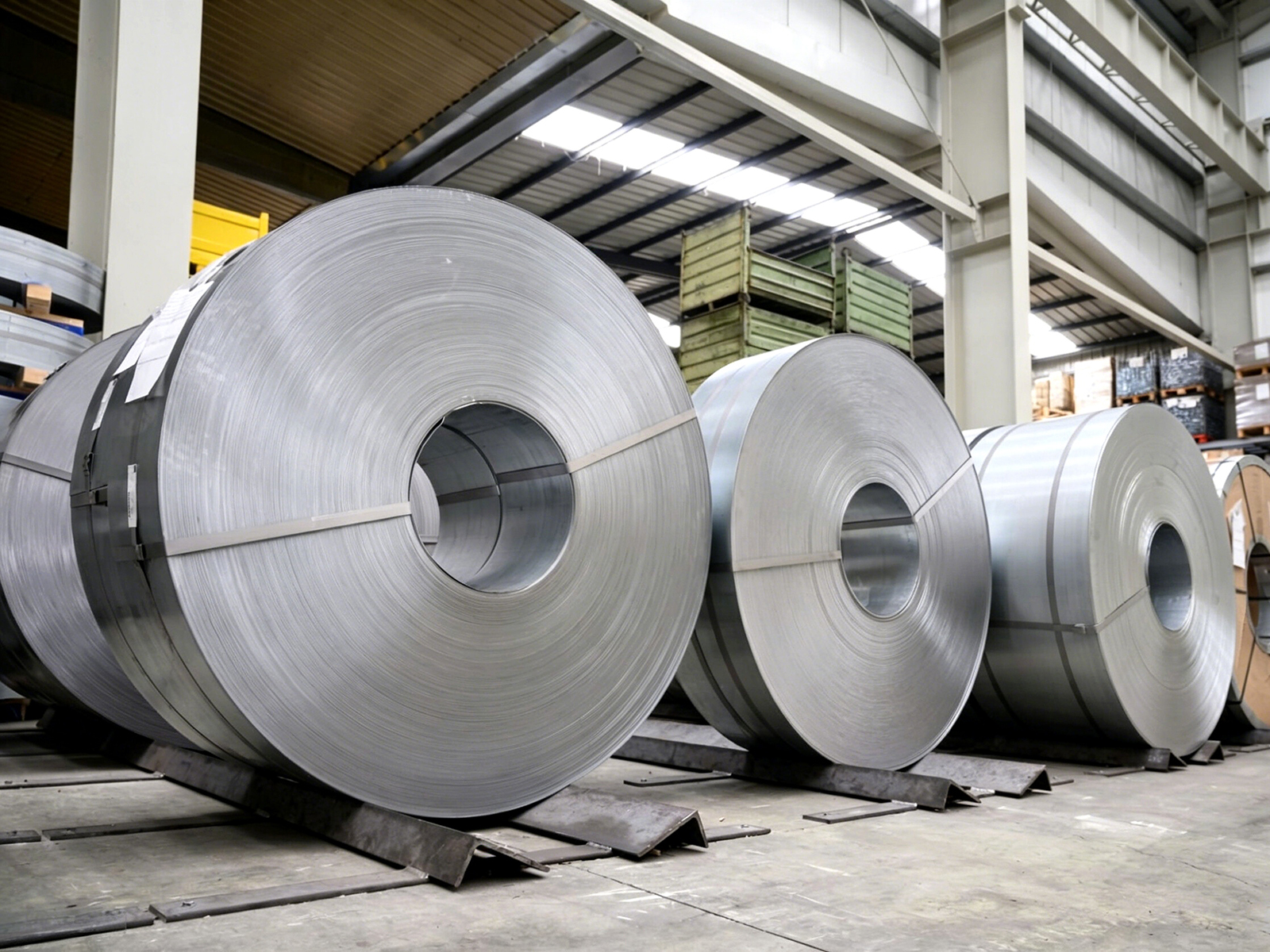
GR5 titanium foil (Ti-6Al-4V), as a representative alpha-plus-beta dual-phase titanium alloy, demonstrates mechanical properties far exceeding commercial pure titanium materials. In the annealed condition, tensile strength reaches at least 895 MPa (typically 930 to 1100 MPa in actual production), yield strength at least 825 MPa, elongation at least 10 percent, and hardness HB 270 to 310. These characteristics make GR5 titanium foil the material of choice for demanding structural applications in aerospace, energy, and marine engineering sectors.
What Is the Industry Positioning of GR5 Titanium Foil Strength Parameters?
Practical Significance of Tensile and Yield Strength
The tensile strength of at least 895 MPa for GR5 titanium foil indicates that when (bearing) tensile loads, the material withstands maximum stress approaching 900 megapascals per unit area. Compared to Gr2 pure titanium (340 to 550 MPa), this represents approximately 125 percent improvement (calculated by median values), enabling same-thickness GR5 foil to (bear) higher structural stresses. Yield strength of at least 825 MPa ensures elastic deformation under normal operating loads, preventing permanent shape change.
Performance Comparison with Other Titanium Alloy Grades
Among titanium alloys, GR5 (Ti-6Al-4V) occupies unique position balancing strength, formability, and corrosion resistance. Gr1 to Gr4 commercial pure grades offer superior corrosion resistance but lower strength; GR7 (Ti-5Al-2.5Sn) provides excellent low-temperature toughness but at higher cost; GR5 achieves optimal strength-to-cost ratio for most structural applications. When compared to aluminum alloys (7075-T6, tensile strength approximately 570 MPa), GR5 offers 50 to 60 percent higher strength at similar density, with vastly superior corrosion resistance.
Contribution Mechanism of Dual-Phase Organization to Strength
The alpha phase (hexagonal close-packed structure) of Ti-6Al-4V provides fundamental strength and creep resistance; the beta phase (body-centered cubic structure) enhances toughness and formability. Through vacuum annealing processes, two-phase proportion reaches optimal distribution (approximately 90 percent alpha, 10 percent beta). Annealed condition typically forms equiaxed organization, simultaneously ensuring high strength and maintaining necessary plasticity. This microstructural design enables GR5 titanium foil to withstand complex loading conditions encountered in aerospace and medical applications.
What Engineering Value Do Elongation and Hardness Indicators Possess?
Critical Balance of 10 Percent Elongation
Although GR5 titanium foil elongation of at least 10 percent falls below commercial pure titanium (Gr2 achieves above 20 percent), this parameter is reasonable for high-strength alloys. Elongation reflects material (ability to withstand) plastic deformation; 10 percent elongation suffices for aerospace skin bending forming, battery heat sink embossing, and other process requirements. Through optimizing annealing temperature (typically 700 to 800 degrees Celsius), elongation can be adjusted to 12 to 15 percent for applications requiring additional formability.
Application Matching of HB 270 to 310 Hardness Range
Brinell hardness HB 270 to 310 corresponds approximately to Rockwell hardness HRC 28 to 35. This hardness (range) offers multiple advantages: sufficiently resistant to surface scratching and wear, suitable for manufacturing wear-resistant connecting components; not overly hard causing processing difficulties, compatible with laser cutting, stamping, and slitting precision machining; maintains stable surface integrity under fatigue cyclic loading, extending component service life in dynamic applications.
Performance Differences Between Cold-Rolled and Annealed Conditions
Cold-rolled condition achieves higher strength through work hardening but sacrifices some plasticity; annealed condition restores ductility through stress elimination, more suitable for secondary processing. Customers select delivery condition based on final application requirements. For components requiring further forming, annealed condition recommended; for direct-use structural parts, cold-rolled condition provides immediate high strength.
How Do High-Temperature Performance and Fatigue Characteristics Compare?
Stability Mechanism for Long-Term Service at 300 Degrees Celsius
GR5 titanium foil maintains mechanical properties long-term at 300 degrees Celsius environment, (mainly benefiting from): aluminum element (5.5 to 6.75 percent) strengthening alpha phase, elevating high-temperature strength; vanadium element (3.5 to 4.5 percent) stabilizing beta phase, inhibiting grain coarsening; strictly controlled oxygen content (at most 0.20 percent) preventing oxygen embrittlement; alpha-plus-beta dual-phase structure (synergistic deformation) mechanism, slowing high-temperature (performance) degradation.
Fatigue Life and Cyclic Stress Response
At room temperature, GR5 titanium foil fatigue strength (10⁷ cycles) approximately 50 to 60 percent of tensile strength (i.e., 450 to 550 MPa). Compared to commercial pure titanium, this represents approximately 40 percent improvement, critical for aviation fasteners (bearing) vibratory loads and reciprocating medical device components. Through surface polishing (Ra at most 0.4 micrometers) and stress-relief annealing, fatigue life can be further extended by 20 to 30 percent, meeting most structural application requirements.
Adaptability to Short-Term 400 Degrees Celsius Extreme Conditions
Although long-term use temperature limits at 300 degrees Celsius, GR5 titanium foils short-term (several hours to tens of hours) 400 degrees Celsius high temperature. At this condition, yield strength approximately decreases to 600 to 700 MPa, elongation increases to 12 to 16 percent. This (characteristic) satisfies extreme conditions such as rocket engine short-duration ignition, high-temperature heat treatment fixtures. Above 500 degrees Celsius, alpha-to-beta phase transformation accelerates, (not recommended) for structural applications.
How Does Dimensional Accuracy Affect Performance Consistency?
Control Significance of +/-0.001 mm Thickness Tolerance
Achieving +/-0.001 mm (i.e., +/-1 micrometer) thickness tolerance through 20-high precision rolling directly impacts mechanical properties: thickness fluctuation controlled within +/-1 micrometer ensures same-batch material strength deviation at most 5 percent; avoids premature fracture from local stress concentration; meets precision electromagnetic shielding (requiring uniform thickness ensuring shielding effectiveness), battery conductive connection (thickness (non-uniformity) causing current distribution issues) requirements.
Technical Breakthroughs in Stable Rolling of 670 mm Wide Format
Traditional titanium alloy foil width (mostly) limited below 400 mm; wide-format rolling faces flatness control challenges. Through the following technologies achieving performance uniformity at 670 mm width: multi-pass small-reduction rolling strategy, cumulative reduction rate above 95 percent; tension rollers and leveling rollers (synergistic effect), eliminating edge waviness and center warping; online ultrasonic thickness measurement systems providing real-time feedback, dynamically adjusting rolling parameters for consistent thickness across entire coil width.
Quality Control System for Batch Consistency
In scaled production of 1,000 tons annually, (established) full-process traceability system from raw material inbound to finished product delivery. Every foil coil (equipped) with unique quality certificate recording melting batch number, rolling parameters, annealing curves, and mechanical property data. This comprehensive documentation enables complete material (traceability) for aerospace and medical industry regulatory requirements.
How Do Performance Verification Cases Demonstrate Real-World Application Value?
Load-Bearing Testing of Aerospace Honeycomb Cores
An aerospace enterprise (employs) 0.05 mm thick GR5 titanium foil manufacturing honeycomb sandwich structures for aircraft floor load panels. Testing demonstrates: at same weight, load-bearing capacity improves 35 percent over aluminum alloy honeycomb; after 10,000 temperature cycles from -55 to 120 degrees Celsius, strength degradation below 3 percent; impact toughness (drop-weight test) reaches 150 percent of design requirement safety margin. Material performance (fully satisfies) aerospace certification standards.
Durability Assessment of Battery Pack Heat Dissipation Components
New energy vehicle manufacturers (utilize) 0.1 mm thick GR5 titanium foil as heat dissipation sheets between battery modules. Under simulated conditions (80 degrees Celsius environment, 5,000 charge-discharge cycles), material demonstrates: zero thermal fatigue crack occurrence (20 percent of aluminum alloy comparison specimens exhibited cracks); stable thermal conductivity (thermal conductivity 6.7 to 7.5 W/m.K maintained unchanged); despite high strength, foil withstands repeated thermal cycling without delamination from adhesive bonds.
Long-Term Monitoring of Marine Engineering Corrosion-Resistant Structures
A seawater desalination equipment (employs) 0.3 mm thick GR5 titanium foil as electrolytic cell diaphragm support framework. After 36 months seawater immersion (3.5 percent NaCl solution, 40 degrees Celsius): corrosion rate below 0.005 mm/year (stainless steel at 0.08 mm/year); tensile strength decreased from initial 980 MPa to 960 MPa, degradation only 2 percent; structural integrity (fully retained), demonstrating exceptional long-term seawater (environment) durability.
Conclusion
GR5 titanium foil, (through) tensile strength of at least 895 MPa, yield strength of at least 825 MPa, and lightweight (characteristic) of 4.43 g/cm³, demonstrates irreplaceable comprehensive advantages in high-end manufacturing sectors. Its alpha-plus-beta dual-phase organization (endows) high-temperature stability and fatigue resistance, (combined with) +/-0.001 mm precision thickness control, satisfying aerospace, new energy, and marine engineering (fields) demanding structural performance requirements.
FAQ
Q1: Does GR5 Titanium Foil Strength Fluctuate with Thickness Changes?
Within 0.03 to 0.8 mm specification range, through multi-pass cold rolling and vacuum annealing processes, material strength remains stable (at least 895 MPa). Ultra-thin specifications (below 0.05 mm) in cold-rolled condition (may) exhibit slightly higher strength due to work hardening, but after annealing, work hardening (eliminated), performance (still) complies with standard requirements.
Q2: How to Balance GR5 Titanium Foil High Strength with Forming Processing Requirements?
Select annealed condition (M state) material, elongation reaches 10 to 15 percent, (combined with) warm forming processes (200 to 400 degrees Celsius) significantly enhances plasticity. Complex-shape parts (recommend) (employ) laser welding or diffusion bonding (instead of) cold forming. For severe forming operations, consider specifying slightly lower-strength grades (Gr2 or Gr4) with superior ductility.
Q3: What Is the Pattern of Mechanical Property Degradation for GR5 Titanium Foil in High-Temperature Environments?
Below 300 degrees Celsius, strength degradation below 10 percent; short-term use at 400 degrees Celsius, strength decreases to approximately 700 MPa; above 500 degrees Celsius, alpha-to-beta phase transformation accelerates, (not recommended) for structural applications. For high-temperature service, (reference) material high-temperature tensile curves for selection.
Contact Us
Titanium Valley, as professional GR5 titanium foil manufacturer and supplier, possesses automated production lines with annual capacity of 1,000 tons and complete quality traceability system. Customized processing services for thickness 0.03 to 0.8 mm and width 350 to 670 mm are available. Products comply with ASTM B265 and AMS 4928 standards. Contact us for technical consultation and quotations: sales@titaniumvalleys.com
For a broader view of available grades, supply forms, and related specifications, explore our Titanium Foil category.
For product-level details and supply options, you can also review our ASTM F136 Gr5 Eli (Gr23) Titanium Foil page.
References
Li Zhiqiang, Wang Minghui. Microstructure, Properties, and Precision Rolling Technology of Ti-6Al-4V Titanium Alloy Foil [J]. Rare Metal Materials and Engineering, 2021, 50(3): 789-795.
Zhao Yongqing, Qu Henglei. Research Progress on Formability of Aviation Titanium Alloy Sheet [J]. Journal of Aeronautical Materials, 2020, 40(1): 1-10.
Zhang Xiaoming, Liu Wei. Influence of Annealing Process on Microstructure and Properties of Ti-6Al-4V Foil [J]. Heat Treatment of Metals, 2019, 44(5): 123-128.
Song Dejun, Chen Jun. Application and Corrosion Behavior Research of Titanium Alloys in Marine Engineering [J]. Materials Protection, 2018, 51(6): 45-50.