
What Are the Microstructural Changes in Gr12 Titanium Bar After Heat Treatment
- GR12 Titanium Bar
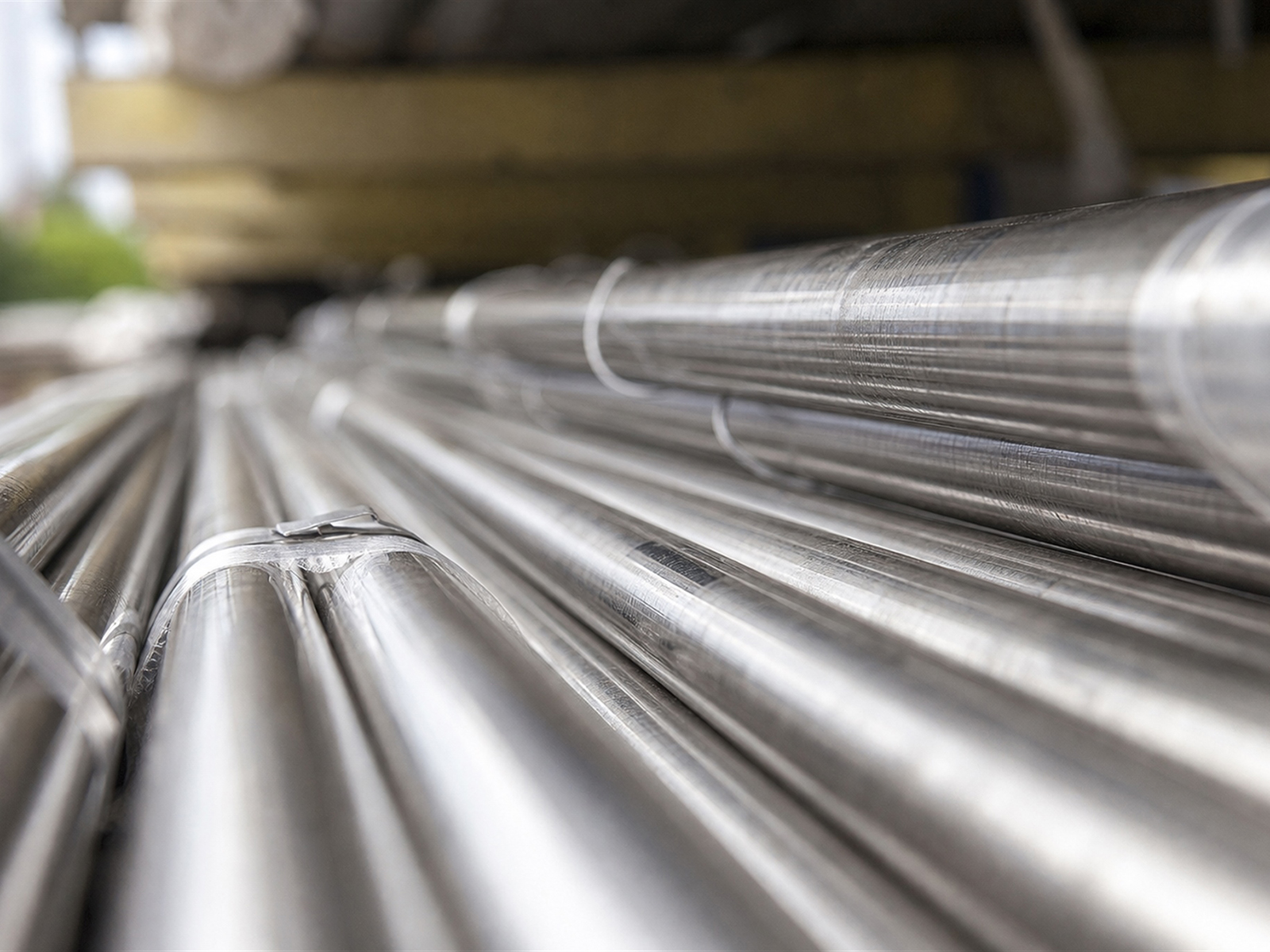
GR12 titanium bar (Ti-0.3Mo-0.8Ni alloy) undergoes complex microstructural evolution during heat treatment. Annealing treatment renders the alpha-phase matrix within the material more uniform, while beta-phase transformation products distribute finely and discretely at grain boundaries and within grains. The dissolution and precipitation of Mo and Ni alloying elements directly influence grain size and phase boundary characteristics. Typical annealed microstructures exhibit equiaxed alpha grains with intergranular beta phase and finely dispersed Ti₂Ni intermetallic precipitates.
What Are the Basic Microstructural Characteristics and Phase Transformation Mechanisms of GR12 Titanium Alloy?
Influence of Alloy Composition on Microstructure
In GR12 titanium alloy, molybdenum content is controlled at 0.20 to 0.40 percent, and nickel content at 0.60 to 0.90 percent. The trace addition of these two elements significantly alters the phase equilibrium relationship of pure titanium. Molybdenum, as a beta-phase stabilizer, lowers the alpha-to-beta phase transformation temperature, promoting beta phase formation and retention during heating. Nickel provides strengthening (effects) in the matrix and enhances corrosion resistance in specific environments.
Phase Equilibrium Characteristics in the Alpha-Plus-Beta Two-Phase Region
Within the 500 to 900 degrees Celsius alpha-plus-beta two-phase region, dynamic phase transformation equilibrium exists within GR12 titanium bars. The alpha phase possesses a hexagonal close-packed crystal structure (HCP), providing excellent room-temperature plasticity and corrosion resistance; the beta phase adopts a body-centered cubic structure (BCC), stable at elevated temperatures. Heat treatment temperature determines the two-phase proportion: higher temperatures increase beta phase content, which transforms upon cooling to influence final mechanical properties.
Dissolution and Precipitation Behavior of Alloying Elements
Molybdenum exhibits solubility in both alpha and beta phases but preferentially enriches within the beta phase. During annealing, some molybdenum exists in dissolved form while some may form fine beta-phase stabilization zones. Nickel has lower solubility and readily precipitates as Ti₂Ni intermetallic compounds during slow cooling. These nano-scale precipitates distribute uniformly within the alpha matrix, providing second-phase strengthening (effects). Fine precipitation significantly enhances strength while maintaining acceptable ductility.
What Microstructural Evolution Occurs During Annealing Heat Treatment?
Microstructural Response During Heating Stage
When GR12 titanium bars heat from room temperature to annealing temperature (typically 650 to 750 degrees Celsius), multiple microstructural changes occur internally. The fibrous organization and stress concentration regions of the initial cold-worked state begin recovery, dislocation density decreases, and internal stress gradually releases. As temperature approaches the alpha-plus-beta transformation region, partial alpha phase boundaries begin transforming to beta phase, and the original elongated grains progressively refine into equiaxed structures.
Recrystallization and Grain Growth During Holding Stage
During holding at annealing temperature, GR12 titanium bars undergo complete recrystallization, with deformed (microstructure) replaced by new equiaxed grains. Recrystallization driving force derives from stored deformation energy; new nuclei preferentially form at high-energy regions such as grain boundaries and dislocation entanglement zones, subsequently growing and consuming surrounding deformed matrix. Longer holding times produce larger grain sizes, but excessive growth reduces strength. Typical annealing at 700 degrees Celsius for 1 hour yields average grain sizes of 25 to 40 micrometers.
Phase Transformation and Precipitation During Cooling Process
During cooling from annealing temperature to room temperature, critical microstructural transformations occur in GR12 titanium bars. Under air cooling or furnace cooling conditions, high-temperature beta phase gradually transforms to alpha phase or alpha prime martensite (depending on cooling rate). For medium cooling rate annealing processes, the beta phase primarily transforms through diffusion-controlled phase transformation to secondary alpha phase (alphaₓ), these secondary alpha plates being fine and distributed within the primary alpha grain boundaries and intergranular regions.
How Do Different Heat Treatment Processes Regulate Microstructure?
Influence of Annealing Temperature on Grain Size and Phase Composition
Annealing temperature is the core parameter determining the final microstructure of GR12 titanium bars. Low-temperature annealing (600 to 680 degrees Celsius) produces fine equiaxed grains (15 to 30 micrometers) with limited residual beta phase content (below 10 percent), yielding higher material strength but somewhat reduced plasticity, suitable for precision components requiring strict strength specifications. Medium-temperature annealing (680 to 750 degrees Celsius) obtains moderate grain sizes (25 to 40 micrometers) with balanced strength-plasticity properties, applicable to most general engineering applications.
Role of Holding Time on Microstructural Homogeneity
Holding time influences recrystallization completion and compositional homogenization (degree). Short holding times (0.5 to 1 hour) suit thin-specification bars (diameter below 20 mm), completing recrystallization rapidly, but larger-diameter bars may contain insufficiently annealed regions, resulting in non-uniform (microstructure). Standard holding times (1 to 2 hours) ensure complete cross-sectional recrystallization with uniform grain size distribution.
Influence of Cooling Rate on Precipitation Characteristics and Mechanical Properties
Cooling rate determines beta phase transformation products and precipitation characteristics. Furnace cooling (approximately 20 to 50 degrees C/min) produces coarse secondary alpha plates and abundant Ti₂Ni precipitates, yielding optimal corrosion resistance and dimensional stability but relatively lower strength, suitable for chemical equipment where corrosion resistance takes priority. Air cooling (50 to 100 degrees C/min) is the standard process, forming finer precipitate distributions with higher strength.
How Are Heat-Treated Microstructures Characterized and Related to Performance?
Quantitative Analysis Methods for Metallographic Organization
Standard metallographic specimen preparation employs mechanical grinding plus electropolishing plus Kroll reagent etching (HF:HNO₃:H₂O=1:3:6) to reveal microstructure. Under optical microscopy, annealed GR12 titanium bars present equiaxed alpha grain matrices (light gray) and intergranular beta phase (dark). Image analysis software measures average grain size, grain size grade, and beta phase volume fraction, providing quantitative (microstructural) characterization for quality control.
Correspondence Between Microstructural Features and Mechanical Properties
The tensile strength (485 to 620 MPa) and yield strength (380 to 520 MPa) of annealed GR12 titanium bars are primarily determined by grain size and precipitation strengthening. According to the Hall-Petch relationship, grain refinement significantly increases yield strength; reducing grain size from 50 micrometers to 25 micrometers increases yield strength by approximately 60 MPa. Fine and uniform Ti₂Ni precipitates further enhance strength through dispersion strengthening mechanisms.
Influence Mechanism of Microstructure on Corrosion Resistance
The outstanding corrosion resistance of GR12 titanium bars derives from the surface passivation film and uniform microstructure. Fine and equiaxed alpha grains reduce grain boundary segregation and micro-galvanic corrosion tendency, improving uniform corrosion resistance. Molybdenum dissolves in the alpha phase and enriches in the beta phase, lowering the passivation film breakdown potential and significantly enhancing resistance to pitting and crevice corrosion. Nickel addition inhibits hydrogen ion reduction reactions, reducing hydrogen embrittlement susceptibility.
What Microstructural Control and Quality Assurance Measures Exist for Industrial Applications?
Heat Treatment Process Stability in Mass Production
In batch production, advanced annealing furnaces enable scaled heat treatment. Multi-zone independent temperature control systems ensure temperature uniformity within +/-5 degrees Celsius. Furnace atmosphere employs high-purity argon protection (oxygen content below 10 ppm), preventing surface oxidation and alpha-case layer formation. Automated loading and unloading systems reduce human operation errors; holding time is precisely controlled through PLC systems, with cooling processes programmed for consistent results.
Microstructure Inspection and Performance Verification System
A comprehensive inspection system is the core of microstructure quality assurance. Metallographic inspection determines grain size per ASTM E112 standard, requiring average grain size within process specifications, with no abnormally coarse grains or mixed grain phenomena. Hardness testing (HB or HV) rapidly evaluates microstructural uniformity; hardness variation within the same batch remains below 10 HV. Tensile testing verifies mechanical properties comply with ASTM B348 requirements.
Customized Heat Treatment to Meet Special Application Requirements
For different application scenarios, customized heat treatment services are available. Bars for chemical reactors employ low-temperature long-duration annealing (660 degrees C x 3 hours furnace cooling), obtaining optimal corrosion-resistant (microstructure) with 30 percent improved crevice corrosion resistance. High-strength components for marine engineering utilize medium-temperature short-duration annealing (720 degrees C x 1 hour air cooling), balancing strength (at least 550 MPa) with seawater corrosion resistance.
Conclusion
The microstructure of GR12 titanium bar after heat treatment consists of equiaxed alpha grains, intergranular beta phase, and Ti₂Ni precipitates. Annealing process parameters directly determine grain size, phase composition, and precipitation characteristics. Optimized heat treatment processes achieve microstructural homogeneity and performance stability, meeting demanding requirements in chemical, marine, and energy sectors. Understanding microstructural evolution (patterns) and performance correlation mechanisms enables engineers to select appropriate heat treatment protocols for specific applications.
FAQ
Q1: What Is the Typical Grain Size of Annealed GR12 Titanium Bar?
The average grain size of standard annealed GR12 titanium bars is 25 to 40 micrometers (ASTM grain size grade 6 to 8). This moderate grain size achieves optimal balance between strength (tensile strength at least 620 MPa) and plasticity (elongation 15 to 25 percent), suitable for most industrial application scenarios.
Q2: How Does Heat Treatment Process Affect the Corrosion Resistance of GR12 Titanium Bar?
Annealing temperature and cooling rate influence corrosion resistance through regulation of Mo, Ni element distribution and Ti₂Ni precipitate (state). Optimized processes achieving uniform alloy element distribution and nano-precipitate (uniform distribution) can increase pitting potential in chloride environments by 150 to 200 mV, significantly enhancing resistance to localized corrosion and long-term service stability.
Q3: How to Judge Heat Treatment Quality Through Metallographic Inspection?
Metallographic inspection observes equiaxed alpha grain uniformity, grain size distribution, and beta phase morphology. Qualified microstructure should exhibit no abnormally coarse grains, mixed grains, or continuous beta phase networks. Grain size grade must fall within process specifications. Combined with hardness testing and mechanical property verification, comprehensive assessment of heat treatment process effectiveness and batch stability is achieved.
Contact Titanium Valley Immediately
If you are seeking a high-performance GR12 titanium bar supplier, Titanium Valley provides GR12 titanium bars compliant with international standards and professional heat treatment customization services. We strictly control alloy composition, heat treatment processes, and microstructure quality, ensuring products possess stable grain structures, excellent corrosion resistance, and reliable mechanical properties for chemical, marine, and energy industry applications. Contact us: sales@titaniumvalleys.com
For a broader view of available grades, supply forms, and related specifications, explore our Titanium Rod category.
For product-level details and supply options, you can also review our Gr12 Titanium Rod page.
References
Zhao Yongqing, Qu Henglei, Zhu Kangying. Titanium Alloy Phase Transformation and Heat Treatment Processes [M]. Beijing: Metallurgical Industry Press, 2012.
Zhang Xiaoming, Huang Zhanghong, Zhao Yongqing. Microstructure and Properties Study of GR12 Titanium Alloy [J]. Titanium Industry Progress, 2015, 32(4): 15-19.
Wang Hua, Liu Jian, Wang Xin. Influence of Heat Treatment Process on Microstructure of Ti-0.3Mo-0.8Ni Alloy [J]. Transactions of Materials and Heat Treatment, 2018, 39(6): 78-84.
Li Juntao, Chen Jun, Zhao Yongqing. Recrystallization and Grain Growth Behavior of Titanium Alloys [J]. Rare Metal Materials and Engineering, 2016, 45(3): 615-620.