
What Are the Reasons Behind Growing Global Market Demand for Gr4 Titanium Foil
- Gr4 Titanium Foil
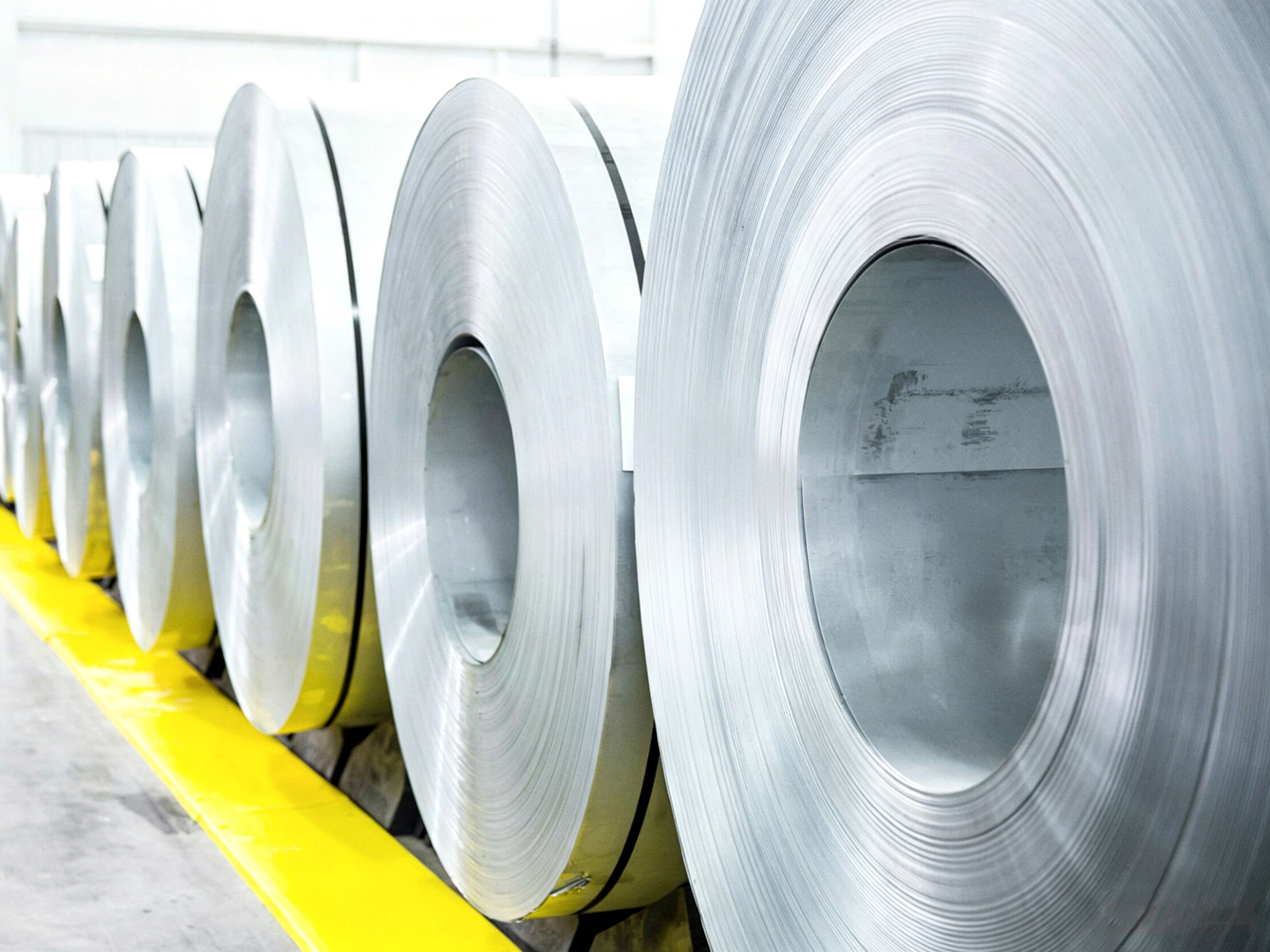
In recent years, GR4 titanium foil has demonstrated robust demand growth globally. This high-strength commercial pure titanium material, (through) its excellent mechanical properties and corrosion resistance, is becoming the preferred material across multiple key industries. The surge in global demand for GR4 titanium foil (mainly stems from) three core drivers: aerospace industry urgent need for lightweight high-strength materials, new energy revolution driving electrochemical material breakthroughs, and extreme operating condition applications expanding material performance boundaries.
How Does Aerospace Industry Upgrade Drive Demand for High-Strength Lightweight Materials?
Stringent Requirements of Next-Generation Aircraft for Structural Materials
Modern aerospace industry is undergoing transformation from traditional aluminum alloys to advanced composite material systems. Design life for new-generation commercial airliners and military aircraft exceeds 30 years, requiring structural materials not only possessing high specific strength but also maintaining stable performance from -55 to 350 degrees Celsius. GR4 titanium foil, with density of only 4.51 g/cm³, compared to traditional steel alloys achieves 40 percent weight reduction while maintaining equivalent strength, directly contributing to improved fuel efficiency and payload capacity.
Deep Space Exploration Missions Catalyzing Extreme-Environment Material Demands
Lunar base construction and Mars exploration programs present unprecedented material challenges. These missions require materials capable of withstanding cosmic radiation, extreme temperature variations, and microgravity environments. GR4 titanium foil’s alpha-type crystal structure imparts excellent low-temperature toughness, maintaining high elongation even at liquid nitrogen temperatures. US and European space agencies have adopted 0.05 to 0.3 mm thick GR4 titanium foil for critical space structure components, validating performance under simulated orbital conditions.
Military UAV Systems Promoting Thin Material Application Innovation
Tactical unmanned aerial vehicle endurance directly depends on structural weight control. Military contractors are replacing traditional materials with 0.02 to 0.1 mm ultra-thin GR4 titanium foil for manufacturing wing spars and sensor housings. This material, while maintaining structural strength, achieves single-aircraft weight reduction of 8 to 12 kilograms, significantly extending operational radius. Japan and South Korea defense industries have incorporated GR4 titanium foil into standard UAV material specifications.
How Does New Energy Revolution Drive Electrochemical Material Technology Breakthroughs?
Urgent Demand for Corrosion-Resistant Current Collectors in Hydrogen Industry Chain
Proton exchange membrane electrolyzers (PEM), core equipment for green hydrogen production, subject anode environments to multiple corrosive factors including high potential, strong acidity, and reactive oxygen radicals. Traditional stainless steel current collectors achieve less than 6 months service life under these conditions, while GR4 titanium foil, (through) its dense passivation film, operates stably for over 5 years. German and Dutch electrolyzer manufacturers have adopted 350 to 670 mm wide GR4 titanium foil for PEM stack current collectors, establishing stable supply chains.
Solid-State Battery Technology Breakthrough Creating New Substrate Markets
Solid-state lithium batteries possess 1.5 times energy density of liquid batteries, but manufacturing requires ultra-thin metal substrates below 0.05 mm thickness. GR4 titanium foil, with non-magnetic (characteristic) and high electrical conductivity (0.50 microhm.cm), attracts attention for solid-state battery current collector applications, currently in R&D validation phase. Some research institutions explore using GR4 titanium foil as negative electrode current collectors, leveraging corrosion resistance and mechanical stability.
Lightweight Design Trends for Fuel Cell Bipolar Plates
Hydrogen fuel cell vehicles require bipolar plates possessing both high conductivity and hydrogen embrittlement corrosion resistance. Precision-stamped 0.1 mm GR4 titanium foil bipolar plates achieve 60 percent weight reduction compared to graphite plates, increasing battery pack power density to 4.2 kW/kg. North American fuel cell manufacturers Plug Power and Ballard have established stable supply systems, annually purchasing thousands of tons of GR4 titanium foil for bipolar plate production.
How Do Extreme Operating Condition Applications Expand Material Performance Boundaries?
Dual Challenges of Corrosion and Pressure Facing Deep-Sea Engineering Equipment
Subsea operating environments exceeding 3,000 meters depth subject materials to simultaneous 30 MPa hydrostatic pressure and high-salinity corrosion. GR4 titanium foil’s yield strength of 480 to 550 MPa ensures structural integrity, while corrosion rate in seawater below 0.005 mm/year guarantees decade-long service life. Norwegian Equinor and Brazilian Petrobras subsea pipeline monitoring systems employ GR4 titanium foil for pressure housing components, demonstrating reliable performance under extreme deep-sea conditions.
Long-Term Protection Demands of Nuclear Waste Processing Facilities
High-level radioactive liquid storage tank lining materials must withstand synergistic effects of nitric acid, radiation, and thermal cycling. US Department of Energy Hanford nuclear facility waste tank renovation project selected 0.8 to 1.0 mm GR4 titanium foil as lining material. Under simulated nuclear waste storage conditions, GR4 titanium foil demonstrates excellent corrosion resistance, though actual engineering requires selection based on specific media (such as boiling nitric acid) with appropriate material grades and surface treatments.
Strict Standards for Clean Materials in Pharmaceutical Industry Sterile Production
Biopharmaceutical reactors require inner surfaces achieving Ra at most 0.4 micrometer roughness with zero metal ion leaching. GR4 titanium foil (processed through) ultrasonic cleaning and argon annealing, achieves surface dyne value exceeding 40 dyne/cm, enabling direct bonding with silicone to form sterile seals. Swiss Roche and American Pfizer monoclonal antibody production lines have adopted titanium foil stirring paddles and heat transfer plates as standard equipment, ensuring product purity and process reliability.
How Do Manufacturing Technology Innovations Break Through Industrialization Scale Bottlenecks?
Thickness Tolerance Breakthroughs Through 20-High Precision Rolling Technology
Traditional 4-high or 6-high mills processing 0.02 mm titanium foil typically achieve thickness tolerance of approximately +/-0.005 mm. Employing 750 mm 20-high precision mills, through intermediate roll micro-adjustment achieving uniform distribution of 3500 kN rolling force, full specification range from 0.02 to 1.0 mm achieves thickness precision of +/-0.001 mm. This equipment maximum processing width reaches 670 mm, enabling large-format single-piece forming for aerospace skin panels and fuel cell bipolar plates.
Intensity-Ductility Balance Optimization Through Continuous Annealing Processes
GR4 titanium’s high strength derives from relatively higher oxygen and nitrogen content (O at most 0.40 percent, N at most 0.05 percent), but this also causes increased brittleness after cold rolling. Employing 7-zone electric heating continuous annealing furnace, achieving temperature control within +/-2 degrees Celsius in 650 to 700 degrees Celsius holding zone, alpha phase grains uniformly grow to 8 to 12 micrometers. After annealing, material tensile strength maintains at least 550 MPa while elongation recovers to 12 to 15 percent, optimizing strength-formability balance.
Material Utilization Improvement Through High-Precision Slitting Technology
When slitting wide-format master coils into narrow strips, traditional cutting tools (tend to produce) burrs and edge cracks. Employing cemented carbide disc knives (combined with) automatic tension adjustment systems, 350 to 670 mm master coils can be slit into finished strips with width tolerance of +/-0.1 mm. This technology improves material utilization from traditional 82 percent to 94 percent, yielding additional 120 kg effective product per ton of master coil, significantly reducing production costs.
How Does Global Supply Chain Restructuring Accelerate Localized Capacity Layout?
Geopolitical Factors Promoting Strategic Material Domestic Production
After Western countries listed titanium materials on critical mineral lists, establishing domestic supply chains became industrial policy priority. US 2024 National Defense Authorization Act requires military titanium material domestication rate of at least 65 percent; European Union Critical Raw Materials Act sets similar targets. This prompts Boeing, Airbus, and other OEMs to expand qualified supplier lists. Chinese manufacturers possessing 3,000 ton annual capacity with complete quality traceability systems gain significant competitive advantage in global tender markets.
Synergistic Effects Formed by Regional Industry Clusters
Emerging manufacturing centers including Bangalore aviation industrial park and Hanoi electronics manufacturing base are forming complete industry chains from raw materials to end products. These regions demonstrate strong demand for 0.05 to 0.3 mm medium-thick GR4 titanium foil, but local supply capacity remains insufficient. Chinese manufacturers possessing ASTM B265 and EN 10263 standard certifications actively establish regional distribution centers, reducing delivery cycles from traditional 12 to 16 weeks to 4 to 6 weeks, improving supply chain responsiveness.
Customized Services Becoming New Dimension of Market Competition
Customer material performance requirements shift from standardized to differentiated. Medical device enterprises require mirror-finish titanium foil with surface roughness Ra at most 0.2 micrometer; electronics manufacturers demand ultra-low magnetic materials with permeability at most 1.002. Establishing full-process quality traceability systems from melting to surface treatment, providing complete material documentation including ultrasonic flaw detection reports, grain size analysis, and hydrogen content testing, differentiates suppliers in competitive global markets.
Conclusion
Rapid global growth in GR4 titanium foil market (essentially is) inevitable result of high-end manufacturing evolving toward extreme-performance materials. Aerospace lightweighting revolution, new energy electrochemical breakthroughs, extreme operating condition reliability requirements, and manufacturing technology industrialization maturity jointly constitute four pillars driving demand explosion. With scaled operation of 3,000-ton annual capacity intelligent production lines, GR4 titanium foil will play increasingly important role in advancing global high-tech manufacturing sectors.
FAQ
Q1: How to Choose Between GR4 and GR2 Titanium Foil in Practical Applications?
When design loads exceed 400 MPa or require long-term fatigue stress endurance, GR4 titanium foil should (prioritize) selection. Its tensile strength exceeds GR2 by over 60 percent, though ductility decreases approximately 25 percent. Low-stress applications such as chemical vessel linings can use GR2; load-bearing components such as aviation fasteners (must) employ GR4.
Q2: What Is the Minimum Processable Thickness for Ultra-Thin GR4 Titanium Foil?
Employing 20-high precision rolling technology, currently stable production achieves 0.02 mm specification products; laboratory conditions have realized 0.005 mm ultra-thin foil trial production. However, specifications below 0.02 mm, due to rolling difficulty and strict quality control, typically require customized production, with delivery cycles extending 2 to 3 weeks beyond standard products.
Q3: How to Verify GR4 Titanium Foil Complies with Aerospace Standards?
Qualified products must provide material certificates (including chemical composition spectrographic analysis), mechanical property reports (tensile, yield, elongation), and ultrasonic flaw detection records. Aerospace applications additionally require grain size testing (ASTM E112 standard) and hydrogen content analysis, ensuring hydrogen at most 0.015 percent to prevent hydrogen embrittlement. Suppliers should be required to provide third-party testing agency certification.
Finding a Reliable GR4 Titanium Foil Supplier
Baoji Titanium Valley Titanium Nickel Zirconium Material Processing Co., Ltd., as professional manufacturer, is equipped with world-class 20-high rolling mills and continuous annealing production lines, stably supplying full specification high-strength titanium foil from 0.02 to 1.0 mm. Serving aerospace, new energy, and chemical industry global customers, providing customized products compliant with ASTM B265 standards. Contact immediately: sales@titaniumvalleys.com
For a broader view of available grades, supply forms, and related specifications, explore our Titanium Foil category.
For product-level details and supply options, you can also review our AMS 4901 Gr4 Titanium Foil page.
References
Zhang Wenming, Li Qiang. Application Progress of High-Strength Commercial Pure Titanium in Aerospace Field [J]. Rare Metal Materials and Engineering, 2023, 52(4): 1256-1264.
Wang Xiaodong, Liu Zhigang. Corrosion Behavior Research of Commercial Pure Titanium in Deep-Sea Environments [J]. Corrosion Science and Protection Technology, 2022, 34(5): 456-462.
Chen Wei, Zhao Ming. Preparation Technology and Properties Research of Titanium Foil for Fuel Cells [J]. Materials Review, 2023, 37(8): 201-208.
Li Hua, Wang Qiang. Research Progress on Precision Rolling Technology of Ultra-Thin Titanium Foil [J]. Rolling Manufacturing, 2024, 41(2): 78-85.