
What Cutting Tools Are Suitable for Machining GR1 Titanium Bar
- Gr1 Titanium Bar
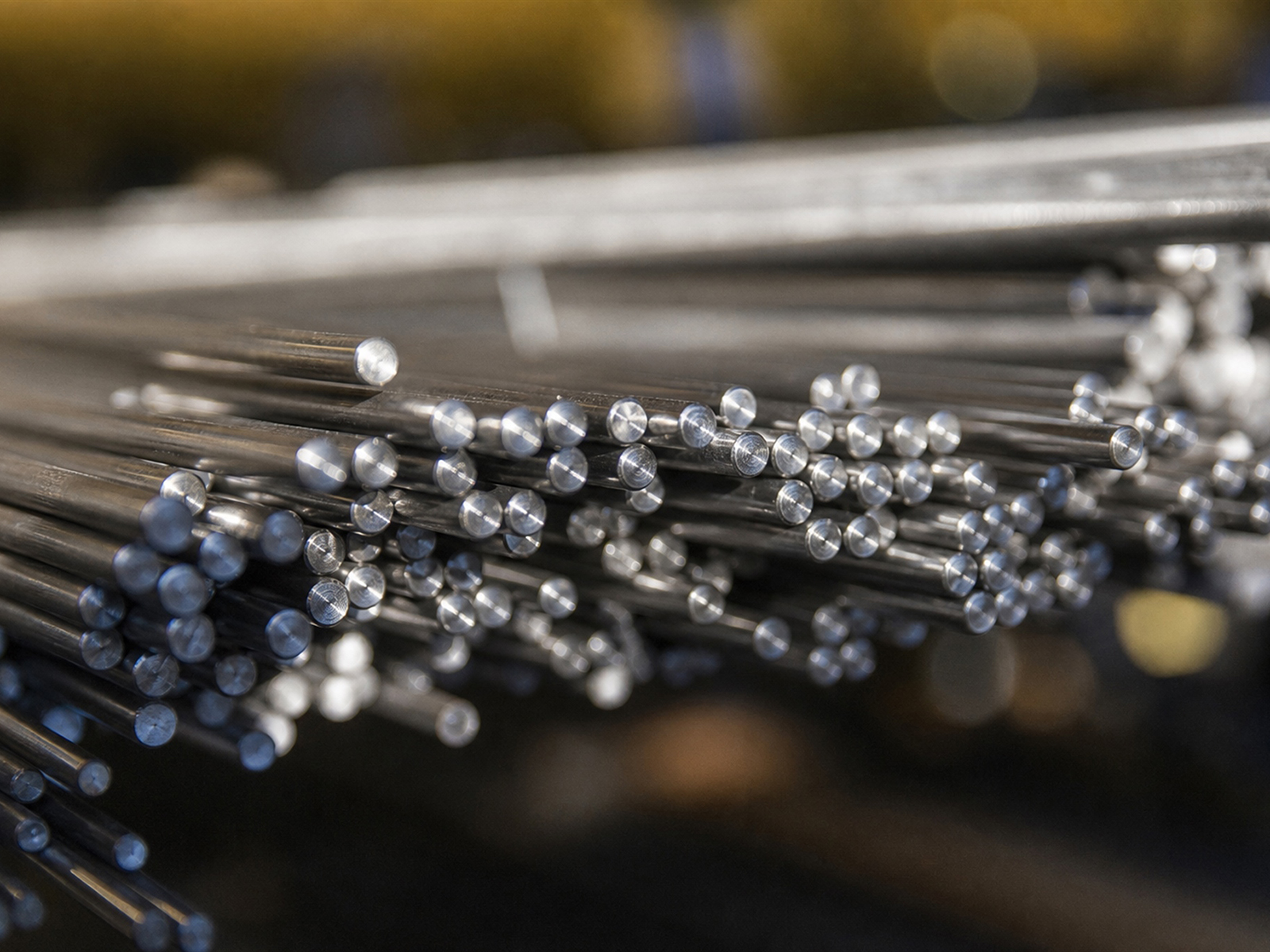
As a high-purity commercial pure titanium material, the choice of cutting tools for GR1 titanium bar directly impacts machining efficiency and cost control. Suitable tools include carbide tools (YG series, YW series), PCD polycrystalline diamond tools, ceramic tools, and coated tools (TiAlN, TiCN). Due to GR1 titanium bar’s poor thermal conductivity, high chemical reactivity, and low elastic modulus, tools with sharp rake angles (15 to 20 degrees), large clearance angles (10 to 15 degrees), and adequate coolant delivery are recommended.
What Core Tool Requirements Does GR1 Titanium Bar Material Properties Impose?
Heat Concentration Problem Caused by Low Thermal Conductivity
The thermal conductivity of GR1 titanium bar is only 17 W/(m.K), approximately one-quarter that of ordinary steel. This means heat generated during cutting cannot quickly dissipate into the workpiece body but concentrates at the tool cutting edge and chip contact zone. Undissipated heat causes rapid temperature rise at the tool tip, accelerating tool wear or even causing chipping. Tools must possess high-temperature hardness and thermal stability, maintaining cutting performance at 600 to 800 degrees Celsius. Carbide tools containing tungsten-cobalt compositions maintain high-temperature hardness and serve as the conventional choice. Ceramic and PCD tools offer superior heat resistance but greater brittleness, suitable for specific operating conditions.
Tool Adhesion Induced by High Chemical Reactivity
Titanium exhibits extremely high chemical reactivity at cutting temperatures, readily forming adhesive layers with tool materials. Accumulated adherent material on the cutting edge alters tool geometry, increasing cutting forces, deteriorating surface quality, and potentially causing tool fracture. Tool surfaces must possess low affinity and anti-adhesion properties. Coated tools reduce chemical reactions between titanium and the tool substrate through TiAlN, TiCN, and similar coatings, decreasing tool adhesion probability. PCD tools, with strong chemical inertness, hardly react with titanium and are particularly suitable for extended continuous machining of GR1 titanium bars.
Deformation Control Due to Low Elastic Modulus
GR1 titanium bar has an elastic modulus of approximately 103 GPa, only half that of steel. Low elastic modulus makes the material more prone to elastic deformation and springback under load. During machining, the workpiece tends to deflect from the tool, affecting dimensional accuracy and surface roughness. Tools require sharp cutting edges and rational geometric angles to reduce cutting forces. Large rake angles (15 to 20 degrees) reduce cutting resistance; large clearance angles (10 to 15 degrees) prevent tool-workpiece friction. Tool nose radius should be controlled at 0.4 to 0.8 mm, balancing strength with reduced cutting forces and workpiece deformation.
What Are the Mainstream Tool Material Types and Their Performance Comparisons?
Carbide Tools: Cost-Effective Choice
Carbide tools, sintered from tungsten carbide (WC) and cobalt (Co) powders, offer high hardness, good wear resistance, and moderate pricing, making them the most widely applied tool type for GR1 titanium bar machining. YG-series carbides (tungsten-cobalt) suit roughing and intermittent cutting with good toughness and impact resistance. YG6 and YG8 grades with 6 to 8 percent cobalt content withstand significant cutting force fluctuations. During rough turning of GR1 titanium bars, YG tools can handle depth-of-cut conditions of 2 to 4 mm. YW-series carbides (tungsten-cobalt-titanium) contain titanium carbide (TiC) with superior red hardness and wear resistance, better suited for semi-finishing and finishing. YW1 and YW2 grades maintain cutting performance at 500 to 700 degrees Celsius, achieving surface roughness of Ra 1.6 to 3.2 micrometers during fine turning of GR1 titanium bars. Recommended cutting speeds for carbide tools are 30 to 50 m/min with feed rates of 0.1 to 0.3 mm/rev. Excessive cutting speeds cause tool tip temperatures exceeding material limits, triggering rapid wear.
PCD Polycrystalline Diamond Tools: Efficient Precision Machining
PCD tools, sintered from diamond micro-powder with carbide substrate at high temperature and pressure, achieve extremely high hardness (8000 to 9000 HV), with wear resistance dozens of times that of carbide. Their strong chemical inertness prevents virtually all adhesion reactions with titanium. PCD tools are particularly suitable for precision machining and high-volume production of GR1 titanium bars. Single PCD tool machining distance reaches 10 to 30 times that of carbide tools; although initial investment is higher, comprehensive costs are significantly lower. When polishing bars with diameters of 10 to 50 mm, PCD tools achieve surface quality of Ra 0.4 to 0.8 micrometers with dimensional accuracy at H7 to H8 levels. For cutting parameters, PCD tools allow higher cutting speeds (60 to 100 m/min) but require lower feed rates (0.05 to 0.15 mm/rev) to avoid brittle fracture. Adequate cutting fluid cooling is mandatory, with water-based emulsion or synthetic cutting fluid recommended.
Ceramic and Coated Tool Application Scenarios
Ceramic tools, sintered from aluminum oxide or silicon nitride ceramics, offer exceptional heat resistance, maintaining hardness above 1000 degrees Celsius, suitable for high-speed cutting. However, ceramic tools are brittle with poor impact resistance, applicable only to continuous finishing of GR1 titanium bars, never for intermittent cutting or roughing. Coated tools deposit TiAlN, TiCN, AlCrN, and similar coatings (thickness 3 to 8 micrometers) on carbide substrates. Coatings reduce friction coefficients, increase surface hardness, and minimize tool adhesion. TiAlN-coated tools extend tool life by 30 to 60 percent compared to uncoated tools during GR1 titanium bar machining, particularly suitable for semi-finishing operations.
How Should Tool Geometry Parameters and Cutting Angles Be Optimized?
Rake Angle Design: Reducing Cutting Force
Large positive rake angles (15 to 20 degrees) significantly reduce cutting force and heat generation. Negative rake angles, while improving edge strength, increase cutting resistance and are generally unsuitable for GR1 titanium machining. Clearance angles of 10 to 15 degrees prevent tool-workpiece friction during cutting. Tool nose radius of 0.4 to 0.8 mm balances edge strength with cutting force reduction. Smaller nose radii reduce cutting force but compromise edge durability; larger radii improve surface finish but increase radial cutting force, potentially causing workpiece deflection.
Cutting Speed and Feed Rate Selection Principles
Lower cutting speeds (30 to 50 m/min for carbide, 60 to 100 m/min for PCD) reduce heat generation. Higher speeds accelerate tool wear and may cause workpiece surface hardening. Feed rates of 0.05 to 0.3 mm/rev should be selected based on desired surface roughness and tool holding rigidity. Finishing operations require lower feed rates (0.05 to 0.1 mm/rev); roughing can tolerate higher feeds (0.15 to 0.3 mm/rev). Depth of cut during roughing should be 1 to 4 mm, while finishing uses 0.1 to 0.5 mm.
Cooling and Lubrication Strategies
Adequate coolant delivery is critical for GR1 titanium machining. Flood cooling with water-based emulsion or synthetic fluid at 15 to 30 L/min directly targets the cutting zone for effective heat removal. External cooling alone is less effective, generally suitable only for roughing; however, high-flow external cooling can serve semi-finishing. PCD tools during high-speed cutting require high-pressure internal cooling systems (pressure at least 2 MPa), otherwise tool life is drastically reduced. For dry machining applications, specialized titanium-compatible solid lubricants may be applied to the cutting zone.
What Are the Recommended Machining Processes for Different GR1 Titanium Bar Applications?
Turning Operations
Turning is the most common GR1 titanium bar machining process. Rough turning uses YG6 or YG8 carbide inserts with large positive rake angles and depth of cut 2 to 4 mm. Semi-finishing and finishing employ YW-series or PCD inserts. CNC lathes with rigid tool holders and hydraulic clamping ensure dimensional stability. For precision shafts, center hole preparation followed by rough turning, heat treatment, and finish grinding achieves dimensional tolerances at IT6 to IT7 levels.
Drilling and Boring Operations
Titanium’s low thermal conductivity causes rapid drill bit heating during drilling. Special titanium-grade drill bits with split points and widened flutes improve chip evacuation. Cutting speed should be reduced to 10 to 20 m/min with generous coolant. For holes larger than 10 mm, pre-drilling with smaller drills (60 to 80 percent of final diameter) reduces cutting force. Boring operations benefit from single-point boring tools with positive rake angles and generous coolant flow.
Milling Operations
Face milling and peripheral milling of GR1 titanium require tools with sufficient tooth count for smooth cutting. Face mills with 5 to 9 teeth and positive rake geometry are recommended. Climb milling is preferred over conventional milling to reduce work hardening. Cutting speeds of 40 to 80 m/min with low radial engagement (10 to 20 percent of tool diameter) minimize heat accumulation. For slotting operations, helical interpolation is preferred over axial plunging to distribute cutting forces.
Grinding Operations
Surface and cylindrical grinding of GR1 titanium requires CBN (cubic boron nitride) or specialized aluminum oxide grinding wheels. CBN wheels offer superior wear resistance and longer life but at higher cost. Grinding parameters: wheel speed 1800 to 2500 m/min, table speed 4 to 8 m/min, depth of cut 0.005 to 0.02 mm per pass. Generous coolant is essential; dry grinding of titanium is not recommended due to fire risk and surface burning.
How Can Tool Wear Be Monitored and Replacement Strategies Optimized?
Common Wear Forms and Identification Methods
Primary tool wear forms during GR1 titanium bar machining include flank wear, crater wear, chipping, and adhesive wear. Crater wear appears on the rake face from chip-tool friction; replacement is required when wear depth exceeds 0.3 mm, otherwise sudden chipping may occur. Carbide tools should be inspected for crater depth after 20 to 40 minutes of cutting. Flank wear manifests as flattening of the flank face; the wear land width (VB value) is the acceptance criterion: roughing VB at most 0.4 mm, finishing VB at most 0.2 mm. Excessive flank wear increases cutting forces and deteriorates surface roughness. Adhesive wear shows titanium buildup on the cutting edge, forming built-up edge that detaches and takes tool material with it, creating micro-chips. Coated and PCD tools significantly reduce adhesion and extend tool life.
Tool Life Management and Economic Analysis
Typical carbide tool life machining GR1 titanium bar is 60 to 120 minutes (effective cutting time), with tool costs of 20 to 50 RMB per insert, yielding low per-piece machining cost suitable for small to medium batch production. PCD tools, with initial investment of 600 to 2000 RMB per insert, achieve life of 2000 to 5000 minutes, with comprehensive costs below carbide. For batches exceeding 500 pieces, PCD tools demonstrate significant economic advantage. When machining medical-grade precision bars, PCD tools also ensure consistent machining quality and reduced dimensional variation.
Tool Sharpening and Reuse
Carbide tools can be sharpened and reused, reducing tool costs. Worn inserts are reground on precision grinders to restore rake and flank faces. Generally sharpenable 3 to 5 times at 5 to 10 RMB per sharpening. During sharpening, original geometric angles must be maintained with deviations not exceeding +/-1 degree. Cutting edges must be ground smooth without nicks or burrs. Sharpened tools recover 60 to 80 percent of original cutting performance, suitable for roughing and semi-finishing. PCD and ceramic tools are difficult to sharpen and typically require factory refurbishment. Coated tools generally should not be resharpened as sharpening destroys the coating.
Conclusion
Selection of cutting tools for GR1 titanium bar machining requires comprehensive consideration of material properties, machining precision, and cost control. Carbide tools (YG series, YW series) offer cost-effectiveness for conventional production; PCD tools, though higher initial investment, deliver long life and high precision suitable for batch precision machining. Tool geometry parameter optimization (large rake angle, large clearance angle) combined with rational cutting parameters (low speed, low feed) and adequate cooling significantly extends tool life and improves machining quality. Establishing tool wear monitoring and lifecycle management systems is essential for consistent production quality and cost optimization.
FAQ
Q1: Why Can High-Speed Steel Tools Not Be Used for Machining GR1 Titanium Bar?
High-speed steel tools have a heat resistance temperature of only around 600 degrees Celsius, while the GR1 titanium bar cutting zone temperature often exceeds 700 degrees Celsius. At this temperature, HSS rapidly softens and loses hardness, causing rapid tool wear and failure. Carbide or higher-grade tool materials are mandatory.
Q2: Why Do PCD Tools Chip Easily When Machining GR1 Titanium Bar?
PCD material is extremely hard but has poor toughness and is sensitive to impact loads. Intermittent cutting, excessive feed rates, unstable workpiece clamping, or inappropriate cutting parameter settings all increase impact forces beyond PCD (capacity), causing chipping. Process parameters must be optimized and smooth cutting ensured.
Q3: How Great Is the Impact of Cutting Fluid Selection on GR1 Titanium Bar Machining Tool Life?
Cutting fluid directly affects cutting temperature control. Adequate high-quality cutting fluid extends tool life by 40 to 80 percent. Inferior or insufficient cooling causes tool overheating, intensified adhesion, and accelerated wear. Dedicated titanium alloy cutting fluid is recommended with flow rate at least 20 L/min, with regular concentration and cleanliness testing.
Contact Us
Titanium Valley, as a professional GR1 titanium bar manufacturer and supplier, not only provides high-quality titanium bar materials but also offers machining process consultation and tool selection recommendations. Our products comply with ASTM B348 standards with complete material reports. For more information on GR1 titanium bar specifications or machining technical support, contact: sales@titaniumvalleys.com
For a broader view of available grades, supply forms, and related specifications, explore our Titanium Rod category.
For product-level details and supply options, you can also review our ASTM F67 Gr1 Titanium Rod page.
References
Zhao Yongqing, Ge Peng. Titanium Alloy Cutting Machining Technology [M]. Beijing: National Defense Industry Press, 2018.
Liu Xianli, Li Maoyue. Cutting Technology for Difficult-to-Machine Materials [M]. Harbin: Harbin Institute of Technology Press, 2020.
Wang Chengyong, Zhang Xingyu. Modern Tool Materials and Coating Technology [M]. Beijing: Machinery Industry Press, 2019.
Tang Aijun, Zhou Zhaoyao. Titanium and Titanium Alloy Processing Technology [M]. Changsha: Central South University Press, 2017.