
What Are the Typical Applications of Nickel 200 Foil?
- Nickel 200 Foil
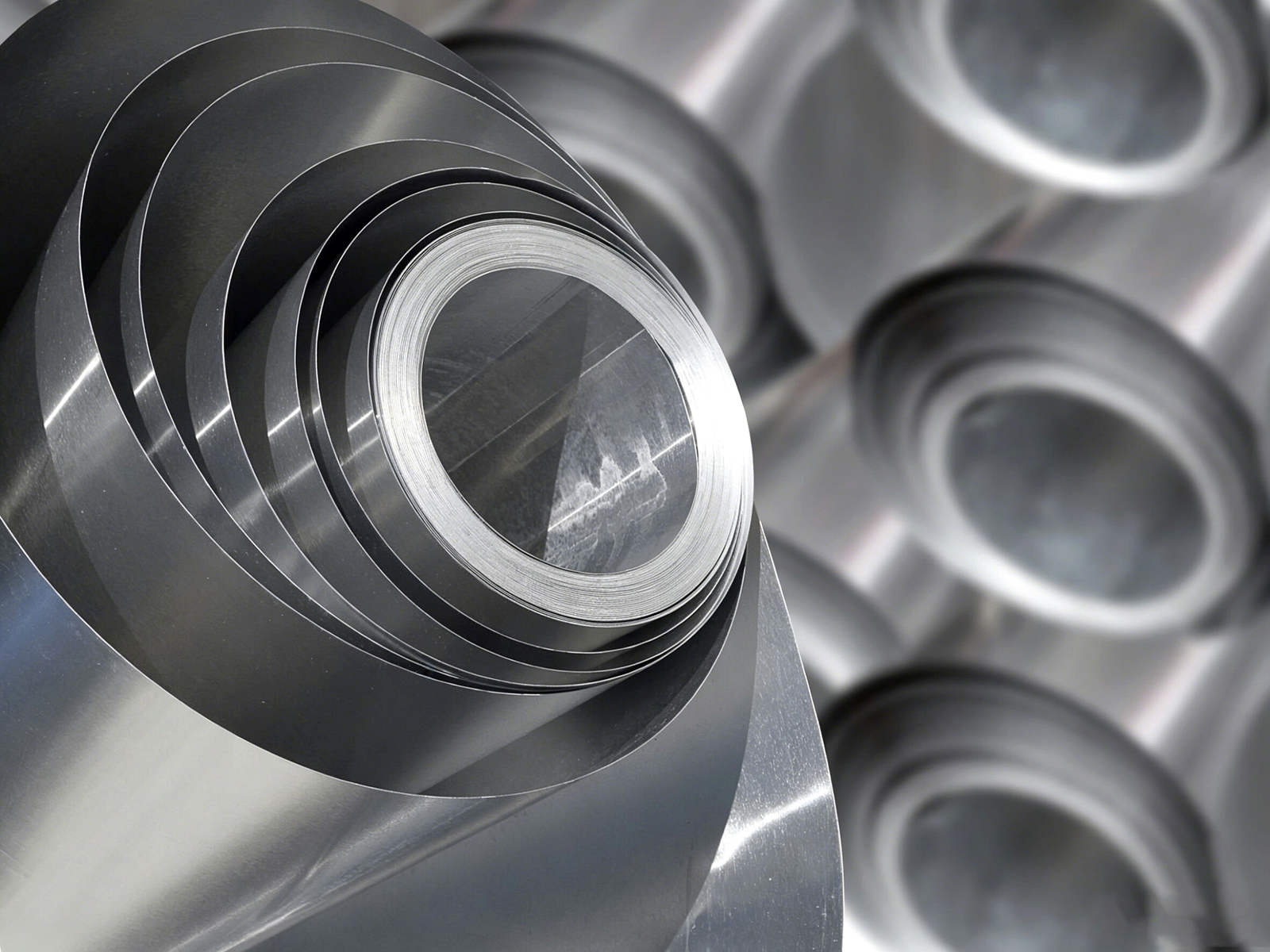
Nickel 200 foil, as a high-purity (Ni >= 99.0%) industrial pure nickel material, has found extensive application across chemical processing, electronics, energy, aerospace, food and pharmaceutical industries, and many other sectors. Leveraging its excellent corrosion resistance, good formability and weldability, and superior electrical and thermal conductivity, Nickel 200 foil remains the material of choice in numerous corrosive environments — despite being one of the earliest developed nickel-based alloys. This article details the typical applications of Nickel 200 foil across six major industry sectors.
1. Chemical and Petrochemical Industry
(1) Reactor and Tank Linings
Nickel 200 foil is widely used as lining material for chemical reactors and storage tanks, particularly in applications involving strong alkaline media such as sodium hydroxide (NaOH) and potassium hydroxide (KOH). In alkali solutions with concentrations up to 50% and temperatures reaching 200 degrees Celsius, the corrosion rate of Nickel 200 foil is below 0.01 mm/year — far superior to stainless steel and carbon steel.
(2) Heat Exchanger Tubesheets
In the chlor-alkali industry, heat exchanger tubesheets and heat exchange tubes fabricated from Nickel 200 foil effectively resist corrosion by chlorine-containing alkaline solutions. Compared to titanium, Nickel 200 offers a higher cost-performance ratio in alkaline chlorine-containing media and eliminates the risk of pitting corrosion.
(3) Pump, Valve, and Piping Components
Nickel 200 foil can be machined into critical components such as pump impellers, valve seats, and sealing rings. It demonstrates good corrosion resistance in medium-to-low temperature applications involving inorganic acids such as sulfuric acid and phosphoric acid.
2. Electronics and Electrical Industry
(1) Resistive Heating Elements
Nickel 200 foil possesses a relatively high electrical resistivity (approximately 6.84 x 10^-8 ohm-m) and good high-temperature oxidation resistance, making it commonly used as the substrate material and lead wire for resistive heating elements. At operating temperatures below 1,000 degrees Celsius, Nickel 200 foil maintains stable resistive characteristics.
(2) Thermocouple Protection Tubes
Thermocouple protection tubes manufactured from Nickel 200 foil are extensively employed in temperature measurement applications. Its excellent corrosion resistance and mechanical strength ensure long-term stable operation of thermocouples in harsh environments.
(3) Electromagnetic Shielding Materials
Nickel 200 foil exhibits a certain level of magnetic permeability and can be used for electromagnetic shielding layers in electronic equipment. In high-frequency circuits, Nickel 200 foil effectively absorbs and reflects electromagnetic interference (EMI).
3. Energy and Environmental Protection
(1) Nuclear Power Equipment
In pressurized water reactor (PWR) nuclear power plants, Nickel 200 foil is used to manufacture seals and elastic components in coolant systems. Nickel-based alloys exhibit good stability under neutron irradiation and do not significantly absorb neutrons.
(2) Fuel Cell Components
Nickel 200 foil can serve as interconnect plates and sealing materials for solid oxide fuel cells (SOFCs). In high-temperature reducing atmospheres between 600 and 800 degrees Celsius, Nickel 200 foil demonstrates exceptional stability.
(3) Flue Gas Desulfurization (FGD) Equipment
In FGD systems of coal-fired power plants, spray pipes and slurry circulation pump components fabricated from Nickel 200 foil effectively resist corrosion by sulfur-containing media.
4. Food and Pharmaceutical Industries
(1) Food Processing Equipment
Nickel 200 foil is non-toxic and odorless, meeting food safety requirements. It is widely used in the manufacture of food steamers, sterilization equipment, and storage tanks. During the processing of acidic foods (such as fruit juices and yogurt), Nickel 200 foil does not release harmful substances.
(2) Pharmaceutical Reaction Vessels
In pharmaceutical production, reaction vessels and piping systems fabricated from Nickel 200 foil resist erosion by various chemical reagents without contaminating the products. Its smooth surface is also easy to clean and sterilize.
5. Marine and Shipbuilding Industry
(1) Seawater Desalination Equipment
In seawater desalination equipment, Nickel 200 foil is primarily used to manufacture evaporator tubesheets and condenser heat exchange tubes. Although titanium performs better in seawater, Nickel 200 foil offers a higher cost-performance ratio under specific operating conditions.
(2) Marine Components
Nickel 200 foil can be used to manufacture ship propeller shaft sleeves, seawater valve components, and other parts resistant to seawater corrosion. Its good resistance to seawater erosion ensures the long-term reliable operation of marine equipment.
6. Other Application Areas
(1) Aerospace
In the aerospace sector, Nickel 200 foil is mainly used to manufacture high-temperature seals and elastic components. In certain rocket engine parts, Nickel 200 foil can withstand high-temperature gas erosion.
(2) Glass Manufacturing
Nickel 200 foil-fabricated refractory linings and stirrers for glass kilns resist erosion by molten glass. Its excellent high-temperature strength and thermal shock resistance meet critical demands of the glass manufacturing industry.
(3) Pulp and Paper Industry
During pulp concentration and evaporation processes, equipment components fabricated from Nickel 200 foil effectively resist corrosion by sulfur-containing compounds.
7. Conclusion
With its comprehensive performance advantages, Nickel 200 foil plays a vital role across chemical processing, electronics, energy, food, marine, and multiple other sectors. As industrial technology continues to advance, the application scope of Nickel 200 foil is still expanding. For engineering applications requiring high-purity nickel materials, Nickel 200 foil remains a reliable and trusted choice.
FAQ
Q1: What thickness specifications are available for Nickel 200 foil?
The standard thickness range for Nickel 200 foil is 0.05 mm to 3.0 mm, with special thicknesses available upon customer request. Ultra-thin specifications (0.05-0.1 mm) are commonly used in the electronics industry, while medium thicknesses (0.5-2.0 mm) are typically applied in chemical processing equipment.
Q2: Can Nickel 200 foil undergo surface treatment?
Yes. Nickel 200 foil can be subjected to surface treatments including polishing, sandblasting, pickling, and plating to meet the requirements of different applications.
Q3: What are the storage requirements for Nickel 200 foil?
Nickel 200 foil should be stored in a dry, well-ventilated environment and kept away from contact with acidic substances. For long-term storage, wrapping in anti-rust paper is recommended.
Finding a Reliable Nickel 200 Foil Supplier
Baoji Titanium Valley Titanium, Nickel and Zirconium Material Processing Co., Ltd. is a professional manufacturer of high-end rare metal products. Equipped with an Italian Danieli rolling production line, the company produces over 1,000 metric tons of nickel foil annually and offers full-size customization with EN 10204 3.1 certification. Contact us now for technical support and quotation: sales@titaniumvalleys.com
For a broader view of available grades, supply forms, and related specifications, explore our Nickel Foil category.
For product-level details and supply options, you can also review our Nickel 200 Foil page.
References
ASTM International. ASTM B90-21 Standard Specification for Nickel Sheet, Strip, and Foil [S]. West Conshohocken: ASTM International, 2021.
China Nonferrous Metals Industry Association. Handbook of Nickel and Nickel Alloys [M]. Beijing: Metallurgical Industry Press, 2019.
Application Overview
| Application Sector | Specific Use | Key Performance Requirements | Corrosion Environment |
| Chemical Equipment | Reactor Linings | Resistance to Strong Alkali Corrosion | NaOH, KOH Solutions |
| Electronics Industry | Resistive Heating Elements | Conductivity + High-Temperature Resistance | Air, 1000 deg-C |
| Nuclear Power Equipment | Seals | Radiation Resistance | High-Temperature, High-Pressure Water |
| Food & Pharmaceutical | Processing Vessels | Food Safety Compliance | Acidic Foods, Cleaners |
Nickel 200 Foil Specifications
| Foil Category | Thickness Range | Width Range | Typical Applications |
| Ultra-Thin Foil | 0.05-0.1 mm | <= 300 mm | Electronic Shielding, Sensors |
| Thin Foil | 0.1-0.5 mm | <= 600 mm | Chemical Linings, Heat Exchangers |
| Medium-to-Thick Foil | 0.5-2.0 mm | <= 1200 mm | Reactor Linings, Pump & Valve Parts |
| Thick Foil | 2.0-3.0 mm | <= 1500 mm | Tank Linings, Structural Components |
Corrosion Rate Data in Various Media
| Corrosion Medium | Concentration | Temperature | Nickel 200 Corrosion Rate |
| NaOH | 50% | 200 deg-C | < 0.01 mm/year |
| H2SO4 | 10% | Ambient | 0.1-0.5 mm/year |
| HCl | 5% | Ambient | 1-2 mm/year (Not Recommended) |
| Seawater | – | Ambient | < 0.001 mm/year |