
What Are the UNS R60702 Foil Thickness Specification and Custom Manufacturing Guide?
- UNS R60702 Foil
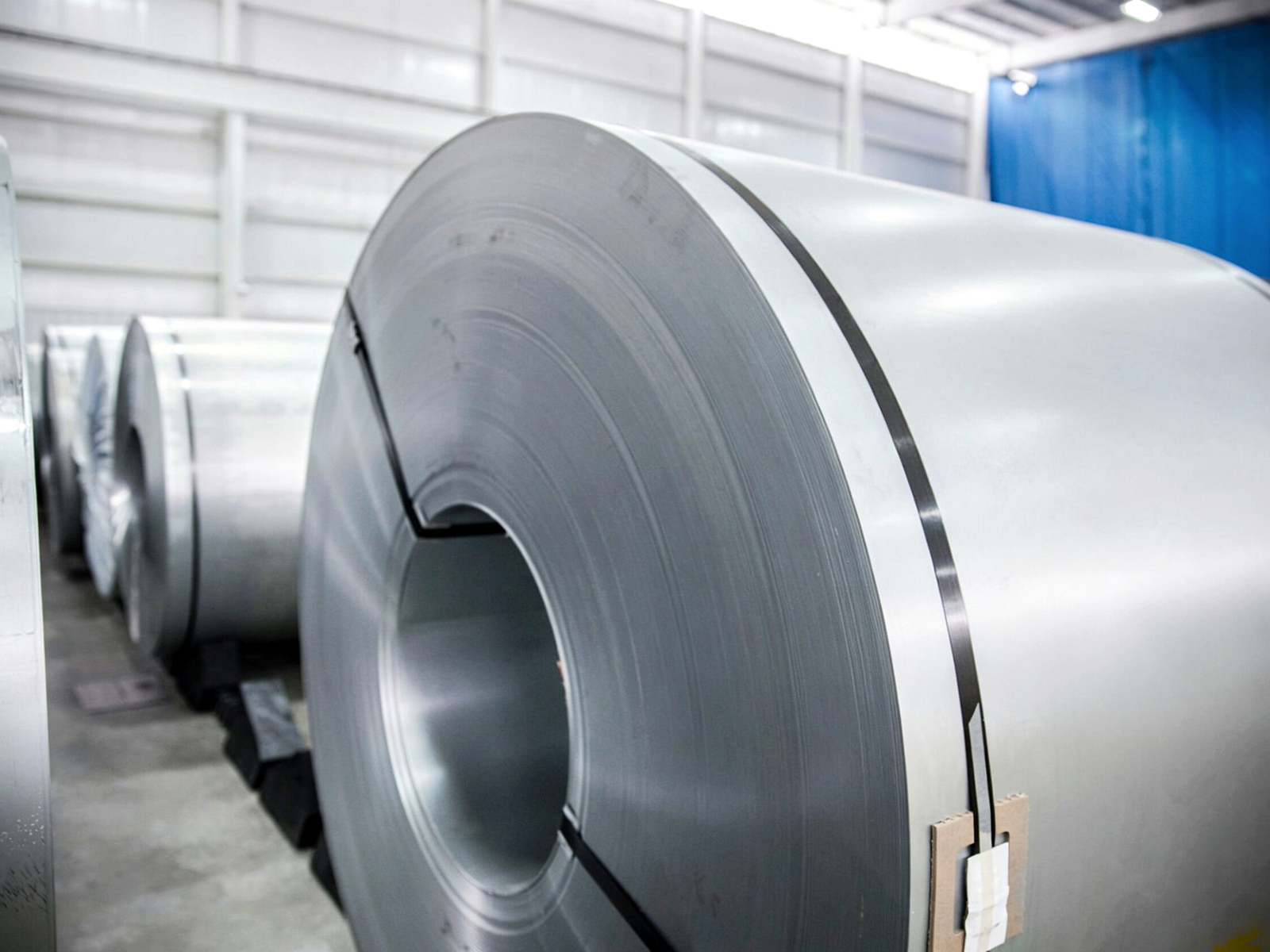
UNS R60702 foil (industrial pure zirconium foil) has become a key material in the fields of chemical industry, electrolysis and high-end equipment due to its excellent strong acid corrosion resistance and long-term stability. The standard thickness range is 0.02-1.0mm, and the width can reach 680mm, meeting the application needs of sealing gaskets, electrode structures, and anti-corrosion linings. Customized specifications can be as thin as 0.005mm, suitable for precision electrolysis and vacuum equipment. This guide will provide an in-depth analysis of the thickness grading system, performance characteristics, customized processing technology paths and application scenario matching strategies of UNS R60702 foil, helping engineers and procurement decision-makers to quickly lock in the optimal specifications, reduce the risk of equipment corrosion, and extend the service life of the system.
1. What Are the UNS R60702 Foil Standard Thickness System and Performance Classification?
(1) How Is Core Application Scenarios for Thin Gauge Segments (0.02–0.10mm)?
Zirconium foil in this thickness range mainly serves applications that are weight-sensitive, space-limited and require extremely high sealing properties. Soft sealing gaskets in chemical reactors, electrolytic cell diaphragm support layers, and ultra-thin shielding parts of vacuum systems all fall into this category. The material still maintains an elongation of ≥20% at this thickness, ensuring no cracking during stamping. The vacuum annealing process eliminates cold rolling stress, refines the grain size to 5-10 um, and has a surface roughness Ra≤0.4 um, meeting high cleanliness requirements.
(2) What Are the Balanced Performance Advantages of Mid-range Segment (0.10–0.50mm)?
Medium-thickness zirconium foil combines strength and flexibility and is widely used in corrosion-resistant structural parts and electrochemical electrodes. Annealed materials with tensile strength ≤380MPa are suitable for complex bending and welding operations, while cold-worked (hard) materials can be increased to over 420MPa for load-bearing components. The 20-roller finishing technology controls the thickness tolerance within +/-0.002mm. With ultrasonic cleaning and alkali cleaning processes, the surface dyne is stabilized at 40, ensuring the reliability of bonding with resin, rubber and other materials.
(3) What Are the Structural Strengthening Properties of Thick Gauge Sections (0.50–1.0mm)?
Thicker UNS R60702 foil is commonly used in anti-corrosion linings, flange gaskets and electrode substrates that need to withstand mechanical stress. The density of 6.51g/cm³ brings good dimensional stability and is not easy to deform in high temperature (≤300℃) strong acid environment. This specification segment can directly punch complex shapes without secondary annealing. The fibrous structure after multi-pass rolling enhances the resistance to pitting and crevice corrosion, and the corrosion rate is <0.1mm/year in an environment where the temperature is ≤300℃, the hydrochloric acid concentration is ≤37%, and the sulfuric acid concentration is ≤70%.
2. What Are the Technical Breakthroughs and Manufacturing Difficulties in Customizing Ultra-thin Specifications (≤0.02mm)?
(1) What Should You Know About Precision Rolling Control of Extremely Thin Foils (0.005–0.020mm)?
Producing zirconium foil with a thickness less than 0.02mm requires breaking through three major technical bottlenecks: oxidation sensitivity control, ultimate thickness uniformity and edge cracking suppression. The micro-tension rolling mode of a 20-high rolling mill with a work roll length of 750mm is used, and the single-pass reduction rate is controlled at 5-8%. It is combined with intermediate inert atmosphere annealing (argon purity ≥99.999%) to avoid embrittlement caused by excessive oxygen content. The real-time thickness measurement system (accuracy +/-0.001mm) and adaptive rolling force adjustment ensure that the full width thickness fluctuation is <3%.
(2) What Are the Surface Quality Control: Oxidation Color Difference and Pinhole Defect Prevention?
The surface area ratio of ultra-thin foils increases, and any trace of oxidation or impurity adhesion will cause performance degradation. A continuous alkaline cleaning line (pH 12-13, temperature 60-80℃) removes surface oil and ultrasonic cleaning (40kHz frequency) strips away micron-sized particles. The heating rate of the vacuum annealing furnace (vacuum degree <5×10⁻⁴Pa) is controlled within 5℃/min to avoid local overheating and the formation of oxidation spots. Immediately after coming out of the oven, it is cooled by inert gas. The surface color is silvery white and uniform, with no yellow or gray spots.
(3) What Should You Know About Plate Shape Stability Challenges for Ultra-wide Customization (≥350mm, Usually Defined As Ultra-wide in the Industry)?
Wide and ultra-thin UNS R60702 foil is prone to plate defects such as wavy edges and middle bulges, which affects subsequent precision blanking and stacking assembly. Adopting CVC (continuously variable crown) roll profile control technology, the crown of the work roll is dynamically adjusted to compensate for uneven material extension. The high-precision slitting line is equipped with a laser edge detection system, with a cutting accuracy of +/-0.05mm and a burr height of <5um. The tension control system (accuracy +/-0.5N) prevents the roll from being creased or crushed during the rewinding process.
3. What Are the In-depth Analysis of Material Performance Parameters and Selection Logic?
(1) What Are the the Decisive Influence of Chemical Composition Purity on Corrosion Resistance?
| element | Content standard | Performance impact |
| Zr+Hf | ≥99.2% | Main component, determines basic corrosion resistance |
| Hf | ≤4.5% | To improve high temperature stability, it is actually necessary to reduce the Hf content to reduce the neutron absorption cross section. |
| Fe+Cr | ≤0.20% | Too high will form intermetallic compounds and reduce ductility |
| O | ≤0.16% | Affects plasticity and causes embrittlement if exceeded. |
| N | ≤0.025% | Appropriate amount can increase strength but reduce toughness |
| C | ≤0.05% | Formation of carbide precipitation phase, affecting corrosion resistance |
Oxygen content is the focus of control: the annealed state requires ≤0.12% to ensure elongation, while some load-bearing applications can accept 0.16% to improve strength. When the total iron and chromium content is <0.15%, the corrosion rate of the material in boiling hydrochloric acid can be reduced to <0.05mm/year.
(2) What Are the Mechanical Property Matching: Selection Criteria for Annealed and Cold-worked Conditions?
| Availability status | tensile strength | Elongation | Typical applications |
| Annealed state (M) | ≥380MPa | ≥20% | Gaskets, flexible liners, complex formed parts |
| Semi-hard state (H1) | 380-420MPa | 12-18% | Electrode substrate, structural reinforcement |
| Hard state (H2) | ≥420MPa | 8-12% | High-strength spring sheets and load-bearing washers |
For sealing applications, the annealed state is preferred, and high ductility is used to achieve bonding of microscopic uneven surfaces; the electrode structure needs to be semi-hard to take into account conductivity and stiffness; the hard state is selected for stressed parts, but the risk of reduced welding performance needs to be assessed.
(3) What Should You Know About Implicit Requirements of Physical Characteristics on System Integration?
The density of 6.51g/cm³ is between titanium (4.51g/cm³) and nickel (8.9g/cm³), which is better than nickel-based materials in aerospace lightweight design. The non-magnetic properties (magnetic susceptibility <1×10⁻⁶) make it the first choice for shielding layers of precision instruments to avoid magnetic field interference. The melting point of 1852℃ ensures that it will not soften during long-term service in a medium-to-high temperature environment of 300-400℃. The thermal expansion coefficient of 5.8×10⁻⁶/K is close to that of borosilicate glass, and is suitable for welding of dissimilar materials.
4. How Is Specification Matching Strategy for Key Application Scenarios?
(1) What Should You Know About Chemical Anti-corrosion System: Gasket and Lining Thickness Selection?
For normal-temperature storage tanks with hydrochloric acid concentration <20%, it is recommended to use 0.2-0.3mm foil to make soft gaskets and use a polytetrafluoroethylene filling layer to achieve zero leakage. Concentration towers with a sulfuric acid concentration of 40-70% and a temperature of 80-120℃ require a 0.5-0.8mm thick lining and a welding overlap of ≥15mm. In mixed acid environments (such as nitric acid + hydrofluoric acid), the risk of hydrogen embrittlement needs to be assessed, and batches with low hydrogen content (<0.003%) and thickness ≥0.3mm should be selected to enhance the safety margin.
(2) What Are the Electrolysis and Electroplating Industry: Balance Between Conductivity and Durability of Electrode Foils?
The chlor-alkali electrolyzer anode separator support layer uses 0.05-0.1mm ultra-thin foil to reduce ohmic voltage drop while ensuring mechanical strength. The electrode substrate for the chromium plating tank needs to be 0.3-0.5mm thick and the surface roughness Ra<0.3um to reduce bubble retention. The recommended semi-hard specification for hydrometallurgical electrolytic baths is 0.4mm, which takes into account conductivity (resistivity 44μΩ·cm) and bending stiffness. The service life can be more than three times that of ordinary titanium electrodes.
(3) What Should You Know About New Energy Batteries: Reliable Design of Current Collectors and Seals?
| Application site | Recommended thickness | key performance requirements |
| Flow battery current collector | 0.1-0.2mm | Resistant to sulfuric acid corrosion, stable conductivity |
| Sodium sulfur battery sealing ring | 0.3-0.5mm | High temperature (300℃) sealing, resistant to sulfur vapors |
| Fuel cell bipolar plate lining | 0.05-0.1mm | Lightweight and resistant to acid condensation |
Although copper foil is mostly used as the negative electrode current collector of lithium batteries, in high-voltage positive electrodes (>4.5V) or solid electrolyte systems, 0.02-0.05mm zirconium foil can avoid copper dissolution contamination and improve cycle life.
(4) What Should You Know About Vacuum Electronics and Precision Instruments: Dimensional Accuracy of Non-Magnetic Shielding?
The vacuum chamber shielding of electron beam welding equipment requires 0.02-0.05mm ultra-thin UNS R60702 foil, with a thickness tolerance of +/-0.001mm to ensure a uniform magnetic shielding effect. The mass spectrometer ion channel bushing uses 0.1mm annealed material, and the inner hole accuracy is +/-0.01mm through precision blanking. The anti-pollution coating of the scanning electron microscope sample stage is made of 0.03mm foil, and the surface cleanliness reaches Class 10 to avoid secondary electron interference.
5. What Should You Know About Customized Manufacturing Full-process Quality Control System?
(1) What Are the Raw Material Smelting and Composition Fine-tuning Technology?
The zirconium sponge is remelted three times in a vacuum consumable arc furnace (VAR) to remove gas impurities to the ppm level. Homogenization annealing of the ingot (1050℃ for 48 hours) eliminates dendrite segregation and ensures uniform subsequent rolling structure. For low neutron absorption applications in the nuclear industry, the hafnium content is reduced to <2% through precise batching, meeting the special requirements of ASTM B551 Grade R60702.
(2) What Should You Know About Process Path Optimization of Multi-pass Cold Rolling?
Hot rolled plate with a thickness of 6mm→cold rolled to 1.5mm→intermediate annealing (650℃×2h)→finish rolling to 0.2mm→finished product annealing. The reduction rate of each pass is dynamically adjusted according to the material hardening curve: 20-30% in the early stage for rapid thinning, and later reduced to 8-12% to ensure surface quality. The roll material is made of high-speed steel or tungsten carbide coating, with a roughness of Ra0.05um, and is replaced/reground every 50 tons of rolling to maintain dimensional accuracy.
(3) What Should You Know About Temperature-time-atmosphere Collaborative Control of Annealing Process?
The continuous annealing furnace is divided into three zones: preheating zone (moisture removal at 400-500℃), insulation zone (homogenization at 650-750℃), and cooling zone (quick cooling with inert gas). The oxygen partial pressure in the furnace is <1×10⁻⁵Pa, and the dew point is <-60℃ to prevent the formation of oxide films. The holding time is adjusted according to the thickness: 0.05mm is kept for 30 minutes, 0.5mm is extended to 90 minutes to ensure complete recrystallization. After coming out of the furnace, hardness testing (HV<150) and grain size rating (ASTM grade 8-10) are performed to verify the annealing effect.
(4) What Should You Know About Precision Slitting and Edge Quality Enhancement Measures?
The high-speed slitting line (speed ≤120m/min) is equipped with air-cushion tension control to avoid wrinkling of thin materials. The material of the disc knife is powder metallurgy high-speed steel, the arc radius of the cutting edge is ≤0.02mm, and the side gap adjustment accuracy is 0.005mm. After slitting, the burr height is detected (laser profilometer, accuracy 1 um), and products exceeding the standard are processed twice by a polishing roller. The inner diameter accuracy of the coil is +/-0.2mm, and the end face flatness is <0.5mm/m, which meets the requirements of automated loading equipment.
6. What Should You Know About Summarize?
The specification selection of UNS R60702 foil requires a comprehensive evaluation of corrosive medium characteristics, mechanical load requirements and system integration constraints. Standard thickness 0.02-1.0mm covers 90% of conventional applications, and ultra-thin customized specifications break through the extreme performance boundaries. Precision rolling, vacuum annealing and full-process cleanliness control form the cornerstone of high-quality manufacturing. Correctly matching the thickness and supply status can extend the corrosion failure period of the equipment by 5-10 times, reduce maintenance costs by more than 60%, and provide reliable material guarantee for long-term stable operation in strong acid environments.
FAQ
Q1: What is the performance difference between UNS R60702 foil and titanium foil in hydrochloric acid environment?
The corrosion rate of zirconium foil in 37% hydrochloric acid at room temperature is <0.05mm/year, while the titanium foil corrodes and perforates rapidly at a concentration of 10%. The passivation film of zirconium is more stable in strong reducing acids and has a service life of more than 20 times that of titanium. It is especially suitable for high-concentration chloride conditions.
Q2: What is the lead time and minimum order quantity for customizing ultra-thin specifications below 0.01mm?
Ultra-thin foils with a thickness of <0.01mm require special production arrangements, and the lead time is usually 12-16 weeks. The minimum order quantity depends on the width: when the width is <200mm, the minimum order is 50kg, when the width is ≥500mm, more than 100kg is required to share the cost of tooling and debugging. 5-10 pieces of free samples are available for preliminary verification.
Q3: How to verify whether UNS R60702 foil meets the low hafnium content requirements of the nuclear industry?
An ICP-MS (Inductively Coupled Plasma Mass Spectrometry) full element analysis report is required, with the hafnium content accurate to two decimal places. Nuclear grade applications require Hf<2.0% and provide batch number traceability documents. It is recommended that suppliers be required to issue material certificates and neutron absorption cross-section calculation data from third-party testing agencies (such as SGS, Intertek).
7. What Should You Know About Call to Action?
Baoji Titanium Nickel Zirconium Materials Processing Co., Ltd. is a professional manufacturer and supplier of UNS R60702 foils with an annual production capacity of 3, 000 tons and provides full-specification customization services of 0.005-1.0mm. Our 750mm 20-roll finishing line and automated quality inspection system ensure that each roll of product meets ASTM B551 standards. Contact sales@titaniumvalleys. com now for technical selection support and sample testing services.
For a broader view of available grades, supply forms, and related specifications, explore our Zirconium Foil category.
References
- Chen Guang, Wang Haifeng. Research on cold rolling process and microstructure properties of industrial pure zirconium foil [J]. Rare Metal Materials and Engineering, 2021, 50(8): 2856-2863.
- Wang Dezhi, Liu Yong, Huang Boyun. Progress in processing technology of zirconium and zirconium alloys [J]. Rare Metals, 2005, 29(4): 502-506.
- Zhang Xiaoming, Zhang Jun, Liu Wei, et al. Research on the preparation process and properties of ultra-thin zirconium foil [J]. Chinese Journal of Nonferrous Metals, 2016, 26(10): 2130-2137.
- Yang Jun, Sun Zhiping, Liu Xuefeng. Application and corrosion protection of zirconium in chemical equipment [J]. Corrosion Science and Protection Technology, 2018, 30(2): 185-190.