
What Is the Difference Between GR4 Titanium Wire and Other Grades of Titanium Wire?
- Gr4 titanium wire
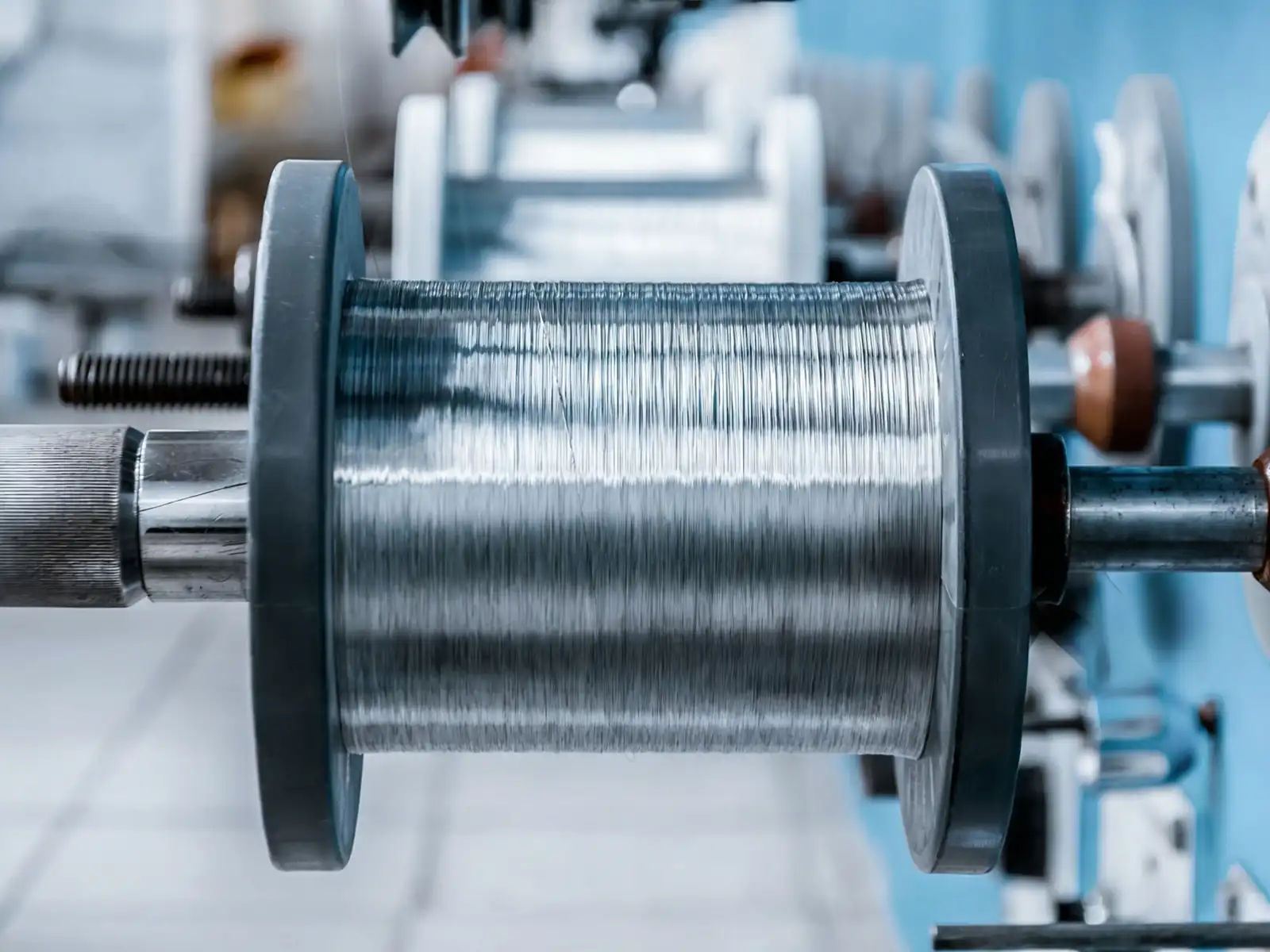
Among industrial titanium wire materials, GR4 titanium wire represents the peak strength of the commercial pure titanium series. Compared with low-grade pure titanium wires such as GR1 and GR2, the tensile strength of GR4 titanium wire reaches ≥ 550MPa and the yield strength is ≥ 485MPa, which is significantly higher than other pure titanium grades by 30%-50%. This gives it a unique advantage in applications that need to withstand high loads. At the same time, GR4 retains the excellent corrosion resistance and biocompatibility of pure titanium, and the process complexity is lower than that of titanium alloys. This combination of high strength and pure titanium properties makes GR4 titanium wire widely used in the fields of welding wires, chemical anti-corrosion and precision machinery, filling the market gap between the insufficient strength of ordinary pure titanium and the complexity of titanium alloy processing.
1. What Are the Differences in Material Essence and Composition Differences of GR4 Titanium Wire?
(1) What Should You Know About “Strengthening Responsibility” in Commercial Pure Titanium?
GR4 titanium wire belongs to α single-phase commercial pure titanium, and its strength is mainly improved through interstitial element strengthening. The oxygen content is controlled below 0.40% (while GR1 is only 0.18%), and the iron content can reach 0.50%. These interstitial atoms produce a significant strengthening effect in the titanium lattice. Compared with GR1 and GR2, GR4 achieves a jump in mechanical properties while maintaining the basic characteristics of pure titanium by precisely controlling the content of interstitial elements.
(2) What Are the Differences in Alloy Element Comparison Table?
element | GR1 titanium wire | GR2 titanium wire | GR4 titanium wire | TC4 titanium alloy wire |
Oxygen O | ≤ 0.18% | ≤ 0.25% | ≤ 0.40% | ≤ 0.20% |
Fe | ≤ 0.20% | ≤ 0.30% | ≤ 0.50% | ≤ 0.30% |
TitaniumTi | ≥ 99.5% | ≥ 99.2% | ≥ 99.0% | about 90% |
Aluminum Al | – | – | – | 5.5-6.8% |
Vanadium V | – | – | – | 3.5-4.5% |
Note: The oxygen content standard of TC4 is generally ≤ 0.20%, while the oxygen content control range of pure titanium is wider, and the two have different impact mechanisms on performance.
(3) What Should You Know About Non-Heat Treatment Strengthening Mechanisms?
Unlike β-type titanium alloy wires such as TC4, the strength of GR4 titanium wire does not depend on complex heat treatment processes. Its α-phase structure can reach a tensile strength of more than 550MPa in the annealed state. This means users can apply it directly without complex post-processing. This “natural strength” characteristic simplifies the production process and reduces the difficulty of quality control, and is especially suitable for welding wire applications in large-volume continuous production.
2. What Are the Differences in Comparison of Differences in Mechanical Properties and Processing Characteristics?
(1) What Should You Know About the Balance Between Strength and Ductility?
Tensile strength comparison data
Trademark | tensile strength | Yield strength | Elongation | hardness |
GR1 titanium wire | ≥ 240MPa | ≥ 170MPa | ≥ 24% | 120-150HB |
GR2 titanium wire | ≥ 345MPa | ≥ 275MPa | ≥ 20% | 150-200HB |
GR4 titanium wire | ≥ 550MPa | ≥ 485MPa | ≥ 15% | 200-240HB |
TC4 titanium alloy wire | ≥ 895MPa | ≥ 828MPa | ≥ 10% | 320-370HB |
GR4 titanium wire still maintains an elongation of 15% at a tensile strength of 550MPa. This value is consistent with industry standards, making it able to meet the needs of high-load structural parts without causing cold drawing difficulties or welding cracks due to low plasticity like TC4.
(2) What Should You Know About Cold Work Hardening Properties?
In the multi-pass cold drawing process, the work hardening rate of GR4 titanium wire is significantly higher than that of GR1/GR2. When the cold drawing deformation reaches 60%, the tensile strength of GR4 can exceed 650MPa, while GR1 only reaches about 300MPa. High work hardening rates require more precise pass design and intermediate annealing control, otherwise embrittlement will easily result. Titanium Valley uses a ball mold cold drawing process, combined with segmented annealing and stress relief treatment, to control the diameter tolerance to ± 0.01mm, effectively avoiding the common embrittlement problem of high-strength wire.
(3) Why Is Fatigue Performance Advantages Important?
Under cyclic stress environment, the fatigue strength of GR4 titanium wire is about 50%-55% of the tensile strength, while that of ordinary GR2 is only about 40%. This means that in components such as springs and fasteners that are subject to repeated loads, the service life of GR4 can be extended by more than 50%. Its close-packed hexagonal alpha phase structure inhibits dislocation slip and improves resistance to fatigue crack growth.
3. What Are the Differences in Differences in Welding Performance and Application Suitability?
(1) What Should You Know About the Absolute Protagonist in the Field of Welding Wire?
GR4 titanium wire accounts for more than 60% of the global titanium welding wire market, which is due to its unique combination of welding performance. Compared with low-strength GR1/GR2, GR4 welded joints have higher strength and can match the requirements of the base material; compared with TC4 alloy wire, GR4 does not produce a martensitic brittle phase during welding, has a porosity lower than 0.5%, and the joint impact toughness retention rate reaches more than 85%.
(2) What Should You Know About Melt Pool Stability Analysis?
During the TIG/MIG welding process, the molten pool of GR4 has moderate fluidity. It is not too thin like GR1 to cause collapse, nor does it require strict control of the interlayer temperature like TC4. The precise control of the oxygen content of 0.40% forms a stable oxide film protective layer, inhibiting the absorption of impurities such as hydrogen and nitrogen. The φ1.0-3.0mm welding wire produced by Titanium Valley adopts a vacuum annealing process, and the surface oxide layer thickness is controlled at 50-80nm to ensure stable arc ignition and a spatter rate of less than 5%.
(3) What Should You Know About Dissimilar Material Welding Capabilities?
GR4 titanium wire can be used to weld GR1 and GR2 base materials, as well as α-β alloys such as TA9 and TA10, and even achieve titanium-steel dissimilar metal transition layer welding. This broad adaptability results from its moderate strength level and good thermal expansion matching. In the repair of chemical equipment, the use of GR4 welding wire can reduce the risk of cracks by 90%, and the welding efficiency is 40% higher than that of titanium alloy wire.
4. What Are the Differences in Differences and Synergistic Effects in Corrosion Resistance?
(1) What Are the Differences in Passivation Film Stability Comparison?
All pure titanium grades rely on the surface TiO2 passivation film to achieve corrosion resistance, but GR4 has a higher oxygen content, which makes the oxide film regenerate faster. In the acid-base environment of pH 2-12, the corrosion resistance of GR4 is equivalent to that of GR2. However, in the salt spray test, the pitting depth on the surface of GR4 is only 70% of that of GR2. This is related to its denser α-phase grain structure and reduced susceptibility to grain boundary corrosion.
(2) What Should You Know About Stress Corrosion Synergistic Resistance?
The unique value of GR4 titanium wire lies in its combination of high strength and corrosion resistance. In marine engineering, ordinary GR2 wire is corrosion-resistant but insufficient in strength, while high-strength steel wire is strong but easy to rust. GR4 solves two problems at the same time: in a high-stress environment containing chloride ions, its stress corrosion cracking threshold can reach about 80% of the yield strength (the specific value is related to the test conditions, it is recommended to refer to relevant standards for verification), while ordinary stainless steel is only 30%-40%. This makes it an ideal material for seawater desalination and deep-sea culture cages.
(3) What Should You Know About High Temperature Oxidation Resistance?
In an environment below 350℃, the oxidation weight gain rate of GR4 is similar to that of GR1/GR2 (about 0.1mg/cm²·h), which is significantly better than that of titanium alloy (above 0.5mg/cm²·h). This is because the oxide film of pure titanium is more uniform and dense, and alloying elements can cause selective oxidation. In the welding repair of chemical heat exchangers, the high-temperature oxidation resistance of the GR4 welding wire weld is consistent with that of the base material, avoiding weak links.
5. Why Is Cost-efficiency and Supply Chain Stability Advantages Important?
(1) What Should You Know About Life Cycle Economics?
Although the unit price of GR4 titanium wire is 20%-30% higher than that of GR2, its high strength allows the wire diameter to be reduced. When bearing the same load, if the strength difference allows for direct equivalent replacement, the φ2.0mm GR4 wire can replace the φ3.0mm GR2 wire, reducing the material consumption by approximately 55% (calculated based on cross-sectional area) and reducing the overall cost by 40%. In welding applications, the low porosity and high joint strength of GR4 wire reduce rework rates and save labor costs by up to 50%.
(2) What Are the Differences in Production Stability Comparison?
Comparative item | GR1/GR2 titanium wire | GR4 titanium wire | TC4 titanium alloy wire |
Difficulty in ingredient control | Low | middle | high |
cold draw passes | 8-12 channels | 12-18 lanes | 20-30 channels |
Intermediate annealing times | 2-3 times | 3-5 times | 5-8 times |
Surface quality control | easy | middle | Disaster |
Batch consistency | excellent | good | Need to be strictly controlled |
Titanium Valley’s Danieli continuous rolling production line has achieved an annual production capacity of 10, 000 tons of GR4 titanium wire, with an automation rate of more than 90%. Real-time monitoring of ingredients through ICP spectroscopy, eddy current flaw detection to detect internal defects, and laser diameter measurement ensure dimensional accuracy. The batch consistency exceeds the industry standard by 15%, ensuring the stability of large-volume supply.
(3) What Should You Know About Inventory Management Optimization?
Due to the “universal adaptability” of GR4 titanium wire, buyers can use one grade to cover multiple application scenarios and simplify inventory management. A chemical company uses GR4 to replace the original two inventories of GR2 (daily maintenance) and TC4 (high-strength components), reducing warehousing costs by 60% and shortening emergency order response time from 3 days to 8 hours. This “one material for multiple uses” strategy is of great value at a time when supply chain uncertainty is increasing.
6. What Is the Conclusion?
The uniqueness of GR4 titanium wire is that it occupies the top mechanical performance among commercial pure titanium series, while retaining the process simplicity and corrosion resistance of pure titanium, filling the performance gap between ordinary pure titanium and titanium alloys. Its tensile strength of 550MPa meets high load requirements, its 15% elongation ensures processability, and its excellent welding performance makes it a mainstream welding wire material in the world. In the fields of chemical anti-corrosion, marine engineering, precision machinery and other fields, GR4 achieves the optimal balance of strength, corrosion resistance and economy, and the whole life cycle cost is more than 40% lower than alternative materials.
FAQ
Q1: Can GR4 titanium wire directly replace stainless steel wire?
It can be substituted, but the specific working conditions need to be evaluated. In highly corrosive environments, GR4’s corrosion resistance far exceeds that of 316 stainless steel and is non-magnetic; in high-load scenarios, its 550MPa strength is close to that of 304 stainless steel. However, the cost of GR4 is relatively high, so it is recommended to be used first in harsh working conditions where corrosion and stress coexist, as it can extend the service life by 3-5 times.
Q2: Why is GR4 titanium wire more suitable for welding applications than TC4 titanium alloy wire?
The α single-phase structure of GR4 does not produce brittle martensite during welding, and the porosity is less than 0.5%, while TC4 requires strict control of the interlayer temperature to prevent β phase transformation. The price of GR4 welding wire is 30% lower than that of TC4, the welding efficiency is 40% higher, and the joint toughness is better. Unless the base material is high-strength titanium alloy, GR4 is a more economical and reliable choice.
Q3: How to verify whether the purchased GR4 titanium wire meets the standards?
Suppliers should be required to provide a complete material list (including ICP component analysis) and mechanical performance report, focusing on checking the tensile strength ≥ 550MPa and oxygen content ≤ 0.40%. The uniformity of α phase structure is confirmed through hardness test (200-240HB) and metallographic examination. Formal manufacturers such as Titanium Valley can provide ASTM B863 certification and third-party testing reports to ensure material authenticity and traceability.
How Should Contact Titanium Valley – Your Professional GR4 Titanium Wire Supplier?
Baoji Titanium Nickel and Zirconium Materials Processing Co., Ltd. has the world’s leading Danieli continuous rolling production line, with an annual production capacity exceeding 10, 000 tons, and can provide customized services for φ0.1-6.5mm full specification GR4 titanium wire. As a high-end titanium wire manufacturer, we provide 3.1 quality certificates, non-destructive testing reports and full-process technical support. Contact sales@titaniumvalleys.com now for professional selection advice.
References
- Li Minghui, Wang Jianguo. Research on the relationship between mechanical properties and interstitial elements of commercial pure titanium [J]. Progress in Titanium Industry, 2021, 38(4): 12-18.
- Peters M, Kumpfert J. Titanium and titanium alloys: Fundamentals and applications[M]. Beijing: Science Press, 2021: 145-167.
- Zhang Zhiqiang, Liu Haitao. Application practice of GR4 titanium welding wire in chemical equipment welding[J]. Welding Technology, 2022, 51(6): 78-83.
- Zhang Xiaoming, Zhao Yongqing. Titanium Alloy Handbook[M]. Beijing: Chemical Industry Press, 2020: 89-104.