
What Should You Know About ASTM B550 Zirconium Wire, a Key Material for Nuclear Reactor Fuel Assemblies?
- ASTM B550 Zirconium Wire
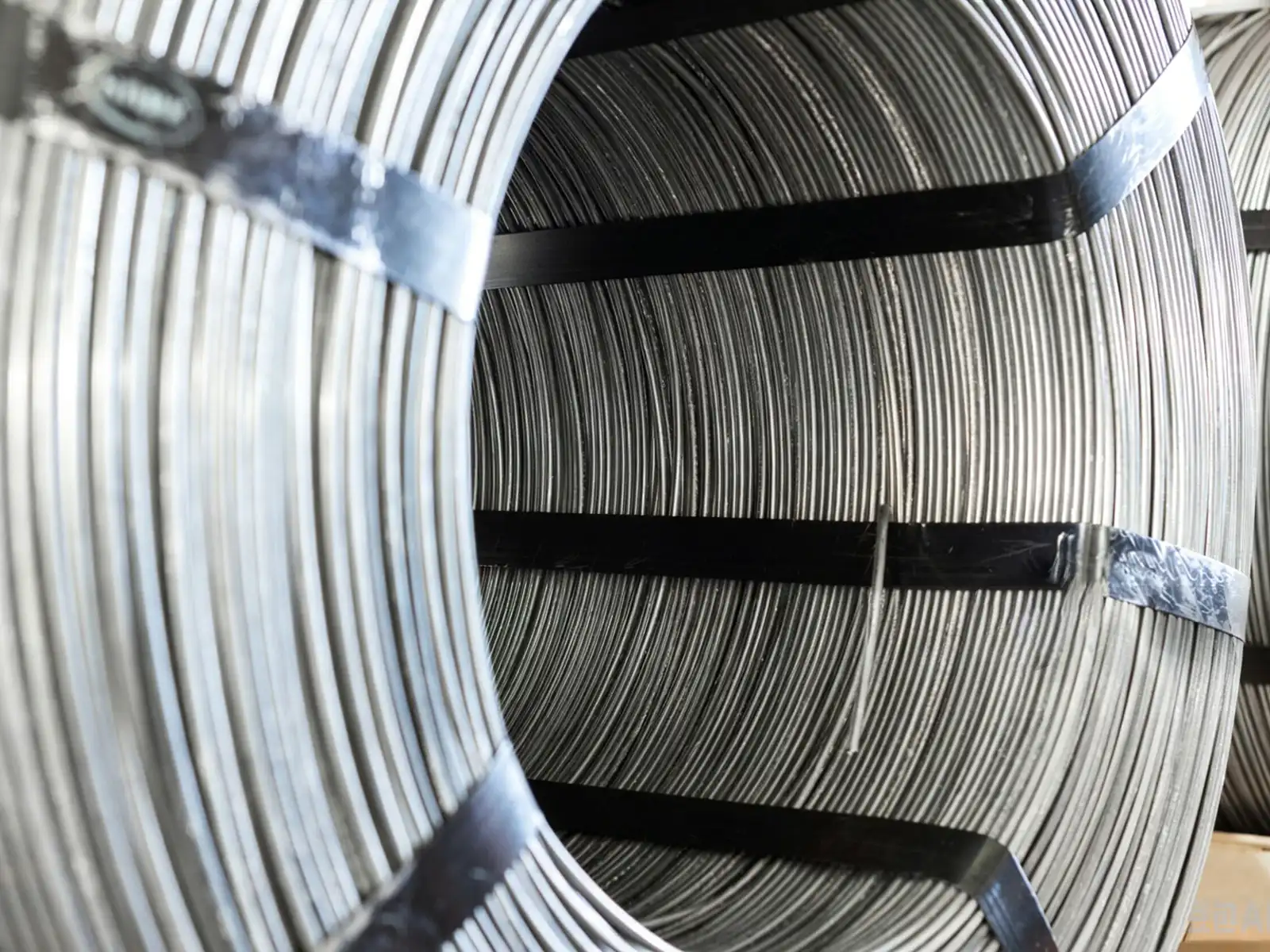
When we talk about material selection for nuclear reactors, ASTM B550 Zirconium Wire plays an irreplaceable role. The reason why this special metal material has become a core component of the nuclear industry is due to its unique neutron transparency, excellent corrosion resistance, and long-term stability in high-temperature and high-pressure water environments. In pressurized water reactors, the fuel cladding, guide tubes and spacer grids made of zirconium wire and its alloys are directly related to the safe operation and fuel utilization efficiency of the reactor. Compared with stainless steel, which absorbs a large amount of neutrons, and titanium alloys, which are prone to hydrogen embrittlement in high-temperature water, zirconium wire that meets the ASTM B550 standard has become the best choice for nuclear reactor materials due to its low neutron absorption cross-section and oxide film characteristics that can continuously regenerate in high-temperature water and inhibit further corrosion.
1. Why Must Zirconium Wire Be Chosen for Nuclear Reactors?
(1) What Should You Know About Neutron Economy Determines Reactor Efficiency?
The core task of a nuclear reactor is to maintain a controllable chain reaction, and neutrons are the “currency” of the chain reaction. The thermal neutron absorption cross-section of zirconium is only 0.18 bn, which is much lower than that of stainless steel, which is about 3.1 rn. This means that structural parts made of zirconium alloy wire hardly “waste” precious neutrons, allowing more neutrons to participate in fission reactions. In commercial pressurized water reactors, the total amount of zirconium alloy cladding tubes, guide tubes and spaced grids in the fuel assembly can reach several tons. If other metals are used instead, the reactivity will be significantly reduced and the fuel utilization rate will be reduced by 15-25%. Grades such as R60702, R60704 and R60705 covered by the ASTM B550 standard all maintain low hafnium content (≤ 4.5%). It is worth noting that hafnium is the “twin element” of zirconium, with a neutron absorption cross-section as high as 105 nm. Therefore, strict control of hafnium content is the key to ensuring neutron economy.
(2) What Should You Know About Long-term Corrosion Resistance in High Temperature Water Environments?
The operating conditions of pressurized water reactors are extremely harsh: the temperature of the primary loop cooling water can reach 320-350℃, the pressure is as high as 15.5 MPa, and the water chemical environment contains dissolved hydrogen, boric acid and lithium salts. Ordinary metals will corrode rapidly under these conditions, while a dense ZrO₂ self-generated oxide film can spontaneously form on the surface of the zirconium wire. This oxide film is only a few microns thick, but it can continue to regenerate in high-temperature water and inhibit further corrosion. Even if it is partially damaged, it can heal quickly in high-temperature water, effectively isolating corrosive media. After decades of in-reactor testing, the thickness of the corrosion layer of the zirconium alloy cladding is controlled within 100 microns, which is far lower than the safety limit of ≤ 100 microns usually required by nuclear power plants. R60705 (Zr-2.5Nb) grade further improves its resistance to uniform corrosion and hydrogen-induced cracking by adding 2.0-3.0% niobium element, making it the mainstream choice for third-generation nuclear power plants.
(3) What Should You Know About Balance of Mechanical Strength and Irradiation Stability?
The fuel assembly needs to serve for 3-5 years in the reactor, during which the cumulative dose of neutron irradiation can reach 10²³ n/cm². Zirconium wire and its products must maintain sufficient mechanical strength and dimensional stability in the irradiation environment. Although pure zirconium (R60702) has excellent corrosion resistance, its strength is low and it is difficult to meet the structural requirements of long-life and high-fuel consumption fuel assemblies. R60705 zirconium-niobium alloy is strengthened by atomic dispersion strengthening of niobium and β-Nb precipitation phase, and its yield strength can reach more than 380 MPa while maintaining good ductility. More importantly, zirconium alloys have low irradiation growth (i.e., neutron irradiation causes material volume and anisotropic size changes) and irradiation creep (i.e., irradiation accelerates the long-term deformation of the material under stress) rate, which can ensure the control of the gap between the fuel cladding and the pellets and prevent the leakage of radioactive materials caused by cladding damage.
Material type | Thermal Neutron Absorption Cross Section (Target) | Corrosion rate in water at 320℃ | Radiation resistance |
Zirconium alloy (R60705) | 0.18 | Excellent (<30 mg/dm²·year) | Good (can effectively control irradiation growth and creep) |
Stainless steel | 3.1 | medium | Poor (easy to become brittle) |
Titanium alloy | 6.1 | good | Poor (easy to absorb hydrogen) |
2. What Should You Know About Core Technical Parameters of ASTM B550 Standard Zirconium Wire?
(1) What Should You Know About Stringent Requirements for Chemical Composition Control?
The ASTM B550 standard sets precise limit intervals for the chemical composition of ASTM B550 zirconium wire. Taking R60705 grade as an example, the niobium content is controlled at 2.0-3.0%. This narrow range not only ensures strength improvement, but also avoids the deterioration of processing performance caused by excessive niobium. The upper limit of oxygen content of 0.18% is a key indicator. Oxygen exists in dissolved form in zirconium. An appropriate amount of oxygen can improve strength, but too high an amount will cause increased brittleness and decreased corrosion resistance. The hydrogen content must be strictly controlled below 0.005%, because the solubility of hydrogen in zirconium is extremely low. If it exceeds the standard, brittle hydride (ZrH₂) will precipitate, resulting in delayed hydrogen cracking (DHC). The total amount of impurity elements such as iron, chromium, and nickel must be strictly limited. These elements will form second phase particles under irradiation and accelerate corrosion and radiation growth.
(2) What Should You Know About Microstructure and Heat Treatment Status?
The microstructure of zirconium wire directly affects its service behavior in the pile. Vacuum consumable melting (VAR) is a standard process for preparing high-quality zirconium ingots, which can effectively remove inclusions and gases through multiple remeltings. The multi-pass deformation process of forging-hot rolling-cold drawing refines the grains to 10-30 microns and optimizes the texture control. Annealed zirconium wire has an α phase (close-packed hexagonal structure), which not only maintains good plasticity but also has sufficient strength. Different heat treatment states are available for different application scenarios: the soft state (annealed state) is suitable for springs, circlips and other elastic components that require cold processing; the hard state (cold working state) is directly used for high-strength fasteners and guide tubes.
(3) What Should You Know About Geometric Accuracy and Surface Quality Requirements?
Nuclear grade zirconium wire has extremely strict requirements on dimensional accuracy. The zirconium wire diameter tolerance of the fixed-distance grid for fuel assemblies is usually ± 0.01 mm, and defects such as cracks, folds, pitting, etc. are not allowed on the surface. Pickling surface treatment can remove the oxide scale and α pollution layer formed by thermal processing, revealing the metallic luster, and the surface roughness Ra≤ 0.8um. For zirconium wire for welding, the straightness index is particularly critical, and the curvature needs to be controlled to usually ≤ 2 mm/m (specifically based on ASTM B550) to ensure stable operation of the automatic wire feeding system. Ultrasonic flaw detection and eddy current testing are necessary non-destructive testing methods for detecting internal defects and surface microcracks.
Trademark | Niobium content (%) | Oxygen content (%) | Tensile strength (MPa) | Elongation (%) | Typical applications |
R60702 | – | ≤ 0.16 | ≥ 380 | ≥ 20 | General corrosion-resistant parts |
R60704 | – | ≤ 0.18 | ≥ 410 | ≥ 18 | Improved corrosion-resistant parts |
R60705 | 2.0-3.0 | ≤ 0.18 | ≥ 550 | ≥ 16 | High strength nuclear fuel assembly |
Note: The tensile strength of R60705 (≥ 550 MPa) in the table does not conflict with the “yield strength can reach more than 380 MPa” in the text. The latter is the yield strength index, and both are typical properties of this material.
3. What Should You Know About the Specific Application of Zirconium Wire in Reactor Fuel Assemblies?
(1) What Should You Know About Fuel Cladding Tube Welding and End Plug Sealing?
The fuel cladding tube is the first barrier to wrap uranium dioxide pellets, and its integrity is directly related to the containment of radioactive materials. Both ends of the cladding tube are sealed by zirconium wire welding technology. Tungsten arc welding (TIG) is a mainstream process. The welding process needs to be carried out under the protection of high-purity argon gas with an oxygen content of <5 ppm to prevent zirconium from violent oxidation at high temperatures. The welding wire usually uses R60705 zirconium wire with a diameter of 0.8-2.0 mm that matches the composition of the base metal to ensure the consistency of the performance of the weld and the base metal. Precise control of welding parameters is crucial: current 60-120 A, voltage 10-15 V, welding speed 120-180 mm/min. X-ray inspection and helium filling-vacuum leak detection (or bubble leak detection) are required after welding. Bubble leak detection is often used for overall sealing testing of the cladding tube to ensure that the weld is defect-free and the sealing performance reaches a leakage rate of <10⁻⁸ Pa·m³/s.
(2) What Should You Know About Precision Stamping and Spot Welding of Fixed-distance Grids?
The fixed-spacing grid is a key structural component that maintains the geometric position of the fuel rod array. It is assembled by stamping and forming multi-layer zirconium alloy strips and then spot welding. The lattice springs and bumps are often drawn from ASTM B550 zirconium wire into a specific cross-sectional shape, and then cold stamped through a mold. Spot welding adopts the resistance spot welding process, the welding time is <0.1 seconds, the diameter of the welding spot is 2-4 mm, and sufficient shear strength (≥ 1500 N/point) must be ensured to withstand the flow-induced vibration and thermal expansion stress under operating conditions. The grid withstands the double test of neutron radiation and high-temperature water corrosion in the reactor. The corrosion resistance and radiation stability of the welded joints cannot be lower than those of the base material.
(3) How Should Guide Tube and Control Rod Drive Mechanism Connector?
The control rod is an actuator that regulates the power of the reactor, and its lifting movement is transmitted through the guide tube and the drive rod. The connection between the upper end of the guide tube and the upper tube seat is fastened or welded with zirconium wire threads. Threaded fasteners are processed from cold-formed R60705 zirconium wire, and the surface is passivated to improve crevice corrosion resistance. The connecting pin between the drive rod and the claw is also often processed by high-strength zirconium wire, which must meet the shear strength ≥ 800 MPa and wear resistance requirements. Although these connectors are small in size, they are subject to frequent mechanical actions and thermal cycle impacts, and are indispensable for material fatigue performance and dimensional stability.
4. What Should You Know About Quality Control Challenges in Nuclear Grade Zirconium Wire Production?
(1) What Should You Know About Vacuum Melting and Ingot Quality Control?
The preparation of nuclear-grade zirconium begins with vacuum arc remelting of sponge zirconium. Zirconium sponge itself contains chloride ion residues and inclusions, and must undergo at least three VAR remelts to reach nuclear grade purity. During the melting process, the crucible material, electrode shape, and melting parameters (current 2000-5000 A, vacuum <1 Pa) all directly affect the quality of the ingot. The ingot needs to undergo ultrasonic flaw detection to ensure that there are no shrinkage cavities, inclusions and segregation inside. The as-cast structure is coarse columnar crystals, which need to be broken through β-zone forging (950-1050℃), and then multi-fire forging in the α+β zone to refine the grains.
(2) What Should You Know About Thermal and Cold Working Process Windows?
The plastic deformation temperature window of zirconium is relatively narrow. The hot rolling temperature is usually controlled at 650-850℃. If it is too high, it will cause grain coarsening, and if it is too low, it will easily crack. Cold drawing is a key process for zirconium wire finishing. The deformation amount in a single pass needs to be controlled at 15-25%. Excessive deformation will lead to serious work hardening and edge cracks. Carbide or artificial diamond is selected as the drawing die material. The die angle and lubricant formula are crucial to the surface quality. Zirconium is easy to stick to the mold and cause scratches during cold working. Special lubricants containing graphite need to be used and the drawing speed must be strictly controlled (20-60 m/min). After multiple passes of cold drawing, intermediate annealing (600-700℃, vacuum or inert atmosphere) is required to eliminate work hardening and residual stress.
(3) What Should You Know About Finished Product Inspection and Traceability System?
There are more than 20 factory inspection items for ASTM B550 zirconium wire, including chemical composition spectrum analysis, tensile test, hardness test, metallographic structure inspection, ultrasonic flaw detection, grain size determination, visual inspection of surface quality, etc. The inspection sequence usually involves non-destructive testing (such as ultrasonic flaw detection) and then destructive metallographic testing. Each batch of products must be accompanied by a Material Quality Certificate (MTC), recording the melting furnace number, heat treatment records, inspection data and traceability codes. Some high-end applications also require pre-irradiation samples for in-reactor monitoring and post-irradiation analysis. Establish a full-process database from zirconium sponge procurement, smelting, processing, inspection to delivery to ensure that each ASTM B550 zirconium wire can be traced back to the raw material batch and process parameters.
Inspection items | Standard requirements | Detection frequency | Consequences of failure |
chemical composition | ASTM B550 | per batch | Whole batch rejected |
tensile strength | ≥ 550 MPa (R60705) | per plate | Downgrade or scrap |
Ultrasonic flaw detection | defect free signal | Full inspection | Eliminate root by root |
surface quality | No cracks or scratches | Full inspection | Eliminate root by root |
5. What Should You Know About New Requirements for Zirconium Wire Performance in Future Nuclear Power Development?
(1) What Should You Know About High Fuel Consumption and Accident-tolerant Fuel Requirements?
Advanced reactor design and the development of accident-tolerant fuel (ATF) have placed higher requirements on zirconium alloys. High burnup fuel assemblies require the cladding to stay in the reactor for a longer period of time (in research reactors or advanced reactor designs, the burnup can reach 70 GWd/tU), and zirconium wires and products need to have better corrosion resistance and radiation growth resistance. In the high-temperature steam environment of a loss of water accident (LOCA), traditional zirconium alloys will undergo violent oxidation and release hydrogen, posing a risk of hydrogen explosion. Coating-modified zirconium alloys or zirconium-based composites have become a research hotspot. For example, depositing protective coatings such as CrN, high-entropy alloys or MAX phase ceramics on the surface of zirconium wires can significantly improve high-temperature oxidation resistance. It should be noted that MAX phase ceramic coatings are mostly in the laboratory research stage and are still far from mature industrial applications.
(2) What Should You Know About Material Adaptation for Small Modular Reactors?
Small modular reactors (SMRs) and microreactors have attracted attention due to their flexibility and safety. This type of reactor uses a passive safety system and a compact core design, which requires more stringent dimensional accuracy, consistency and reliability of materials. Zirconium wire needs to adapt to the processing requirements of smaller diameters (such as <0.5 mm) and higher surface quality, and supporting micro-beam welding and precision assembly processes need to be developed. Marine nuclear power platforms also need to consider the effects of salt spray environment and hull vibration, which pose challenges to the fatigue and stress corrosion cracking resistance of zirconium wires.
(3) What Should You Know About Digital Manufacturing and Intelligent Detection Technology?
The production of nuclear-grade materials is transforming towards digitalization and intelligence. Online real-time monitoring technology can realize continuous measurement of diameter, surface defects and tension during the drawing process, and automatically reject unqualified products. Big data and artificial intelligence algorithms are used for process parameter optimization and defect prediction to improve yield rate and production efficiency. Blockchain technology is applied to material traceability management to ensure supply chain transparency and data cannot be tampered with. Three-dimensional imaging and high-resolution microscopy technology can achieve non-destructive characterization of microstructure and guide the improvement of heat treatment processes.
6. What Is the Conclusion?
ASTM B550 zirconium wire has become an irreplaceable key material for nuclear reactor fuel components due to its excellent neutron transparency, high temperature water corrosion resistance and radiation stability. From cladding welding to distance grid manufacturing, from chemical composition control to full-process quality traceability, every step reflects the stringent standards of nuclear-grade materials. Facing the future development needs of high fuel consumption and accident-tolerant fuels, zirconium wire technology still needs to continue to innovate to support the safe and efficient use of global nuclear energy.
FAQ
Q1: What are the performance advantages of R60705 zirconium-niobium alloy wire compared to pure zirconium wire?
R60705 contains 2.0-3.0% niobium, and its yield strength is more than 40% higher than that of pure zirconium, while maintaining excellent corrosion resistance and radiation resistance. The atomic dispersion strengthening of niobium and the β-Nb precipitation phase work together to make it the first choice material for high burn-up fuel components, which can withstand higher mechanical stress and longer service time in the reactor.
Q2: Why must high-purity argon gas be used for nuclear grade zirconium wire welding?
Zirconium is extremely sensitive to oxygen and nitrogen at high temperatures, and even trace amounts of contamination can cause weld embrittlement and reduced corrosion resistance. The oxygen content in the welding area needs to be controlled below 5 ppm, and the argon purity is ≥ 99.999%. If the heat-affected zone after welding shows a golden yellow or blue oxidation color, it indicates that the protective atmosphere is insufficient and the weld performance is unqualified and needs to be reworked or scrapped.
Q3: How to ensure the dimensional stability of zirconium wire in long-term irradiation environment?
By precisely controlling the grain size, texture orientation and alloying element ratio, the irradiation growth and creep behavior of zirconium wire can be optimized. The recrystallized structure of annealed zirconium wire and the optimized pole figure distribution on the basal surface can reduce the anisotropic deformation caused by irradiation. Real-time monitoring and regular inspection of dimensional changes in samples within the reactor provide data support for subsequent fuel assembly design.
How Should Looking for Nuclear Grade Zirconium Wire Suppliers That Meet ASTM B550 Standards?
As a professional manufacturer, Titanium Valley has vacuum consumable arc remelting (VAR), multi-pass forging-hot rolling-cold drawing and a full-process quality traceability system, and can stably supply R60702, R60704 and R60705 grade zirconium wires with φ0.5-8.0mm. The hafnium content of the product is strictly controlled to ≤ 4.5%, and the hydrogen content is ≤ 0.005%. It has low neutron absorption cross-section, excellent 320℃ high temperature water corrosion resistance and radiation resistance stability. We provide global customers with nuclear power fuel assemblies, spacer grids and guide tubes with customized products that comply with ASTM B550 standards, complete with ultrasonic flaw detection, eddy current testing and complete material certificates. Contact sales@titaniumvalleys.com immediately to obtain technical solutions and samples.
References
- Zhou Bangxin, Li Qiang, Liu Wenqing. (2010). Application and research progress of zirconium alloys in nuclear reactors. Atomic Energy Science and Technology, 44(Supplement), 112-118.
- Liu Jianzhang. (2005). Nuclear structural materials. Beijing: Chemical Industry Press.
- National Technical Committee for Standardization of Nonferrous Metals. (2018). GB/T 3620.1-2018 Grades and Chemical Compositions of Titanium and Titanium Alloys. Beijing: China Standards Press.
- Yang Ke, Xiao Bolu. (2012). Research status and prospects of corrosion behavior of zirconium alloys for nuclear use. Chinese Journal of Corrosion and Protection, 32(6), 449-458.