
What Should You Know About Everything You Need to Know About Zirconium 702 Foil?
- Zirconium 702 Foil
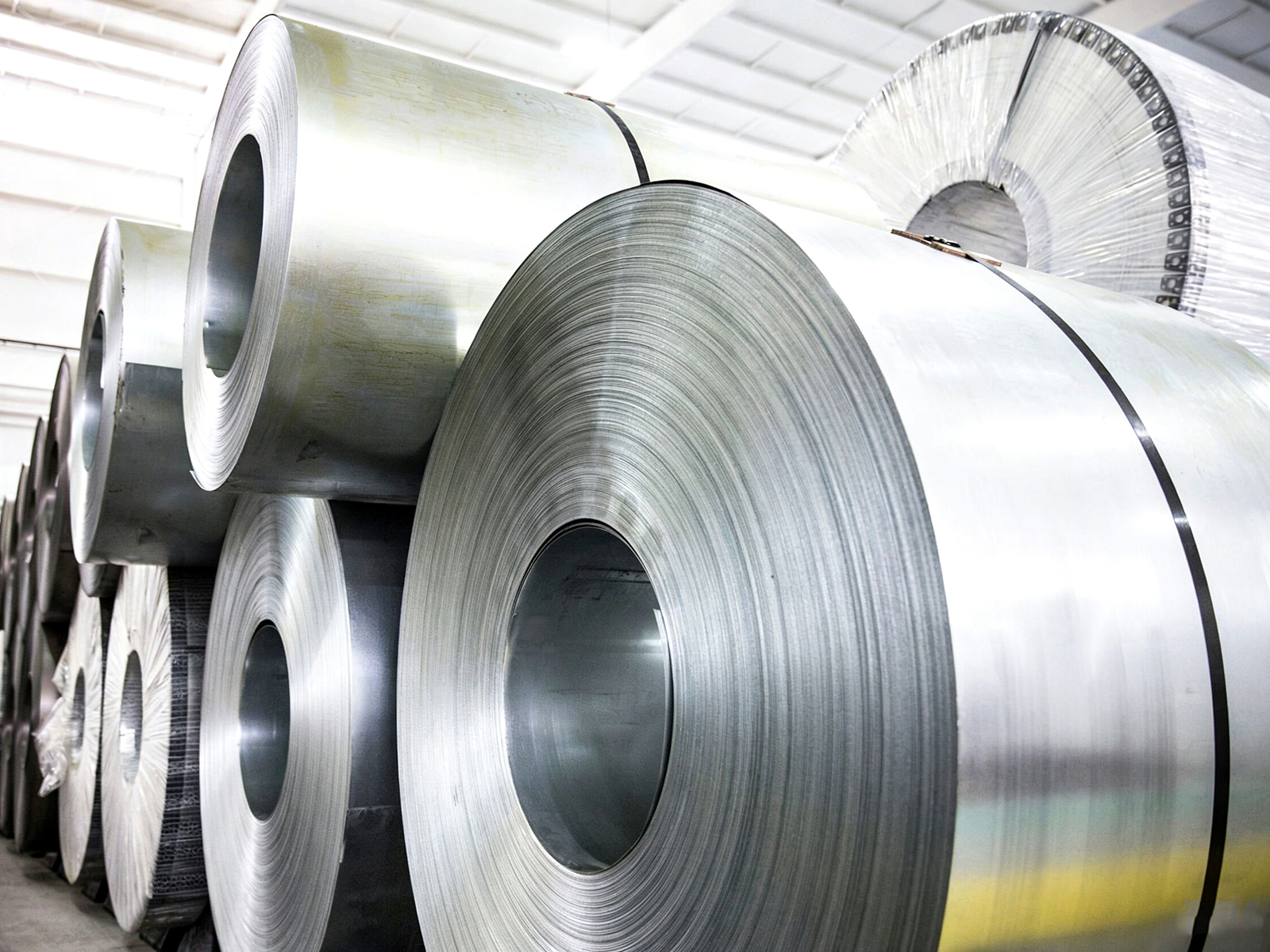
When chemical equipment fails repeatedly in a hydrochloric acid environment, or electrolytic cell electrodes are frequently replaced due to corrosion, Zr702 Foil, as an industrial pure zirconium material (Zr+Hf≥ 99.2%), is specially designed for extremely corrosive environments and exhibits excellent corrosion resistance in hydrochloric acid, dilute sulfuric acid, organic acids and seawater. Unlike titanium, which is prone to failure in non-oxidizing acids, zirconium 702 foil uses vacuum melting, multi-pass precision cold rolling and strict annealing processes to achieve ultra-thin specifications with a thickness of 0.02-0.8mm and a width of up to 670mm, providing long-term and stable material guarantees for chemical anti-corrosion, electrolytic plating, new energy batteries and other industries.
1. Why Is Zirconium 702 Foil Irreplaceable in Highly Corrosive Environments?
(1) How Should Material Selection Dilemma in Hydrochloric Acid Environments?
The chemical industry faces a common pain point: ordinary stainless steel will suffer from pitting corrosion and perforation in hydrochloric acid. Although titanium has good corrosion resistance, it lacks a protective oxide film in non-oxidizing acids (such as hydrochloric acid), causing the corrosion rate to rise sharply. A German fine chemical company once used 316 stainless steel to make reactor gaskets, but it leaked after only 3 months of operation in a 12% hydrochloric acid environment (unspecified temperature). Such failures not only cause production downtime, but also bring safety hazards and environmental risks.
(2) What Should You Know About Corrosion Resistance Mechanism of Zirconium 702 Foil?
Zirconium materials will form a dense ZrO₂ passivation film in oxidizing media. This film remains stable even in strong reducing acids (such as concentrated hydrochloric acid). Typical data shows that the corrosion rate of zirconium in boiling hydrochloric acid is less than 0.1mm/year (typical test conditions: 10% hydrochloric acid, boiling temperature), which is much lower than the 1-5mm/year of titanium. The purity of zirconium 702 foil reaches more than 99.2%, the impurity elements Fe+Cr ≤ 0.20%, and the oxygen content ≤ 0.16%. This high purity ensures that the material will not contaminate the medium due to impurity precipitation during long-term use.
(3) What Are the Differences in Comparison of Corrosion Resistance with Other Materials?
Material type | Corrosion resistance in hydrochloric acid environment | Corrosion resistance in sulfuric acid environment | Formability | relative cost |
316 stainless steel | Poor (rapid pitting) | medium | excellent | Low |
Titanium Gr2 | Poor (non-oxidizing acid failure) | excellent | excellent | medium |
Nickel 200 | medium | Medium (concentrated acidity) | excellent | high |
Zirconium 702 | Excellent (close to inert) | excellent | excellent | Middle to high |
Note: The corrosion resistance rating in the table is a qualitative comparison under typical working conditions. The actual performance depends on specific conditions such as temperature and concentration. Based on the above comparison, the comprehensive performance of zirconium 702 foil in a strong acid environment is significantly better than that of traditional materials. For example, after a Japanese electronic-grade chemical manufacturer replaced the electrolytic cell separator from titanium to zirconium 702 foil, the equipment maintenance cycle was extended from 6 months to 3 years, significantly reducing operating costs.
2. How to Ensure Stable Performance in the Manufacturing Process of Zirconium 702 Foil?
(1) What Should You Know About Vacuum Melting and Purity Control?
The production of Zirconium 702 foil begins with a vacuum smelting process, a critical step to ensure the purity of the material. The raw material zirconium sponge is smelted in vacuum or inert atmosphere to avoid contamination by oxygen, nitrogen and other impurities. The smelted zirconium ingots are tested through spectral analysis to ensure that the Zr+Hf content is ≥ 99.2%, of which the hafnium content is allowed to be ≤ 4.5% (the chemical properties of hafnium and zirconium are similar, and the upper limit is the allowable value of industrial pure zirconium in the ASTM B551 standard, and the hafnium content in actual industrial products is usually lower). Strictly control the total amount of iron and chromium ≤ 0.20%, because these elements will form micro-batteries in acidic environments and accelerate local corrosion.
(2) What Should You Know About the Breakthrough in 20-roll Finishing Rolling Technology?
It is difficult for traditional rolling mills to stably produce 0.02-0.8mm ultra-thin zirconium foil. The main difficulties lie in springback control and thickness uniformity. The 750mm 20-high precision rolling mill can control the thickness tolerance to ± 0.001mm through the multi-pass support roller design. The rolling process adopts multi-pass cold rolling with intermediate annealing, and the reduction rate of each pass is accurately controlled at 15-25%, which not only ensures thickness accuracy, but also avoids material cracking due to excessive work hardening. For different thickness specifications, the number of intermediate annealing times and reduction rate range need to be adjusted accordingly (for example, the number of annealing times needs to be increased for 0.02mm specifications).
(3) What Should You Know About Vacuum Annealing and Tissue Stability?
There are residual stresses and dislocations inside the cold-rolled zirconium foil, and ductility must be restored by annealing. The continuous vacuum annealing furnace processes in an environment with a temperature of 600-750℃ and a vacuum degree of ≤ 10⁻³Pa. The temperature fluctuation is controlled within ± 2℃. This rigorous process ensures uniform grain refinement and avoids surface oxidation and discoloration. The typical tensile strength of annealed zirconium 702 foil is 380-420MPa, and the elongation is ≥ 20%, which can meet complex forming requirements such as stamping and bending. In addition, surface treatments such as degreasing and pickling are required after rolling to eliminate the adverse effects of rolling oil and surface oxide layers on corrosion resistance.
3. What Scenarios Are Suitable for Zirconium 702 Foils with Different Thickness Specifications?
(1) Why Is Mainstream Applications with Standard Thickness 0.02-0.8mm Important?
Zirconium 702 foil in this thickness range occupies the mainstream market and is widely used in chemical sealing gaskets, electrolytic cell diaphragms and corrosion-resistant linings. A Korean battery manufacturer uses 0.05mm zirconium foil as a current collector protective layer in the lithium battery electrolyte system, which effectively solves the corrosion problem of the electrolyte on the copper foil and increases the battery cycle life by 40%. The surface of standard specifications of zirconium foil has been ultrasonic cleaned and treated with alkali solution, and the surface dyne value is stable at ≥ 44 mN/m, which is convenient for subsequent welding and composite processing.
Thickness specification | Typical applications | key performance requirements |
0.02-0.05mm | Battery current collector, precision gasket | High cleanliness and uniform thickness |
0.05-0.2mm | Electrolytic cell diaphragm, chemical seal | Corrosion resistance, weldability |
0.2-0.5mm | Anti-corrosion lining, structural gasket | Strength, formability |
0.5-0.8mm | High-pressure sealing and load-bearing structure | Mechanical strength, fatigue resistance |
(2) What Should You Know About High-precision Requirements for Customized Ultra-thin Specifications 0.01-0.03mm?
This specification is used in high-end electrolysis equipment and vacuum coating target substrates, which require extremely high thickness consistency and surface flatness. An American aerospace company uses 0.015mm zirconium foil as a sealing diaphragm in rocket fuel valves, using its non-magnetic and corrosion-resistant properties to ensure that the precision control system works stably in extreme environments. The production of this specification requires a high-precision thickness gauge and tension control system, and laser or ultrasonic cutting is used to avoid edge burrs when slitting.
(3) Why Is the Special Value of Scientific Research Grade Ultra-thin Specification 0.005-0.01mm Important?
A nuclear research institution in India uses 0.008mm zirconium foil as a window material in a neutron detector, using zirconium’s low neutron absorption cross-section (0.18 Bahn) characteristics to improve detection sensitivity. This type of ultra-thin foil has zero tolerance for surface defects, the production environment must meet clean room standards, and the entire process uses dust-free packaging. Although the output is limited, it is irreplaceable in the fields of nuclear industry, precision optics and cutting-edge scientific research.
How to Choose the Right Zirconium 702 Foil Supplier?
What Should You Know About Production Equipment and Process Capability Assessment?
A quality supplier must have a complete production line, not just trade. Key equipment includes: precision rolling mill with more than 20 rollers (to ensure thickness accuracy), continuous cleaning annealing line (to ensure surface quality), vacuum furnace (to improve material structure), and high-precision slitting machine (to control edge quality). The 362 million yuan investment production line of some suppliers (such as Baoji Titanium Valley) includes these core equipment, with an annual production capacity of 3, 000 tons (specific data is based on the supplier’s production capacity plan, and the actual situation may be adjusted due to order fluctuations), which can stably supply large-volume orders. Ask the supplier whether it has overcome seven major technical problems such as “oxidation control, thickness stability, and edge defects”. This is an important indicator for judging the maturity of its process.
What Should You Know About Quality Control System and Certification Standards?
Zirconium 702 foil must comply with ASTM B551 (foil) or ASTM B352 (sheet and strip) standards. Regular suppliers should provide a complete material report, including chemical composition spectral analysis, mechanical property tensile testing, and grain size metallographic testing. The production line has an automation rate of more than 90% and is equipped with an online thickness gauge, surface defect detection system and full-process traceability system. When selecting suppliers, a Vietnamese electronics manufacturing company requires third-party SGS or TÜV testing reports to ensure that materials comply with RoHS and REACH regulations.
What Should You Know About Customization Capabilities and Technical Service Support?
Different application scenarios have special requirements for the surface condition, hardness and size of zirconium foil. Quality suppliers can provide:
- Customized surface treatment: bright surface (suitable for welding), pickled surface (increased adhesion), frosted surface (increased friction coefficient)
- Hardness state selection: annealed M (maximum ductility), semi-hard H (balanced strength and formability)
- Precision slitting processing: width tolerance ± 0.5mm, no burrs on the edges
- Small batch sample supply: for process validation and performance testing
When a German chemical equipment manufacturer was developing a new type of reactor, it required the supplier to provide pressure burst test data of 0.1mm zirconium foil. The technical team assisted in completing the corrosion experiment under simulated working conditions, and finally realized batch supply.
4. What Should You Know About Precautions for Welding and Processing of Zirconium 702 Foil?
What Should You Know About Key Points of Argon Arc Welding and Spot Welding Processes?
Zirconium materials easily absorb oxygen and nitrogen at high temperatures, and welding must be performed under inert gas protection. TIG (tungsten arc welding) is the most commonly used welding method for zirconium foil. The purity of argon gas must be ≥ 99.99%, and the back side also needs argon gas protection to prevent oxidation. The welding current is adjusted according to the thickness: 0.05mm zirconium foil uses 15-25A, 0.3mm uses 40-60A. When an American medical device company manufactures artificial heart valve stents, it uses micro-beam plasma to weld 0.08mm zirconium foil with a weld width of only 0.3mm to ensure biocompatibility and long-term reliability.
What Should You Know About Stamping and Bending Techniques?
Annealed zirconium 702 foil has excellent ductility, but you need to pay attention when stamping:
- Mold material: Use carbide or quenched tool steel to avoid adhesion
- Lubrication treatment: Use special stamping oil to reduce friction and prevent scratches
- Bending radius: The minimum bending radius is 3-5 times the thickness. If it is too small, it will easily crack.
- Rebound compensation: The elastic modulus of zirconium material is low (98GPa), and a 5-8° rebound angle needs to be reserved.
When a Japanese precision instrument factory produces vacuum cavity sealing gaskets, it stamps 0.2mm zirconium foil into a corrugated shape. Through step-by-step forming and intermediate annealing, the yield rate increases from 65% to 92%.
What Should You Know About Surface Cleaning and Storage Requirements?
Residual oil stains or fingerprints on the surface of zirconium foil will cause local corrosion during use. Ultrasonic cleaning combined with alkaline solution can effectively remove organic pollutants. After cleaning, rinse with deionized water and vacuum dry. The storage environment should be kept dry (relative humidity <50%) and avoid contact with acids and alkalis. A pharmaceutical equipment company in India stored zirconium foil sealing rings in a nitrogen-filled drying cabinet. After a year, they still maintained their original luster and had no degradation in welding performance.
5. What Is the Conclusion?
Zirconium 702 foil has become an important material in chemical anti-corrosion, electrolytic plating, new energy batteries and other fields due to its high purity of Zr+Hf≥ 99.2%, excellent corrosion resistance in strong acid environments (typical corrosion rate is less than 0.1mm/year), and precision manufacturing capabilities in ultra-thin specifications of 0.02-0.8mm. Only by choosing suppliers with advanced 20-roll rolling mills, vacuum annealing processes and complete quality systems can we ensure stable material performance and long-term supply capabilities.
If you want to learn more about the technical parameters or application solutions of zirconium 702 foil, it is recommended to contact a professional supplier with complete production capabilities to obtain technical information that meets specific working conditions.
FAQ
Q1: What is the performance difference between zirconium 702 foil and titanium foil in hydrochloric acid environment?
Titanium lacks a protective oxide film in hydrochloric acid, and the corrosion rate can reach 1-5mm/year (typical conditions: 10% hydrochloric acid, boiling temperature), while the ZrO₂ passivation film of zirconium 702 foil is extremely stable, the corrosion rate is less than 0.1mm/year, and the service life can be extended by more than 10 times.
Q2: How to ensure the thickness uniformity of 0.02mm ultra-thin zirconium foil?
Using a 750mm 20-roll precision rolling mill for multi-pass cold rolling, combined with real-time monitoring by an online thickness measurement system, the thickness tolerance is controlled at ± 0.001mm. Intermediate annealing eliminates residual stress and ensures consistent material performance throughout the roll.
Q3: Can Zirconium 702 foil be used in nuclear industry related applications?
Can. Zirconium’s low neutron absorption cross-section (0.18 Barn) and excellent corrosion resistance make it an ideal material for nuclear reactor cladding and neutron detectors, which must comply with nuclear-grade material standards such as ASTM B551 and provide complete traceability documents.
How Should Looking for Reliable Zr702 Foil Supplier?
As a professional manufacturer, Baoji Titanium Valley Titanium Nickel Zirconium Material Processing Co., Ltd. has a 750mm 20-roll precision rolling mill, a vacuum annealing furnace and a full-process quality control system. It can stably supply ultra-thin wide zirconium foils with a thickness of 0.02-0.8mm and a width of 670mm. We provide customized products and technical support for global chemical anti-corrosion, electrolytic plating, new energy battery and nuclear industry customers. Contact sales@titaniumvalleys.com now to get technical solutions and samples
References
- Zhang Wei, Li Ming. Research on the application of zirconium and zirconium alloy materials in the chemical industry [J]. Chinese Journal of Nonferrous Metals, 2021, 31(5): 1023-1032.
- Smith J R, Brown A K. Corrosion Resistance of Zirconium Alloys in Acidic Environments[J]. Journal of Materials Science, 2020, 55(12): 5120-5130.
- Tanaka Kenichi. Ultra-thin metal foil precision rolling technology [J]. Journal of the Japan Metal Society, 2019, 83(4): 245-253.
- Wagner P, Müller H. Advanced Manufacturing Processes for High-Purity Zirconium Foils[J]. Materials Processing Technology, 2022, 300: 117345.