
What Should You Know About Grade 5 Titanium Foil, a High-strength Material for High-end Industries?
- Grade 5 Titanium Foil
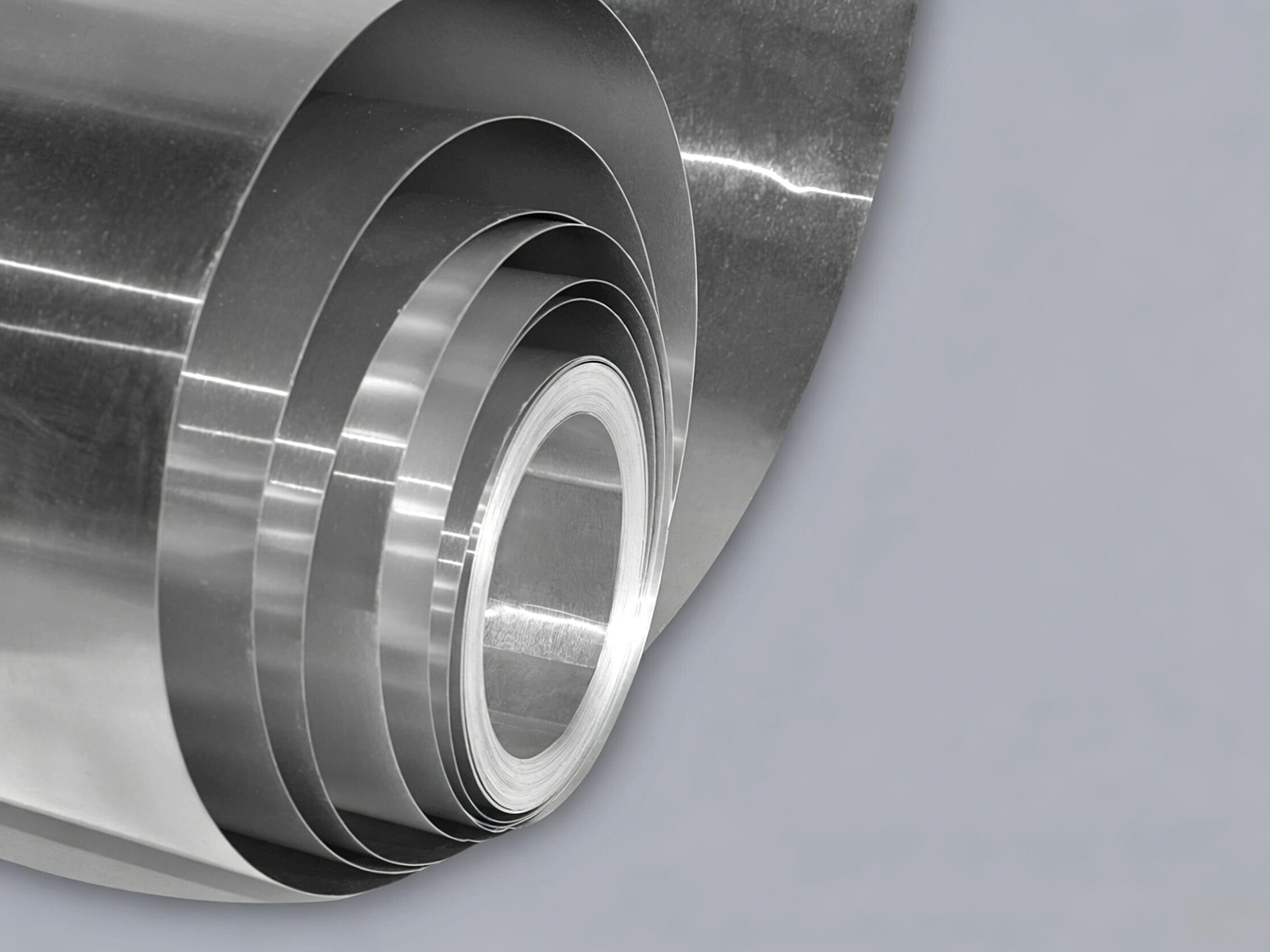
In the context of the global manufacturing industry evolving towards lightweight and high performance, Gr5 titanium foil (Grade 5 titanium foil, Ti-6Al-4V alloy foil) is becoming a key material in the fields of aerospace, new energy and precision electronics. This kind of strip based on the Ti-6Al-4V alloy system has a tensile strength of more than 895 MPa, which is nearly twice that of pure titanium, while the density is only 60% of steel. From aircraft honeycomb core materials to lithium battery heat dissipation components, from deep-sea submersible structures to semiconductor vacuum chambers, this metal foil with a thickness of 0.03-0.8mm has demonstrated significant advantages in extreme environmental adaptability, lightweight and long-term reliability.
1. What Should You Know About High-end Industry Demand for Gr5 Titanium Foil?
(1) What Should You Know About Performance Bottlenecks and Industrial Pain Points of Pure Titanium?
Although commercial pure titanium (Gr1/Gr2) has excellent corrosion resistance and ductility, its tensile strength is usually in the range of 240-550 MPa. When aerospace engine heat shields need to withstand 300℃ high temperatures and vibration loads, or when electric vehicle battery packs require heat dissipation components to be both lightweight and structurally rigid, pure titanium materials often increase wall thickness due to insufficient strength, which in turn offsets the lightweight advantage. Although the pressure-resistant chamber of deep submersibles in ocean engineering needs to be resistant to chloride ion corrosion, pure titanium cabins are prone to creep deformation under extreme water pressure, forcing designers to adopt excessively redundant designs.
(2) Why Is Performance Advantages of Ti-6Al-4V Alloy Important?
Gr5 titanium foil adds 6% aluminum and 4% vanadium to a pure titanium matrix to form a synergistic strengthening structure of α phase (hexagonal close-packed) and β phase (body-centered cubic). Aluminum solid solution strengthens the α phase and improves high-temperature stability, and vanadium stabilizes the β phase to enhance room temperature strength, increasing the tensile strength of the material to more than 895 MPa and the yield strength to 825 MPa, while maintaining an elongation of more than 10%. This combination of properties allows 0.5mm thick Gr5 titanium foil to replace 1.2mm pure titanium sheet, achieving a 58% weight reduction. More importantly, its fatigue strength can reach 50-60% of the tensile strength, and it can still maintain structural integrity under 10⁷ cyclic loads, which is crucial for aircraft skins that bear repeated take-off and landing stress or precision instrument supports that undergo long-term vibration.
(3) What Should You Know About Applicability Under Extreme Working Conditions?
When the operating temperature exceeds 250℃, the aluminum alloy begins to soften and fail. However, Gr5 titanium foil can serve for a long time at 300℃ with less than 15% performance degradation, and can withstand short-term temperatures up to 400℃. In seawater environment, its passivation film regeneration ability makes the pitting corrosion potential higher than +800mV (vs. SCE, test standard refers to ASTM G61), which is better than 316 stainless steel. The non-magnetic properties (magnetic permeability <1.005) make it one of the choices for shielding layers of nuclear magnetic resonance equipment and precision sensors.
2. What Should You Know About Manufacturing Difficulties and Technological Breakthroughs of Gr5 Titanium Foil?
(1) What Should You Know About Rolling Challenges of High-Strength and Low-Plastic Materials?
The yield-strength ratio of Ti-6Al-4V alloy is as high as 0.92, and the plastic processing window is extremely narrow. When the thickness of the traditional four-high rolling mill is less than 0.1mm, the roll gap control accuracy is insufficient, causing the strip thickness to fluctuate more than ± 0.015mm, and the high-strength material rebounds seriously, making it difficult to control the flatness. Cracked edges and broken strips occur frequently in ultra-thin specifications rolling, and the yield rate is often lower than 65%. In addition, the α+β dual-phase structure is extremely sensitive to deformation temperature and speed: if the temperature is too high, the β phase will coarsen and lose strength, while if the temperature is too low, microcracks will be caused by dislocation accumulation.
(2) What Should You Know About 20-roller Finishing Rolling and Multi-pass Collaborative Optimization?
The use of a 750mm twenty-high precision rolling mill can disperse the rolling force to multiple small-diameter work rolls, shorten the contact arc length by 40%, reduce the rolling pressure and improve the thickness control accuracy to ± 0.001mm. By establishing a three-parameter dynamic model of “thickness-tension-speed”, 15-20 passes of progressive rolling are implemented on the premise that the reduction rate of each pass is controlled at 8-12%. The key breakthrough lies in the “micro-tension-rapid cooling” process between passes: atomized coolant is introduced immediately after rolling to reduce the strip temperature to below 150℃ to inhibit the growth of recrystallized grains, and then 0.3-0.5 MPa micro-tension is applied to eliminate residual stress. This process achieves synergy between rapid cooling and micro-tension control by synchronously controlling the cooling rate and tension parameters, increasing the elongation of the final product from 6% in the conventional process to more than 12%.
(3) What Should You Know About Vacuum Annealing and Structural Uniformity Control?
The cold-rolled Gr5 titanium foil stores a large amount of dislocation and distortion energy inside, and needs to be annealed to restore plasticity. However, conventional atmosphere annealing can easily lead to surface oxidation (oxygen content increases from 0.18% to 0.25%), and the embrittlement depth reaches 20-30 um. Using a continuous annealing furnace with a vacuum degree of <5×10⁻³ Pa and holding at 700-750℃ for 1.5-2 hours, α phase spheroidization and β phase uniform distribution can be achieved, and the grain size is controlled at ASTM level 8-9. Through segmented temperature control (rapid heating – constant temperature maintenance – slow cooling), the α phase volume fraction is stabilized at 90± 2%, ensuring that the tensile strength deviation between batches is <20 MPa, and the yield strength deviation is <15 MPa.
Process link | Pain points of traditional crafts | Technology breakthrough plan | Performance improvements |
precision rolling | Thickness fluctuation ± 0.015mm (for specifications below 0.1mm), edge cracking rate >30% | 20-roll mill + multi-pass micro-reduction (8-12%) | Thickness accuracy ± 0.001mm, yield >92% |
Annealing | Surface oxidation, elongation <6% | Vacuum annealing (<5×10⁻³ Pa) + segmented temperature control | Oxygen content <0.18%, elongation >12% |
Shape control | Warpage>3mm/m, surface corrugation | Tension leveling + multi-roller leveling | Straightness≤ 1.5mm/m, surface roughness Ra<0.4um |
3. What Should You Know About Key Performance Parameter Analysis and Application Matching?
(1) What Should You Know About 1 Engineering Significance of Mechanical Properties?
The tensile strength of Gr5 titanium foil is ≥ 895 MPa (required by ASTM B265 standard), which means that a section of 1 square centimeter can bear nearly 90 kilograms of tensile force, which makes 0.3mm thick material sufficient to meet the needs of most structural parts. Yield strength ≥ 825 MPa ensures high stiffness within the elastic deformation range and avoids permanent deformation during service. Although the 10% elongation is lower than the 20-30% of pure titanium, it is enough to support conventional forming processes such as stamping and bending. The hardness range of HB 270-330 indicates that it is both scratch-resistant and can be processed with standard tools.
(2) What Should You Know About Physical Properties and Environmental Adaptability?
The density of 4.43 g/cm³ is 44% lighter than that of steel (7.85 g/cm³). It has direct economic value in the context that every 1 kilogram of aircraft weight reduction can save approximately US$3, 000 in fuel costs. The melting point of 1668℃ gives it a safety margin under unexpected high temperatures such as fires. Although the resistivity of 165-175 μΩ·cm is higher than that of copper and aluminum, its excellent thermal conductivity (λ=7.2 W/m·K) makes it an optional material for the “thermal insulation + conductive” composite functional layer in battery packs. The non-magnetic properties ensure that no eddy current loss or hysteresis effect occurs in strong magnetic field environments (such as MRI equipment, magnetic levitation systems).
(3) What Should You Know About Size Specifications and Customization Capabilities?
The thickness of 0.03-0.8mm covers the entire application spectrum from electromagnetic shielding (0.03-0.05mm) to structural parts (0.5-0.8mm). The width of 350-670mm can meet the overall forming needs of wide parts such as large honeycomb panels and battery trays, and reduce the number of welded joints. The coil supply format supports automatic loading of continuous production lines, and fixed-length cutting facilitates precision processing of small batches. The pickled surface removes the oxide layer and exposes the metallic luster. The bright surface is polished to Ra<0.2um and is suitable for optical grade applications. The matte surface provides better coating adhesion.
performance category | Parameter index | Corresponding application scenarios | Performance advantages |
Strength properties | Tensile strength ≥ 895 MPa, yield ≥ 825 MPa | Aircraft skin, deep submersible frame | High load bearing + lightweight design |
temperature stability | Long-term use ≤ 300℃, short-term use ≤ 400℃ | Engine heat shield, exhaust system | Strength retention rate under high temperature >85% |
Corrosion resistance | Pitting corrosion potential in seawater >+800mV (vs SCE, ASTM G61) | Desalination equipment, ocean platform | 30 years of service without puncture corrosion |
Dimensional accuracy | Thickness tolerance ± 0.001mm, width deviation <2mm | Microelectronic substrates, precision gaskets | Assembly gap control <0.01mm |
4. Why Is Global High-end Application Cases and Value Creation Important?
(1) What Should You Know About Aerospace, From Structural Weight Reduction to Thermal Protection?
The Boeing 787 Dreamliner uses a honeycomb sandwich structure made of Gr5 titanium foil, which reduces the weight of the fuselage by 15% and increases the impact strength by 40%. 0.1mm thick titanium foil is bonded and diffusion welded to form a hexagonal honeycomb core, with a load capacity of 120 kN/m² per unit area, while the weight is only 1.3 times that of aluminum honeycomb. In the engine nacelle, 0.3mm Gr5 foil acts as a thermal barrier, reducing the outer wall temperature from 650℃ to below 200℃, protecting the carbon fiber composite material from thermal damage. The support frame of the satellite solar sail panel is made of 0.05mm ultra-thin foil material, which is laser welded to achieve the stiffness requirement under a 5-meter expansion span. A single component weighs less than 800 grams.
(2) What Should You Know About New Energy Field, Battery Safety Protection Solution?
The temperature of electric vehicle power batteries can rise to 800℃ when thermal runaway occurs, and traditional aluminum protective layers lose their strength at 300℃. The battery module spacer made of 0.2mm Gr5 titanium foil can withstand continuous high temperatures for 15 minutes without melting through. The battery pack of a high-end electric sports car uses a “titanium foil + aerogel” composite insulation solution, which reduces the heat spread rate of adjacent modules by 70%. In the development of solid-state batteries, titanium foil as a current collector can withstand more than 500 charge-discharge cycles without dendrite puncture. The bipolar plate of the hydrogen fuel cell uses 0.1mm titanium foil with surface nitriding treatment. The contact resistance is as low as 5 mΩ·cm², and the corrosion resistance is better than platinum-coated stainless steel.
(3) How Should Medical and Semiconductors, Material Selection for Clean Environments?
The brain pacemaker shell requires materials that are both high-strength, non-magnetic and biocompatible. The 0.15mm Gr5 titanium foil can be made into a sealed cavity with uniform wall thickness through cold forming and electron beam welding. The corrosion depth is <2um during the 10-year implantation period. The radio frequency shielding layer of the nuclear magnetic resonance equipment adopts a multi-layer titanium foil superimposed structure, with a shielding efficiency of more than 80 dB and no artifacts. The vacuum cavity of the semiconductor lithography machine is lined with 0.3mm titanium foil, which not only meets the degassing requirements of ultra-high vacuum (<10⁻⁸ Pa), but also can withstand thermal cycles in which the cavity is frequently heated to 250℃.
(4) What Should You Know About Marine Engineering, a Reliable Partner in Extreme Environments?
The pressure-resistant spherical shell observation window frame of the full-sea deep manned submersible is made of multi-layer 0.5mm Gr5 titanium foil through diffusion welding. The deformation is <0.3mm under the deep sea pressure of 11, 000 meters (110 MPa). The plate heat exchanger of the seawater desalination plant uses 0.2mm titanium foil pressed into corrugated plates. The heat exchange efficiency is 30% higher than that of titanium tubes, and the chloride ion concentration can be tolerated up to 80, 000 ppm. The sacrificial anode connector of the offshore wind power platform and the titanium foil conductive bridge not only ensure electrical continuity, but also avoid galvanic corrosion of steel parts.
How Should Supplier Selection Criteria and Quality Assurance System?
What Should You Know About Key Indicators of Production Line Advancement?
When evaluating a Gr5 titanium foil manufacturer, first examine whether it has a precision rolling mill with twenty rollers or more, which directly determines whether the thickness tolerance can be within ± 0.002mm. Whether the presence of the continuous vacuum annealing line affects the uniformity of the structure: uneven temperature rise and cooling in the intermittent annealing furnace will lead to a performance difference of up to 8% between the beginning and the end of the same roll of material, while the continuous type can be controlled within 3%. Whether the ultrasonic cleaning system can remove surface grease and metal particles to a cleanliness level of Class 100 is crucial for semiconductor and medical applications. The production line is equipped with a laser thickness gauge and an online plate shape detection system, enabling full-length data traceability.
What Should You Know About In-depth Verification of Quality Management System?
Aerospace supplier qualifications (such as AS9100D, NADCAP) require the establishment of a full-process traceability system from the entry of raw materials into the delivery of finished products. Each roll of material should be accompanied by a quality certificate containing spectral analysis of chemical composition, mechanical property testing (tensile, hardness), metallographic structure photos, and ultrasonic flaw detection report. The timeliness of third-party testing reports (such as SGS, TÜV) needs to be paid attention to. Reports older than 6 months may not reflect the current process status.
What Should You Know About Customized Service Capability Assessment?
High-end applications often involve non-standard specifications. Whether suppliers can provide value-added services such as 0.001mm thickness customization, special-shaped width slitting (such as trapezoids, curved edges), surface functionalization (nitriding, anodizing), etc., directly affects the customer’s development cycle. An aviation customer required titanium foil with a thickness of 0.08mm x 550mm and a positioning hole on one side. Conventional suppliers were unable to deliver it due to equipment limitations. However, manufacturers with flexible manufacturing capabilities quickly iterated through molds and completed sample verification within 3 weeks. A large-scale production line with an annual production capacity of more than 3, 000 tons can ensure the stability of delivery of bulk orders.
Supplier capability dimensions | basic threshold | Excellent standard | benchmark of excellence |
Advanced equipment | Four-roll mill + box annealing furnace | Twenty-high rolling mill + continuous annealing line | Laser thickness measurement + AI shape control |
Quality traceability | Batch number record | Batch-level traceability + 3-year data retention | Single-volume digital twin + lifelong traceability |
Customized response | Standard specification ± 10% adjustment | Non-standard thickness/width customization | Complex surface treatment + 72 hours proofing |
Certification qualification | ISO 9001 | ASTM B265 + EN 4678 | AS9100D + NADCAP + FDA |
5. What Is the Conclusion?
Gr5 titanium foil has shown important application value in aerospace, new energy, medical and marine engineering fields due to its specific strength, high temperature stability and extreme environmental adaptability. From lightweight design in aerospace to safety protection in new energy, from biocompatibility in medical implants to clean manufacturing of semiconductors, this metal foil continues to expand the application boundaries of material performance (it should be noted that in some scenarios, other materials such as stainless steel and composite materials can still be substituted). Choosing suppliers with advanced technology, strict quality control and customization capabilities is a key prerequisite for ensuring product reliability and project success.
FAQ
Q1: How to balance the cost difference between Gr5 titanium foil and pure titanium foil in practical applications? ?
The unit price of Gr5 is 40-60% higher than that of Gr2 pure titanium (data source is market research statistics), but due to the increase in strength, the wall thickness can be reduced by more than 50%. After the comprehensive material consumption is reduced, the total cost of parts can be reduced by 15-25%, and the operating cost savings (such as aviation fuel) brought by lightweighting can recover the price difference within 3-5 years.
Q2: What precautions should be taken during the forming processing of 0.03-0.05mm ultra-thin Gr5 titanium foil? ?
For ultra-thin materials, flexible molds (such as polyurethane pads) can be used to avoid indentation. The stamping speed should be controlled at 5-10 m/min to prevent tearing. The bending radius must be ≥ 3 times the material thickness. Pulse laser (pulse width <5ms) should be used during welding to reduce the heat-affected zone. The operating environment humidity should be controlled at 40-60% to prevent hydrogen embrittlement.
Q3, How to verify whether the Gr5 titanium foil provided by the supplier meets aerospace standards?
It is required to provide a material certificate that complies with ASTM B265 or AMS 4911, check the sampling direction of the tensile sample (should include transverse and longitudinal), grain size metallographic photos (magnification and ruler need to be marked), ultrasonic flaw detection report (equivalent diameter of defects should be <0.5mm), and a third-party laboratory can be entrusted to conduct blind sample re-inspection to verify the authenticity of the data.
What Should You Know About Looking for a Professional Supplier of High Strength Gr5 Titanium Foil?
As a professional manufacturer, Baoji Titanium Nickel and Zirconium Materials Processing Co., Ltd. has a 750mm 20-roll precision rolling mill, a continuous vacuum annealing furnace and a full-process quality traceability system. It can stably supply Gr5 titanium foil (Ti-6Al-4V) with a thickness of 0.03-0.8mm and a width of 670mm. The tensile strength is ≥ 895MPa and the thickness accuracy is ± 0.001mm. The product performs excellently under extreme working conditions such as high temperatures of 300℃, seawater corrosion and alternating loads, and its fatigue strength reaches 50%-60% of the tensile strength. We provide customized products and complete material certificates that comply with AMS 4911 and ASTM B265 standards for global aerospace, new energy battery, medical device and marine engineering customers. Contact sales@titaniumvalleys.com immediately to obtain technical solutions and samples.
References
- Qu Hennglei, Liu Jianrong. Research on the microstructure evolution and performance control of multi-pass cold rolling of Ti-6Al-4V titanium alloy thin plates [J]. Rare Metal Materials and Engineering, 2021, 50(8): 2847-2856.
- Zhao Yongqing, Xi Zhengping, Zhang Xuejun. Titanium alloy materials and their applications[M]. Beijing: Science Press, 2018: 132-168.
- Zhang Xuejun, Zhao Yongqing. Progress and challenges in preparation technology of titanium alloy foils for aviation [J]. Chinese Journal of Nonferrous Metals, 2019, 29(10): 2103-2118.
- Mao Xiaonan, Yu Zhentao, Zhou Lian. Preparation and properties of medical titanium alloy materials[M]. Beijing: Metallurgical Industry Press, 2016: 45-73.