
What Is the Fatigue Strength of GR1 Titanium Bar
- Gr1 Titanium Bar
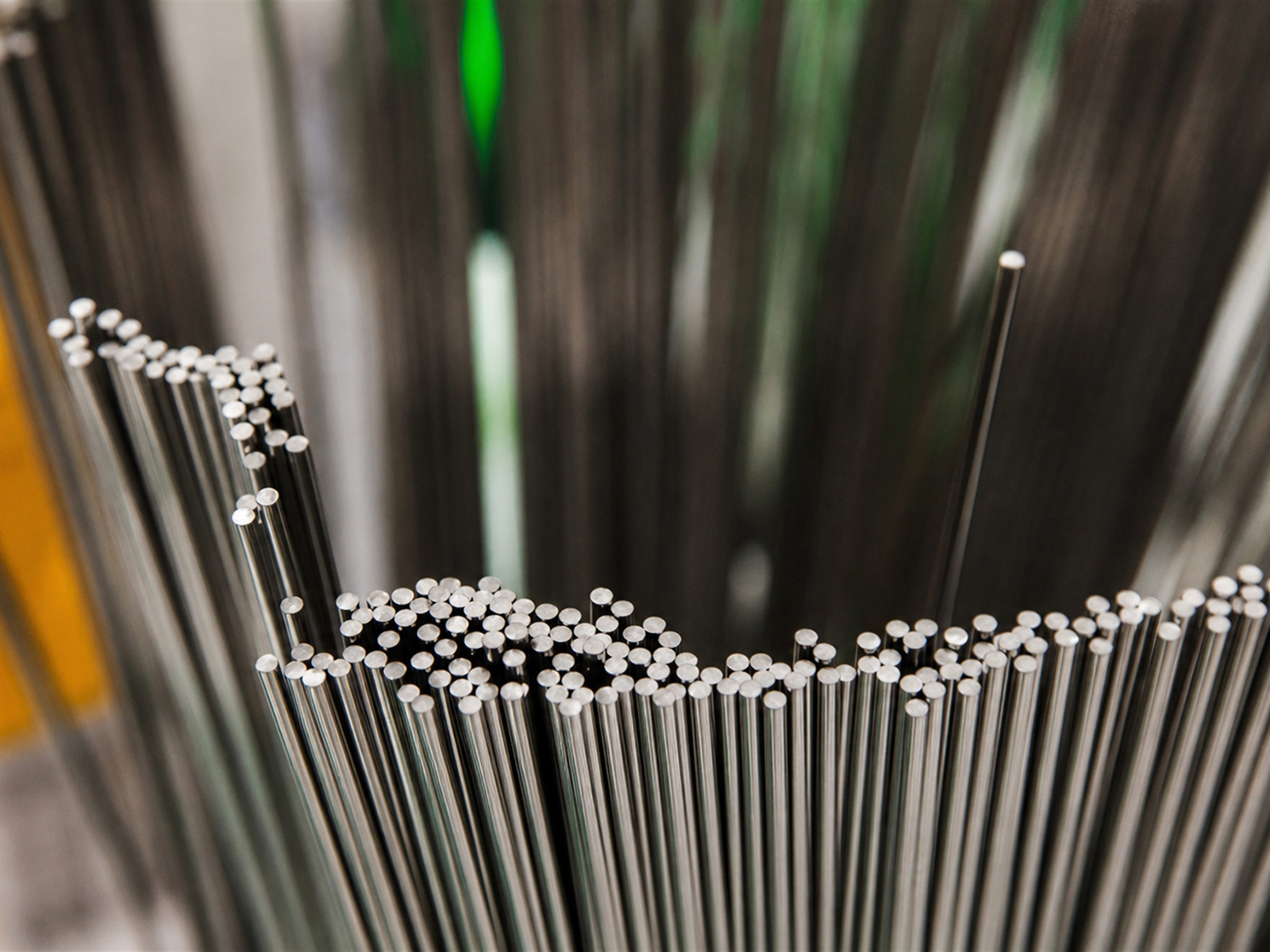
The fatigue strength of GR1 titanium bar typically falls within the 150 to 200 MPa range (room temperature, symmetric cyclic loading, stress ratio R=-1). Specific values are influenced by processing condition, surface quality, loading frequency, and environmental media. As the softest grade among commercial pure titanium, GR1 has relatively low static strength (tensile strength 240 to 345 MPa), but its excellent plastic deformation capability and corrosion resistance ensure stable performance in low-load cyclic applications.
What Is the Definition and Testing Standard for GR1 Titanium Bar Fatigue Strength?
Engineering Significance of Fatigue Strength
Fatigue strength refers to the maximum stress value a material can withstand under repeated alternating stress without fracture, corresponding to a specified number of cycles (such as 10⁷ cycles). Unlike one-time tensile testing, fatigue behavior reflects material reliability under long-term dynamic loading. Chemical reactor stirrer shafts, seawater pump connecting rods, and medical implant fixation screws all endure tens of thousands to millions of cyclic loads; fatigue failure may cause sudden equipment shutdown or safety incidents.
Internationally Accepted Testing Methods
The ASTM E466 standard specifies the use of rotating bending fatigue testers, placing polished standard specimens in symmetric bending state (stress ratio R=-1) and applying varying stress amplitudes until fracture or reaching preset cycle counts (typically 10⁷ cycles). GR1 titanium bar fatigue limit testing must be conducted in controlled environments at room temperature (20 to 25 degrees Celsius) with relative humidity of 40 to 60 percent, avoiding corrosive media interference. Data processing employs S-N curves (stress versus number of cycles) to determine the fatigue limit.
Key Factors Influencing Test Results
Surface roughness significantly affects fatigue performance. Polished bars (Ra at most 1.6) achieve fatigue strength up to 200 MPa, while black-skin bars (Ra above 6.3) may see fatigue strength reduced by 30 to 40 percent due to stress concentration from surface micro-cracks and scale. Additionally, specimen sampling direction creates differences: longitudinal specimens along the rolling direction exhibit approximately 15 percent better fatigue performance than transverse specimens, related to grain flow distribution.
What Factors Influence the Fatigue Performance of GR1 Titanium Bar?
Material Purity and Microstructure
GR1 titanium content is at least 99.5 percent, with extremely low interstitial element (oxygen, nitrogen, carbon) content ensuring good plasticity but also meaning a lower strength baseline. The alpha single-phase organization presents an equiaxed grain structure with grain sizes typically 50 to 100 micrometers. Coarser grains tend to form persistent slip bands under cyclic loading, serving as crack initiation sites. For cold-deformed GR1 titanium bars, vacuum annealing refines grains to 30 to 50 micrometers, improving fatigue strength by approximately 10 to 15 percent.
Processing Condition | Grain Size (μm) | Fatigue Strength (MPa) | Elongation (%) |
Hot-rolled | 80-120 | 150-170 | 25-28 |
Cold-drawn + Annealed | 40-60 | 180-200 | 24-26 |
Precision Polished (note: polishing does not change grain size, table is a comprehensive processing example) | 30-50 (from cold-drawn + annealed) | 190-210 | 24-26 (elongation unaffected by polishing) |
Surface Treatment Processes
Acid pickling, while removing scale, may leave micro-etch pits (depth 5 to 15 micrometers) that serve as stress concentration sources. Mechanical polishing to Ra 0.8 significantly extends fatigue life, though surface hardening layers (approximately 50 micrometers deep) formed during polishing may improve fatigue resistance through residual compressive stress. Shot peening, commonly used in aerospace, can cause excessive surface deformation on soft materials like GR1 and requires strict control of peening intensity (Almen intensity).
Synergistic Effects of Environmental Media
Corrosion fatigue is a hidden danger in GR1 titanium bar applications. In seawater environments, chloride ions disrupt the surface passivation film, reducing fatigue strength by 20 to 35 percent and increasing crack propagation rates by 2 to 5 times. The fatigue limit in 3.5% NaCl solution is only 60 to 70 percent of that in dry air. Hot concentrated sulfuric acid and hot alkali solutions in chemical industries similarly accelerate crack propagation. Cathodic protection or periodic replacement of stress-concentrated components is recommended.
How Does Fatigue Performance Vary Across Different Operating Conditions?
Low-Stress High-Cycle Scenarios
Titanium tie-rods in chemical heat exchangers typically operate at stresses below 100 MPa but endure vibration from thermal cycling (frequency 10 to 50 Hz), with cycle counts reaching 10⁸. GR1 titanium bar exhibits infinite-life characteristics in this regime; the key is avoiding installation stresses and weld defects. Field failure analysis shows that 90 percent of fatigue fractures originate from unchamfered thread roots or grain coarsening in weld heat-affected zones.
Medium-Stress Cyclic Bending Conditions
Flexible catheter supports in medical devices and connecting arms in food mixers operate at stresses of 120 to 160 MPa with 10⁵ to 10⁶ cycles. Cold-drawn polished bars meet these requirements, though surfaces must be free of machining marks or dents. A pharmaceutical enterprise extended the service life of a Gr1 titanium stirring shaft from 2 years to over 5 years by optimizing fillet radius (R at least 5 mm) and surface polishing (Ra 0.4).
Fatigue Considerations in Special Environments
Mooring rigging and seawater valve shafts in marine engineering endure simultaneous stress corrosion and fatigue loads. The splash zone (tidal zone) experiences the most severe corrosion fatigue; a design safety factor of at least 3.0 is recommended with regular ultrasonic flaw detection. Desulfurization equipment flue gas pipe supports, while operating at lower stresses, experience approximately 15 percent fatigue performance reduction due to the combined effect of high temperature (150 to 180 degrees Celsius) and SO₂/SO₃ presence.
What Engineering Strategies Can Improve GR1 Titanium Bar Fatigue Life?
Optimization Measures in the Design Phase
Avoid sharp corners and sudden cross-section changes during design. Fillet radii of at least R3 mm should be used at stress concentration points. Threading should prefer fine-pitch over coarse-pitch where feasible. Surface integrity must be ensured through precision machining. The following table illustrates stress concentration improvement through design modifications:
Structural Feature | Stress Concentration Factor Kt | Improvement Scheme | Improved Kt |
Right-angle step (height-to-width ratio approx. 1:2) | 3.0-3.5 | R=5 mm fillet transition | 1.8-2.0 (for reference only; actual engineering requires calculation based on specific dimensions) |
Coarse-thread M20 | 3.8 | Fine-thread M20×1.5 | 2.5 |
Butt weld | 2.5-3.0 | Grind flush + TIG repair weld | 1.5-1.8 |
Inspection and Maintenance Protocols
Implement scheduled inspection programs using non-destructive testing methods. Eddy current testing effectively detects surface cracks in non-magnetic titanium materials. During equipment shutdown maintenance, utilize penetrant testing or eddy current inspection to (screen for) surface cracks. Establish equipment fatigue life ledgers, predicting replacement cycles based on accumulated cycle counts.
Material Substitution and Upgrade Paths
When operating stresses exceed 180 MPa or cycle counts are extremely high, consider upgrading to GR2 titanium bar (fatigue strength 220 to 270 MPa) or GR5 titanium alloy (fatigue strength 500 to 550 MPa). Note that GR5 has more challenging machinability, higher cost (approximately 3 to 4 times GR1), and slightly lower corrosion resistance. In certain low-speed reciprocating motion scenarios, GR1 combined with surface nitriding (forming TiN hardening layer) can maintain plasticity while improving fatigue performance.
What Industry Application Cases and Data Support GR1 Titanium Bar Fatigue Performance?
Long-Term Operation Records in the Chemical Industry
A domestic chlor-alkali enterprise used GR1 titanium bars to manufacture electrolytic cell anode hooks, operating at current density 2 to 3 A/dm², temperature 85 to 95 degrees Celsius, with 2 start-stop cycles per day. After 8 years of operation (approximately 5,800 cycles), sampled specimens showed no fatigue cracks, with the surface passivation film intact. Compared to stainless steel hooks replaced every 2 years on average, titanium extended service life by 4 times and reduced comprehensive costs by 60 percent.
Rigorous Validation in Medical Devices
An orthopedic implant manufacturer used GR1 titanium bars to produce intramedullary nail locking screws, passing 5 million cycle bending tests (stress amplitude +/-120 MPa) per FDA standards at a 98 percent pass rate. Fracture analysis of failed specimens revealed cracks originating from surface micro-scratches (depth under 10 micrometers), underscoring the importance of precision machining quality. The product has been in clinical use for over 10 years with no fatigue fracture reports.
Extreme Tests in Marine Engineering
An offshore platform used GR1 titanium bars to manufacture seawater lift pump shafts, 80 mm diameter at 600 RPM. After 3 years of operation, inspection revealed: although the journal position showed slight wear (depth 0.05 mm), no crack propagation was observed. Fatigue life calculations indicated a theoretical life of 15 years under 100 MPa alternating stress. This project validated the reliability of GR1 titanium bars in marine corrosion-fatigue environments.
Conclusion
Although GR1 titanium bar fatigue strength does not match high-strength alloys, its long-life performance in the 150 to 200 MPa stress range, combined with outstanding corrosion resistance and formability, makes it an irreplaceable material in chemical, medical, and marine sectors. Engineering applications must comprehensively consider surface quality, environmental media, and structural design through precision manufacturing and scientific maintenance to fully leverage its fatigue performance advantages and achieve lifecycle cost reduction and efficiency improvement.
FAQ
Q1: How Much Does Fatigue Strength of GR1 Titanium Bar Decrease in Seawater?
Fatigue strength in seawater environments typically decreases by 20 to 35 percent, depending on seawater temperature, flow velocity, and chloride ion concentration. Design stress should not exceed 120 MPa, and cathodic protection measures are recommended to extend service life.
Q2: How to Determine Whether GR1 Titanium Bar Is Approaching Fatigue Failure?
Regular eddy current or penetrant testing should detect surface cracks (length above 2 mm) triggering immediate replacement. Abnormal frequency changes in vibration monitoring, or visible discoloration and corrosion pit propagation, serve as early warning signals.
Q3: How Much Better Is the Fatigue Performance of Cold-Drawn Polished Bar Compared to Hot-Rolled Black-Skin Bar?
Cold-drawn polished bars (Ra at most 1.6) achieve 30 to 50 percent higher fatigue strength than black-skin bars (Ra above 6.3), with fatigue life extended 2 to 4 times. Precision machining increases cost but significantly reduces equipment downtime risk.
Contact Us
Baoji Titanium Valley Titanium Nickel Zirconium Material Processing Co., Ltd. as a professional GR1 titanium bar manufacturer and supplier operates Italian Danieli rolling production lines with an annual output exceeding 20,000 tons of high-quality titanium bars. Custom diameters, lengths, and surface treatments are available. All products comply with ASTM B348 standards with material certificates and test reports provided. Contact: sales@titaniumvalleys.com
For a broader view of available grades, supply forms, and related specifications, explore our Titanium Rod category.
For product-level details and supply options, you can also review our ASTM F67 Gr1 Titanium Rod page.
References
Zhao Yongqing, Ge Peng. Titanium Alloy Fatigue Behavior and Fracture Mechanisms [M]. Beijing: Metallurgical Industry Press, 2019.
Institute of Metal Research, Chinese Academy of Sciences. Titanium Alloy Materials Handbook [M]. Beijing: Chemical Industry Press, 2013.
Li Miaoquan, Wang Kelu. Study on Corrosion Fatigue Characteristics of Commercial Pure Titanium in Marine Environments [J]. Chinese Journal of Corrosion and Protection, 2018, 38(4): 287-294.
Zhang Xiaoming, Wang Liang. Research Progress on Fatigue Properties of Titanium and Its Alloys [J]. Rare Metal Materials and Engineering, 2020, 49(2): 685-692.