
What Is the Reaction of Gr12 Titanium Bar with Alkali
- GR12 Titanium Bar
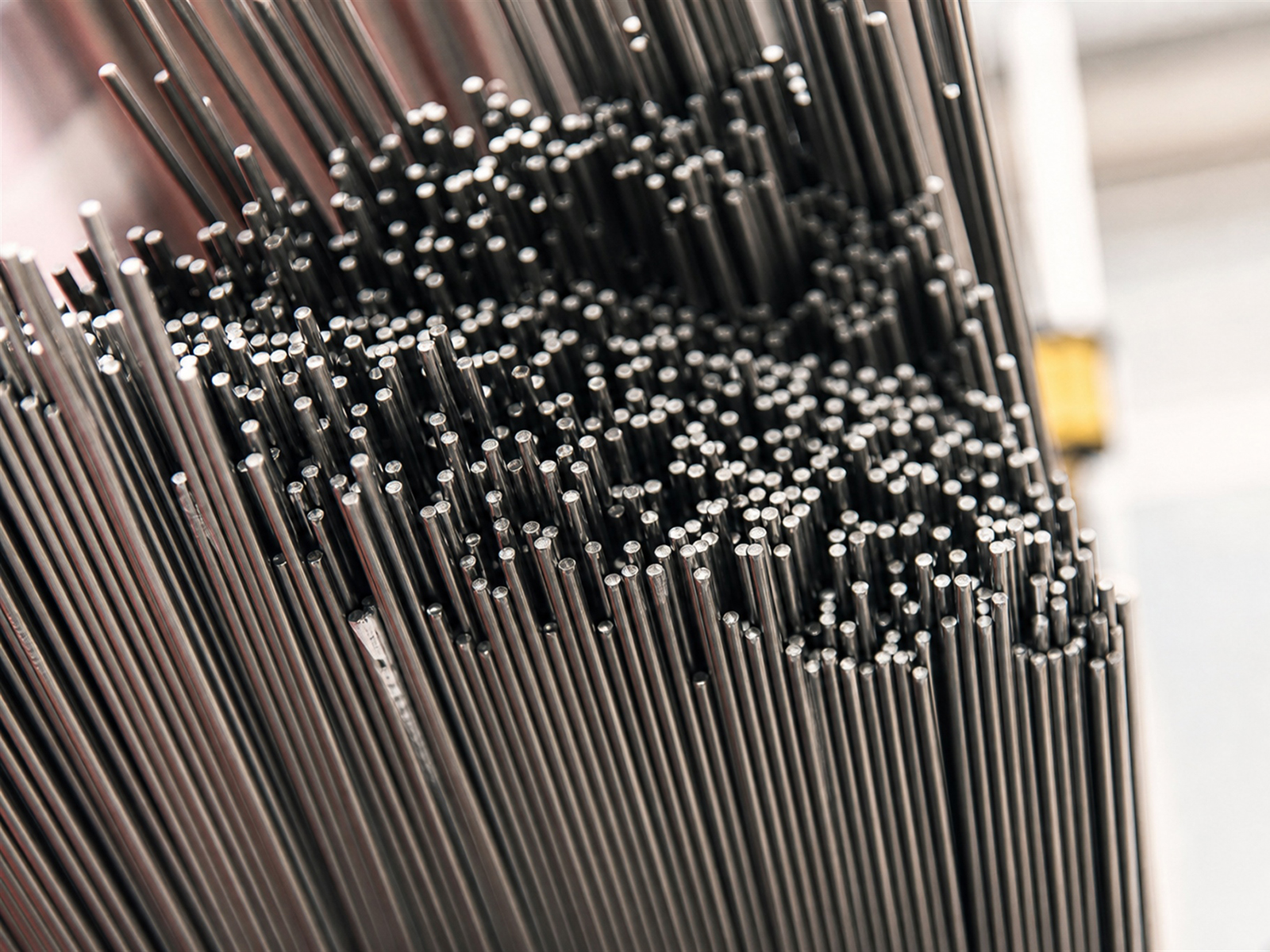
The chemical reaction behavior of GR12 titanium bar in alkaline environments has always been an important focus in industrial applications. As an alpha-type titanium alloy containing 0.3% molybdenum and 0.8% nickel (Ti-0.3Mo-0.8Ni, UNS R53400), GR12 titanium bar exhibits outstanding chemical stability in alkaline media, maintaining structural integrity and corrosion resistance across a wide range of concentrations and temperatures.
What Is the Chemical Composition and Passivation Mechanism of GR12 Titanium Bar?
How Alloy Composition Affects Alkali Resistance
The unique alloy design of GR12 titanium bar directly determines its stable performance in alkaline environments. The titanium matrix itself possesses strong oxygen affinity, rapidly forming a TiO₂ passivation layer approximately 2 to 7 nanometers thick on the surface. The addition of molybdenum (0.20 to 0.40 percent) significantly enhances the stability of this protective film in both reducing and oxidizing environments, (making) the film more resistant to dissolution in concentrated alkali solutions.
Formation and Self-Healing Characteristics of the Passivation Film
When GR12 titanium bar is exposed to alkaline solutions, an instantaneous oxidation reaction forms a TiO₂ protective layer, a process completed within milliseconds. This transparent and dense oxide film bonds firmly to the substrate, effectively blocking further alkaline ion (corrosion). More importantly, even if the film suffers minor damage from mechanical wear or local stress, titanium’s high oxygen affinity promotes rapid self-repair, reforming the protective layer within seconds.
Comparison of Alkali Resistance with Pure Titanium and Other Titanium Alloys
Compared to commercial pure titanium (GR1-GR4), GR12 titanium bar obtains superior resistance to localized corrosion through molybdenum-nickel alloying. Pure titanium may exhibit passivation film instability under concentrated alkali and high temperature conditions, while GR12’s modified composition raises its critical corrosion threshold. Compared to high-strength titanium alloys such as Ti-6Al-4V, GR12 sacrifices some strength for significantly improved corrosion resistance in alkaline environments.
What Are the Reaction Characteristics of GR12 Titanium Bar in Different Alkaline Environments?
Stability Performance in Dilute Alkali Solutions
In dilute sodium hydroxide or potassium hydroxide solutions with mass fractions below 10 percent, GR12 titanium bar exhibits extremely weak reactions under conventional operating conditions. Within the room temperature to 80 degrees Celsius range, the annual corrosion rate is typically below 0.01 mm/year, far lower than stainless steel materials. The surface passivation film remains intact with self-healing capability; even when active anions such as chloride ions are present in the solution, molybdenum addition inhibits pitting initiation.
Corrosion Behavior in Medium-Concentration Alkali Solutions
When alkali concentration increases to the 10 to 30 percent range, GR12 titanium bar still demonstrates good corrosion resistance, though the cumulative effect of temperature factors requires attention. Below 60 degrees Celsius, corrosion rates remain at extremely low levels; when temperature rises to 80 to 100 degrees Celsius, although the passivation film persists, film dissolution and regeneration reach dynamic equilibrium, with corrosion rates showing slight increases but remaining well within acceptable limits.
Analysis of Extreme Conditions with High-Concentration Strong Alkali
In concentrated alkali environments with mass fractions exceeding 40 percent (such as molten caustic soda or high-temperature concentrated alkali solutions), the passivation film of GR12 titanium bar may face dissolution challenges. When temperature exceeds 100 degrees Celsius and alkali concentration is extremely high, hydroxide ion chemical dissolution speed of the TiO₂ film accelerates, potentially forming soluble titanates. However, even under these extreme conditions, GR12 corrosion rates remain significantly lower than conventional metallic materials.
What Are the Temperature Effects on Reaction Rates?
Reaction Kinetics from Room Temperature to Medium-Temperature Range
Within the 20 to 80 degrees Celsius temperature range, the reaction between GR12 titanium bar and alkali solutions follows typical passive metal behavior. For every 10 degrees Celsius temperature increase, the chemical reaction rate theoretically doubles; however, due to the barrier effect of the passivation film, actual corrosion rate increases are far smaller than this theoretical value. At room temperature, the passivation film thickness is approximately 3 to 5 nanometers, increasing to 5 to 7 nanometers at 60 degrees Celsius as the film stabilizes.
Film Evolution Mechanisms Under High-Temperature Conditions
Above 100 degrees Celsius, passivation film dissolution and regeneration reach a new equilibrium state. High temperature accelerates hydroxide ion diffusion and titanate formation reactions, while simultaneously increasing titanium re-oxidation speed. In the 120 to 150 degrees Celsius medium-temperature range, GR12 titanium bar still maintains protective films through rapid self-repair, a capability enhanced by molybdenum’s improvement of film electrochemical stability.
Impact of Thermal Cycling on Long-Term Alkali Resistance
In actual industrial applications, equipment frequently experiences temperature cycling due to start-stop operations. During repeated heating and cooling cycles, the passivation film undergoes thermal expansion and contraction. However, since TiO₂ and the titanium substrate possess similar thermal expansion coefficients and strong bonding, the film resists spalling. Nickel addition improves alloy phase stability, reducing micro-cracks induced by thermal cycling. Long-term thermal cycling tests demonstrate no significant degradation in corrosion resistance.
Temperature Range | Alkali Concentration | Corrosion Rate (mm/year) | Passivation Film Status | Application Recommendation |
Room temperature to 80°C | Below 10% NaOH | Below 0.01 | Stable, self-repairing | Fully suitable for long-term service |
80 to 100°C | 10 to 30% NaOH | 0.01 to 0.05 | Dynamic equilibrium | Suitable with temperature monitoring |
100 to 120°C | 30 to 40% NaOH | 0.05 to 0.2 | Partial dissolution-repair cycle | Limited service life, monitor regularly |
Above 120°C | Above 40% NaOH | 0.2 to 0.5 | Significant dissolution | Not recommended; consider alternatives |
How Is Performance Verified in Actual Industrial Applications?
Chemical Industry Alkali Process Equipment Cases
In chlor-alkali industry electrolytic cell systems, GR12 titanium bars are extensively used for manufacturing anode hooks, flow guides, and structural supports. These components remain immersed in 30 percent sodium hydroxide solution continuously, with operating temperatures maintained at 80 to 90 degrees Celsius. After 5 or more years of continuous operation, GR12 titanium bar components maintain smooth surfaces with no noticeable localized corrosion signs, with annual corrosion rates below 0.01 mm/year, demonstrating exceptional long-term stability.
High-Purity Alkali Washing Systems in Pharmaceutical Industry
Biopharmaceutical enterprises’ CIP (Clean-In-Place) systems frequently circulate 2 to 5 percent sodium hydroxide solution at 70 degrees Celsius for cleaning. GR12 titanium bar manufactured pipes, valves, and spray devices not only resist alkali corrosion but, more critically, do not leach metal ions into the medium to contaminate products. Over a three-year service period, GR12 components generated no corrosion products on their surfaces, maintaining cleanliness measurements within pharmaceutical-grade specifications.
Long-Term Service in Environmental Desulfurization and Denitrification Equipment
In thermal power plant wet flue gas desulfurization systems, absorber tower spray layers and mist eliminators must withstand high-humidity corrosive environments containing alkaline absorbents. GR12 titanium bar-processed nozzles and support structures operate under combined conditions of pH 8 to 10, temperature 50 to 70 degrees Celsius, and high chloride ion concentration. After 8 years of operation, equipment inspection revealed GR12 components in pristine condition, while adjacent carbon steel components required complete replacement.
Material | Corrosion Rate in 30% NaOH at 80°C (mm/year) | Service Life Expectancy | Maintenance Requirement |
GR12 Titanium Alloy | Below 0.01 | Over 20 years | Minimal |
316L Stainless Steel | 0.5 to 2.0 | 2 to 5 years | Frequent replacement |
Nickel Alloy C276 | Below 0.005 | Over 25 years | Negligible |
Carbon Steel | 5.0 to 15.0 | Less than 1 year | Continuous replacement |
What Selection Guidelines and Engineering Practice Recommendations Exist?
Determining Material Suitability Based on Alkali Characteristics
When selecting GR12 titanium bar, first clarify the alkali type, concentration, temperature, and presence of other corrosive ions. For common alkalis such as sodium hydroxide and potassium hydroxide, with concentrations below 30 percent and temperatures below 100 degrees Celsius, GR12 represents an extremely cost-effective choice. If the alkali solution contains mixed chlorides, sulfates, or oxidizers, GR12’s molybdenum-nickel alloying characteristics (instead) enhance corrosion resistance, making it superior to most alternative materials.
Process Control Points During Machining and Welding
GR12 titanium bar machining performance surpasses high-strength titanium alloys, though cutting speed and cooling methods require attention. Carbide tools are recommended, with cutting speeds controlled at 30 to 50 m/min and adequate cooling to prevent local overheating-induced oxidation. Welding must employ argon shielding with inert gas coverage on both front and back sides to prevent high-temperature oxidation and nitridation. Post-weld heat treatment restores corrosion resistance in the heat-affected zone.
Corrosion Prevention Optimization Strategies in Equipment Design
Even with GR12 titanium bar’s excellent corrosion resistance, engineering design must follow corrosion prevention principles. Crevice structures should be avoided; connection points should prioritize full-penetration welding over threaded or flanged joints. Fluid dead zones where concentrated alkali may accumulate require drainage and flushing provisions. Dissimilar metal contact demands consideration of galvanic corrosion; titanium alloy fasteners or insulating gaskets should be used for isolation.
Operating Condition | Maximum Temperature (°C) | Maximum Concentration (%) | Recommended Application Duration | Monitoring Requirement |
Dilute NaOH (<10%) | 100 | 10 | Indefinite | None required |
Medium NaOH (10-30%) | 80 | 30 | Over 15 years | Annual inspection |
Concentrated NaOH (30-40%) | 60 | 40 | 5 to 10 years | Quarterly inspection |
High-temp concentrated | Below 60 | Above 40 | Limited | Monthly monitoring |
Conclusion
GR12 titanium bar, (through) its precise molybdenum-nickel alloy design and excellent passivation film self-repair capability, demonstrates outstanding chemical stability and long-term corrosion resistance in alkaline environments. From dilute to medium-concentration alkali solutions, from room temperature to medium-high temperature conditions, GR12 maintains extremely low corrosion rates and reliable mechanical integrity. Extensive industrial practice confirms that selecting GR12 titanium bar for alkaline service applications delivers superior performance, extended service life, and reduced total cost of ownership compared to conventional metallic materials.
FAQ
Q1: How Long Can GR12 Titanium Bar Be Used in Room-Temperature Dilute Alkali?
In sodium hydroxide or potassium hydroxide solutions below 10 percent at room temperature, the annual corrosion rate of GR12 titanium bar is typically below 0.005 mm. Under stable operating conditions, service life exceeds 20 years. However, actual lifespan is influenced by operating condition fluctuations and stress factors, making absolute predictions inappropriate. The surface passivation film remains stable with self-repair capability, requiring no frequent replacement for long-term service.
Q2: Does High-Temperature Concentrated Alkali Cause Rapid GR12 Titanium Bar Failure?
Not necessarily. Although high temperature (above 100 degrees Celsius) combined with high-concentration alkali (above 40 percent) accelerates passivation film dissolution, GR12 corrosion rates remain far lower than stainless steel and other conventional materials. By optimizing operating parameters, controlling residence time, or adopting intermittent contact methods, GR12 remains viable under such conditions, though the synergistic effect of temperature and concentration must be monitored to avoid exceeding the passivation film dissolution threshold.
Q3: What Differences Exist Between GR12 Titanium Bar and Pure Titanium in Alkaline Environments?
GR12, with added molybdenum and nickel, demonstrates (significantly) superior resistance to localized corrosion compared to commercial pure titanium, particularly in alkalmedia containing chloride ions. Simultaneously, hydrogen embrittlement risk is lower, making it more suitable for complex corrosive environments and long-term high-reliability application scenarios.
Contact Titanium Valley Immediately
If you are seeking a high-performance GR12 titanium bar supplier suitable for alkaline corrosive environments, Titanium Valley provides GR12 titanium bars and customized solutions compliant with international standards. (Through) excellent molybdenum-nickel alloy design, stable passivation film protection capability, and reliable alkali corrosion resistance, our GR12 titanium bars are widely used in chemical equipment, pharmaceutical manufacturing, and environmental protection applications. Contact us for technical consultation: sales@titaniumvalleys.com
For a broader view of available grades, supply forms, and related specifications, explore our Titanium Rod category.
For product-level details and supply options, you can also review our Gr12 Titanium Rod page.
References
Zhao Yongqing, Ge Peng. Electrochemical Behavior Research of Titanium Alloys in Corrosive Media [M]. Beijing: Metallurgical Industry Press, 2019.
Li Xingwu, Qu Henglei. Application Technology of Titanium and Titanium Alloys in the Chemical Industry [J]. Titanium Industry Progress, 2020, 37(3): 1-8.
Standardization Administration of China. GB/T 3620.1-2016 Titanium and Titanium Alloy Grades and Chemical Composition [S]. Beijing: Standards Press of China, 2016.
Wang Xiangdong, Lu Fusheng. Corrosion Behavior and Protection of Titanium Alloys in Alkaline Media [J]. Corrosion & Protection, 2017, 38(5): 345-350.