
What Is the Surface Finish Quality of Gr12 Titanium Bar
- GR12 Titanium Bar
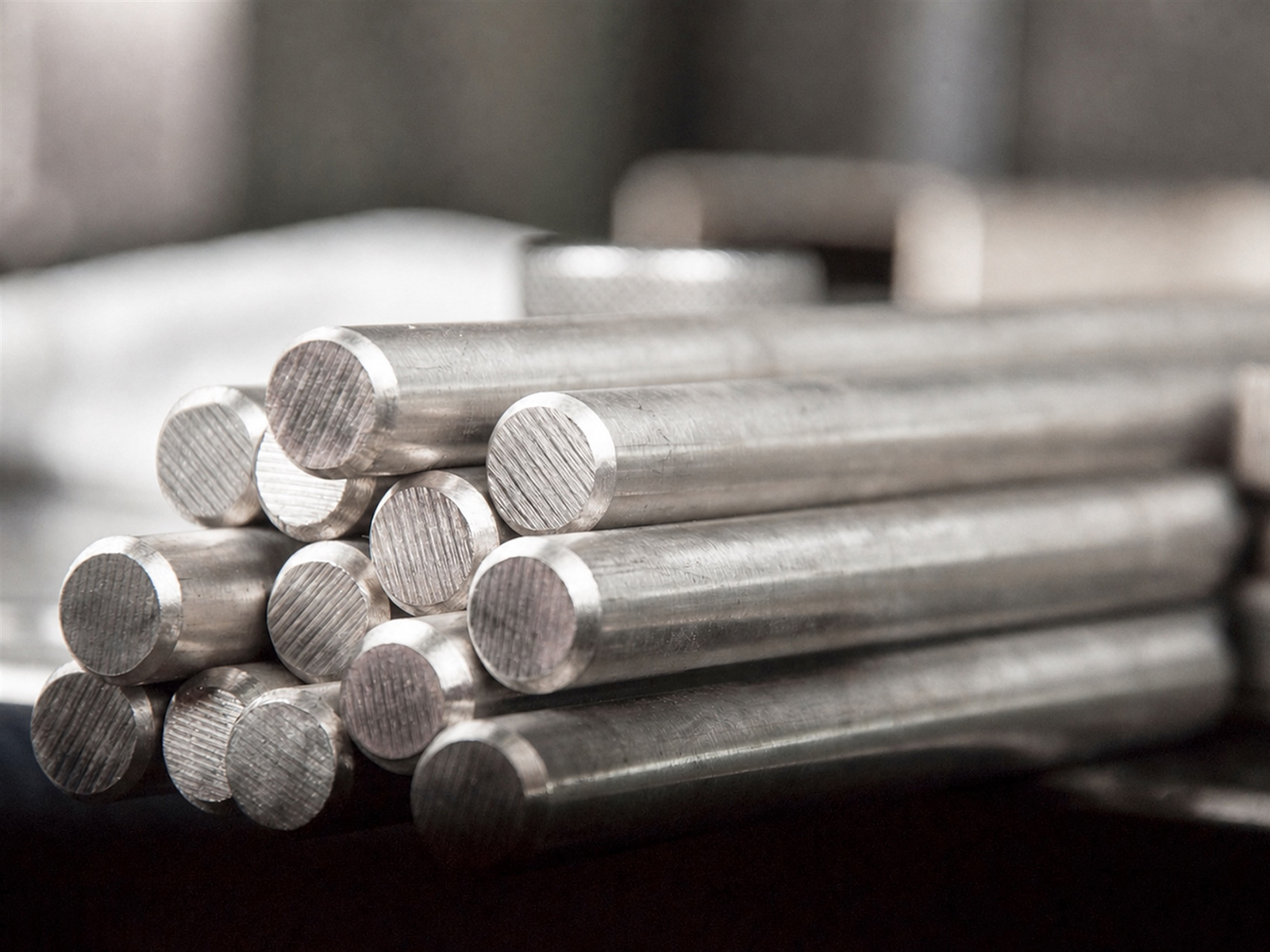
The surface finish of GR12 titanium bar typically achieves Ra 0.4 to 3.2 micrometers, with specific grades depending on processing technology and application requirements. GR12 titanium bars (processed through) cold drawing or precision grinding can achieve mirror-like surfaces with roughness as low as below Ra 0.2 micrometers; while hot-rolled annealed products exhibit surface roughness of approximately Ra 1.6 to 3.2 micrometers, suitable for general industrial applications.
What Are the Core Factors Influencing the Surface Finish of GR12 Titanium Bar?
Intrinsic Role of Alloy Composition on Surface Quality
The molybdenum element in GR12 titanium alloy refines grain structure, (making) material deformation more uniform during rolling and drawing processes, reducing surface micro-crack formation. Nickel element enhances material plasticity and toughness, reducing work hardening tendency, allowing titanium bars to maintain flat surface (morphology) after multi-pass cold working. This alloying design enables GR12 titanium bars to demonstrate superior surface consistency compared to commercial pure titanium during precision machining operations.
Decisive Impact of Production Process Path on Finish Quality
Vacuum arc remelting (VAR) technology effectively controls gas content, reducing surface oxidation and inclusions. Temperature control and deformation design during forging and rolling stages directly influence surface texture and roughness distribution. Cold drawing processes, through precise die design and lubrication systems, control surface roughness below Ra 0.4 micrometers, meeting precision instrument component standards.
Heat Treatment State and Surface Oxide Layer Management
Annealing treatment (M condition) forms a thin and dense oxide layer on the titanium bar surface, approximately 0.01 to 0.05 micrometers thick. This oxide film provides basic corrosion protection but may slightly affect surface gloss. Acid pickling or mechanical polishing removes the oxide layer, achieving higher surface finish. For applications requiring direct welding or ultra-clean environments, oxide layer removal (after) GR12 titanium bar surfaces achieve ISO 14644-1 Class C cleanliness standards.
How Does Surface Finish Compare Across Different Processing Technologies?
Surface Quality Characteristics of Hot Rolling Process
Hot-rolled GR12 titanium bars (formed) within the 900 to 950 degrees Celsius temperature range develop golden or light blue oxide layers on the surface, a normal phenomenon of titanium-oxygen reaction at high temperatures. Although roughness is relatively higher, this surface (condition) possesses excellent adhesion, suitable for subsequent welding or surface coating treatments. GR12 titanium bars used in seawater systems typically retain this surface (condition), though attention should be paid to the limited corrosion resistance of hot-rolled oxide layers in seawater environments.
Precision Control Advantages of Cold Working Processes
GR12 titanium bars (employing) multi-pass cold drawing processes, with each pass compression rate controlled between 15 to 25 percent, (combined with) specialized emulsion lubrication, precisely (control) surface morphology. Titanium bars produced by this process achieve dimensional tolerances at H7 to H9 grades, with surfaces free of scratches, laps, or cracks, directly meeting rough machining requirements for precision mechanical parts. Cold-drawn titanium bars exhibit slightly increased hardness, but intermediate annealing treatment restores formability while maintaining excellent surface quality.
Improvement Potential of Surface Treatment Technologies
Mechanical polishing using aluminum oxide or silicon carbide abrasives removes surface micro-defects, reducing roughness below Ra 0.3 micrometers. Electrochemical polishing technology, through controlling current density and electrolyte composition, achieves more uniform material removal, obtaining ultra-clean surfaces free of stress and deformation layers. Passivation treatment follows polishing, enhancing oxide film density and corrosion resistance through nitric or hydrofluoric acid solution immersion, particularly suitable for pharmaceutical and food industry sanitary-grade applications.
What Are the Inspection and Evaluation Standards for GR12 Titanium Bar Surface Quality?
Roughness Measurement Techniques and Parameter Interpretation
Contact profilometers scan surfaces with diamond stylus, measuring vertical microscopic undulations, outputting parameters including Ra (arithmetical mean roughness) and Rz (maximum height). Non-contact optical measurement instruments utilize white light interference or laser triangulation principles, suitable for measuring polished titanium bar surfaces, avoiding stylus-induced scratching. For GR12 titanium bars above 50 mm diameter, multiple measurement points should be evenly selected around the circumference, with 2 to 3 cross-sections measured per meter along the axis.
Classification and Acceptable Levels of Visual Defects
Common surface defects of GR12 titanium bars include rolling marks, scratches, pitting, and oxidation color variation. Minor oxidation color variation (golden to light blue) is normal and does not affect performance; for non-critical surfaces, local scratches below 0.1 mm depth may be permissible, but precision machining applications require no visible defects; pitting (pits) exceeding 0.5 mm diameter or 0.2 mm depth should be judged as (unqualified). Precision machining-grade titanium bars require surfaces free of visible defects.
Cleanliness Assessment and Contaminant Control
Cleanliness testing employs wiping or immersion methods to extract surface residues, analyzing chloride ions, sulfate ions, and other corrosive ion content through ion chromatography or mass spectrometry. Pharmaceutical-grade GR12 titanium bars require surface chloride ion content below 10 ppm, with total organic carbon (TOC) not exceeding 10 ppm. Titanium bars for semiconductor industry applications additionally control metal ion contamination, employing ICP-MS detection for iron, chromium, nickel, and other element residuals below 0.1 ppb levels.
How Does Surface Finish Actually Affect the Performance of GR12 Titanium Bar?
Correlation Between Corrosion Resistance and Surface Condition
Smooth surfaces reduce corrosive media retention and concentration effects, significantly lowering crevice corrosion and pitting risk. In chloride-containing acidic environments, reducing surface roughness from Ra 3.2 micrometers to 0.8 micrometers extends pitting induction period by 3 to 5 times. Surface microscopic pits and scratches serve as (preferred) corrosion initiation sites; finely processed GR12 titanium bars demonstrate superior performance in sulfuric acid, hydrochloric acid, and other aggressive media compared to rougher counterparts.
Dependency of Fatigue Strength on Surface Integrity
Stress concentration exists at surface roughness peaks and valleys, serving as fatigue crack initiation sources. Research indicates that for every 1 micrometer reduction in GR12 titanium bar surface roughness, fatigue limit increases by 5 to 10 MPa. Pressure-bearing structural components and rotating parts are particularly sensitive to surface quality; polished titanium bars exhibit 2 to 3 times improved fatigue life. Surface residual processing deformation layer depth should be controlled below 0.05 mm for critical fatigue applications.
Matching Design of Sealing Performance and Surface Roughness
Flange sealing surfaces, threaded connectors, and dynamic seal shafts have specific roughness requirements. GR12 titanium bar-processed flange sealing surfaces recommend roughness Ra 0.8 to 1.6 micrometers, (combined with) graphite or PTFE gaskets achieving leak-free sealing. Threaded portion roughness controlled below Ra 3.2 micrometers, ensuring smooth assembly while providing sufficient friction torque for reliable joint integrity.
What Engineering Practices Improve the Surface Finish of GR12 Titanium Bar?
Key Quality Control Points in Production Process
Raw material electrode preparation stages strictly control sponge titanium purity, reducing iron, silicon, and other impurity content to minimum levels. VAR melting maintains stable arc power and melt pool depth, reducing surface shrinkage porosity and inclusion defects. Forging heating furnaces employ protective atmospheres or rapid heating methods, avoiding severe surface oxidation. Rolling processes utilize high-precision rolls and real-time thickness measurement systems, ensuring dimensional uniformity and surface flatness.
Optimization Strategies for Post-Processing Technologies
Pickling solution formulas (employ) nitric-hydrofluoric acid mixed systems, with concentration and temperature precisely controlled, removing oxide layers while avoiding over-etching. Note: hydrofluoric acid is highly toxic; operations require strict (protection). Mechanical polishing divides into rough and fine polishing stages, abrasive grit transitioning progressively from 80 mesh to above 1000 mesh, ensuring no scratch (residue) on surfaces. Ultrasonic cleaning (combined with) deionized water rinsing thoroughly removes surface (residue) of processing fluids and contaminants.
Application of Dedicated Tooling and Inspection Equipment
Cold drawing dies (utilize) cemented carbide materials, surface hard chromium plated or diamond-coated, extending service life and improving titanium bar surface quality. Online roughness monitoring systems provide real-time feedback on processing quality, promptly adjusting process parameters. Automated packaging lines (equip) cleanroom environments, avoiding human contact and air contamination. Establishing surface quality databases (trace) each titanium bar’s processing history and inspection records, continuously improving process stability.
Conclusion
The surface finish of GR12 titanium bars (achievable) through alloy design, process control, and post-processing technologies in the broad range of Ra 0.2 to 3.2 micrometers, meeting diverse requirements from conventional chemical industry to ultra-clean semiconductor applications. Excellent surface quality not only enhances corrosion resistance and fatigue life but also serves as the foundation ensuring long-term stable equipment operation. Selecting qualified GR12 titanium bar suppliers, focusing on their quality control systems and inspection capabilities, effectively avoids material defect-related risks.
FAQ
Q1: Can the Oxide Color on GR12 Titanium Bar Surfaces Be Removed?
Yes, through acid pickling or mechanical polishing. Acid pickling uses nitric-hydrofluoric acid mixed solution immersion for 5 to 15 minutes, dissolving the oxide layer and revealing metallic luster; mechanical polishing removes 0.05 to 0.1 mm surface thickness through abrasive grinding, achieving mirror effects. After oxide layer removal, timely passivation treatment or vacuum packaging is required to prevent re-oxidation.
Q2: Is There Significant Price Difference Among GR12 Titanium Bars of Different Roughness?
Price differences primarily depend on processing (procedure) complexity. Hot-rolled titanium bars (Ra 1.6 to 3.2 micrometers) represent base pricing; cold-drawn bars (Ra 0.4 to 0.8 micrometers) increase costs by approximately 15 to 25 percent; precision-ground polished bars (Ra at most 0.4 micrometers) increase costs by 30 to 50 percent. Large-volume purchasing obtains more favorable processing fees; selecting appropriate surface states based on actual application needs avoids cost waste from over-processing.
Q3: How to Accept the Surface Quality of GR12 Titanium Bars?
Acceptance should comprise three levels: visual inspection for obvious scratches, pitting, and cracks on surfaces; using roughness meters to (sample inspect) 2 to 5 specimens, with measured values complying with technical agreement requirements; for cleanliness-sensitive applications, surface wiping analysis detecting chloride ions and organic (residue) is required. Suppliers should provide surface quality inspection reports and traceable production records for each batch.
Contact Titanium Valley Immediately
If you are seeking a high-quality GR12 titanium bar supplier, Titanium Valley provides titanium bar products and customized processing services compliant with international standards. We strictly control raw materials, production processes, and surface treatment procedures, ensuring GR12 titanium bars possess excellent surface finish, dimensional accuracy, and corrosion resistance for chemical equipment, seawater desalination, medical, food, and precision manufacturing industry applications. Whether you require hot-rolled, cold-drawn, or precision-polished products, we deliver customized solutions meeting your specifications. Contact us: sales@titaniumvalleys.com
For a broader view of available grades, supply forms, and related specifications, explore our Titanium Rod category.
For product-level details and supply options, you can also review our Gr12 Titanium Rod page.
References
Surface Treatment Technology and Applications of Titanium and Titanium Alloys, edited by Titanium Zirconium Hafnium Branch of China Nonferrous Metals Industry Association, Metallurgical Industry Press, 2021.
Wang Jianjun, et al. Surface Behavior Study of GR12 Titanium Alloy in Corrosive Environments [J]. Rare Metal Materials and Engineering, 2020, 49(6): 1523-1528.
Li Minghua. Influence Mechanism of Precision Cold Working on Surface Integrity of Titanium Alloys [J]. Materials Science and Technology, 2019, 27(3): 45-52.
Liu Wei, et al. Research Progress on Titanium Bar Surface Quality Inspection Technology [J]. Titanium Industry Progress, 2021, 38(3): 15-20.