
What Should You Know About Analysis of Processing Performance of Gr5 Titanium Rod, Key Factors Affecting Machining Efficiency?
- Gr5 Titanium rod
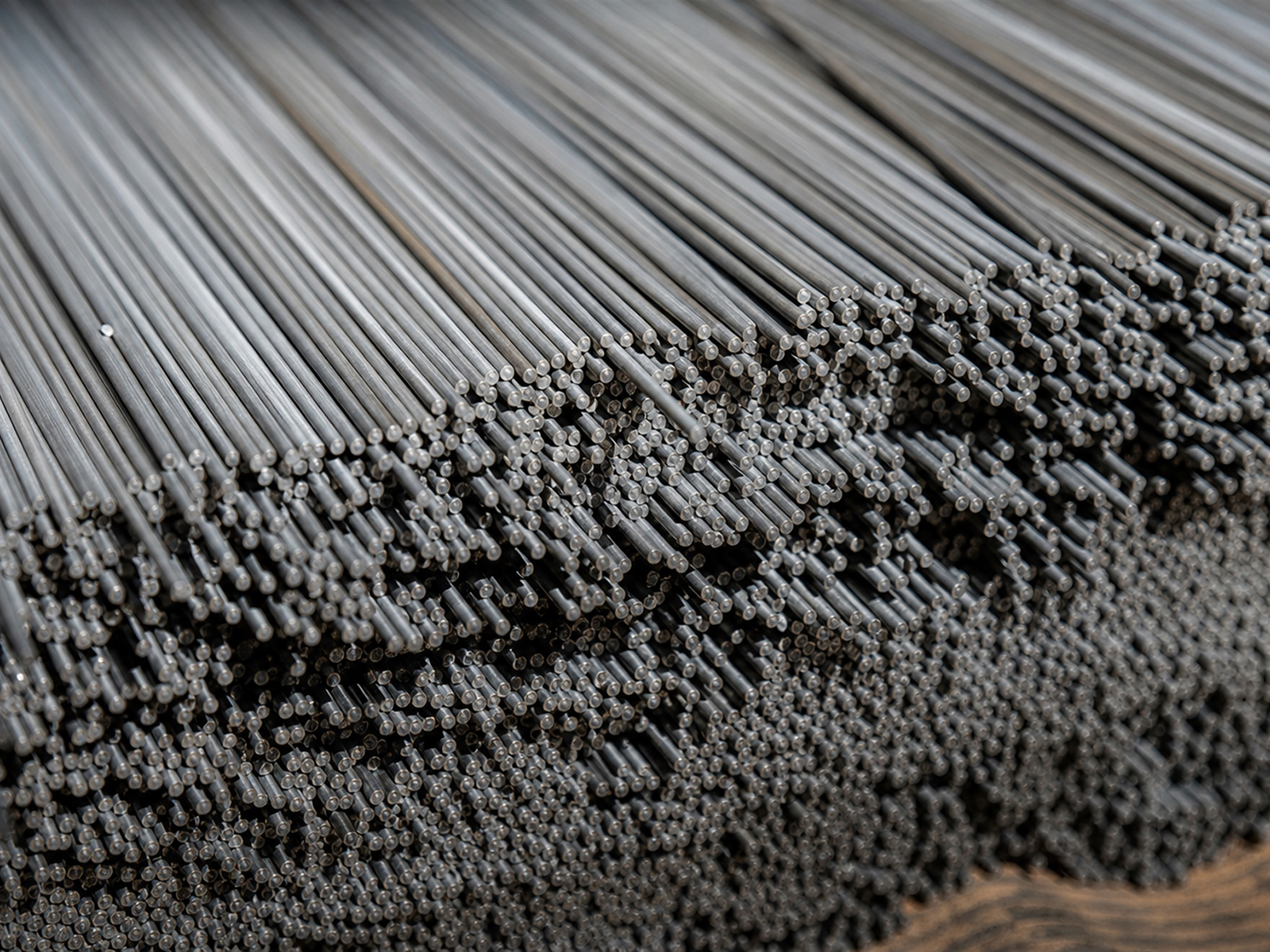
The machining efficiency of Gr5 titanium rod (Ti-6Al-4V) is restricted by multiple factors. The core challenges arise from its low thermal conductivity, high chemical activity and work hardening properties. During the cutting process, heat is concentrated on the cutting edge of the tool, which can easily cause tool sticking and rapid wear. At the same time, the material’s low elastic modulus causes the workpiece to easily deform, and cutting force fluctuations affect dimensional accuracy. Optimizing processing parameters, selecting special tool coatings, and using high-pressure cooling technology are key paths to improving efficiency. An in-depth understanding of the matching principles of material properties and processes can effectively reduce production costs, shorten delivery times, and ensure the quality stability of parts. This has important practical value for batch applications in the fields of aerospace, medical implants, and precision manufacturing.
1. What Should You Know About the Essential Influence of Gr5 Titanium Rod Material Properties on Processing Behavior?
(1) Why Is Thermal Damage Mechanism of Tools Caused by Low Thermal Conductivity Important?
The thermal conductivity of Ti-6Al-4V alloy is only 6.7 W/(m·K), which is about 1/7 of AISI 1045 steel. The heat generated in the cutting zone cannot be quickly transferred to the workpiece matrix and chips, and more than 80% of the heat energy (typical estimate) is concentrated in the narrow area of the tool rake face. When the cutting speed reaches 60 m/min, the tool tip temperature can exceed 900℃, far exceeding the working limit of carbide tools. The high temperature environment accelerates the diffusion wear of tool materials, and the tool life is shortened to 1/10 of the processing of ordinary steel.
(2) Why Is Tool Bonding Caused by Chemical Activity Important?
Titanium alloys chemically react with elements such as cobalt and nickel in tool materials above 600℃ to form a brittle compound layer. During the cutting process, micro-welding occurs between the workpiece material and the tool surface, and the built-up edge repeatedly forms and falls off, causing crater wear on the tool. Experimental data shows that when uncoated carbide tools process Gr5 titanium rods, the flank wear reaches the 0.3 mm scrap standard (based on the ISO 3685 standard) within 15 minutes, which is far lower than the 60-minute service life of stainless steel.
(3) Why Is Difficulties in Processing Deformation Control Caused by Low Elastic Modulus Important?
The elastic modulus of Gr5 titanium rod is 110 GPa, which is only half that of steel. Under the action of cutting force, the workpiece is prone to elastic deflection, causing the actual cutting depth to be less than the theoretical value, and the rebound amount of the machined surface can reach 0.05-0.15 mm (for a typical workpiece with a diameter of 20-50 mm and an aspect ratio of 10: 1). When processing slender shaft parts, the bending deformation caused by radial cutting force causes the cylindricity error to exceed the tolerance. Deformation needs to be controlled by optimizing the clamping method and reducing the radial cutting force, which directly affects the processing rhythm and automation level.
Material performance parameters | Gr5 titanium rod (Ti-6Al-4V) | AISI 1045 steel | 316 stainless steel |
Thermal conductivity W/(m·K) | 6.7 | 48 | 16.3 |
Modulus of elasticity GPa | 110 | 210 | 193 |
Cutting temperature C | 850-1100 | 600-800 | 700-900 |
Tool life ratio (typ.) | 1 | 10 | 5 |
2. What Should You Know About the Quantitative Impact of Cutting Parameter Optimization on Machining Efficiency?
(1) What Should You Know About Balancing the Dual Effects of Cutting Speed?
Increasing the cutting speed can increase the material removal rate, but the optimal cutting speed range of Gr5 titanium rods is narrow. Tests show that the recommended linear speed of cemented carbide tools is 30-50 m/min. After exceeding 60 m/min, tool wear shows a significantly accelerated growth (experimental data shows that the wear rate increases by approximately 40-60% for every 10 m/min increase). Using ceramic tools or cubic boron nitride tools can increase the speed to 60-80 m/min, but it requires a high-pressure cooling system. If the speed is too low, work hardening will be severe, the cutting force will increase by 15%-25%, and the surface roughness will deteriorate.
(2) What Should You Know About Synergistic Matching of Feed Rate and Cutting Depth?
In the roughing stage, it is advisable to use a larger feed rate (0.2-0.4 mm/r) and a medium cutting depth (1.5-3 mm), and reduce the number of tool passes to reduce the cumulative thermal effect. During finishing, the feed rate needs to be controlled at 0.1-0.2 mm/r, and the cutting depth is 0.3-0.5 mm to ensure surface integrity. Actual measurement data shows that when the feed rate increases from 0.1 mm/r to 0.3 mm/r, the cutting force increases by 40% but the material removal amount per unit time increases by 180%, and the overall efficiency is significantly improved. It should be noted that excessive feed will lead to the risk of chipping.
(3) What Should You Know About Microscopic Control of Tool Geometry Angle?
Increasing the rake angle can reduce cutting deformation and cutting force, but an excessively large angle weakens the strength of the blade. The recommended rake angle for Gr5 titanium rod processing is 0°-5°, the main deflection angle is 45°-75°, and the edge inclination angle is -5° to 5°. If the clearance angle is too small, friction and heat will occur on the flank surface; if it is too large, the tool tip will not have sufficient strength. The use of large negative chamfers (chamfer width 0.1-0.15 mm, angle -20° to -30°) can strengthen the blade and improve impact resistance. The tool tip arc radius is 0.4-0.8 mm suitable for finishing, and 1.2-2.0 mm can be used for roughing to enhance durability.
processing stage | Cutting speed m/min | Feed rate mm/r | Cutting depth mm | Tool material |
roughing | 35-50 | 0.25-0.40 | 2.0-3.0 | K10 carbide |
semi-finishing | 40-60 | 0.15-0.25 | 0.8-1.5 | TiAlN coated cutting tools |
finishing | 50-80 | 0.08-0.15 | 0.3-0.5 | Ceramic/CBN cutting tools |
3. What Should You Know About Performance Breakthroughs in Tool Materials and Coating Technologies?
(1) What Should You Know About Performance Matching of Tool Base Materials?
Fine-grained carbide (ISO K type) has good toughness and thermal conductivity, and is suitable for medium and low speed roughing. The crater wear resistance of carbide tools added with TaC and NbC is increased by 30% (under the conditions of cutting speed 40 m/min and feed 0.2 mm/r). Ceramic cutting tools (Si₃N₄-based) have excellent heat resistance and are suitable for high-speed finishing, but are brittle and require a machine tool with good rigidity. Polycrystalline cubic boron nitride (PCBN) tools have high hardness and strong chemical stability, and the efficiency of processing hardened titanium rods is increased by 3-5 times, but the cost is 10-15 times that of cemented carbide, and the economics need to be evaluated.
(2) What Should You Know About the Mechanism of Coating Technology to Reduce Friction Coefficient?
The TiAlN coating forms a dense Al₂O₃ protective layer at high temperatures, with an oxidation resistance temperature of up to 800℃, extending tool life by 2-3 times. Nanocomposite coatings (such as TiAlSiN) have a hardness of 35-42 GPa and a friction coefficient reduced to less than 0.4 through refined grains and multi-layer structure design. Although the diamond coating has extremely high hardness, it has a strong affinity with titanium, which in turn aggravates bonding wear and is not suitable for titanium alloy processing. The thickness of the coating needs to be controlled at 2-4 um. If it is too thick, it will easily peel off, and if it is too thin, the protective effect will be limited.
(3) What Should You Know About Tool Wear Monitoring and Replacement Strategies?
Acoustic emission sensors are used to monitor the cutting process in real time. When the signal amplitude suddenly increases by more than 20%, it indicates abnormal tool wear. When the flank wear amount VB reaches 0.3 mm or the rake surface crater depth KT exceeds 0.15 mm, the tool needs to be replaced (based on ISO 3685 standard). In mass production, it is recommended to set the tool replacement cycle according to the processing time, roughing tools are 40-60 minutes (typical value), and finishing tools are 80-120 minutes. Regularly measure the dimensional change trend of the workpiece. When the dimensions of three consecutive pieces deviate in one direction by more than 30% of the width of the tolerance zone, the tool should be replaced even if the wear limit is not reached.
4. What Should You Know About the Regulating Effect of Cooling and Lubrication System on Temperature Field?
(1) What Should You Know About Penetration Strengthening Effect of High-pressure Coolant?
Conventional pouring coolant has a low flow rate and is difficult to penetrate the gap between chips and tools. The high-pressure cooling system (pressure 10-15 MPa) injects coolant directly into the cutting area, taking away more than 70% of the cutting heat and reducing the tool temperature by 150-250℃. The water-based emulsion with a mass fraction of 5%-8% is used to ensure both cooling effect and lubrication performance. The flow rate needs to be 10-20 L/min, the nozzle is 30-50 mm away from the cutting point, and the angle is aligned with the rake face and the chip discharge direction.
(2) Why Is Environmental Advantages of Minimum Quantity Lubrication Technology Important?
The MQL system mixes a very small amount of lubricating oil (5-50 mL/h) with compressed air to form a micron-sized oil mist that acts on the cutting zone. Compared with traditional wet cutting, coolant consumption is reduced by 95%, and no subsequent cleaning and waste liquid treatment are required. Polyalpha olefin (PAO)-based synthetic oil combined with extreme pressure (EP) additives can form a boundary lubricating film at high temperatures and reduce the friction coefficient by 20%-35%. The surface roughness of titanium rods during finishing can reach Ra 0.4 um, which is close to the grinding level. It should be noted that MQL is not suitable for rough machining with large depth of cut. The limited cooling capacity can easily cause the tool to overheat.
(3) Why Is Extreme Applications of Low-temperature Cold Air and Liquid Nitrogen Cooling Important?
Liquid nitrogen cooling (-196℃) can significantly reduce the temperature of the cutting zone (to about 200℃), completely inhibiting chemical wear and diffusion wear. The tool life is increased by 5-8 times, but liquid nitrogen is expensive and complex to operate. It is mainly used for difficult-to-machine titanium alloys or high-value parts. The low-temperature cold air system (-10℃ to -30℃) is refrigerated through vortex tubes. The cost is between conventional cooling and liquid nitrogen, and it is suitable for medium-volume production. Both methods need to prevent the workpiece from thermal stress cracks due to rapid cooling, and it needs to be preheated to 100-150℃ before processing (suitable for reducing thermal stress during liquid nitrogen cooling).
Cooling method | pressure/temperature | cooling effect | cost factor | Applicable scenarios |
Regular pouring | 0.3-0.5 MPa | benchmark | 1.0 | General machining |
High pressure cooling | 10-15 MPa | Temperature dropped by 200℃ | 1.5 | Efficient roughing |
Minimum quantity lubrication | 0.5-0.8 MPa | Friction reduced by 30% | 0.8 | Precision machining |
Liquid nitrogen cooling | -196℃ | Temperature dropped by 600℃ | 5.0 | Super difficult to process materials |
5. What Should You Know About Machine Tool Rigidity and Process System Stability Guarantee?
(1) What Should You Know About the Influence of Machine Tool Dynamic Characteristics on Vibration Marks?
The cutting force fluctuates greatly when processing Gr5 titanium rods. When the spindle speed of ordinary machine tools exceeds 3000 r/min, resonance is easily excited, and periodic vibration patterns appear on the surface of the workpiece. The high-rigidity machining center adopts a symmetrical gantry structure. Compared with ordinary machine tools, the cross-sectional area of the column is increased by 40%, the natural frequency is increased to more than 180 Hz, and the anti-vibration performance is significantly improved. The spindle bearing needs to be a ceramic ball hybrid bearing, which has low temperature rise and good accuracy retention during high-speed operation. Insufficient lead screw preload will cause backlash and affect contour accuracy. It is recommended to check and adjust to within 0.01 mm every quarter.
(2) What Should You Know About Deformation Suppression Strategy for Workpiece Clamping Methods?
When processing thin-walled titanium rods, the clamping force of the three-jaw chuck needs to be controlled at the minimum necessary value to avoid clamping deformation. Using elastic clamps or hydraulic clamps, uniform pressure distribution can reduce ovality errors. Slender shaft parts need to be supported by a center frame or a tool rest. The distance between the support points is calculated based on the aspect ratio. When L/D>10, at least two support points are set up. When processing heat-treated titanium rods, the release of residual stress will cause secondary deformation. It is necessary to arrange a stress relief annealing process (temperature 550℃, heat preservation for 2 hours) after rough machining, and then finish machining to ensure the final size.
(3) What Should You Know About Heat Accumulation Control for Tool Path Planning?
Continuous cutting of the same area causes heat accumulation and induces local tissue changes. Adopting a segmented cutting strategy, each pass length is 20-30 mm and the tool is retracted for 5-10 seconds to cool down (it is recommended to adjust according to the tool temperature), so that the temperature drops below 300℃ before continuing processing. When milling the cavity, a trochoidal milling path is adopted, the tool always remains in motion, the cutting thickness is uniform, and the thermal shock is small. To prevent the tool from suddenly stopping in the cutting state, arc transitions should be set in the advance and retreat paths to reduce tool marks and surface defects. The tool wear compensation function needs to be set during programming to automatically adjust the tool radius value according to the processing time.
6. What Is the Conclusion?
The machining efficiency of Gr5 titanium rods is restricted by multiple factors such as material properties, process parameters, tool technology and system rigidity. By accurately matching the cutting speed (30-80 m/min), optimizing the tool geometric angle, applying TiAlN coating technology and high-pressure cooling system, the tool life can be increased by 2-5 times, and the processing efficiency can be increased by 40%-60%. Enterprises need to establish a parameter database and wear monitoring mechanism to realize digital control of the processing process, so as to reduce manufacturing costs while ensuring the quality of parts.
FAQ
Q1: Why does the tool wear so quickly when processing Gr5 titanium rods?
The low thermal conductivity of Ti-6Al-4V alloy causes cutting heat to be concentrated on the tool tip, and when the temperature exceeds 900℃, tool diffusion wear and chemical bonding are accelerated. At the same time, the high chemical activity of titanium causes it to form a brittle compound with the tool material. The crater wear is serious, and the tool life is only 10%-15% of that of the processed steel.
Q2: How to choose the appropriate cooling method to improve processing efficiency?
A high-pressure coolant system (10-15 MPa) is recommended for rough machining, which can effectively reduce the cutting temperature by more than 200℃. Minimum quantity lubrication technology can be used for finishing, which can reduce coolant consumption by 95% while ensuring surface quality. Liquid nitrogen cooling can be considered for parts with ultra-high requirements, but the balance between cost and operational complexity needs to be evaluated.
Q3: How to control the deformation problem when processing slender titanium rods?
It is necessary to use elastic clamps to reduce clamping deformation, and add a center frame or tool rest to provide intermediate support (must be set when the aspect ratio is >10). The cutting parameters should reduce the radial cutting force and the feed rate should be controlled at 0.1-0.2 mm/r. After rough machining, stress relief annealing is arranged to release residual stress and then finish machining, so that the cylindricity error can be controlled within 0.02 mm.
7. What Should You Know About About Titanium Valley?
As a professional manufacturer and supplier in the field of high-end rare metal processing in China, Titanium Valley relies on world-class equipment and full-process quality systems to provide customized processing services for Gr5 titanium rods that comply with international standards such as ASTM and AMS for the global aerospace, medical equipment and precision electronics industries. We provide one-stop solutions from material selection, process optimization to batch supply, helping customers reduce trial and error costs and shorten project cycles. Welcome to contact sales@titaniumvalleys.com for technical support and quotation details.
References
- Chen Wuyi, Liu Zhanfeng. Research progress in titanium alloy cutting processing technology. Tool Technology, 2018, 52(1): 3-9.
- Qi Baoyun, Li Chunzhi, Yang Jianguo. Wear mechanism and parameter optimization of titanium alloy Ti-6Al-4V milling tools. Chinese Journal of Mechanical Engineering, 2015, 51(5): 178-184.
- Zhang Youzhen. Metal cutting principles and cutting tools. Beijing: Machinery Industry Press, 2017.
- Wang Xibin, Yang Zhiqiang. Cutting technology of difficult-to-machine materials. Beijing: National Defense Industry Press, 2014.