
What Should You Know About Analysis of the Anti-pitting Corrosion Performance of Gr12 Titanium Rod, a High-performance Material Suitable for Harsh Corrosive Environments?
- Gr12 Titanium Rod
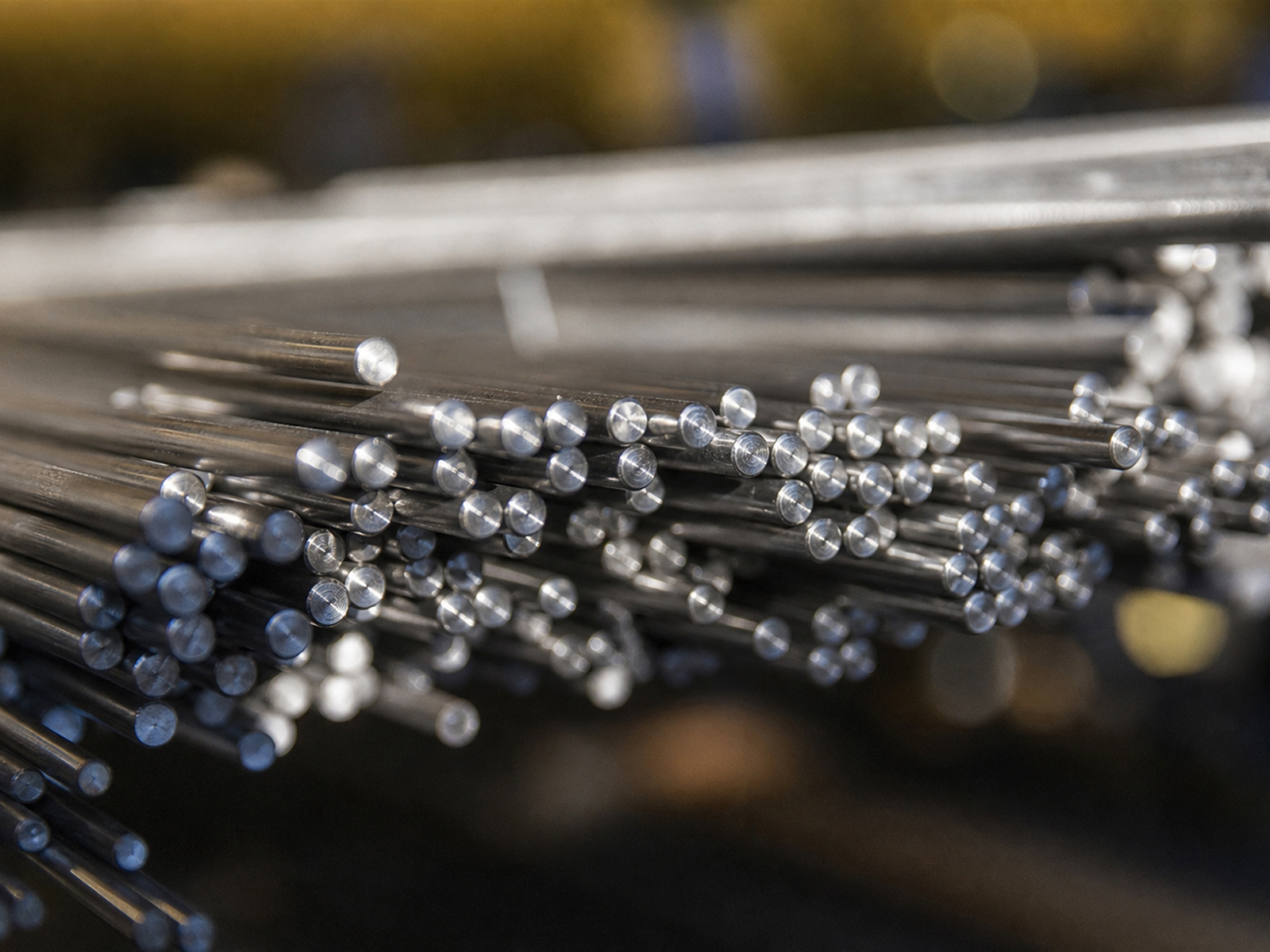
In highly corrosive industrial environments, equipment failure often results from local corrosion failure of materials. Gr12 titanium rod, as a near-alpha titanium alloy added with molybdenum and nickel, has excellent performance in resisting pitting and crevice corrosion. This Ti-0.3Mo-0.8Ni alloy significantly improves its corrosion resistance in chlorine-containing media, reducing acids and seawater environments through precise composition control. Compared with industrial pure titanium, Gr12 titanium rod not only maintains excellent weldability and processability, but also has higher strength and more stable long-term service performance. This makes it an ideal choice to deal with severe corrosion challenges in the chemical industry, marine engineering, energy and other fields, which can effectively extend the life of equipment, reduce maintenance costs and improve system safety.
1. What Should You Know About Alloy Design and Anti-pitting Corrosion Mechanism of Gr12 Titanium Rod?
(1) What Should You Know About the Microscopic Mechanism of Synergy Between Molybdenum and Nickel?
The molybdenum content in Gr12 titanium rods is controlled at 0.20%-0.40%, and the nickel content is maintained at 0.60%-0.90%. Molybdenum element can form a dense oxidation protective film on the surface of the titanium substrate, significantly improving the stability of the film in an acidic chloride environment. The addition of nickel improves the passivation behavior of the alloy in reducing media. The synergistic effect of the two enhances the self-healing ability of the passive film on the alloy surface by about 30%-40%. This optimization of microstructure directly translates into an improvement in macroscopic pitting corrosion resistance.
(2) What Should You Know About Effect of Crystal Structure on Localized Corrosion?
The near-α phase structure gives Gr12 titanium rod excellent structural stability. After vacuum annealing and precision heat treatment, the grain boundaries within the material are evenly distributed, reducing local stress concentration points. This homogenized microstructure effectively suppresses the preferential locations for pitting corrosion initiation, allowing the material to demonstrate long-lasting resistance to localized corrosion in complex electrolyte environments such as seawater and salt spray. Compared with industrial pure titanium, its pitting corrosion potential can be increased by 100-150mV.
(3) What Should You Know About Passivation Film Self-healing Properties?
In an oxidizing environment containing chloride ions, once the passivation film on the surface of the Gr12 titanium rod is mechanically damaged or chemically corroded, molybdenum and nickel elements can promote rapid regeneration of the film. This self-healing process is usually completed within seconds to minutes, much faster than ordinary stainless steel materials. This characteristic allows the material to maintain stable protective performance under dynamic corrosive environments and erosion and wear conditions, greatly reducing the risk of sudden perforation.
2. What Should You Know About Performance in Typical Corrosive Environments?
(1) What Should You Know About Corrosion Resistance in Chlorine-containing Media?
In desalination systems and the chlor-alkali industry, chloride ion concentrations can reach thousands to tens of thousands of ppm. Gr12 titanium rods exhibit excellent crevice corrosion resistance in such environments, with a critical crevice temperature (CCT) of up to 70-90℃, far exceeding the 20-30℃ of 316 stainless steel. Even in high-risk areas such as trapped seawater and sealed joints, the material can maintain long-term stable operation and avoid equipment leakage and safety accidents caused by local corrosion.
Table 1: Performance comparison of Gr12 titanium rods and commonly used materials in chlorine-containing environments
Material type | Pitting corrosion potential (mV, SCE) | Critical gap temperature (C) | Annual corrosion rate (mm/year) | Applicable chloride ion concentration (ppm) |
Gr12 titanium rod | +200 to +350 | 70-90 | <0.005 | >50, 000 |
316 stainless steel | -100 to +50 | 20-30 | 0.15-0.30 | <1, 000 |
Industrial pure titanium | +100 to +200 | 50-65 | 0.010-0.020 | 10, 000-30, 000 |
(2) What Should You Know About Resistance to Reducing Acid Environments?
In reducing acid treatment systems such as sulfuric acid and hydrochloric acid, Gr12 titanium rods rely on the molybdenum-nickel alloying strategy to control the corrosion rate within 0.05mm/year in acidic environments with medium and low concentrations (5%-20%). This property makes it an ideal material for chemical reactors and pickling equipment. Compared with the sensitivity of industrial pure titanium in reducing acids, Gr12 titanium rods have a wider range of applications and can cope with complex working conditions caused by concentration fluctuations and temperature changes.
(3) What Should You Know About Stability Under High Temperature Corrosion Conditions?
In the medium-temperature corrosive environment of 80-150℃, Gr12 titanium rod maintains good structural stability and mechanical properties. The tensile strength of the material remains above 483MPa, and the elongation is not less than 18%. This comprehensive performance balance makes it suitable for thermal equipment such as heat exchangers and evaporators. It can not only withstand moderate mechanical loads, but also resist the double test of high temperature-enhanced corrosion, reducing frequent replacement due to material attenuation.
3. What Should You Know About Effect of Manufacturing Process on Pitting Corrosion Resistance?
(1) What Should You Know About Purity Control of Vacuum Consumable Melting?
Gr12 titanium rods produced using the VAR (vacuum arc remelting) process have an oxygen content strictly controlled below 0.25% and a hydrogen content below 0.015%. The low-oxygen and low-hydrogen composition design reduces non-metallic inclusions and micropore defects inside the material, which are often the starting point for pitting corrosion. High-purity smelting ensures uniform distribution of alloy components and controls performance fluctuations between batches within ± 3%, meeting the consistency requirements for large-scale engineering applications.
(2) What Should You Know About Thermal Processing and Tissue Homogenization?
Through multi-directional forging and precision rolling processes, the internal streamline structure of the material is optimized, and the grain size is controlled at ASTM level 6-8. The uniformly refined grain structure improves the comprehensive mechanical properties of the material while reducing the uneven distribution of grain boundary precipitates. This organizational state enables Gr12 titanium rods to exhibit stronger resistance to stress corrosion cracking in complex stress-corrosion coupling environments, extending the service life of key pressure-bearing components.
(3) What Should You Know About Precise Control of Annealing Process Parameters?
Annealed is the standard delivery state of Gr12 titanium rods. The annealing temperature is accurately controlled within the range of 650-750℃, and the holding time is dynamically adjusted according to the diameter of the rod. This heat treatment system can not only fully eliminate processing stress, but also maintain a moderate dislocation density, achieving the best match between strength and plasticity. The surface hardness of the annealed material is uniform and there is no obvious oxide scale and decarburization layer, which provides good basic conditions for subsequent machining and welding.
Table 2: Key parameters of Gr12 titanium rod production process
Process link | Key parameters | quality control indicators | Performance impact |
VAR melting | Vacuum degree≤ 5×10⁻³Pa | Oxygen≤ 0.25%, Hydrogen≤ 0.015% | Reduce inclusions and improve purity |
hot forging | Forging ratio ≥ 3: 1, temperature 850-950℃ | Streamlines are continuous and no cracks | Uniform organization and elimination of segregation |
precision rolling | Multi-pass rolling, total deformation >60% | Dimensional accuracy ± 0.5mm | Grain refinement, stable performance |
Annealing | 650-750℃, 1-3 hours | Hardness HB≤ 200 | Eliminate stress and optimize plasticity |
4. Why Is Full Life Cycle Value in Engineering Applications Important?
(1) What Should You Know About Long-term Operation Guarantee of Chemical Equipment?
In fine chemical plants such as PTA (purified terephthalic acid) and MDI (diphenylmethane diisocyanate), key components such as stirring shafts, heating tubes, and tower internals made of Gr12 titanium rods have been operating stably for more than 8 years in the coexistence of high-concentration acetic acid, formic acid, and chloride. The low corrosion rate of the material extends the equipment maintenance cycle by more than 50%, reducing production capacity losses caused by unplanned shutdowns. This long-term protection capability directly translates into economic benefits and production continuity guarantee for the enterprise.
(2) What Should You Know About Improving Safety in Offshore Engineering?
After using Gr12 titanium rods in the high-pressure pump shafts, heat exchange tube bundles and offshore platform cooling systems of the desalination plant, the mean time between failures (MTBF) of the equipment increased to more than 15, 000 hours. In extreme marine environments such as typhoons and salt spray, the material showed no obvious signs of crevice corrosion and pitting corrosion. This reliability reduces the high cost and safety risks of offshore maintenance and provides a solid material foundation for the long-term operation and maintenance of offshore facilities.
(3) What Should You Know About Compliance Support for Environmental Protection Equipment?
The spray pipes, demister supports and other components in the desulfurization and denitrification system need to simultaneously resist the synergistic effects of multiple corrosive media such as SO₂, HCl, Cl⁻ and so on. Gr12 titanium rods exhibit excellent comprehensive corrosion resistance in this type of multi-corrosive environment, with a service life of more than 10 years, far exceeding the 3-5 year replacement cycle of traditional materials. The stability of material performance ensures that environmental protection facilities meet emission standards and avoids environmental compliance risks and economic penalties caused by equipment failure.
Table 3: Comparison of application benefits of Gr12 titanium rods in different industries
Application areas | Typical parts | service environment | Life expectancy (years) | Advantages over alternative materials |
Chemical industry | Reactor stirring shaft | Acetic acid + chloride, 80℃ | 8-12 | Extend life by 2-3 times and reduce downtime |
Marine Engineering | Seawater desalination heat exchange tube | Hypersaline seawater, 70℃ | 15-20 | No cathodic protection required, reducing maintenance costs by 60% |
energy power | Nuclear power condenser tube | Circulating cooling water, 40-60℃ | 30+ | Resistant to microbial corrosion and stable system efficiency |
Environmental friendly | Flue gas desulfurization spray pipe | SO₂+Cl⁻, 60-90℃ | 10-15 | Resistant to erosion and wear, reducing maintenance frequency by half |
5. What Should You Know About Quality Control and Technical Service System?
(1) What Should You Know About Whole Process Quality Traceability System?
Each batch of Gr12 titanium rods is equipped with a complete material certificate (MTC), including chemical composition spectral analysis, mechanical property testing, non-destructive testing (UT/ET) reports, etc. Key information such as raw material batches, smelting furnace numbers, and processing parameters can be traced through unique identification codes. This full-process quality control system ensures the verifiability of product performance, enables customers to successfully pass project acceptance and third-party audits, and avoids construction delays caused by missing data.
- (2) What Should You Know About Customized Processing Capabilities?
In response to the special needs of different industries, various specifications such as round rods, square rods, and hexagonal rods with diameters of 6-300mm can be provided. Surface states include polished state (Ra≤ 1.6um), polished state (Ra≤ 0.8um), pickled state, etc. The length can be cut according to customer requirements, and the tolerance is controlled within ± 5mm. This flexible production capability reduces customers’ secondary processing costs and shortens the overall cycle from ordering to assembly.
- (3) What Should You Know About Technical Support and On-site Service?
Equipped with a professional team of materials engineers to provide comprehensive technical services such as corrosion environment assessment, material selection suggestions, and welding process guidance. For complex working conditions, on-site corrosion coupon tests or electrochemical tests can be performed to provide quantitative material performance data. This in-depth technical support helps customers optimize design solutions, reduce material selection risks, and ensure that equipment achieves expected anti-corrosion performance under actual working conditions.
6. What Is the Conclusion?
Gr12 titanium rod has become the first choice for high-performance materials in harsh corrosive environments due to its precise alloy design, excellent pitting corrosion resistance and stable process quality. From the long-term operation of chemical plants to the safety assurance of ocean engineering, to the compliance support of environmental protection equipment, the full life cycle value of materials has been fully verified in many key areas. Choosing high-quality Gr12 titanium rod products that meet international standards, coupled with a complete technical service system, can effectively reduce the risk of equipment failure, extend service life, and improve the overall return on investment.
FAQ
Q1: What are the specific differences in pitting corrosion resistance between Gr12 titanium rods and industrial pure titanium?
By adding 0.3% molybdenum and 0.8% nickel to Gr12 titanium rod, the pitting corrosion potential is increased by 100-150mV compared with industrial pure titanium, and the critical gap temperature is increased by 15-25℃. In chlorine-containing seawater and acidic chloride environments, its ability to resist local corrosion is significantly enhanced, it is applicable to a wider range of chloride ion concentrations, and its service life can be extended by 2-3 times.
Q2: How to verify whether the purchased Gr12 titanium rod complies with ASTM B348 standard?
Regular suppliers should provide a material certificate, including chemical composition spectrum analysis (must meet requirements such as Mo 0.2-0.4%, Ni 0.6-0.9%, etc.), room temperature tensile properties (tensile strength ≥ 483MPa) and ultrasonic flaw detection report. Third-party testing agencies can be requested to conduct re-inspections and verify the traceability of furnace batch numbers to ensure the authenticity and consistency of materials.
Q3: What key matters need to be paid attention to when welding Gr12 titanium rod?
The TIG welding process with argon or helium protection must be used, and the welding area must be fully cleaned to remove oil and oxides. During the welding process, protective gas should be passed through the backside, and the cooling rate should be controlled appropriately to avoid grain coarsening. Post-weld heat treatment is not required to maintain good joint performance, but non-destructive testing is required to confirm the weld quality.
7. What Should You Know About Looking for Reliable Gr12 Titanium Rod Manufacturer?
Baoji Titanium Valley Titanium Nickel and Zirconium Material Processing Co., Ltd. (Titanium Valley) focuses on the production of high-quality titanium alloy bars, with advanced Italian Danieli rolling production lines and a complete quality traceability system. We provide customized Gr12 titanium rod supply and technical services for global chemical, marine, energy and other industries. Welcome to contact: sales@titaniumvalleys.com
References
- Zhao Yongqing, Hong Quan, Ge Peng. Titanium alloy and its processing technology[M]. Beijing: Science Press, 2010.
- Li Xianjun, Wen Zhigang, Wang Liping. Application of titanium and titanium alloy materials in the chemical industry [J]. Progress in Titanium Industry, 2017, 34(4): 1-5.
- Liu Zhenyu, Yang Xiao, Wu Hao. Research progress on corrosion and protection of titanium alloys for marine engineering [J]. Materials Herald, 2020, 34(9): 09165-09171.
- Chen Jun, Zhao Yongqing, Chang Hui. Thermal processing technology and microstructure properties of titanium alloy[M]. Changsha: Central South University Press, 2015.