
What Should You Know About Comprehensive Analysis of Chemical Composition and Mechanical Properties of Gr4 Titanium Foil?
- Gr4 Titanium Foil
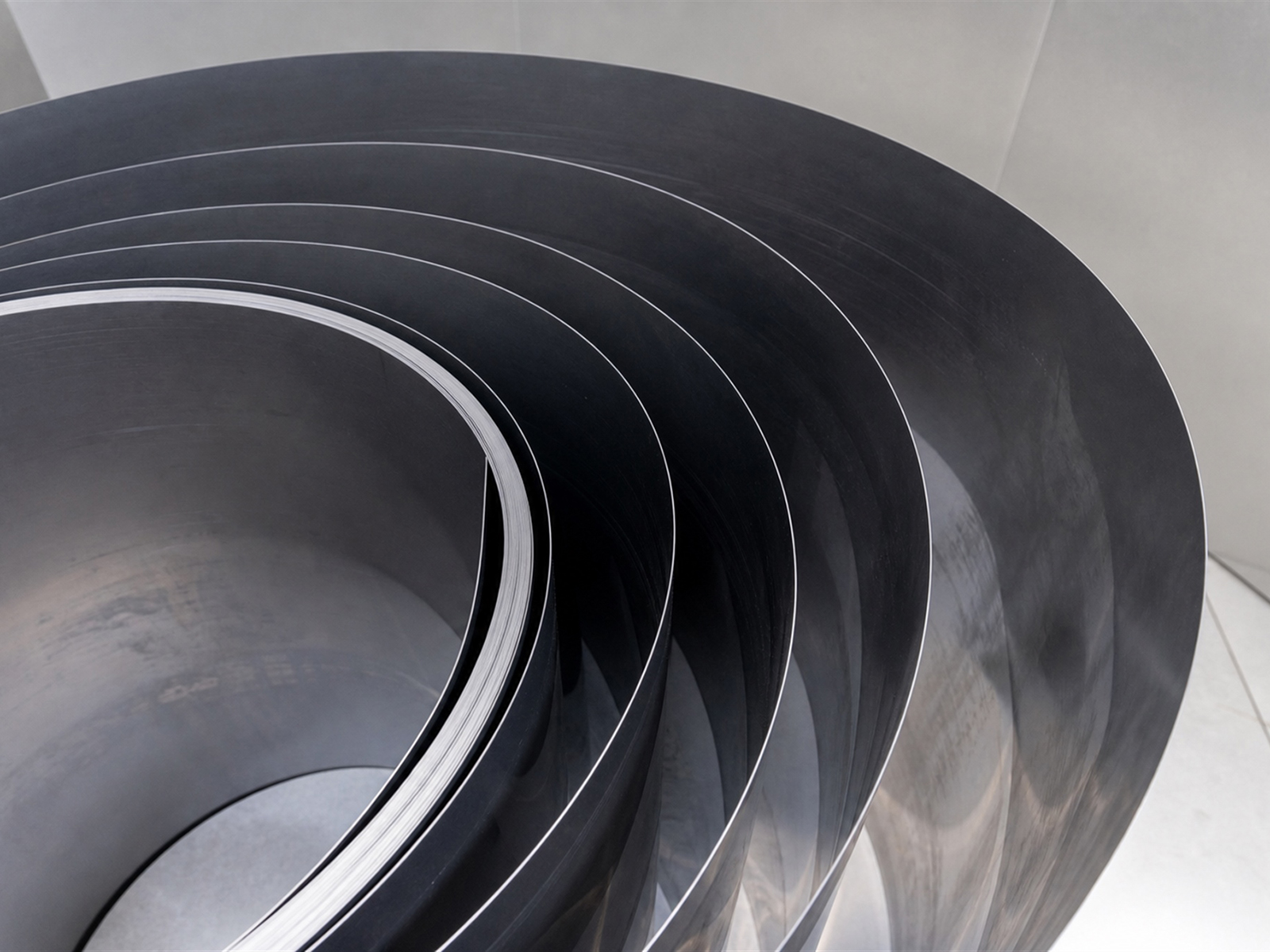
As the material with the highest strength level among industrial pure titanium, Gr4 titanium foil has a chemical composition strictly controlled within the range of Ti ≥ 99.10%, Fe ≤ 0.30%, and O ≤ 0.40%. The tensile strength can reach ≥ 550 MPa and the yield strength is between 480-665 MPa. Compared with Gr1 and Gr2 titanium foil, Gr4 achieves significant improvement in strength by precisely controlling the content of elements such as oxygen and iron while maintaining excellent corrosion resistance. This unique composition design makes it perform well under high load conditions such as aerospace, medical equipment and chemical equipment, making it an ideal choice to solve the failure problem of “high strength + strong corrosion” composite environment.
1. What Should You Know About Chemical Composition Control and Performance Correlation of Gr4 Titanium Foil?
(1) What Should You Know About the Influence Mechanism of Main Alloy Elements on Properties?
The chemical composition design of Gr4 titanium foil reflects the performance optimization logic of industrial pure titanium. Titanium content ≥ 99.10% ensures the basic purity of the material, while controlling the oxygen content below 0.40% is a key technical parameter. Oxygen, as a gap strengthening element, can significantly improve the strength and hardness of materials. Compared with Gr2 titanium foil (oxygen content ≤ 0.25%), Gr4 achieves a strength increase of about 60% by moderately increasing the oxygen content, which is its core feature that distinguishes it from low-grade pure titanium.
It is also critical that iron content be limited to 0.30%. The β-stable phase formed by iron in the titanium matrix can improve the processing properties of the material, but excess will reduce corrosion resistance. The composition design of Gr4 finds the optimal balance between strength improvement and corrosion resistance, allowing it to maintain stable chemical inertness in seawater, acid and alkali environments.
Strict control of carbon, nitrogen, hydrogen and other elements (C≤ 0.08%, N≤ 0.05%, H≤ 0.015%) prevents the occurrence of embrittlement. Hydrogen embrittlement is a common defect in titanium processing, and low hydrogen content ensures the material’s reliability during welding and cold working. This multi-element collaboratively controlled composition system provides a material basis for the stable performance of Gr4 titanium foil under extreme working conditions.
(2) What Should You Know About Determining Effect of Ingredient Purity on Corrosion Resistance?
Titanium’s excellent corrosion resistance comes from its surface’s ability to quickly form a dense TiO2 passivation film. This oxide film, which is only a few nanometers thick, can self-repair and block corrosive media. Although the strength of Gr4 titanium foil is higher than that of Gr1/Gr2, its titanium purity of ≥ 99.10% still ensures the integrity and stability of the passivation film. In a seawater environment with a chloride ion concentration as high as 35, 000 ppm, the corrosion rate of Gr4 titanium foil is less than 0.01mm/year, which is far superior to stainless steel materials.
The precise control of impurity elements directly affects the corrosion resistance performance. When the iron content exceeds 0.5%, an iron-rich phase will be formed at the grain boundaries, resulting in increased susceptibility to pitting corrosion. Gr4 strictly controls the iron content below 0.30%, and cooperates with the ultrasonic cleaning line to achieve a surface dyne value of ≥ 40, ensuring the cleanliness and uniformity of the material surface, which is crucial for electrode stability in electrochemical application scenarios.
Gr4 titanium foil exhibits good chemical stability in environments with strong oxidizing acids (such as nitric acid) and reducing acids (such as dilute sulfuric acid). In long-term working conditions with temperatures below 350℃, the material will not undergo significant oxidative weight gain or surface peeling, making it the preferred material for anode foils and anti-corrosion structural linings of large electrolytic cells in the chemical industry.
(3) What Should You Know About Process Assurance of Batch-to-batch Consistency of Ingredients?
Baoji Titanium Valley Company uses vacuum induction melting (VIM) technology to produce Gr4 titanium ingots. It eliminates component segregation through multiple remeltings and ensures that the chemical composition fluctuation of each batch of materials is controlled within ± 0.02%. This strict smelting process combined with real-time monitoring of spectral analysis provides a stable raw material basis for subsequent precision rolling.
The 7-section electronically controlled heating system of the continuous annealing line can achieve a temperature control accuracy of ± 2℃, ensuring uniformity of the foil structure at the highest operating temperature. Argon protection during the annealing process prevents surface oxidation and hydrogen absorption, which plays a decisive role in maintaining the stability of the mechanical properties of Gr4 titanium foil. The standard deviation of tensile strength between batches is <15 MPa, and the elongation fluctuation is <2%, reaching the international advanced level.
The full-process quality traceability system from raw materials to finished products, including batch number management, online ultrasonic testing and roll-by-roll mechanical property testing, ensures that each roll of Gr4 titanium foil with a thickness of 0.02-1.0mm can provide a complete material report. This batch-to-batch consistency assurance capability is critical for certification in high-security industries such as aerospace and medical devices.
Table 1: Comparison of chemical composition standards of Gr4 titanium foil
element | ASTM B265 Gr4 | JIS H4600 Class 4 | EN 10263-4 Ti4 | actual control range |
Ti | margin | margin | margin | ≥ 99.10% |
Fe | ≤ 0.50% | ≤ 0.50% | ≤ 0.50% | ≤ 0.30% |
O | ≤ 0.40% | ≤ 0.40% | ≤ 0.40% | 0.35-0.40% |
N | ≤ 0.05% | ≤ 0.05% | ≤ 0.05% | ≤ 0.03% |
C | ≤ 0.10% | ≤ 0.08% | ≤ 0.08% | ≤ 0.05% |
H | ≤ 0.015% | ≤ 0.013% | ≤ 0.015% | ≤ 0.010% |
2. Why Is Mechanical Performance Characteristics and Application Advantages of Gr4 Titanium Foil Important?
(1) What Should You Know About Microstructural Basis for High-strength Properties?
The tensile strength of Gr4 titanium foil ≥ 550 MPa comes from its unique α single-phase structure and fine grain structure. Through multi-pass 20-roll precision cold rolling, the grain size of the material is controlled in the range of 10-25 um. Combined with the strengthening effect produced by the oxygen content of 0.35-0.40%, its strength is approximately 60% higher than that of Gr2 titanium foil. This level of strength is superior to some conventional titanium alloys, but at a more economical cost.
The wide range of yield strength 480-665 MPa provides room for selection under different working conditions. The yield strength of the material in the cold-worked state (Y state) can reach 665 MPa, which is suitable for elastic components that require high elastic modulus; the yield strength of the annealed state (M state) is about 480 MPa, retaining an elongation of ≥ 15%, and is more suitable for application scenarios that require secondary forming. This ability to regulate performance through heat treatment conditions enables Gr4 titanium foil to adapt to diverse needs from precision electronic shielding to aerospace honeycomb core materials.
The material’s fatigue resistance is also excellent. In the cyclic load test with a stress ratio R=0.1 and a frequency of 10Hz, the fatigue limit of Gr4 titanium foil can reach 45-50% of the tensile strength, which is much higher than the 30-35% of ordinary stainless steel. This high cycle life characteristic makes it an ideal choice for load-bearing structural parts in vibration environments, especially in long-term stress scenarios such as aircraft engine heat shields and deep-sea detector housings.
(2) What Should You Know About Balance Between Ductility and Forming Performance?
Although Gr4 is the strongest grade among industrial pure titanium, it still maintains an elongation of ≥ 15%, which provides the necessary plastic reserve for actual processing. Compared with Gr1 titanium foil, which has a tensile strength of ≥ 240 MPa but an elongation of ≥ 24%, Gr4 sacrifices some of its ultimate formability in exchange for structural load-bearing capacity. This performance trade-off is particularly suitable for applications that require a balance between strength and moderate deformation capabilities, such as the stamping of microstructured parts for medical implants and battery current collectors.
The bending properties of the material are reflected by the minimum bending radius. The minimum bending radius of 0.1mm thick Gr4 titanium foil is about 0.5mm (5 times the material thickness), and 0.5mm thick material can achieve 180° bending without cracking. This processing adaptability is due to precise temperature control of the continuous annealing line, which eliminates cold rolling residual stress and optimizes grain orientation, giving the material predictable forming behavior while maintaining high strength.
Welding performance is a key consideration in structural applications. Gr4 titanium foil is suitable for various connection methods such as TIG, laser and resistance welding, and the strength of the welded joint can reach 85-95% of the base metal. Under the condition of sufficient argon protection, there will be no obvious oxygen pollution and embrittlement in the weld area. With the independently developed degreasing formula and ultrasonic cleaning process, the dyne value of the material surface before welding can reach more than 42, ensuring the stability of welding quality.
(3) What Should You Know About Performance Stability in Extreme Environments?
The density of Gr4 titanium foil is only 4.51 g/cm³, which is about 57% of steel and 52% of nickel alloy. It has significant advantages in aerospace weight reduction design. Calculated based on the specification of 670mm width and 0.1mm thickness, the weight is only 0.45kg per square meter, but it can withstand a tensile load of 55 kN/m. This high specific strength characteristic makes it a core material for honeycomb sandwich structures of large aircraft and reflective surfaces of satellite antennas.
The low-temperature brittle transition temperature is lower than -100℃, and the material still maintains good toughness in a liquid nitrogen environment (-196℃), which is an inherent advantage of titanium. In terms of high temperature stability, long-term use below 350℃ will not cause obvious strength attenuation or tissue coarsening. The short-term peak temperature can reach 550℃ without losing structural integrity, which makes it suitable for hot-end components of aerospace engines and industrial high-temperature electrolysis systems.
The non-magnetic characteristics (magnetic susceptibility <1.0×10⁻⁶ emu/g) make Gr4 titanium foil an essential material for MRI equipment, precision sensors and electronic shielding. There will be no eddy current loss or hysteresis in a strong magnetic field environment, ensuring the detection accuracy and signal stability of the equipment. Coupled with a resistivity of 0.50 μΩ·cm, the material exhibits good conductive uniformity and current distribution characteristics in electrochemical electrode applications.
Table 2: Comparison of mechanical properties of Gr1/Gr2/Gr4 titanium foils
Performance indicators | Gr1 | Gr2 | Gr4 | Performance improvements |
tensile strength | ≥ 240MPa | ≥ 345 MPa | ≥ 550MPa | Gr4 is 59% higher than Gr2 |
Yield strength | 140-310 MPa | 275-450 MPa | 480-665 MPa | Gr4 is about 47% higher than Gr2 (based on the upper limit of Gr2) |
Elongation | ≥ 24% | ≥ 20% | ≥ 15% | Strength for ductility |
density | 4.51 g/cm³ | 4.51 g/cm³ | 4.51 g/cm³ | same |
fatigue limit | ~110 MPa | ~155 MPa | ~250 MPa | Gr4 increased by 61% |
Processing difficulty | Easy to form | Moderate | Need to control rebound | Increase in intensity and difficulty |
3. What Should You Know About Precision Manufacturing Process and Quality Control of Gr4 Titanium Foil?
(1) What Should You Know About Thickness Control Technology of 20-roll Precision Cold Rolling?
The 750mm 20-roll precision rolling mill is the core equipment to achieve stable production of 0.02-1.0mm ultra-thin wide Gr4 titanium foil. Its unique multi-roller load-bearing structure evenly distributes the rolling force of 3500 kN, effectively suppresses roll bending deformation, and controls the thickness tolerance to an accuracy of ± 0.001mm. This micron-level precision ensures the strict requirements for material consistency for aerospace honeycomb core materials and electronic heat dissipation substrates.
The maximum rolling speed of 400 m/min, combined with the real-time thickness monitoring system, achieves a reduction rate of 40-60% in a single pass. The high deformation resistance of Gr4 titanium foil (approximately 1.5 times that of Gr2) requires precise control of tension and speed matching during the rolling process to avoid edge cracks and surface scratches. By optimizing the distribution of rolling passes (usually 12-18 passes are required to reach the final thickness), the accumulated strain is released evenly, and a bright surface with a surface roughness Ra≤ 0.4um is obtained.
Shape control is a technical difficulty in wide-width thin material rolling. The high-precision flattening line uses hydraulic roller bending and segmented cooling technology to control the flatness of 670mm wide materials to ≤ 3mm/m and reduce residual stress by more than 60%. This flatness guarantee prevents Gr4 titanium foil from warping and deforming during subsequent laser cutting and precision stamping, meeting the dimensional stability requirements of 3℃ electronic product casings and medical device parts.
(2) What Should You Know About the Regulation Mechanism of Continuous Annealing on Tissue Properties?
The 7-section electrically heated continuous annealing line achieves precise management of temperature gradients. The independent control of the heating zone, soaking zone and cooling zone ensures the structural uniformity of the foil at the annealing temperature of 650-850℃. The recrystallization temperature of Gr4 titanium foil is about 580℃. During the annealing process, α-phase grains release cold rolling strain energy through grain boundary migration. The grain size grows from 5-8 um in the cold-rolled state to 15-25 um, and the material elongation recovers from <5% to 15-18%.
The dew point of the argon protective atmosphere is controlled below -60℃, effectively preventing oxygen and nitrogen absorption at high temperatures. Titanium has an extremely strong affinity for oxygen at high temperatures, and even an increase in oxygen content of 100 ppm can cause surface hardening and embrittlement. The non-stop operation mode of continuous annealing shortens the exposure time of materials in the protective atmosphere to 1/5 of traditional box annealing, significantly improving surface quality and performance consistency.
The tempering rolling (Skin Pass) process eliminates the yield plateau after annealing and improves the surface finish through a slight reduction of 2-5%. This process is particularly important for Gr4 titanium foil because its high strength is prone to uneven surface deformation caused by the Lüders Band after annealing. Tempering rolling increases the yield strength by 30-50 MPa while maintaining an elongation of ≥ 15%, achieving the optimal combination of strength and formability.
(3) What Should You Know About Surface Treatment and Dimensional Accuracy Guarantee System?
The ultrasonic cleaning line uses 40kHz high-frequency vibration and a self-developed alkaline degreasing agent to completely remove rolling oil, metal powder and surface oxides. After cleaning, the surface dyne value of the material increased from 28 to more than 42, and the contact angle was <10°. This super-hydrophilic surface state provides an ideal base for subsequent anodization, electroless plating, and organic coatings. The cleaning line speed of 30 m/min combined with the three-stage rinsing process ensures that the residue content is <5 ppm.
The grinding line uses mechanical grinding technology to treat functional surfaces. By controlling the abrasive particle size (320-800 mesh) and grinding pressure, the surface roughness is adjusted to the range of Ra 0.2-0.8um. This controllable surface texture enhances coating adhesion and lamination bonding strength, and is particularly suitable for battery current collectors and composite reinforcement layer applications. Grinding can also eliminate microscopic surface defects and increase the fatigue life of the material by 15-20%.
The high-precision slitting line is equipped with laser distance measurement and automatic deviation correction systems to achieve cutting accuracy with a width tolerance of ± 0.1mm. The cutter is made of carbide material and the cutter gap is dynamically adjusted to avoid edge burrs and micro-cracks during the slitting process. Each roll of material undergoes 100% visual inspection and sampling mechanical testing before packaging, and the rate of defective products is controlled below 0.3%, ensuring the stability of batch supply.
Table 3: Key parameters of Gr4 titanium foil production process
process | key equipment | Core parameters | quality index |
cold rolled | 750mm 20-high rolling mill | Rolling force 3500kN, speed 400m/min | Thickness accuracy ± 0.001mm |
Clean | Ultrasonic cleaning line | Frequency 40kHz, speed 30m/min | Dyne value ≥ 42 |
annealing | continuous annealing line | Temperature 650-850℃, accuracy ± 2℃ | Grain 15-25um |
smooth | High precision flat line | Speed 150m/min, pressure reduction 2-5% | Flatness≤ 3mm/m |
Striping | Precision slitting line | Width 15-680mm | Tolerance ± 0.1mm |
surface treatment | sanding line | Abrasive 320-800 mesh | Roughness Ra0.2-0.8um |
4. Why Is Application Practice of Gr4 Titanium Foil in Key Industrial Fields Important?
(1) How Should Material Selection Logic for Aerospace Lightweight Structures?
The aerospace honeycomb sandwich structure requires the core material to have high specific strength, fatigue resistance and high temperature resistance. The hexagonal honeycomb core made of Gr4 titanium foil with a thickness of 0.05-0.1mm has a compressive strength of up to 3-5 MPa, but the areal density is only 1.2 times that of aluminum honeycomb. In hypersonic aircraft with Mach number > 2, the surface temperature can reach 300-400℃. The Gr4 titanium foil honeycomb still maintains structural integrity at this temperature, while the aluminum material is close to the softening point.
The aircraft engine heat shield adopts a multi-layer Gr4 titanium foil laminated structure, taking advantage of the material’s low thermal conductivity (17 W/m·K, only 1/12 of aluminum) and high temperature stability to establish an effective temperature gradient between the 600℃ hot end and the 150℃ cold end. Single-layer foils with a thickness of 0.1mm are connected by spot welding or laser welding to form a heat-insulating barrier with an air barrier, which is more than 40% lighter than traditional nickel-based high-temperature alloys.
Satellite antenna reflectors and solar cell substrates have strict requirements on the dimensional stability and non-magnetic properties of materials. In the space thermal cycle of -150℃ to +150℃, the thermal expansion coefficient of Gr4 titanium foil is only 8.6×10⁻⁶/ C. The 670mm wide specification reduces the number of splicing welds and improves the surface accuracy of the reflective surface. The non-magnetic feature avoids electromagnetic interference to spaceborne magnetometers and communication equipment, which is an advantage that aluminum alloy and stainless steel materials cannot replace.
(2) Why Is Corrosion Resistance Application in Chemical Industry and Marine Engineering Important?
The anode of a large chlor-alkali electrolyzer uses Gr4 titanium foil as the base material. In the strong oxidizing environment of high concentration chloride ions (>200g/L) and chlorine evolution in the anode, the TiO2 passivation film formed on the surface of the material can exist stably for a long time. Compared with Gr2 titanium foil, the high strength characteristics of Gr4 allow the use of thinner substrate thickness (0.5mm vs 0.8mm), which reduces material costs by 15-20% while ensuring mechanical strength.
The evaporator tube plate and condenser tube of the seawater desalination device need to withstand the corrosion of seawater with a pressure of 3-5 MPa and a salinity of 35000ppm. The heat exchange tubes made of Gr4 titanium foil rolled in 0.8-1.0mm specifications have a tensile strength of ≥ 550 MPa, which provides sufficient pressure-bearing capacity, and the excellent corrosion resistance makes its service life exceed 25 years, which is much higher than the 8-12 years of copper-nickel alloy. The material’s low density also reduces structural loads on offshore platforms, reducing installation and maintenance costs.
The pressure-resistant cabin of the deep-sea detector adopts a Gr4 titanium foil multi-layer roll-welded structure. At a water depth of 6, 000 meters (60 MPa pressure), the yield strength of the material provides a safety factor of more than 2.5. The non-magnetic nature of titanium avoids interference with sonar and navigation equipment, while the good low-temperature toughness ensures structural reliability in a 4℃ deep-sea environment. Compared with titanium alloy forgings, the coil welding structure reduces manufacturing costs by 40% and shortens the production cycle by 50%.
(3) Why Is Precision Machining Applications in Medical and Electronic Fields Important?
Medical implants such as skull repair plates and sternum fixation plates are stamped and formed from Gr4 titanium foil with a thickness of 0.3-0.6mm. The high strength of the material ensures the structural support function of the implant, and the elongation rate of ≥ 15% allows complex three-dimensional forming without cracking. Titanium’s biocompatibility and low elastic modulus (110 GPa) reduce stress shielding effects and promote bone tissue healing. Compared with titanium alloys, industrial pure titanium has lower impurity content, reducing the risk of allergic reactions.
In the field of new energy batteries, the 0.02-0.05mm ultra-thin specification of Gr4 titanium foil can be used in specific corrosion-resistant current collector designs, and its tensile strength of 550 MPa prevents breakage during winding and packaging. The chemical stability of the material in the electrolyte environment is better than that of aluminum foil and copper foil, which can extend the battery cycle life. It should be noted that the electrical conductivity of titanium foil is lower than that of copper and aluminum, so its suitability needs to be evaluated in conjunction with the specific electrochemical design.
The electromagnetic shielding cover of 3℃ electronic products is made of Gr4 titanium foil with a thickness of 0.05-0.1mm, which is formed by laser cutting and precision bending. The high strength of the material allows the design of thinner wall thicknesses, reducing product thickness while ensuring shielding effectiveness (>60dB). The non-magnetic feature avoids any impact on wireless charging and NFC functions, while good thermal conductivity (17 W/m·K) helps dissipate heat from the chip. Compared with stainless steel, titanium foil is 40% lighter and will not corrode or rust, improving product reliability.
5. How Should Gr4 Titanium Foil Selection Guide and Technical Support Services?
(1) What Should You Know About Specification Recommendation Strategies Under Different Working Conditions?
The load-bearing structural parts should be given priority to 0.5-1.0mm thickness specifications, and the tensile strength of the material should be ≥ 550 MPa and the yield strength of 480-665 MPa should be used to carry static or dynamic loads. The annealed state (M state) material is suitable for scenes that require welding or secondary forming, and the cold worked state (Y state) is suitable for directly assembled elastic components. For large chemical equipment linings, the 670mm wide specification can reduce the number of welds and improve overall corrosion resistance and structural reliability.
For functional thin material applications, 0.02-0.2mm ultra-thin specifications are selected to balance material cost and performance requirements. Battery current collectors and electromagnetic shields usually use 0.02-0.05mm thickness, while heat exchanger fins and honeycomb core materials use 0.05-0.1mm specifications. In terms of surface treatment, the bright side is suitable for applications that require subsequent coating or plating, the matte side provides better coating adhesion, and the polished side is used for laminate structures with specific roughness requirements.
Customized processing services cover extreme thin materials with thickness ≥ 0.005mm and ultra-wide products with width ≥ 680mm. Microelectronic packaging substrates can use ultra-thin foil materials below 0.01mm, and precision component manufacturing can be achieved through vacuum adsorption and laser welding. Solar cell backsheets and large antenna reflective surfaces can be customized with a width of more than 800mm, reducing splicing welds and improving product consistency. The technical team provides full-process support from material selection, processing technology to performance testing.
(2) What Should You Know About Quality Certification and Batch Traceability System?
Each roll of Gr4 titanium foil is provided with a complete material report when it leaves the factory, including chemical composition spectral analysis, mechanical properties tensile testing, metallographic structure inspection and ultrasonic flaw detection results. The report complies with ASTM B265 and EN 10263-4 standards and can meet aerospace AS9100 and medical device ISO 13485 certification audits. Witness testing services from third-party testing agencies (such as SGS, TÜV) ensure the objectivity and authoritativeness of the data.
The heat batch number traceability system records all process parameters from titanium ingot smelting to finished product packaging, including rolling pass allocation, annealing temperature curve, cleaning fluid composition and slitting tool status. Each batch is assigned a unique 20-digit traceability code, and customers can query the production date, inspection data and quality manager information of the material through the online system. This full-chain traceability capability provides data support for failure analysis and quality improvement in critical applications.
Regular process audits and equipment calibration ensure the long-term stability of the production system. The 20-high rolling mill performs roll gap calibration every quarter, the continuous annealing line calibrates the temperature control thermocouple every month, and the ultrasonic cleaning fluid detects the component concentration every week. The large-scale production with an annual output of 3, 000 tons has accumulated a rich process database, enabling the performance prediction accuracy of new batches of products to reach more than 95%, significantly reducing the customer’s material verification cost and cycle.
(3) Why Is Technical Collaboration and Application Development Support Important?
Baoji Titanium Valley Company is equipped with a professional application engineering team to provide full technical support from material selection to end product verification. According to the customer’s specific working conditions (load, temperature, medium), material specifications and surface treatment plans are optimized through finite element simulation and small batch trial production. Successful cases include a 0.08mm honeycomb core material developed for an aviation company and a 0.03mm current collector foil customized for a new energy company. The performance indicators exceeded the design requirements.
The joint R&D mechanism is open to strategic customers to jointly tackle cutting-edge technologies such as ultra-wide (>800mm), ultra-thin (0.005mm) and special surface functionalization. The company’s US$36.2 million investment in foil production lines provides a hardware foundation for technological innovation and has broken through seven core process problems, including surface color difference control, thickness tolerance optimization and high-precision slitting technology. Partners can receive priority access to new material samples and process package support to shorten the product development cycle.
The rapid response mechanism ensures timely delivery of urgent orders and small batch requirements. Regular specifications (0.05-0.5mm×100-500mm) have sufficient inventory and can be shipped within 3-5 working days; customized specifications are controlled through the flexible production scheduling system and the delivery time is controlled within 15-20 working days. The global logistics network covers North America, Europe and the Asia-Pacific region, combined with professional titanium packaging (vacuum bags + wooden boxes) and transportation insurance to ensure that materials are delivered to customers in the best condition.
6. What Is the Conclusion?
Gr4 titanium foil achieves a perfect combination of ≥ 550 MPa tensile strength and excellent corrosion resistance through precise composition control (Ti≥ 99.10%, O≤ 0.40%) and advanced manufacturing processes. 20-roll precision rolling and continuous annealing technology ensure dimensional accuracy and performance stability within the thickness range of 0.02-1.0mm. Its successful application in aerospace, chemical industry, medical and electronic fields has verified the reliability and economy of the material, and provides an ideal solution for solving high-strength + strong-corrosion composite working conditions.
FAQ
Q1: To what extent does the strength of Gr4 titanium foil increase compared to Gr2? Will it significantly reduce the ductility?
The tensile strength of Gr4 titanium foil is ≥ 550 MPa, which is approximately 60% higher than that of Gr2 ≥ 345 MPa, and the yield strength is approximately 47% higher (based on the upper limit of Gr2). Although the elongation is reduced from ≥ 20% to ≥ 15%, it still retains sufficient plasticity for stamping, bending and welding processes, making it suitable for structural parts applications that require both strength and moderate formability.
Q2: What level can the thickness tolerance and flatness of 0.02mm ultra-thin Gr4 titanium foil reach?
Using a 20-roll precision rolling mill and a high-precision flattening line, the thickness tolerance of 0.02mm thick Gr4 titanium foil can be controlled at ± 0.002mm (± 10%), and the flatness is ≤ 5mm/m. The 670mm wide material ensures dimensional consistency across the entire width through tension segmentation control and online monitoring, meeting the precision processing needs in the electronics and optical fields.
Q3: What is the long-term corrosion resistance of Gr4 titanium foil in seawater environment? Does it require additional surface treatment?
The corrosion rate of Gr4 titanium foil in natural seawater with 35000ppm chloride ions is <0.01mm/year, and the material loss within 25 years of service life is <0.25mm. Its naturally formed TiO2 passivation film has self-healing capabilities and does not require additional anodizing or coating treatments. For desalination and marine engineering applications, the corrosion resistance of the material itself is reliable enough.
How Should Consult Baoji Titanium Valley Titanium Nickel Zirconium Material Processing Co., Ltd. Immediately – a Professional Gr4 Titanium Foil Manufacturer and Supplier?
As a high-end titanium foil manufacturer with an annual output of 3, 000 tons, we provide 0.02-1.0mm full specification Gr4 titanium foil customization services, equipped with complete material reports and technical support. Whether you need aerospace-grade honeycomb core materials, chemical corrosion-resistant structural parts or electronic functional thin materials, our engineering team can provide professional material selection and process optimization suggestions. Welcome to contact sales@titaniumvalleys.com to obtain samples and technical information to jointly develop high-performance applications.
References
- Li Minghua, Zhang Wenlong. “Structural Properties and Precision Rolling Technology of Industrial Pure Titanium Foils”. Rare Metal Materials and Engineering Press, 2021.
- Wang Jianguo, Liu Chunmei. “Research on the Corrosion Behavior of Titanium and Titanium Alloys in Marine Engineering”. Chinese Journal of Corrosion and Protection, 2020, Volume 40, Issue 3: 245-256.
- Chen Zhiqiang, Zhao Yongqing. “Handbook of Titanium Alloys and Pure Titanium Materials for Aerospace Use”. National Defense Industry Press, 2019.
- Sun Jianshe, Zhou Lian. “Cold rolling process and surface quality control of titanium foil”. Progress in Titanium Industry, 2022, Volume 39, Issue 2: 18-25.