
What Should You Know About Gr4 Titanium Foil Properties, Strength, Corrosion Resistance and Performance?
- Gr4 Titanium Foil
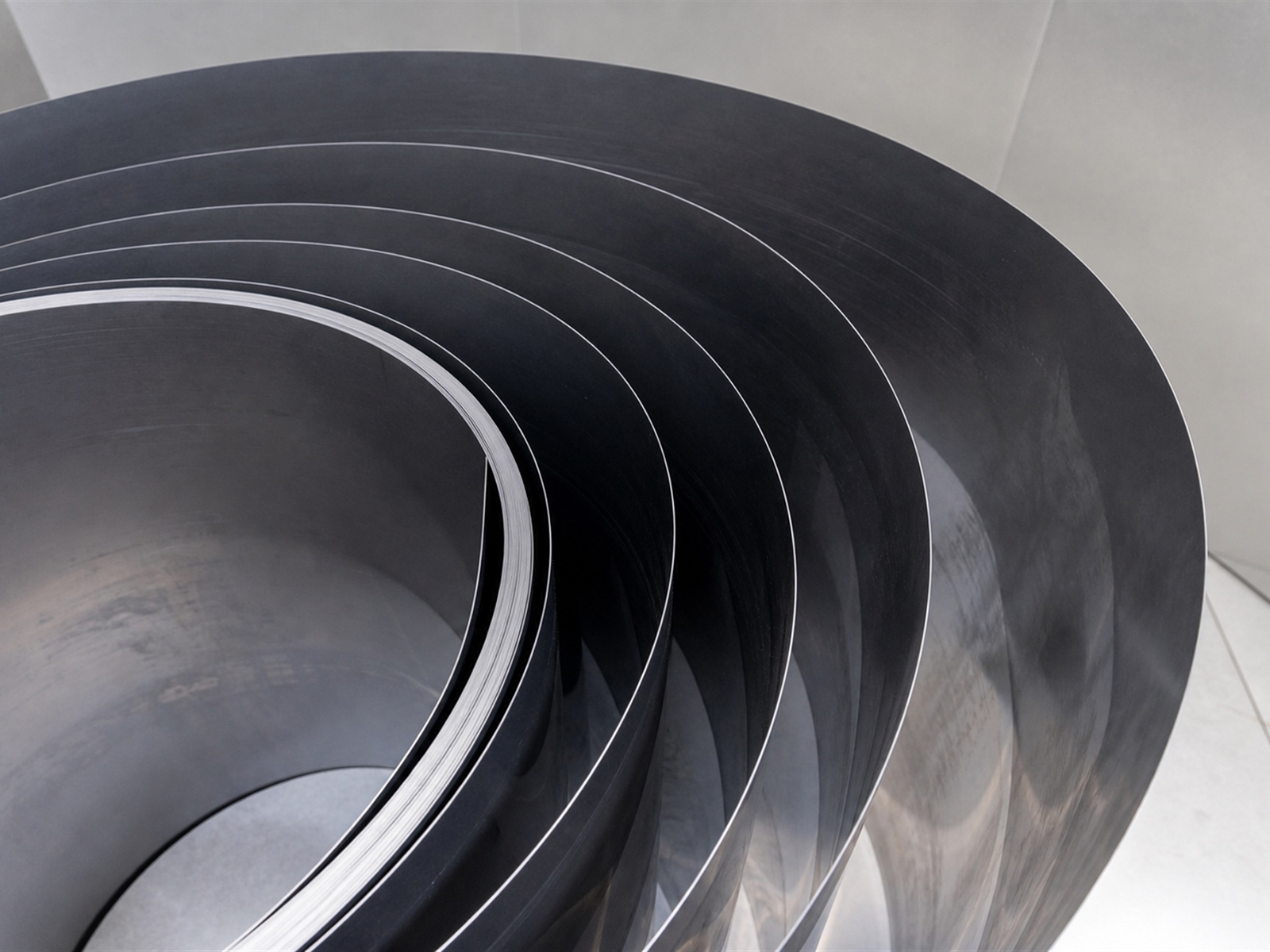
As the highest strength grade among industrial pure titanium, Gr4 titanium foil shows unique application value in the fields of aerospace, chemical equipment and precision manufacturing. The tensile strength of this material can reach more than 550 MPa, significantly surpassing Gr1 and Gr2 titanium foils, while maintaining the excellent corrosion resistance of pure titanium. Gr4 titanium foil with a density of only 4.51 g/cm³ achieves a weight reduction of more than 40% while withstanding high loads. Its stable performance in seawater, acid and alkali environments makes it an ideal material for scenarios where high strength and corrosion resistance are required. Understanding the core performance characteristics of Gr4 titanium foil can help engineers make correct material decisions in critical applications.
1. Why Is Strength Characteristics and Structural Applications of Gr4 Titanium Foil Important?
(1) What Should You Know About the Strength Benchmark Among Industrial Pure Titanium?
Gr4 titanium foil belongs to α-type industrial pure titanium, and its strength level is at the top of the commercial pure titanium series. According to the ASTM B265 standard, the tensile strength of Gr4 titanium foil is not less than 550 MPa, and the yield strength range is 480-550 MPa. This performance index is about 60% higher than that of Gr2 titanium foil. Controlling the oxygen content in the material (≤ 0.40%) is a key factor in achieving high strength. Oxygen atoms form interstitial atom strengthening effects in the titanium lattice, which significantly improves the material’s load-bearing capacity. This strength advantage allows Gr4 titanium foil to still bear the load requirements of structural parts in an ultra-thin state with a thickness of only 0.02-1.0 mm.
(2) What Should You Know About Reliability Performance in Load-bearing Structures?
In practical engineering applications, Gr4 titanium foil exhibits excellent fatigue resistance and long-term stability. The material’s high-strength properties allow it to maintain structural integrity under cyclic loading conditions, making it particularly suitable for honeycomb cores and thin-walled gaskets in the aerospace industry. Compared with ordinary titanium materials, Gr4 titanium foil can provide a higher safety margin at the same thickness and reduce the risk of structural failure. Its yield ratio (ratio of yield strength to tensile strength) is about 0.87, indicating that the material still has a certain plasticity reserve after reaching the yield point, which is crucial to avoid sudden fracture.
(3) What Should You Know About Balance of High Strength and Processability?
Although Gr4 titanium foil has outstanding strength, its elongation can still remain above 15%, which provides the necessary process window for forming processing. Through 20-roll precision cold rolling technology, the material can be rolled to an ultra-thin thickness of 0.02 mm while maintaining the thickness tolerance within ± 0.001 mm. The continuous annealing process uses 7-zone electric heating control with a temperature accuracy of ± 2℃ to ensure that the material retains moderate toughness while obtaining high strength. This balance of strength and ductility enables Gr4 titanium foil to adapt to secondary processing requirements such as stamping and bending, and meet the manufacturing requirements of complex structural parts.
Performance indicators | Gr1 titanium foil | Gr2 titanium foil | Gr4 titanium foil |
tensile strength | ≥ 240MPa | ≥ 345 MPa | ≥ 550MPa |
Yield strength | 140-310 MPa | 275-450 MPa | 480-550 MPa |
Elongation | ≥ 24% | ≥ 20% | ≥ 15% |
Typical applications | Deep forming | general structure | Load-bearing parts |
2. What Should You Know About the Underlying Mechanism of Corrosion Resistance?
(1) What Should You Know About Self-healing Properties of Passivation Film?
The corrosion resistance of Gr4 titanium foil comes from the dense titanium oxide passivation film spontaneously formed on the surface. This TiO2 film, which is only a few nanometers thick, has extremely high chemical stability and can isolate the base metal from direct contact with the corrosive medium. In seawater environment, Gr4 titanium foil can still maintain a stable passivation state under the condition of chloride ion concentration as high as 19000 ppm. Once the passivation film is mechanically damaged, it will automatically repair within milliseconds. This self-healing ability gives the material long-term and reliable protective properties. The titanium content with a purity of ≥ 99.0% ensures the uniformity and integrity of the passivation film.
(2) What Should You Know About Adaptability to Multi-media Environments?
Gr4 titanium foil shows wide applicability in different corrosive media. In oxidizing acids such as sulfuric acid and hydrochloric acid, the corrosion rate of the material is less than 0.1 mm/year, which is much better than that of stainless steel materials. In an alkaline environment, even if the sodium hydroxide concentration reaches 40%, Gr4 titanium foil can still maintain a stable surface state. In marine engineering applications, the material performs particularly well under harsh conditions such as salt spray and splash zones. Long-term use data of more than 10 years has verified its ability to resist pitting and crevice corrosion. This multi-media tolerance makes Gr4 titanium foil the material of choice for chemical equipment and seawater desalination systems.
(3) What Should You Know About High Temperature Oxidation and Environmental Stability?
The long-term working temperature of Gr4 titanium foil can reach 350℃, and the material maintains good oxidation resistance within this temperature range. Under high temperature conditions, the surface oxide film will naturally thicken to form a protective layer, preventing oxygen atoms from diffusing into the matrix. The high melting point of 1668℃ gives the material stability during welding and heat treatment. The non-magnetic characteristics make it suitable for use in precision electronic equipment and magnetically sensitive environments, and the stable value of resistivity of 0.50 μΩ·cm ensures the material’s consistency in electrochemical applications.
corrosive medium | concentration | temperature | corrosion rate |
seawater | 3.5% NaCl | Normal temperature -80℃ | <0.01 mm/year |
sulfuric acid | 10% | room temperature | <0.05 mm/year |
hydrochloric acid | 5% | room temperature | <0.08 mm/year |
sodium hydroxide | 40% | 100℃ | <0.02 mm/year |
3. Why Is Comprehensive Performance in Practical Applications Important?
(1) What Should You Know About Long-term Service Capability of Chemical Equipment?
In large-scale electrolytic cell anode systems, Gr4 titanium foil assumes the structural support function due to its high strength and resists the erosion of highly corrosive electrolytes. The stable supply capability of wide specifications (up to 680 mm) meets the manufacturing needs of large-sized components of chemical equipment. Application cases of the material in the chlor-alkali industry, hydrometallurgy and other fields show that its service life is 3-5 times longer than that of traditional materials. The surface dyne value after ultrasonic cleaning exceeds 40, ensuring the bonding strength of subsequent coating, lamination and other processes, and improving the reliability of the overall system.
(2) What Should You Know About Lightweight Contribution to Aerospace?
Aviation structural parts have strict requirements on the specific strength (ratio of strength to density) of materials. The specific strength of Gr4 titanium foil reaches 122 kN·m/kg, far exceeding aluminum alloy and stainless steel. In the aircraft honeycomb sandwich structure, the 0.05 mm thick Gr4 titanium foil can not only provide sufficient load-bearing capacity, but also achieve significant weight reduction. The low-temperature stability of the material enables it to adapt to temperature changes in high-altitude environments and maintain stable performance within the range of -50℃ to 150℃. The thickness consistency (± 0.001 mm) guaranteed by the precision rolling process ensures the uniformity of stress distribution in the composite structure.
(3) What Should You Know About Functional Integration in the New Energy Field?
In fuel cells and battery systems, Gr4 titanium foil plays a dual role as a current collector and connecting material. Its high strength ensures the structural stability of the stack under mechanical compression, while its corrosion resistance ensures long-term reliable operation in acidic or alkaline electrolyte environments. The use of wide material (350-670 mm) reduces the number of welded joints and potential failure points. The uniform microstructure formed by the continuous annealing process provides stable conductive properties and contact resistance, improving energy conversion efficiency.
4. How Should Material Selection and Engineering Decision Points?
(1) What Should You Know About Strength Needs Assessment Method?
When selecting Gr4 titanium foil in engineering design, it is necessary to clarify the actual load conditions and safety factor requirements. When the design stress exceeds 300 MPa, Gr1 and Gr2 titanium foils can no longer meet the strength requirements, and Gr4 titanium foil becomes an inevitable choice. Dynamic factors such as fatigue load and impact load should be considered during calculation. The high yield strength of the material provides the ability to resist plastic deformation. For thin-walled structures, local buckling issues also need to be paid attention to. The higher elastic modulus of Gr4 titanium foil (approximately 106 GPa) helps to improve structural stiffness.
(2) What Should You Know About Corrosive Environment Matching Principles?
In neutral salt spray, weak acid and weak alkali environments, the corrosion resistance of titanium foil grades Gr1 to Gr4 has little difference. In this case, lower-cost low-grade materials can be given priority. However, in high chloride ion concentration (such as seawater), high temperature corrosion or stress corrosion environments, the higher strength reserve of Gr4 titanium foil can reduce the risk of stress corrosion cracking. For structures that need to be welded, the matching use of Gr4 titanium foil and welding wire of the same grade can ensure the consistency of the strength and corrosion resistance of the weld area.
(3) What Should You Know About Processing Technology Suitability Considerations?
Although Gr4 titanium foil has higher strength, its 15% elongation still supports conventional stamping and bending processing. Pay attention to the mold design during processing. The springback amount is about 20% higher than that of low-strength titanium foil. For the forming of complex shapes, annealed (M-state) materials can be considered, and aging treatment can be performed after processing to improve the strength. The slitting accuracy is ± 0.1 mm and the flatness control technology ensures the stable feeding performance of materials on the automated production line. The polished surface can improve the bonding strength and coating adhesion, expanding the functional application scope of the material.
Application areas | Typical specifications | critical performance requirements | Gr4 Advantages |
Chemical equipment | 0.3-1.0mm×500mm | Corrosion resistance + medium strength | High strength margin and long life |
aerostructures | 0.05-0.2mm×350mm | High specific strength + light weight | Significant weight reduction and high reliability |
battery system | 0.02-0.1mm×200mm | Corrosion resistance + conductive stability | Sufficient structural strength and stable contact |
Marine Engineering | 0.5-1.0mm×670mm | Seawater corrosion resistance + load bearing | The salt spray environment is stable and the intensity is sufficient |
5. What Should You Know About Quality Control and Performance Verification?
(1) What Should You Know About Precise Control of the Production Process?
The performance stability of Gr4 titanium foil relies on the full-process quality control system. During the smelting stage, the oxygen content is strictly controlled below 0.40% to ensure the realization of strength indicators. The multi-pass cold rolling process uses a 20-roll precision rolling mill with a rolling force of 3500 kN and a rolling speed of 400 m/min, achieving stable thinning of ultra-thin materials. The 7-zone temperature control system of the continuous annealing line eliminates rolling stress and restores the ductility of the material. The temperature accuracy of ± 2℃ ensures the consistency of performance between batches.
(2) What Should You Know About Mechanical Property Testing Standards?
The finished titanium foil must undergo a tensile test to verify whether the tensile strength and elongation meet the requirements of ASTM B265 standards. The sampling position should cover the head, middle and tail of the roll to ensure uniform performance across the roll. The hardness test uses a Vickers hardness tester, and the typical hardness value of Gr4 titanium foil is between 200-250 HV. For critical applications, fatigue tests and stress corrosion tests are also required to verify the reliability of materials under actual working conditions. Material reports from third-party testing agencies provide customers with performance guarantees.
(3) What Should You Know About Surface Quality and Consistency Control?
Surface color difference control is a technical difficulty in the production of ultra-thin wide-width titanium foil. The independently developed degreasing formula and optimized flattening tension ensure surface uniformity. The grinding process improves surface consistency and texture, adapting to the requirements of precision machining and functional coatings. High-precision slitting technology cuts wide coils into customer-specified widths with a tolerance of ± 0.1 mm and no burrs on the edges, which improves material utilization and subsequent processing quality. The stable production capacity of 3, 000 tons per year supports the delivery needs of large-volume and high-standard orders.
6. What Is the Conclusion?
Gr4 titanium foil has the highest strength level and excellent corrosion resistance among industrial pure titanium, making it an ideal material choice under the combined working conditions of high load and corrosive environment. Its tensile strength of more than 550 MPa, low density of 4.51 g/cm³, and broad-spectrum media adaptability meet the demanding requirements of high-end fields such as aerospace, chemical equipment, and new energy. Understanding the performance characteristics and application boundaries of Gr4 titanium foil can help engineers optimize material selection and improve product reliability and economy.
FAQ
Q1: How to choose between Gr4 titanium foil and Gr2 titanium foil in practical applications?
When the design load exceeds 350 MPa or a higher safety margin is required, Gr4 titanium foil should be selected. If the main focus is on formability and the strength requirement is below 300 MPa, Gr2 titanium foil is more economical. The corrosion resistance of the two is similar, and the selection is mainly based on strength requirements.
Q2: How to ensure the welding performance of Gr4 titanium foil?
Gr4 titanium foil can be welded by TIG or laser, and the same grade of welding wire must be used and operated under argon gas protection. The strength of the weld can reach more than 90% of the base metal. The key is to control heat input and avoid oxidation. Post-weld heat treatment can further improve joint performance.
Q3: How much forming deformation can ultra-thin Gr4 titanium foil (0.02 mm) withstand?
The elongation rate of Gr4 titanium foil with a thickness of 0.02 mm is about 15%, which is suitable for forming operations with a bending radius greater than 5 times the thickness. During deep drawing forming, annealed materials need to be used and mold parameters should be optimized. For extreme forming needs, it is recommended to choose Gr2 titanium foil for better ductility.
How Should Looking for Reliable Gr4 Titanium Foil Supplier?
Baoji Titanium Valley Titanium Nickel Zirconium Material Processing Co., Ltd. (Titanium Valley), as a professional manufacturer, has an automated production line with an annual output of 3, 000 tons, and can provide customized Gr4 titanium foil products with a thickness of 0.02-1.0 mm and a width of 15-680 mm. Our materials meet ASTM B265 standards and come with complete material reporting and performance testing. Welcome to contact us for technical support and quotation: sales@titaniumvalleys.com
References
- Wang Xiangdong, Wu Zhengping, Zhao Yongqing. Titanium alloys and their applications[M]. Beijing: Chemical Industry Press, 2007.
- Zhao Yongqing, Hong Quan, Ge Peng. Phase transformation and heat treatment of titanium alloys[M]. Changsha: Central South University Press, 2012.
- Zhang Peng, Yang Guanjun, Liu Yong. Research on the microstructure and mechanical properties of industrial pure titanium [J]. Rare Metal Materials and Engineering, 2015, 44(8): 1953-1957.
- Chen Jun, Zhao Yongqing, Chang Hui. Application and development of titanium alloys in chemical equipment [J]. Progress in Titanium Industry, 2018, 35(3): 1-6.