
Why Do Engineers Choose Gr5 Titanium Foil for Aerospace and High-performance Structural Parts?
- Gr5 Titanium Foil
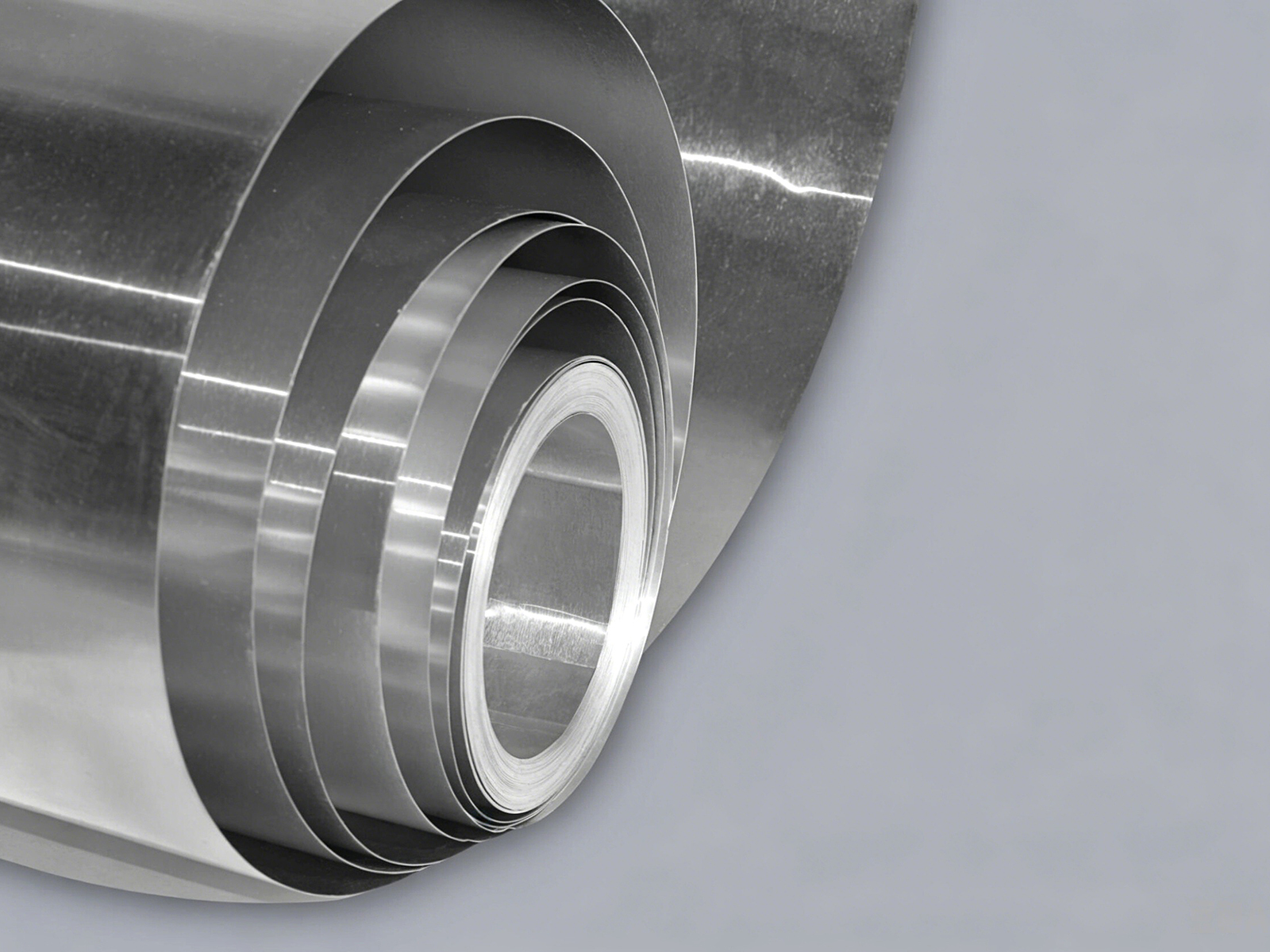
Contemporary aerospace and high-end manufacturing fields place stringent requirements on materials: they must not only withstand extreme loads, but also achieve lightweight design. Gr5 titanium foil (Ti-6Al-4V) relies on its unique α+β dual-phase structure to achieve an ideal balance between strength, temperature resistance and lightweight. The tensile strength of this material can reach 930-1100 MPa, far exceeding that of pure titanium. At the same time, its density is only 4.43 g/cm³, which is 40% lighter than steel. More importantly, it can work stably for a long time in a 300℃ environment and has excellent fatigue resistance. Engineers around the world choose Gr5 titanium foil not only because of its physical performance advantages, but also because of its reliable performance under extreme working conditions – which is the core requirement of aerospace engine insulation components, satellite honeycomb structures and high-performance battery cooling systems.
1. The Material Essence of Gr5 Titanium Foil: Why It Surpasses Pure Titanium and Conventional Alloys?
(1) Why Is Mechanical Advantages of Α+β Dual-phase Structure Important?
Ti-6Al-4V uses aluminum to stabilize the α phase and vanadium to strengthen the β phase, forming a two-phase synergistic mechanism. This microstructure enables the material to combine the thermal stability of the α phase with the high strength and toughness of the β phase. Compared with Gr2 pure titanium (tensile strength only 340 MPa), the strength of Gr5 is nearly three times higher, while maintaining an elongation of more than 10% to avoid the risk of brittle fracture. The vacuum annealing process further optimizes the phase distribution to ensure that performance fluctuations between batches are controlled within ± 3%.
(2) What Should You Know About Specific Strength Breaks Through the Bottleneck of Traditional Materials?
In aerospace structural design, specific strength (strength/density) is a key indicator. The specific strength of Gr5 titanium foil reaches 210 MPa·cm³/g, which exceeds 203 of 7075 aluminum alloy and is significantly higher than ordinary aluminum alloy (about 100) and stainless steel (about 60). This means that under the same load-carrying capacity, using Gr5 can reduce weight by 30-50%, which directly translates into fuel economy or load improvement. The amount of titanium alloy used in the Boeing 787 Dreamliner reaches 15%, and most of the ultra-thin structural parts are made of materials with similar specifications.
(3) What Should You Know About Creep Resistance and High Temperature Stability?
Traditional aluminum alloys experience performance degradation above 150℃, while Gr5 can maintain more than 85% of room temperature strength in an environment of 300℃. Its low thermal expansion coefficient (8.6×10⁻⁶/K) reduces the risk of thermal stress concentration and is especially suitable for hot-end components such as engine compartments and exhaust systems. The ultra-thin specifications of 0.03-0.8mm and the low thermal conductivity (λ=7.5 W/m·K) enable lightweight innovation of the thermal management system through thin-wall design.
Performance comparison | Gr5 titanium foil | Gr2 pure titanium | 7075 aluminum alloy | 316 stainless steel |
Tensile strength (MPa) | 930-1100 | 340 | 570 | 520 |
Density(g/cm³) | 4.43 | 4.51 | 2.81 | 8.00 |
Specific strength | 210 | 75 | 203 | 65 |
Upper limit of temperature resistance (C) | 300 | 250 | 120 | 600 |
2. Why Is Core Application Scenarios in the Aerospace Field Important?
(1) What Should You Know About Honeycomb Structure and Sandwich Materials?
Titanium alloy honeycomb cores are commonly used in satellite solar panels and aircraft fuselage skins. The thickness of Gr5 titanium foil is 0.03-0.1mm. Hexagonal cells are formed by precision stamping and combined with the upper and lower panels to form an ultra-light and rigid structure. This design increases the compressive strength to 2.5 times that of aluminum honeycomb, while withstanding temperature cycles from -100℃ to +300℃, meeting the requirements of low-Earth orbit environments. The tail skin of the Airbus A350 uses a similar process.
(2) What Should You Know About Engine Hot End Components?
The combustion chamber heat shield, exhaust cone and other components of the turbofan engine need to withstand high-temperature and high-pressure gas erosion. Gr5 titanium foil with a thickness of 0.2-0.5mm is formed into a complex curved surface through laser welding, which not only ensures air tightness but also achieves thermal expansion matching. Its non-magnetic properties avoid interference with avionics systems, and the oxidation weight gain rate is less than 0.5 mg/cm² (1000 hours of testing) to ensure long-term reliability. The amount of titanium alloy used in the CFM LEAP engine is increased by 40% compared with the previous generation.
(3) What Should You Know About Avionics Shielding and Support?
Radomes and antenna bases require both material wave transmission performance and structural strength. After surface anodization treatment, the electromagnetic shielding effect of 0.05-0.15mm thick Gr5 titanium foil can reach 40-60dB (depending on the surface treatment process), while carrying vibration load. Its work hardening index n=0.15 is suitable for multi-pass progressive forming and the production of complex three-dimensional structural parts.
3. What Should You Know About Manufacturing Challenges and Breakthroughs in High-performance Structural Parts?
(1) What Should You Know About Technical Barriers to Ultra-thin Wide-width Rolling?
Ti-6Al-4V, which has high strength and low plasticity, is easily cracked during the cold rolling process. It is difficult to control the thickness uniformity of ultra-thin specifications of 0.03mm with traditional four-roll mills. A 20-roll finishing mill is used to disperse the pressure through multiple support rollers, and combined with a tension control system (accuracy ± 2N), the thickness tolerance is ± 0.001mm. The continuous vacuum annealing furnace (oxygen content <5ppm) eliminates work hardening and restores the elongation to more than 12%, ensuring subsequent forming performance.
(2) What Should You Know About Shape Control and Surface Quality?
Wide-width materials (350-670mm) are prone to edge and mid-wave defects. Through the crown control technology, the roller gap is dynamically adjusted, and combined with the seven-roller S-shaped bending and shaping of the tension and leveling machine, the flatness is improved to ≤ 3mm/m. The ultrasonic cleaning system removes rolling oil stains and the surface roughness Ra≤ 0.4um, meeting the requirements of optical grade applications. Pickling or polishing treatments can provide glossy, matte and other states.
(3) What Should You Know About Precision Slitting and Dimensional Stability?
When cutting ultra-thin materials, burrs and deformation must be avoided. Using a shearing slitting machine with a constant tension unwinding system, the edge cutting accuracy is ± 0.05mm. The internal stress of the coil is released through aging treatment, and the thickness change is <0.002mm after 6 months of storage. This stability is crucial for automated assembly lines, reducing scrap rates by up to 15%.
Process link | Key technology | Performance indicators |
Finish rolling | 20-roll mill + tension control | Thickness tolerance ± 0.001mm |
annealing | Vacuum furnace (oxygen <5ppm) | Elongation ≥ 12% |
smooth | Convexity control + tension straightening | Straightness≤ 3mm/m |
Cut | Shear type + constant tension | Trimming accuracy ± 0.05mm |
4. Why Is Expansion of Applications in New Energy and Electronics Fields Important?
(1) What Should You Know About Power Battery Thermal Management System?
Electric vehicle battery packs need to dissipate heat quickly to prevent thermal runaway. 0.1-0.3mm thick Gr5 titanium foil is made of liquid cooling plate or heat pipe. Although the thermal conductivity is only 3.8% of aluminum alloy, its ultra-thin specification (0.03mm) can effectively shorten the heat conduction path and extend the service life to more than 10 years with high corrosion resistance. Its tensile strength ensures structural integrity under collision conditions and has passed UN38.3 transportation safety certification. The battery cooling systems of some high-end electric models already use titanium components.
(2) What Should You Know About Electromagnetic Interference Shielding Materials?
5G base stations and server chassis require shielding effectiveness of 80dB. In the multi-layer composite structure, Gr5 titanium foil serves as the middle layer to provide structural support, and the outer layer is nickel-plated to enhance conductivity. The ultra-thin specifications with a thickness of 0.05mm can be hot-pressed to form complex cavities, and the weight is only 60% of copper foil. At the same time, the structure is optimized to assist heat dissipation.
(3) What Should You Know About Precision Sensor Elastic Element?
The diaphragm and strain gauge substrate of the pressure sensor require high elastic modulus and fatigue life. The fatigue strength of Gr5 titanium foil reaches 550 MPa (10⁷ cycles), and the hysteresis error is <0.1%. Customized specifications with a thickness of 0.02-0.05mm are processed into micron-level structures through chemical milling, with a measurement accuracy of 0.01% FS, and are used in aerospace engine parameter monitoring.
5. How Should Material Selection Decision: the Core Dimension That Engineers Focus On?
(1) What Should You Know About Whole Life Cycle Cost Analysis?
Although the unit price of Gr5 titanium foil is higher than that of aluminum alloy, the overall economics is better considering the processing cost, maintenance cost and service life. Its coating-free anti-corrosion feature eliminates the need for surface treatment, and its weldability (TIG/laser) reduces the difficulty of connection. An aviation component case shows that the cost is reduced by 18% within a 20-year life cycle.
(2) What Should You Know About Supply Chain Stability and Certification System?
Aviation-grade materials must comply with ASTM B265, AMS 4911 and other standards, as well as Chinese standard GB/T 3620.1, and provide material reports (CMR) and ultrasonic flaw detection reports. The large-scale production capacity of 3, 000 tons per year ensures batch supply and avoids delays in key projects. Certification by third-party testing agencies (such as TÜV, SGS) enhances customer trust.
(3) What Should You Know About Customized Processing Capabilities?
The requirements of different application scenarios vary significantly. Available in various forms such as coils, sheets, and strips, the width is adjustable from 350-670mm, and the length can be customized as needed. Surface conditions include pickling, polishing, sandblasting, annealed (M) and cold rolled (Y) optional. OEM services include stamping, laser cutting, chemical etching and other deep processing.
decision factors | Gr5 Advantages | Quantitative indicators |
Lightweight benefits | Lose 30-50% weight | Fuel saving or load increase |
Durability | 20 years maintenance free | Whole life cycle cost reduced by 18% |
environmental adaptation | -100℃ to +300℃ | Covering 90% of industrial scenarios |
Supply guarantee | 3000 tons/year production capacity | Delivery time is stable ± 7 days |
6. What Is the Conclusion?
Gr5 titanium foil solves the three-dimensional contradiction between high strength, lightweight and high temperature stability through the deep integration of material science and precision manufacturing. From aircraft engines to new energy batteries, from satellite structures to precision sensors, its breadth of applications confirms the value of the technology. As the manufacturing process continues to be optimized, the cost of ultra-thin wide formats will further decrease, which will promote the use of this excellent material in more innovative fields. The choice of engineers is essentially the ultimate pursuit of performance reliability.
FAQ
Q1: How to choose between Gr5 titanium foil and Gr2 pure titanium in aviation applications?
Gr5 has a tensile strength of more than 930 MPa and is suitable for load-bearing structural parts such as fuselage skins and engine parts; Gr2 has a strength of only 340 MPa but has better ductility and is suitable for non-load-bearing parts formed by deep drawing. Gr5 must be used in high-temperature environments (>250℃) or fatigue load conditions. Its specific strength advantage can reduce weight by more than 30%.
Q2: How to overcome the welding difficulty of ultra-thin Gr5 titanium foil (0.03-0.1mm)?
Using pulsed TIG welding or laser welding can effectively control heat input and avoid burn-through. The key is to match the argon protection (purity ≥ 99.99%) with the welding speed (laser power 500-800W, speed 2-4m/min). Pretreatment requires thorough removal of oil, and the tensile strength of the weld can reach 85% of the base material, meeting air tightness and structural strength requirements.
Q3: How to verify whether Gr5 titanium foil meets aviation grade standards?
Suppliers are required to provide ASTM B265 material reports, including chemical composition spectrum analysis (Al 5.5-6.75%, V 3.5-4.5%), tensile test data (σb≥ 895 MPa) and ultrasonic flaw detection report (Grade A qualified). Key batches require sampling witnessed by a third-party organization (such as SGS) to ensure that the oxygen content is ≤ 0.20%, the hydrogen content is ≤ 0.015% (150ppm), and meets the AMS 4911 aviation material specifications.
7. What Should You Know About Get Professional Technical Support Now?
As the world’s leading manufacturer and supplier of Gr5 titanium foil, Titanium Valley is equipped with world-class 20-roller finishing equipment and an annual production capacity of 3, 000 tons, and can provide full-specification customization services of 0.03-0.8mm. Our technical team is ready to provide one-stop support for your project such as material selection and process optimization. Welcome to contact sales@titaniumvalleys.com to obtain samples and detailed technical information.
References
- Liu Wei, et al. Titanium alloy and its processing technology[M]. Beijing: Metallurgical Industry Press, 2018.
- Zhao Yongqing, et al. Titanium alloy materials and applications for aviation[M]. Beijing: Science Press, 2020.
- Yang Guanjun, et al. Research on the structure and properties of Ti-6Al-4V alloy [J]. Chinese Journal of Nonferrous Metals, 2019, 29(3): 521-528.
- Chen Jun, et al. Application status and development trends of titanium alloys in aerospace [J]. Materials Herald, 2021, 35(5): 05001-05010.