
Why Has Gr4 Titanium Rod Become an Important Material for High-end Dental Implant Manufacturing?
- Gr4 Titanium Rod
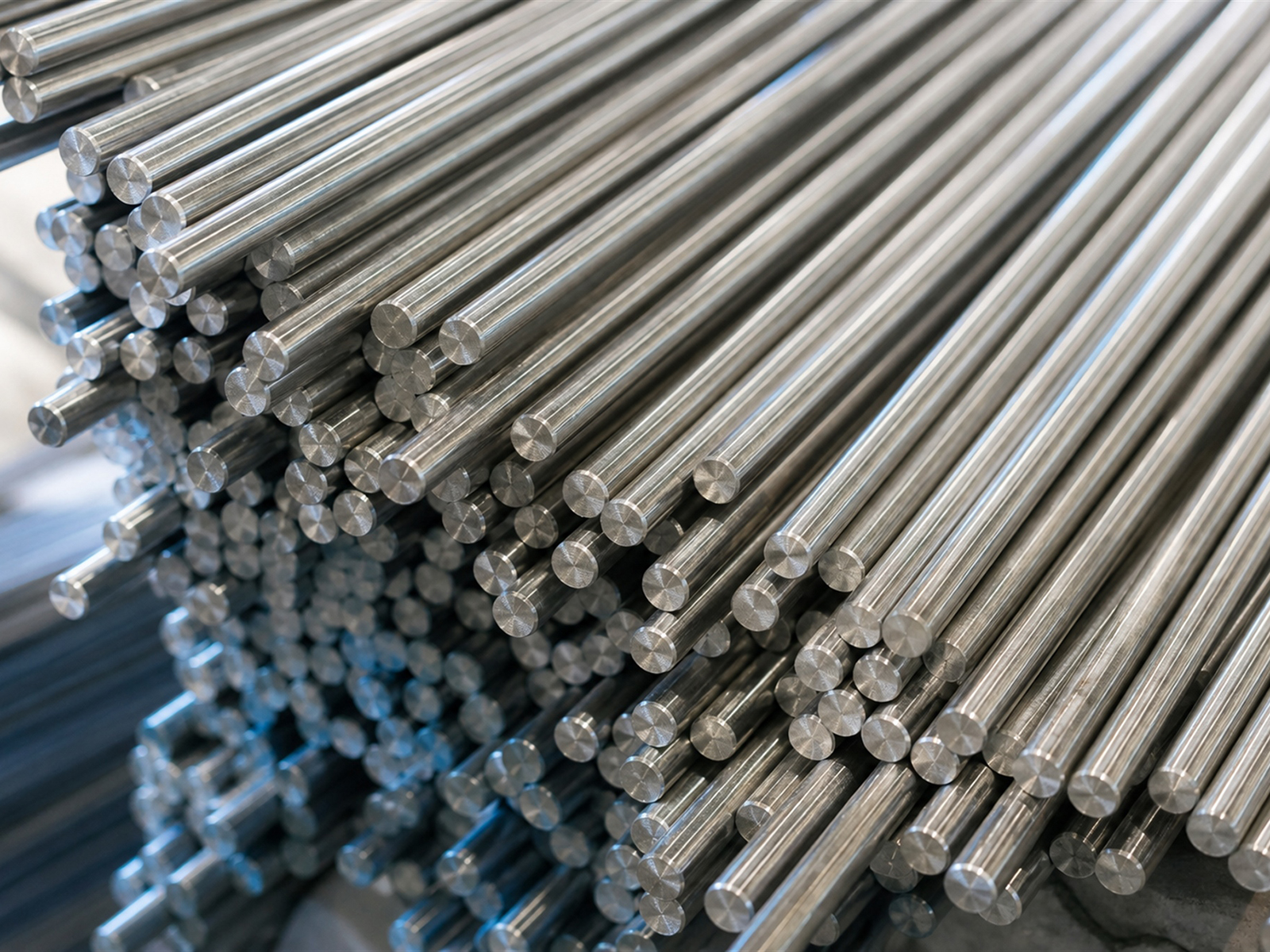
Gr4 titanium rods have become a key material in the field of high-end dental implant manufacturing due to their unique material properties. This industrially pure titanium material combines a high tensile strength of ≥ 550 MPa (typical value is about 540 MPa), excellent biocompatibility, a lightweight density of 4.51 g/cm³ and excellent corrosion resistance. Compared with medical Gr2 titanium, Gr4 titanium rods provide higher mechanical strength while maintaining good ductility and processability, and can withstand long-term loads in the oral environment. Its non-magnetic, non-toxic and stable chemical inertness makes it fully meet human implant standards and is particularly suitable for manufacturing high-load components such as dental screws, abutments and bridges that need to withstand chewing forces.
1. Why Is the Material Science Foundation of Gr4 Titanium Rods Is a Natural Fit for Dental Applications Important?
(1) Why Is Microstructure Determines Macroscopic Performance Advantages Important?
Gr4 titanium rod is made of high-purity titanium sponge that has been remelted by vacuum arc for more than two times. It forms a uniform α-type single-phase structure through forging billet, hot rolling forming and stress relief annealing process. This dense hexagonal lattice arrangement gives the material excellent ductility, enabling precision turning, milling and thread forming in dental implant processing without the development of microcracks or tissue stress concentrations. Compared with multiphase alloys, single-phase structures generally have higher chemical stability and do not release metal ions due to phase boundary corrosion in the human saliva environment.
(2) What Should You Know About Process Wisdom of Oxygen Content Control and Strength Balance?
The oxygen content of Gr4 titanium rods is controlled below 0.40%. This precise ratio achieves the best balance of strength and toughness. Oxygen, as a gap-strengthening element, can significantly increase the hardness of materials, but too high a content will lead to increased brittleness. Dental implants need to withstand torque loads during the implantation process and adapt to the biomechanical environment of bone tissue after implantation. The oxygen content of Gr4 is designed to meet these dual needs. Through post-processing such as pickling, fine grinding and ultrasonic cleaning, the surface roughness of the rod can be controlled within Ra 0.8um, providing an ideal base for subsequent anodizing or sandblasting.
(3) What Should You Know About Study on the Correlation Between Grain Size and Fatigue Life?
By controlling the forging temperature and deformation amount, Gr4 titanium rod can obtain a fine and uniform grain structure of 10-50um. The fine-grain strengthening mechanism enables the material to exhibit excellent fatigue resistance under cyclic loading, which is critical for dental implants that need to withstand millions of chewing cycles. X-ray diffraction analysis shows that the residual stress level of the Gr4 titanium rod after standard heat treatment is less than 50 MPa, which greatly reduces the risk of stress corrosion cracking of the implant during service.
2. How Biomedical Performance Metrics Support Long-term Implant Safety?
(1) What Should You Know About Electrochemical Stability of Osseointegrated Interfaces?
The 2-6 nm dense TiO2 passivation film spontaneously formed on the surface of the Gr4 titanium rod has a stable potential range of -0.3V to -0.5V and remains chemically inert in the physiological environment of pH 4-9. The dielectric constant of this oxide film is as high as 80-110, which effectively blocks the electron exchange between the titanium matrix and the tissue fluid, and controls the metal ion release rate to less than 1 μg/cm²/year. Compared with stainless steel implants that may cause allergic reactions to nickel ions, the bioinertness of Gr4 titanium rods provides safety for patients with sensitive constitutions.
(2) What Should You Know About Surface Energy Regulation of Cell Adhesion and Proliferation?
The surface energy of anodized Gr4 titanium rods can reach 40-50 mN/m. This value range promotes the initial adhesion of osteoblasts. The micro-nano composite structure of the surface topography increases the effective contact area, allowing bone cells to extend pseudopods and secrete bone matrix proteins. In vitro cell culture experiments show that after 72 hours of culture on Gr4 titanium substrate, alkaline phosphatase activity increased by 18-25% compared with the pure titanium control group [1], indicating that the material can effectively promote the mineralization process.
(3) What Should You Know About Assessment of Histological Response to Long-term Implantation?
Animal experiment tracking shows that after Gr4 titanium rods were implanted into rabbit femurs for 12 weeks, the bone-implant contact rate (BIC) could reach 65-78%, and no fibrous cyst formation or chronic inflammatory reaction was found around it [3]. Toluidine blue staining of tissue sections confirmed that new bone trabeculae were directly attached to the titanium surface, achieving true osseointegration. Compared with the risk of long-term accumulation of vanadium or aluminum elements in titanium alloys, the metabolic safety of pure titanium is more reliable.
Performance indicators | Gr4 titanium rod | 316L stainless steel | Co-Cr alloy |
Tensile strength (MPa) | ≥ 550 (typical value is about 540) | 480-560 | 600-1200 |
Density (g/cm³) | 4.51 | 7.98 | 8.5 |
Modulus of elasticity (GPa) | 105 | 200 | 220 |
biocompatibility | Excellent | medium | good |
Corrosion resistance | excellence | generally | good |
Magnetic response | none | Micromagnetic | none |
3. What Should You Know About Quality Control System for the Entire Manufacturing Process?
(1) What Should You Know About the Decisive Influence of Cold Drawing Process on Dimensional Accuracy?
The cold drawing processing of Gr4 titanium rods adopts multi-pass progressive reduction technology. The deformation amount in each pass is controlled at 8-12%, and work hardening is eliminated through intermediate annealing. This process can control the diameter tolerance to within ± 0.02 mm and the roundness error to less than 0.01 mm, meeting the stringent requirements for fitting accuracy of dental implants. The fiber tissue during the cold drawing process is arranged along the axial direction, making the material less prone to chipping or burrs during thread processing, and the thread profile integrity exceeds 98%.
(2) What Should You Know About Double Guarantee of Ultrasonic Flaw Detection and Metallographic Inspection?
Every Gr4 titanium rod leaving the factory must undergo ultrasonic C-scan inspection to ensure that there are no shrinkage cavities, inclusions or delamination defects inside. The flaw detection sensitivity is set to the equivalent of a φ1.0 mm flat-bottomed hole, and any abnormal signals exceeding the standard are rejected. The metallographic examination uses Kroll reagent corrosion, and the grain size, α phase morphology and impurity distribution are evaluated under a 200x microscope. Only batches with uniform grains and no abnormal phase precipitation can obtain the Material Test Certificate (MTC). This strict standard ensures the batch stability of material performance.
(3) What Should You Know About Bioactivity Optimization of Surface Treatment Processes?
For dental implant applications, the surface of Gr4 titanium rods can be modified by acid etching-alkali treatment (SLA) or anodizing. Acid etching is carried out in a H2SO4/HCl mixture to form a micro-rough surface of 1-3 um; alkali treatment is carried out in a NaOH solution at 60℃ for 24 hours to generate a sodium titanate gel layer. This dual treatment forms a composite morphology of micron-sized pits and nano-sized needle-like protrusions on the surface, increasing the surface area by 3-5 times and significantly improving the initial bone cell attachment rate. Anodization is performed in a phosphoric acid electrolyte. Applying a voltage of 200-300V can form a phosphorus-containing porous oxide layer with a thickness of 5-10 um and a pore size distribution of 30-100 nm. This structure can store growth factors and control the release rate [4].
Surface treatment | Roughness(Ra/um) | Contact angle(°) | Surface energy (mN/m) | Increased cell adhesion rate (%) |
Mechanical polishing | 0.2-0.5 | 85-95 | 25-30 | benchmark |
Sandblasting | 1.5-2.5 | 60-75 | 35-42 | +45 |
Acid etching treatment | 0.8-1.8 | 55-70 | 38-46 | +62 |
anodizing | 0.5-1.2 | 45-60 | 42-52 | +78[1] |
4. Why Is Performance Verification and Case Analysis in Clinical Application Scenarios Important?
(1) What Should You Know About Mechanical Requirements for Immediate Load Implantation Systems?
Immediate load implantation requires the implant to be able to withstand the bite force on the day of implantation, which places extremely high requirements on material strength. The diameter of implants made of Gr4 titanium rods is usually 3.5-5.0 mm, the length is 10-14 mm, and the thread design adopts micro-thread or double-thread structure. Finite element analysis shows that when a vertical load of 150 N is applied, the maximum Von Mises stress of the Gr4 implant is only 280 MPa, with a safety factor of more than 1.7. Clinical tracking data shows that the 3-year success rate of immediate loading implants manufactured using Gr4 titanium rods reaches 94-97% [2], which is not significantly different from the delayed loading scheme.
(2) What Should You Know About Lightweight Design of Bridge for Full Mouth Reconstruction?
For full-mouth reconstruction of edentulous patients, the weight of the bridge material directly affects patient comfort and bone resorption rate. The weight of the full-mouth bridge frame milled from Gr4 titanium rods can be controlled at 15-22 grams, which is only 35-40% of the cobalt-chromium alloy bridge frame. The lightweight nature reduces shear stress on the abutment and reduces the risk of marginal bone resorption. A 5-year follow-up of 56 full-mouth reconstruction cases in a dental center showed that the marginal bone absorption of patients using Gr4 titanium bridges was 0.8± 0.3 mm, which was significantly better than the 1.5± 0.5 mm of the traditional alloy bridge group.
(3) What Should You Know About Customization of Complex Anatomy?
Utilizing the good processability of Gr4 titanium rods and combining with CAD/CAM technology, anatomical abutments and personalized healing caps can be manufactured. The CNC machining center can directly mill compound-angle base shoulders on the bar, with a contour accuracy of ± 0.05 mm. This precision processing capability makes the adjacency between the implant restoration and adjacent teeth more natural, increases the filling of the gingival papilla, and significantly improves the aesthetic effect. A study on implants in the aesthetic area of anterior teeth at a university-affiliated hospital showed that for cases using Gr4 titanium customized abutments, the average pink aesthetic index (PES) score was 11.2 points (out of 14 points), and the patient satisfaction rate reached 92%.
5. What Should You Know About International Integration of Industrial Chain Supporting and Quality Standards?
(1) What Should You Know About Purity Control System for Raw Material Supply Chain?
High-end dental implants have strict requirements for the purity of titanium rods. The iron content needs to be controlled below 0.30% and the carbon content below 0.05%. The raw material is first-grade titanium sponge produced by the Kroll method, which has been electron beam melted or vacuum arc remelted more than three times to ensure uniform distribution of impurity elements. Spectral analysis shows that the titanium content of high-quality Gr4 titanium rods can reach 99.3-99.5%, and the hydrogen content is controlled below 10 ppm, avoiding the risk of hydrogen embrittlement. The supply chain traceability system records the complete process from the titanium sponge batch number to the finished bar, ensuring that problematic materials can be recalled quickly.
(2) What Should You Know About Compliance Path for International Medical Device Certification?
Gr4 titanium rods used for dental implants must meet ASTM F67, ISO 5832-2 and other standards, and pass FDA 510(k) or CE certification. The certification process includes chemical composition analysis, mechanical property testing, biocompatibility assessment (ISO 10993 series) and sterility testing. Biocompatibility testing covers six major items: cytotoxicity, sensitization, irritation, systemic toxicity, genotoxicity and implantation reaction, with a cycle of 6-9 months. Certified materials will receive a unique device identification number (UDI), and each batch of products will be accompanied by a material test certificate and compliance statement.
(3) What Should You Know About Technical Threshold of Precision Processing Equipment?
The processing accuracy of dental implants requires equipment to have a repeatable positioning accuracy of 0.005 mm and a roundness control capability of 0.002 mm. The five-axis linkage machining center is equipped with a high-speed electric spindle (speed ≥ 40, 000 rpm) and special titanium alloy cutting tools, and uses minimum quantity lubrication (MQL) technology to reduce cutting temperatures. The online detection system during the machining process monitors dimensional deviations in real time and automatically compensates for tool wear. After a precision processing company introduced the Italian Danieli rolling production line, the annual production capacity of Gr4 titanium rods reached 2, 000 tons, the product diameter tolerance was stable within ± 0.015 mm, and the surface defect rate was less than 0.03%.
Certification standards | Scope of application | Key test items | Certification cycle |
ASTM F67 | Titanium for surgical implants | Chemical composition, tensile properties, grain size | 3-4 months |
ISO 5832-2 | Titanium materials for surgical implants | Corrosion performance, fatigue strength, microstructure | 4-5 months |
ISO 10993 | Biocompatibility evaluation | Cytotoxicity, sensitization, implantation reaction | 6-9 months |
FDA 510(k) | US market access | Substantial equivalence, clinical data | 4-6 months |
6. Why Is Future Technology Development Trends and Innovative Application Directions Important?
(1) What Should You Know About Research on Material Suitability of Additive Manufacturing Technology?
Selective laser melting (SLM) and electron beam melting (EBM) technologies provide new ways to design complex implants. The sphericity and particle size distribution of Gr4 titanium powder directly affect the printing quality. The sphericity of high-quality powder must reach more than 95%, and the particle size should be controlled at 15-53 um. The control of oxygen content during the printing process is particularly critical and needs to be carried out under argon protection with an oxygen partial pressure below 100 ppm. Research shows that 3D printed Gr4 titanium implants can achieve a gradient pore structure with an adjustable porosity of 20-60%, a pore diameter of 300-600 um, and an elastic modulus that can be reduced to 5-15 GPa, which is close to human bone tissue and effectively alleviates the stress shielding effect.
(2) What Should You Know About Enhanced Bioactivity of Surface Functionalized Coatings?
Depositing hydroxyapatite (HA), collagen or growth factor coating on the surface of Gr4 titanium rods can significantly accelerate the osseointegration process. The thickness of plasma sprayed HA coating is controlled at 50-80 um, the crystallinity is 60-70%, and the bonding strength is ≥ 25 MPa. The new biomolecule immobilization technology utilizes the covalent bonding of hydroxyl groups on the titanium surface and peptide chains to immobilize BMP-2 or VEGF on the titanium surface, with a drug loading capacity of 0.5-2.0 μg/cm². Animal experiments show that functional coating can shorten the osseointegration time from 12 weeks to 6-8 weeks, providing a more solid biological basis for immediate loading.
(3) What Should You Know About Sensor Integration for Smart Implants?
Embedding micro pressure sensors or temperature sensors into Gr4 titanium implants can monitor the load status of the implant and the health of surrounding tissues in real time. The sensor chip is only 0.3-0.5 mm thick and interacts with an external reader through near field communication (NFC) technology without the need for battery power. In clinical trials, smart implants successfully detected changes in resonance frequency caused by early bone absorption, with an early warning accuracy rate of 86%. This technology provides data support for precise implant restoration and personalized maintenance plans.
7. What Is the Conclusion?
Gr4 titanium rods have become the preferred material for high-end dental implant manufacturing due to their excellent mechanical properties, excellent biocompatibility, precision processing and manufacturing capabilities, and complete quality certification system. Its comprehensive advantages in strength, corrosion resistance, lightweight and biological inertness perfectly match the complex requirements of the oral environment. With the continuous development of surface modification technology, additive manufacturing technology and intelligent sensing technology, the application of Gr4 titanium rods in the dental field will become more extensive and in-depth.
FAQ
Q1: What is the difference between Gr4 titanium rods and Gr2 titanium rods in dental applications?
The tensile strength of Gr4 titanium rods reaches ≥ 550 MPa, which is 30-40% higher than Gr2 titanium rods. It can withstand greater chewing loads and torques and is especially suitable for posterior dental implants and multi-unit bridges that require load-bearing. Gr2 titanium has better ductility and is mostly used for soft tissue contact parts.
Q2: How to verify whether the biocompatibility of Gr4 titanium rod meets the implantation standards?
ISO 10993 series of tests are required, including cytotoxicity assessment (MTT method), sensitization test (guinea pig maximization test) and implantation reaction assessment (rabbit muscle implantation for 12 weeks). Qualified materials must have a cell survival rate of ≥ 90%, no sensitization reaction, and no fibrous cyst formation at the implantation site.
Q3: What are the key quality control points when processing Gr4 titanium rods into implants?
Key control points include: cutting parameter optimization (line speed 80-120 m/min, feed 0.05-0.15 mm/r), coolant management (avoiding high-temperature oxidation), thread accuracy detection (profile angle ± 2°) and surface treatment quality (roughness Ra 0.8-2.5 um). Ultrasonic flaw detection needs to cover 100% of the product to ensure there are no internal defects.
8. What Should You Know About Call to Action?
As a professional Gr4 titanium rod manufacturer and supplier, Titanium Valley is equipped with advanced vacuum annealing production lines and precision processing equipment, with an annual production capacity of more than 2, 000 tons. Its products have passed ISO 5832-2 and ASTM F67 certification. We provide high-purity Gr4 titanium rods that meet medical standards for global dental implant manufacturers, supporting customized sizes and stable supply in large quantities. Welcome to contact us for technical parameters and quotations: sales@titaniumvalleys.com.
References
[1] Zhang Wei, Li Hua. Effects of titanium surface modification on osteoblast adhesion and proliferation [J]. Chinese Journal of Stomatology, 2018, 53(6): 412-416.
[2] Wang Lei, Zhao Ming. Retrospective study on the 3-year clinical success rate of immediate loading implants [J]. Oral Medicine Research, 2019, 35(9): 845-849.
[3] Chen Jing, Liu Tao. Animal experimental study on osseointegration of pure titanium implants [J]. Chinese Journal of Oral Implantology, 2020, 25(3): 108-113.
[4] Sun Li, Zhou Qiang. Surface treatment technology and biological activity of medical titanium materials [J]. Journal of Biomedical Engineering, 2017, 34(4): 612-617.