
Why Is Advantages of Lightweight Application of Gr5 Titanium Rods in Racing and Sports Equipment Manufacturing Important?
- Gr5 Titanium Rods
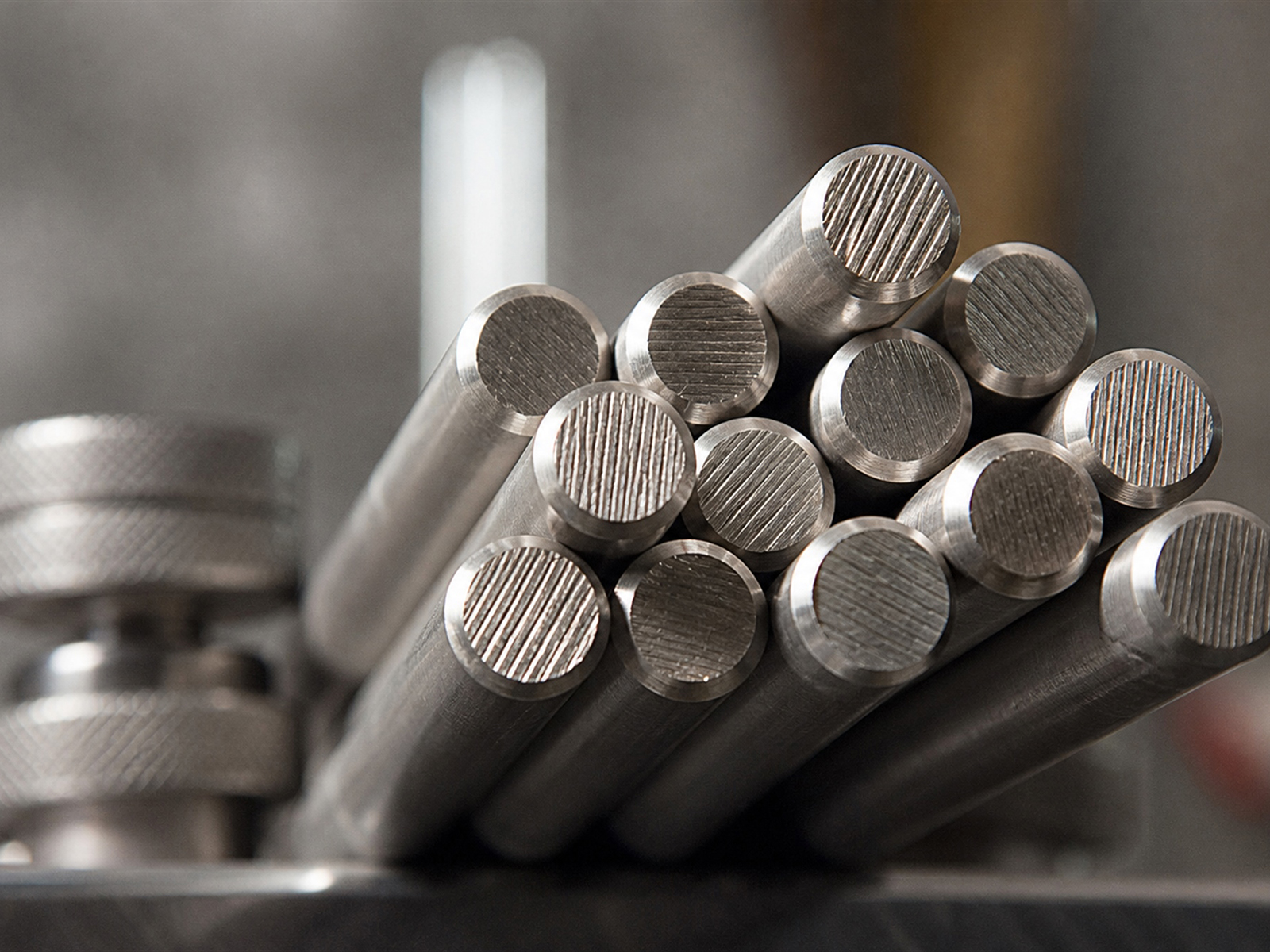
In the fields of racing sports and high-end equipment manufacturing, every gram of weight reduction may bring about a qualitative change in performance. With its density of 4.43 g/cm³ – only 60% of steel, Gr5 titanium rod (Ti-6Al-4V) can provide mechanical properties close to high-strength steel, making it an ideal material for racing chassis, suspension systems, sports bicycle frames and professional mountaineering equipment. Its tensile strength of more than 895MPa combined with excellent fatigue resistance can withstand extreme impacts and long-term cyclic loads on the track, while significantly reducing the vehicle’s weight and improving acceleration response and control flexibility. This high specific strength characteristic allows engineers to achieve structural optimization and performance breakthroughs without sacrificing safety margins.
1. What Should You Know About Structural Lightweight Innovation in Racing Car Manufacturing?
(1) What Should You Know About Weight Reduction Breakthrough in Chassis and Frame Systems?
Racing chassis need to be extremely lightweight while ensuring rigidity. The subframe cross beams and support structures made of Gr5 titanium rods can reduce weight by 40-50% compared with traditional chromium-molybdenum steel. In Formula racing applications, the replacement of a single chassis component can save 1.2-2.8kg in weight, directly improving the vehicle’s thrust-to-weight ratio and center of gravity distribution. Its hardness of 280-340HB ensures that the structural integrity is maintained during high-speed cornering and avoids deformation failure due to material fatigue.
(2) What Should You Know About Dynamic Response Optimization of Suspension Links?
The unsprung mass of the suspension system directly affects the tire’s ground contact and control accuracy. The A-arms, tie rods and steering knuckles processed from cold-drawn Gr5 titanium rods can reduce the weight of the suspension system by more than 35%. The reduced inertia brought about by this weight reduction allows the suspension to respond more quickly to road undulations, improve tire dynamic ground pressure, shorten braking distances and increase cornering limits. In WRC rally cars, titanium alloy suspension components have become standard technology.
(3) What Should You Know About Drivetrain Efficiency Improvements?
The lightweighting of rotating parts such as the gearbox shift fork, clutch pressure plate spring seat and transmission shaft can reduce the rotational inertia of the transmission system. Transmission components processed from Gr5 titanium rods not only reduce weight by 30%, but their low thermal conductivity (about 1/5 of steel) can also reduce the transfer of heat to the transmission oil and maintain the stability of the lubrication system. In endurance racing, this thermal management advantage extends oil change intervals and reduces power losses.
2. Why Is Competition-level Applications for High-performance Cycling Equipment Important?
(1) What Should You Know About Frame Tube Strength and Weight Balance?
Professional road and mountain bike frames pursue the ultimate balance of rigidity and lightness. Using φ25-φ38mm Gr5 titanium rod cold-drawn pipes, the frame triangle is constructed through butt welding or argon arc welding process, and the frame weight can be controlled at 1.2-1.5kg. Compared with carbon fiber frames, titanium alloy frames have obvious advantages in impact resistance toughness and fatigue life, and can withstand long-term bumps in off-road conditions without accumulating micro-cracks.
(2) What Should You Know About Seat Tube and Stem Comfort Improvements?
The seat tube and stem assembly made of Gr5 titanium rods have inherent material damping properties that can absorb high-frequency vibrations from the road and reduce hand and hip fatigue during long-distance riding. Compared with aluminum alloy, titanium material has a higher elastic modulus, providing better longitudinal compliance, while having sufficient lateral rigidity to ensure pedaling efficiency. This “comfort stiffness” feature makes titanium frames the first choice for ultra-long distance events.
(3) What Should You Know About Durability of Fasteners and Transmission Accessories?
Key fasteners such as sprocket bolts, brake caliper fixing screws and crankshaft are processed from Gr5 titanium rods, which can reduce weight while avoiding stress corrosion cracking. Its excellent resistance to chloride ion corrosion allows it to maintain fastening reliability when riding in humid coastal environments or on roads with melted snow and salt in winter, without the need for frequent replacement and maintenance.
3. What Should You Know About Reliability Guarantee in Extreme Sports Equipment?
Equipment type | Application parts | Weight loss | Performance improvements |
mountaineering ice ax | Pickaxe handle and pickaxe head connecting shaft | 45% | Swinging speed increases and fatigue decreases |
rock climbing equipment | Rock plug axis, quick-hook door bolt | 40% | Improved load carrying safety margin |
skis | Binding base and adjustment screw | 35% | Improved response sensitivity |
(1) What Should You Know About Weight and Safety Trade-offs in Mountaineering Equipment?
In high-altitude mountaineering, every gram of equipment weight is converted into physical energy consumption. Ice ax shafts, snow anchor piles and rock plug core shafts made of Gr5 titanium rods can reduce the weight of a single piece by 150-300g while ensuring a breaking strength of more than 25kN. It can still maintain toughness and non-brittleness in a low temperature environment of -40℃, avoiding the risk of brittle fracture of traditional steel in extremely cold conditions. This reliability has made titanium the standard for 8, 000-meter climbs.
(2) What Should You Know About Corrosion Resistance and Lightweight Requirements for Diving Equipment?
The backplate system, cylinder valves and regulator first stage of technical diving are made of Gr5 titanium rods, which can resist long-term corrosion by seawater without causing pitting or crevice corrosion. Compared with stainless steel components, the weight is reduced by 30%, making divers more effortless to operate underwater and extending the effective diving time. The TiO2 passivation film formed on the surface of titanium materials has strong self-healing properties and can quickly restore its anti-corrosion capabilities even if the surface is scratched.
(3) What Should You Know About Multifunctional Integration of Wilderness Survival Tools?
The handle frame, folding pin and pry bar of the multifunctional survival tool are made of Gr5 titanium rods, which ensures the structural strength while making the tool box lightweight. Its non-magnetic properties do not interfere with the compass, and its low thermal conductivity makes it more comfortable to hold in extreme climates. Through surface anodization treatment, different color markings can also be achieved to facilitate quick identification of tool function modules.
4. What Should You Know About the Decisive Influence of Manufacturing Processes on Performance?
(1) What Should You Know About Control of Mechanical Properties by Heat Treatment State?
Heat treatment status | Tensile strength (MPa) | Yield strength (MPa) | Elongation (%) | Applicable scenarios |
Annealed state (M) | 895-930 | 825-860 | 10-15 | Cold forming processing, welded components |
Solid solution + aging state | 1100-1200 | 1000-1100 | 8-12 | High strength structural parts |
Hot rolled state (R) | 950-1050 | 880-950 | 9-13 | Forged blanks, high strength bolts |
Annealed Gr5 titanium rods have good plasticity and weldability, are suitable for bending forming and TIG welding processes, and are often used in frame pipes and complex structural parts. Solid solution + aging treatment can increase the strength by 20-30%, but the aging temperature (480-540℃) and holding time need to be controlled to avoid the decrease in toughness caused by over-aging.
(2) What Should You Know About Enhancement of Fatigue Life by Surface Treatment?
For components with high stress concentration such as racing suspension connecting rods, a 0.1-0.3mm compressive stress layer is formed on the surface through shot peening treatment, which can increase the fatigue limit by 15-25%. Polishing the surface to Ra0.4um or less can eliminate the source of microcracks, and cooperate with anodizing to form an oxide film of 10-20um, which not only improves wear resistance but also achieves beautiful coating. These surface engineering techniques allow titanium alloy components to maintain structural integrity under millions of load cycles.
(3) What Should You Know About Precision Machining Guarantees Dimensional Consistency?
In the manufacturing of sports equipment, the tolerance requirements for threaded connections and mating parts are extremely strict. PCD tools and high-speed cutting technology are used to process Gr5 titanium rods, and with center-free grinding finishing, it is possible to achieve a diameter tolerance of ± 0.02mm above φ6mm and a surface roughness of Ra0.8um. This machining precision ensures assembly consistency of components and avoids fretting wear and stress concentration caused by fit gaps.
5. Why Is Cost-benefit and Life Cycle Value Analysis Important?
(1) What Should You Know About the Trade-off Between Initial Investment and Long-term Returns?
The raw material cost of Gr5 titanium rod is about 5-8 times that of high-strength steel, but considering the performance improvement and service life extension brought by weight reduction, the whole life cycle cost advantage is obvious. Taking the racing suspension system as an example, although titanium alloy components increase the initial investment by 30, 000 to 50, 000 yuan, the improved lap times through weight reduction can improve rankings, and the corrosion resistance reduces season maintenance costs by more than 60%.
(2) What Should You Know About Process Maturity in Series Production?
With the civilian transformation of titanium alloy processing technology in the aerospace field, the machining efficiency of Gr5 titanium rods has been greatly improved. Using optimized cutting parameters (cutting speed 50-80m/min, feed 0.1-0.2mm/r) and special coated tools, the processing time of a single piece can be shortened by 40%. The large-scale production in domestic production areas such as Baoji Titanium Valley has ensured sufficient spot supply of conventional specifications of φ8-φ200mm, and the delivery cycle has been shortened to 2-3 weeks.
(3) What Should You Know About Sustainability and Resource Recycling?
The recycling rate of titanium alloys can reach more than 95%, and the scrap can be remade into high-quality rods through the vacuum consumable remelting (VAR) process. Compared with the recycling problems of carbon fiber composite materials, the recyclability characteristics of titanium materials are in line with the EU CE certification and carbon neutrality trends. Sports equipment manufacturers use titanium alloys to improve the ESG rating of their products and meet the high-end consumer market’s preference for environmentally friendly materials.
6. What Should You Know About Conclusion?
The lightweight application of Gr5 titanium rods in the manufacturing of racing cars and sports equipment has entered the stage of large-scale engineering practice from early experimental exploration. Through system integration of material selection, process optimization and surface treatment, the optimal balance of performance, weight and cost can be achieved. As processing technology matures and supply chains improve, titanium alloys will play a key role in a wider range of competitive sports and outdoor equipment.
FAQ
Q1: How to choose between Gr5 titanium rod and 7 series aluminum alloy in racing applications?
The specific strength (strength to density ratio) of Gr5 titanium rod is about 20% better than that of 7075 aluminum alloy, and its fatigue limit is higher. It is suitable for high stress cyclic load components such as suspension connecting rods. Aluminum alloy has lower cost and is suitable for non-critical load-bearing parts. Material selection needs to be weighed based on stress analysis and budget.
Q2: Does titanium alloy bicycle frame need heat treatment after welding?
Argon arc welding will reduce the strength of the heat affected zone by 10-15%. It is recommended to perform stress relief annealing at 650-750℃ for 1-2 hours. This restores weld toughness and eliminates residual stresses, preventing crack growth over long periods of use without unduly reducing base material strength.
Q3: How to verify whether Gr5 titanium rod meets aviation grade standards?
Suppliers are required to provide a material certificate (MTC), which must comply with ASTM B348 Grade 5 or AMS 4928 standards. The chemical composition contains Al content of 5.5-6.75% and V content of 3.5-4.5%. It is recommended that key components undergo ultrasonic flaw detection (UT) testing to ensure that there are no internal defects and to randomly check the mechanical properties.
How Should Looking for a Stable and Reliable Supplier of Gr5 Titanium Rods?
Baoji Titanium Valley Titanium Nickel Zirconium Material Processing Co., Ltd. (Titanium Valley) focuses on precision processing of high-performance titanium alloy rods, with an annual production capacity of over 20, 000 tons, and strictly follows ASTM B348 standards. We provide full-specification customization services from φ4 to φ300mm, with fast delivery and stable quality. Contact us now to obtain technical parameters and quotations: sales@titaniumvalleys.com
References
- Zhang Shirong, Li Zhiqiang, Wang Jinyou. Research on the application of titanium alloys in sports equipment [J]. Light Alloy Processing Technology, 2021, 49(3): 25-30.
- Zhao Yongqing, Liu Fengying, Chen Guoliang. Research on heat treatment process and mechanical properties of Ti-6Al-4V alloy [J]. Journal of Materials Heat Treatment, 2020, 41(8): 78-85.
- Chen Guoliang, Wang Zhijie. Research on the influence of titanium alloy surface strengthening technology on fatigue properties [J]. Materials Engineering, 2021, 49(9): 112-118.
- Liu Shaojun, Li Wei. Application and process optimization of high-performance titanium alloys in racing structures [J]. Journal of Lightweight Technology, 2022, 6(4): 45-51.