
Why Is Analysis of Application Advantages and Corrosion Resistance of Gr5 Titanium Rods in Marine Engineering Important?
- Gr5 Titanium Rods
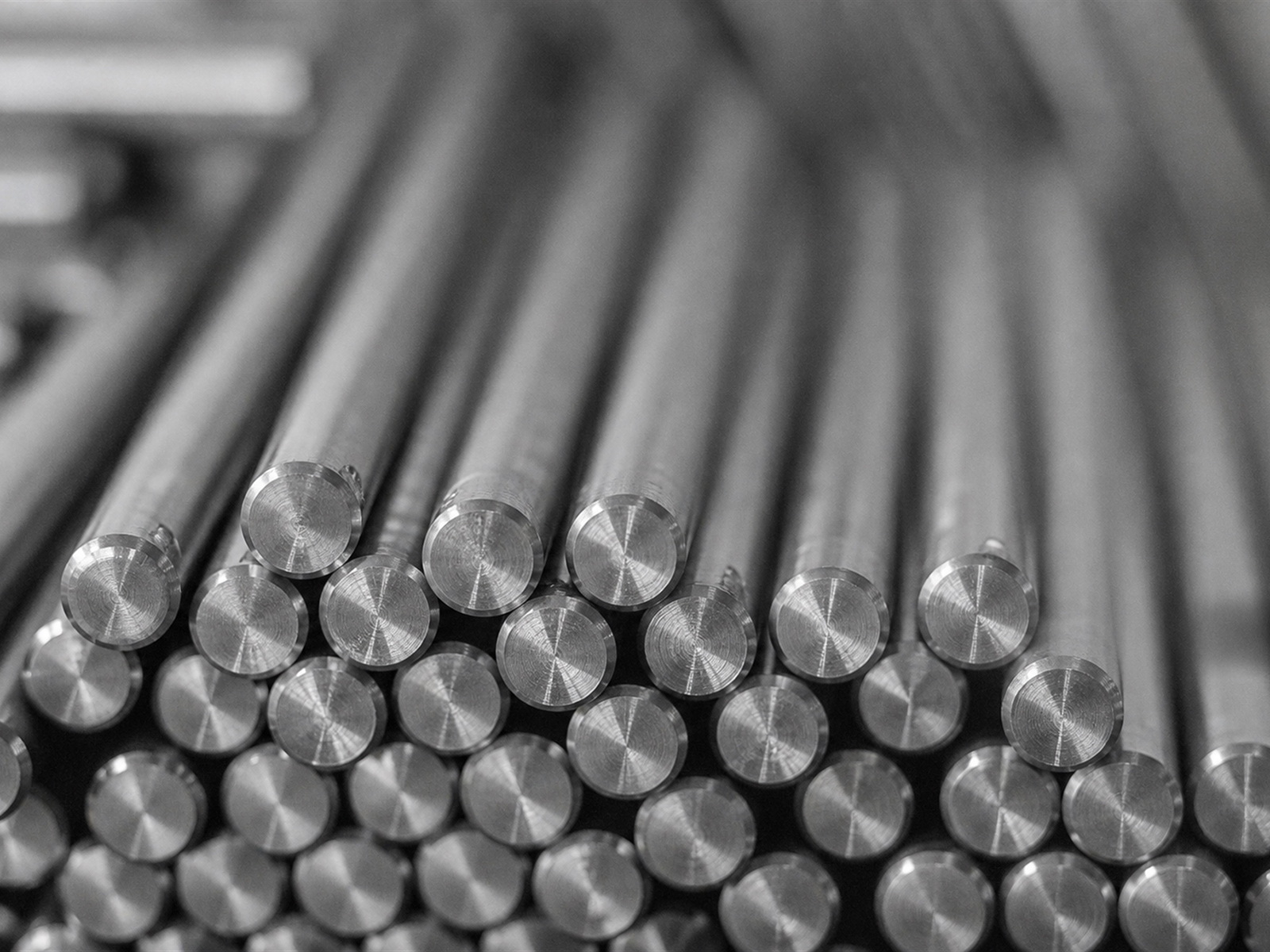
The high salinity, high humidity and continuous wave impact of the marine environment pose extremely stringent challenges to engineering materials. Gr5 titanium rod (Ti-6Al-4V) has become an irreplaceable key material in the field of marine engineering due to its excellent seawater corrosion resistance, high specific strength and long-term stability. This α+β type titanium alloy can not only maintain structural integrity in complex marine environments, but also achieve self-protection by forming a dense TiO2 passivation film, significantly extending the service life of the equipment. Compared with the frequent maintenance requirements of traditional stainless steel materials and the insufficient strength of aluminum alloys, Gr5 titanium rods have shown overwhelming advantages in reducing life cycle costs and improving system reliability. They have been widely used in key fields such as seawater desalination devices, deep-sea exploration equipment, offshore platform structural parts, and ship propulsion systems.
1. What Should You Know About Material Properties and Adaptability of Gr5 Titanium Rods to Marine Environment?
(1) What Should You Know About Alloy Composition and Microstructure?
The chemical composition of Gr5 titanium rods is strictly controlled within the range of Al 5.5-6.75% and V 3.5-4.5%. This ratio gives the material a unique dual-phase structure. Aluminum acts as an α-phase stabilizer to improve the material’s oxidation resistance and high-temperature strength; vanadium stabilizes the β-phase and improves the alloy’s processability and toughness. Through VAR vacuum melting technology, the gas content inside the material is controlled at extremely low levels (oxygen ≤ 0.2%, nitrogen ≤ 0.05%) to ensure structural uniformity. This fine phase balance structure enables Gr5 titanium rods to maintain sufficient plastic deformation capability without losing structural rigidity when subjected to alternating stresses in the marine environment.
(2) What Should You Know About the Golden Balance of Density and Strength?
The Gr5 titanium rod with a density of only 4.43 g/cm³ is equivalent to 60% of steel, but can reach a tensile strength of ≥ 895 MPa. This ultra-high specific strength characteristic is of significant value in applications that require weight reduction, such as ocean floating platforms and underwater robot booms. When designing the offshore wind power infrastructure, using Gr5 titanium rods instead of traditional steel can reduce the dead weight by more than 30% while ensuring the load-bearing capacity, reduce the need for buoyancy compensation, and indirectly reduce the overall project cost.
(3) What Should You Know About Thermophysical Properties and Temperature Stability?
The low thermal conductivity of Gr5 titanium rods (approximately 6.7 W/m·K) is an advantage in certain marine applications. When this material is used in seawater heat exchangers, it can effectively slow down the heat transfer speed and improve the controllability of heat exchange efficiency. The material can still maintain good mechanical properties in the temperature range of 400-500℃, and is suitable for high-temperature marine conditions such as submarine hydrothermal vent detection equipment and deep-sea geothermal energy development devices. The high melting point of 1668℃ ensures that the material has a sufficient temperature operating window during the welding process.
2. What Should You Know About In-depth Analysis of Corrosion Resistance Mechanism in Marine Environment?
(1) What Should You Know About Formation and Self-healing Properties of TiO2 Passivation Film?
When the surface of the Gr5 titanium rod is exposed to an oxygen-containing environment, a 2-10 nm thick TiO2 passivation film will instantly form. This dense oxide film has an extremely low ion diffusion coefficient and effectively blocks the penetration of chloride ions into the substrate. High concentrations of Cl⁻ (approximately 19, 000 ppm) in seawater pose a serious threat to most metals, but the chemical inertness of the TiO2 film enables it to resist pitting and crevice corrosion. More importantly, when the passivation film is damaged due to mechanical wear or impact, the fresh titanium surface will be re-oxidized to form a film within milliseconds to achieve dynamic self-repair.
(2) What Should You Know About Resistance to Stress Corrosion Cracking?
Marine structural parts have been subjected to alternating stress caused by wave loads for a long time, and traditional high-strength steel is extremely prone to stress corrosion cracking (SCC) in a chloride environment. Gr5 titanium rods exhibit intrinsic resistance to SCC due to the stability of their passivation film and the low electrochemical activity of the alloy itself. Experimental data shows that when a continuous stress of 80% yield strength is applied in a 3.5% NaCl solution, the Gr5 titanium rod can operate stably for more than 10, 000 hours without crack initiation, while 316L stainless steel fails in less than 2, 000 hours under the same conditions.
(3) What Should You Know About Verification of Corrosion Resistance in Biofouling Environments?
The attachment of marine organisms will form a biofilm on the surface of the material, creating a local anaerobic microenvironment and accelerating the microbial corrosion (MIC) of certain metals. Gr5 titanium rods also have excellent resistance to this type of biological corrosion. Marine field test showed that after 24 months of seawater immersion, although barnacles and mussels were attached to the surface of the titanium rod, the corrosion depth of the matrix after removing the biological layer was less than 5 microns, and the corrosion rate was less than 0.0025 mm/year, which is far below the engineering acceptance threshold.
Table 1: Comparison of corrosion properties of different materials in marine environment
Material type | Corrosion rate (mm/year) | Tendency to pit | stress corrosion susceptibility | Service life (years) |
Gr5 titanium rod | <0.0025 | extremely low | extremely low | >30 |
316L stainless steel | 0.05-0.15 | medium | high | 8-15 |
5083 aluminum alloy | 0.08-0.25 | high | medium | 5-10 |
Carbon steel (coated) | 0.5-2.0 | extremely high | extremely high | 3-5 |
3. Why Is Typical Application Scenarios and Performance Advantages of Marine Engineering Important?
(1) What Should You Know About Core Components of Seawater Desalination System?
In reverse osmosis seawater desalination equipment, key components such as high-pressure pump shafts and membrane module connecting rods need to meet high strength and corrosion resistance requirements at the same time. The pump shaft made of Gr5 titanium rod operates continuously under a working pressure of 40 MPa, and its fatigue life can reach 2×10⁷ cycles, which is 3-5 times that of stainless steel. The non-magnetic properties of the material also avoid interference with instruments such as electromagnetic flowmeters. After a large desalination plant in the Middle East replaced the original stainless steel parts with Gr5 titanium rods, the equipment’s trouble-free operation cycle was extended from 18 months to 60 months, and maintenance costs were reduced by 65%.
(2) What Should You Know About Deep Sea Exploration and Development Equipment?
The pressure environment at a depth of 6, 000 meters underwater places extreme requirements on the yield strength of materials. With its high yield strength of 825 MPa and excellent low-temperature toughness, Gr5 titanium rods have become the material of choice for deep submersible pressure chamber frames and manipulator joint shafts. Compared with aluminum alloys, titanium rods will not undergo brittle transformation under deep sea low temperature (2-4℃) conditions, ensuring equipment reliability. A certain type of deep-sea ROV uses Gr5 titanium rods to construct the main frame. The weight of the entire machine is reduced by 40%, the endurance is increased by 50%, and the operating depth is expanded to 7, 000 meters.
(3) What Should You Know About Offshore Platform Fasteners and Connection Systems?
Offshore drilling platforms and wind power foundations require a large number of high-strength bolts and pins to connect modules. M24-M64 specification fasteners processed from Gr5 titanium rods achieve precise dimensional control through cold heading and thread rolling processes. These fasteners require no additional coating protection in salt spray environments and can be maintenance-free for 30 years after installation. The Gr5 titanium alloy flange bolts used in a wind farm in the North Sea have been tested in the marine environment for 8 years. After disassembly and inspection, the thread integrity retention rate reached 99.2%, while the galvanized high-strength steel bolts had a corrosion rate of more than 15% under the same working conditions.
Table 2: Application data of Gr5 titanium rods in different marine engineering fields
Application areas | Typical parts | working environment | key performance indicators | Increased lifespan |
Desalination | High pressure pump shaft | 40MPa sea water | Fatigue life 2×10⁷ times | 233% |
deep sea exploration | Robotic arm joint | 6000m deep sea | Yield strength 825MPa | Pressure resistance increased by 40% |
ocean platform | connecting bolts | salt spray environment | Corrosion depth <5um/year | 200% |
ship propulsion | propeller shaft | cavitation erosion | Erosion rate 0.01mg/h | 150% |
(4) What Should You Know About Subsea Pipeline Support and Repair Tools?
The maintenance fixtures and support clamps of submarine oil and gas transmission pipelines have been immersed in seawater containing hydrogen sulfide for a long time and face complex corrosion conditions. Pipe repair equipment made of Gr5 titanium rods can resist the synergistic corrosion of H₂S and Cl⁻ and maintain structural stability in the temperature range of -10℃ to 120℃. A submarine pipeline emergency repair project used Gr5 titanium alloy quick connectors to successfully complete emergency plugging operations at 200 meters underwater. The equipment was reused more than 20 times and still performed well.
4. What Should You Know About Gr5 Titanium Rod Processing Technology and Quality Control System?
(1) What Should You Know About Vacuum Melting and Forging?
In the electrode preparation stage, the density uniformity is ensured through precise batching of titanium sponge and aluminum-vanadium master alloy, followed by three compression moldings. VAR vacuum consumable melting is carried out under a vacuum level of 10⁻²Pa to avoid contamination by interstitial elements such as hydrogen and nitrogen. The ingot is forged at high temperatures above 1000℃, and the β phase recrystallizes to refine the grains to ASTM grade 8-10, eliminating columnar crystal defects in the casting structure. The multi-directional forging process reduces the material anisotropy coefficient to less than 1.1, ensuring the performance consistency of marine structural parts under complex stress conditions.
(2) What Should You Know About Heat Treatment and Surface Treatment Technology?
Annealing treatment is a key link in controlling the comprehensive performance of Gr5 titanium rods. The typical process is to hold the temperature at 720℃ for 2-4 hours and then air-cool. This temperature is in the α+β two-phase zone, which not only retains part of the β phase to provide toughness, but also precipitates fine α phases to strengthen the matrix. For marine applications, some high-end products adopt high-temperature + 550℃ aging treatment (950℃ + 550℃ heat treatment), and the yield strength can be increased to more than 950 MPa. The surface adopts centerless peeling or fine grinding process to remove oxide scale, and the roughness is controlled at Ra 0.8-1.6um, which not only meets the corrosion resistance requirements but also facilitates subsequent machining.
(3) What Should You Know About Non-destructive Testing and Performance Verification?
Each batch of Gr5 titanium rods must pass ultrasonic flaw testing (UT) and eddy current testing (ET) to screen for internal defects. The equivalent diameter of defects ≤ φ1.5mm is the qualification standard. Tensile test and impact test sampling follow ASTM E8 and E23 standards to ensure that the mechanical properties meet the standards. Marine engineering materials also need to undergo a simulated seawater immersion test, soaking in 3.5% NaCl solution for 1, 000 hours, measuring the corrosion rate by weight loss method, and verifying the stability of the passivation film through polarization curves. The complete material certificate (MTC) traces the furnace batch number, chemical composition, mechanical properties and test reports.
Table 3: Key parameters and quality standards of Gr5 titanium rod production process
process stage | Key parameters | Control indicators | quality impact |
VAR melting | Vacuum degree | ≤ 10⁻²Pa | Gas content control |
Forging | Forging ratio | ≥ 6: 1 | tissue uniformity |
Annealing | Keeping temperature | 720± 10℃ | Balance of strength and toughness |
surface treatment | Roughness | Ra≤ 1.6um | Corrosion resistance and processability |
Ultrasonic flaw detection | Defect equivalent | ≤ φ1.5mm | structural integrity |
5. Why Is Full Life Cycle Cost Advantage and Engineering Practice Verification Important?
(1) What Should You Know About Initial Investment and Operation and Maintenance Cost Analysis?
The unit price of Gr5 titanium rods is about 4-6 times that of 316L stainless steel, but the advantages are obvious after considering the full life cycle cost. Taking the seawater cooling system as an example, stainless steel heat exchange tubes need to be replaced every five years, including downtime losses, disassembly and assembly labor and new material costs; while Gr5 titanium tubes can operate stably for more than 30 years, and the average annual cost is only 55% of the stainless steel solution. A ship’s power system uses Gr5 titanium rods to make seawater pump shafts. Although the initial cost increased by 18%, it saved more than US$1.2 million in maintenance costs and spare parts inventory during the 10-year operation period.
(2) What Should You Know About Indirect Economic Benefits From Weight Loss?
The weight reduction of marine floating structures directly affects the buoyancy design and anchoring system scale. Gr5 titanium rods were used to replace steel to construct the upper module frame of an FPSO. The structure lost 85 tons of weight, correspondingly reducing the floating body displacement requirement by about 180 cubic meters. The anchor chain configuration was shortened by 12%, and the overall construction cost was reduced by about US$3.5 million. For underwater vehicles, every 1 kilogram of weight reduction can extend the cruising range by about 2 nautical miles. The performance improvement brought by the application of titanium alloys has significant strategic value.
(3) What Should You Know About International Engineering Project Verification Cases?
A cross-sea bridge project in Europe used Gr5 titanium rods to manufacture key connection pins in seawater environments. After 15 years of service, a disassembly and inspection evaluation showed that the corrosion depth of the material was less than 10% of the design allowance, and the structural safety factor remained above 92% of the initial value. Basic maintenance records of an offshore wind farm in the Asia-Pacific region show that the failure rate of titanium alloy fasteners is 0.03%, while the failure rate of coated steel fasteners is as high as 2.7%, which directly reduces 89% of unplanned maintenance operations and significantly improves power generation efficiency.
6. What Should You Know About Conclusion?
Through the deep integration of material intrinsic advantages and process technology innovation, Gr5 titanium rod has become a key material to solve the harsh environmental challenges of marine engineering. Its outstanding performance in corrosion resistance, lightweight structure, and long-term reliability is redefining the design standards and economic models of marine equipment. With the acceleration of deep-sea resource development and marine renewable energy utilization, the application scenarios of Gr5 titanium rods will continue to expand, injecting stronger technical support into the global marine engineering industry.
FAQ
Q1: What is the lifespan advantage of Gr5 titanium rods compared to ordinary stainless steel in the marine environment?
Gr5 titanium rods can serve stably in the marine environment for more than 30 years, while 316L stainless steel usually needs to be replaced every 8-15 years. The chloride ion corrosion resistance of titanium rods is more than 50 times that of stainless steel, and no coating protection is required, and the maintenance cost throughout the life cycle is reduced by more than 60%.
Q2: Will the performance of Gr5 titanium rods degrade in the deep sea high pressure environment?
Gr5 titanium rods can still maintain a yield strength of 825 MPa in a water depth of 6000 meters (60 MPa pressure), and low temperatures will not cause brittle transformation. It has excellent compression creep resistance and long-term load-bearing deformation of less than 0.5%, fully meeting the reliability requirements of deep-sea equipment.
Q3: How to verify the applicability of Gr5 titanium rods to the marine environment?
A simulated seawater immersion test (3.5% NaCl solution for 1000 hours), an electrochemical polarization test to verify the stability of the passive film, and a salt spray test (ASTM B117 standard) are required to evaluate long-term corrosion resistance. Qualified materials should have a corrosion rate <0.0025 mm/year and a pitting potential >800 mV (vs. SCE).
How Should Consult the Professional Gr5 Titanium Rod Supplier Now – Titanium Valley?
We provide high-quality titanium alloy materials that meet ASTM B348 standards and support customized specifications and bulk supply. As an experienced titanium material manufacturer, we can provide a full range of services from material selection to technical support for your offshore engineering project. Welcome to contact: sales@titaniumvalleys.com
References
- Wang Hailong, Li Minghua. “Corrosion Behavior and Protection Technology of Titanium Alloys in Marine Engineering”. Beijing: Chemical Industry Press, 2021.
- Liu Bin, Li Hongwei. “Study on the long-term performance of Ti-6Al-4V alloy in marine environment”. China Marine Materials, 2020, 38(2): 112-125.
- Zhang Weiguo, Zhao Yongqing, Zeng Weidong. “Design and Application of Titanium Alloy Materials for Marine Use”. Xi’an: Northwestern Polytechnical University Press, 2019.
- China Titanium Industry Association. “Technical Guidelines for Titanium Alloys for Marine and Submarine Engineering”. Beijing: Metallurgical Industry Press, 2022.