
What Makes Pure Nickel 200 Wire Advantageous for Electrical and Electrochemical Applications?
- Pure Nickel 200 Wire
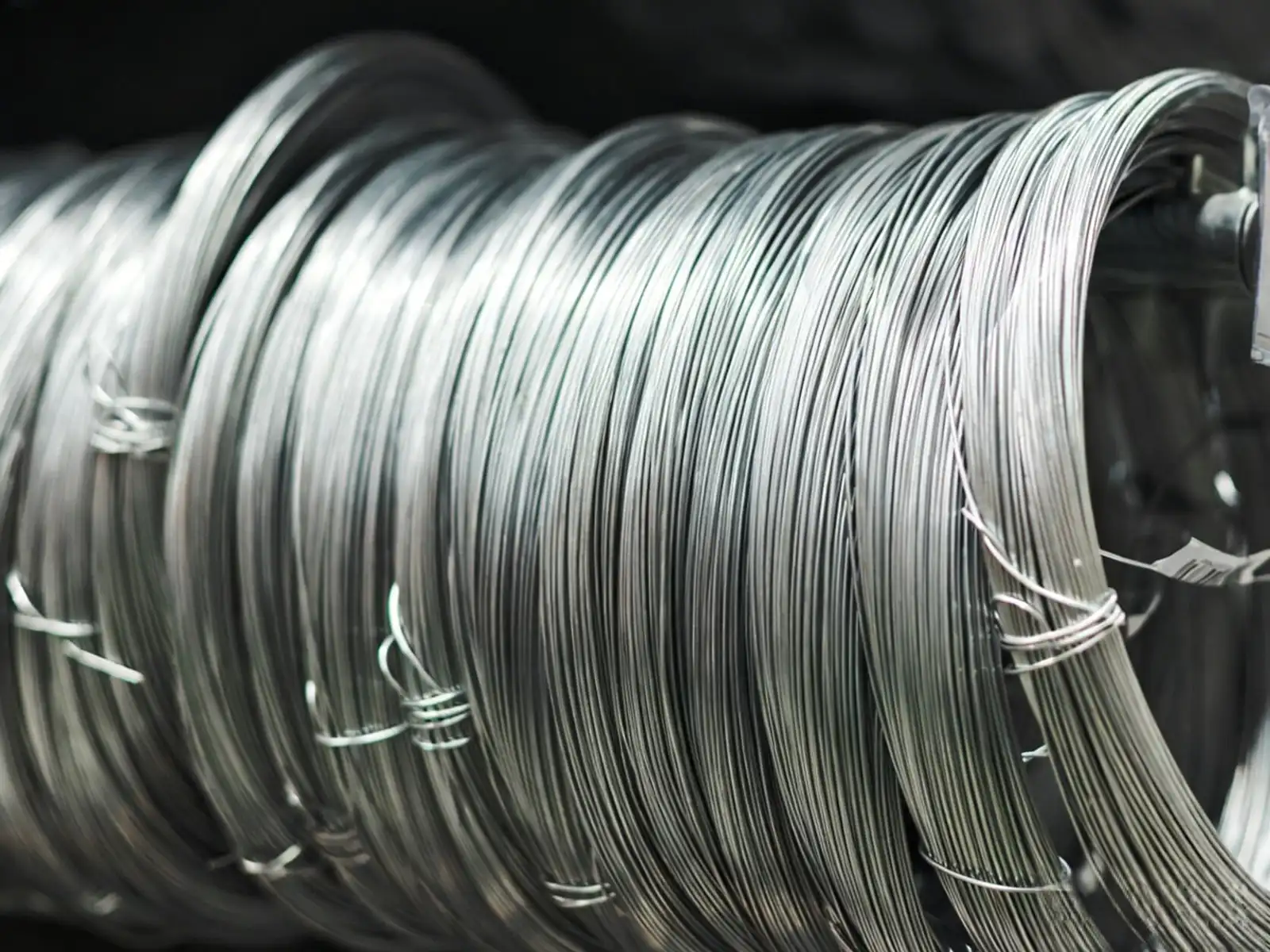
Pure Nickel 200 wire has become an indispensable engineering material in modern electrical and electrochemical industries because of its excellent electrical conductivity and stable electrochemical behavior. This high-purity nickel wire, with nickel content of at least 99.5%, not only offers strong electrical performance with resistivity as low as 6.84 × 10^-8 Ω·m, but also maintains excellent stability in alkaline media, electrolytic service, and elevated-temperature operating conditions. From battery tabs and electrolytic electrodes to precision transformer coils, Nickel 200 wire provides a reliable material solution for high-end manufacturing applications that demand stable current transfer and dependable electrochemical performance.
1. What Are the Core Electrical Conductivity Parameters and Material Characteristics of Nickel 200 Wire?
(1) How Are Resistivity and Conductivity Quantified?
Nickel 200 wire maintains resistivity at approximately 6.84 × 10^-8 Ω·m, and its conductivity is about 25% that of copper. Although its absolute conductivity is lower than that of common conductive materials such as copper and aluminum, this moderate resistance can become a design advantage in specific service conditions. In precision circuits that require controlled current density and overload protection, nickel wire can deliver a more stable current response. With hardness in the range of 85 – 95 HB, the material retains sound mechanical strength while preserving sufficient elasticity for repeated bending and precision forming.
(2) How Does High Purity Improve Electrical Stability?
The combined nickel and cobalt content is not less than 99.5%, while impurity elements such as iron and copper are strictly limited to below 0.10%. This high purity directly reduces resistance fluctuation caused by impurities. Under long-term energized service, impurity elements can create localized heat concentration and even open-circuit failure risk, whereas the clean matrix of Nickel 200 wire promotes uniform current distribution and significantly extends service life. Manganese and silicon are each controlled to 0.35% or less, further reducing oxidation tendency and helping preserve electrical performance in hot and humid environments.
(3) How Does Temperature Affect Electrical Performance?
With a melting point of 1453-1455℃, nickel wire provides excellent high-temperature stability. Even within a working range of 300-600℃, its temperature coefficient of resistance remains linear and controllable. This characteristic makes it well suited for high-temperature electrical heating elements. Although its thermal conductivity of 70 W/(m.K) is moderate rather than exceptional, it effectively helps prevent localized overheating. Combined with a density of 8.90 g/cm3, the material also shows strong dimensional stability under thermal cycling and helps avoid joint loosening or increased contact resistance caused by thermal expansion and contraction.
2. What Are the Key Electrical Applications and Technical Advantages of Nickel 200 Wire?
(1) Why Is It Used for Transformer and Inductor Windings?
In precision transformer manufacturing, Nickel 200 wire is ferromagnetic, with a Curie temperature of about 358℃, yet it does not undergo electrochemical corrosion in alkaline insulating media, which greatly extends maintenance-free service intervals. Fine-gauge nickel wire with diameters from 0.5 mm to 2.0 mm can be cold drawn through multiple passes to achieve a smooth, oxide-free surface. During winding, it does not generate burrs, which helps ensure reliable turn-to-turn insulation. Test data from a Japanese electronics manufacturer showed that transformers wound with nickel wire retained more than 95% of their initial insulation resistance after five years of operation in humid environments.
(2) How Does It Perform in Conductive Leads and Connector Components?
Conductive leads in semiconductor equipment must satisfy three requirements at the same time: conductivity, corrosion resistance, and processability. With elongation of at least 30%, Nickel 200 wire can readily accommodate crimping, welding, and miniature forming operations. Inside the vacuum chambers of chemical vapor deposition equipment, nickel wire connectors can withstand repeated thermal shock from room temperature to 400℃ with contact resistance increase held to no more than 8%. After polishing, the contact surface can achieve roughness of Ra ≤ 0.4 um, which helps reduce contact resistance and improve signal transmission stability.
(3) Why Is It Suitable for Resistance Heating and Temperature Control Components?
Nickel wire is widely used as a heating element in industrial furnaces and laboratory heating equipment. Its resistance-temperature relationship is highly linear, making precise temperature control easier to achieve. One German manufacturer of high-end laboratory equipment used 1.5 mm nickel wire to produce a heating mesh that operated continuously for more than 8, 000 hours at 550℃ in air, with resistance variation limited to only ± 3% of the initial value, far better than the ± 12% fluctuation seen with FeCrAl alloy. When combined with thermocouple feedback, system temperature control accuracy can reach ± 2℃, meeting the needs of precision heat treatment.
Table 1: Performance Comparison Between Nickel 200 Wire and Common Conductive Materials
Performance Parameter | Nickel 200 Wire | Copper Wire | FeCrAl Alloy |
Resistivity (Ω·m) | 6.84×10⁻⁸ | 1.72×10⁻⁸ | 1.39×10⁻⁶ |
Resistance to Alkaline Corrosion | Excellent | Poor | Fair |
High-Temperature Stability (C) | 600+ (sulfur-free atmosphere required) | 300 | 1200+ |
Nonmagnetic | Yes | No | Usually Magnetic |
Formability | Excellent (≥ 30%) | Excellent | Poor |
3. What Are the Core Electrochemical Applications and Performance Advantages of Nickel 200 Wire?
(1) Why Is It Used for Anode and Cathode Materials in Electrolysis?
Electrolytic cells in the chlor-alkali industry operate under extremely severe conditions. Concentrated caustic solutions containing 30-50% NaOH at 80-110℃ place severe demands on materials. Electrode grids made from Nickel 200 wire show excellent resistance to alkaline corrosion, with annual corrosion rates below 0.05 mm and service life reaching 8-12 years. Compared with stainless steel electrodes, nickel wire electrodes offer lower contact resistance and can reduce cell voltage by 0.15-0.3 V, directly translating into energy savings of 5-8%. One chlor-alkali producer in North America reduced unit power consumption from 2300 kWh/ton to 2150 kWh/ton after switching to nickel wire anodes, saving more than USD 2 million in annual electricity cost.
(2) How Does It Perform in Plating Racks and Conductive Plates?
Electroplating lines require conductive racks that can remain immersed for long periods in plating solutions that alternate between acidic and alkaline chemistry. Nickel 200 wire is a preferred choice because it combines resistance to alkaline media with resistance to reducing acids. Racks fabricated from 3.0 mm nickel wire have been used in more than 3, 000 process cycles involving nickel plating, chromium plating, and zinc plating, with only slight passivation observed on the surface and no pitting or cracking. Because current distribution uniformity directly affects coating quality, the low contact resistance of nickel wire racks helps keep current density deviation within ± 5%, significantly improving coating thickness consistency.
(3) Why Is It Used for Battery Tabs and Connections?
The new energy battery industry imposes extremely strict purity requirements because any impurity may trigger self-discharge or cycle fade. Nickel 200 wire controls sulfur to ≤ 0.005% and phosphorus to ≤ 0.002%, helping prevent side reactions inside the cell. In cylindrical battery tab welding, the strong weldability of nickel wire, including a narrow heat-affected zone and no brittle phase formation, helps ensure connection strength. After adopting 0.8 mm nickel wire tabs, one South Korean battery manufacturer achieved tensile strength of 120 N per welded tab, representing a 40% improvement over nickel-clad copper solutions.
Table 2: Corrosion Resistance of Nickel 200 Wire in Typical Electrochemical Environments
Corrosive Medium | Concentration/Temperature | Annual Corrosion Rate (mm/year) | Suitability Rating |
NaOH Solution | 50% / 100℃ | <0.05 | Grade A (Excellent) |
H2SO4 Solution | 10% / 60℃ | 0.12 | Grade B (Good) |
Salt Spray | 5% NaCl / 35℃ | <0.08 | Grade A (Excellent) |
Seawater Immersion | Natural Seawater / 25℃ | 0.03 | Grade A (Excellent) |
4. How Do Manufacturing Processes Influence the Electrical Performance of Nickel 200 Wire?
(1) How Do Cold Drawing and Grain Structure Control Affect Performance?
Nickel 200 wire is produced through a multi-pass cold drawing process in which deformation per pass is controlled at 15 – 25%, combined with intermediate annealing to maintain grain size within ASTM 5 – 7. This fine and uniform grain structure provides the microstructural basis for stable electrical performance because electron scattering at grain boundaries is effectively controlled. Continuous drawing lines such as those supplied by Danieli in Italy can hold diameter tolerance within ± 0.01 mm. This dimensional precision helps maintain consistent turn spacing during coil winding and reduces the risk of localized current concentration.
(2) How Does Heat Treatment Improve Resistance Stability?
Precise control of the annealing window at 700-800℃ determines the final property state of the nickel wire. Excessive temperature causes grain coarsening and reduced mechanical strength, while insufficient temperature leaves residual stress unreleased and undermines dimensional stability. Professional heat treatment systems use protective atmospheres such as hydrogen or argon to avoid surface oxidation and preserve conductive continuity. After optimized heat treatment, nickel wire aged for 1, 000 hours at 200℃ shows resistance increase of no more than 2%, which is critical for long-term electrical service.
(3) How Does Surface Treatment Influence Contact Resistance?
Bright, semi-bright, pickled, and polished finishes are used to satisfy different application requirements. A polished surface can achieve roughness of Ra ≤ 0.2 um and, in precision electrical connectors under suitable conditions, can reduce contact resistance to as low as 0.5 mΩ. Pickled surfaces remove oxide scale formed during cold drawing and expose a clean metallic substrate, making them well suited to subsequent welding. Comparative testing by a U.S. aerospace company showed that polished nickel wire improved crimp connection reliability by 65% relative to untreated material and reduced contact resistance fluctuation under vibration by 80%.
Table 3: Performance Comparison of Nickel Wire Under Different Surface Treatments
Surface Condition | Roughness Ra (μm) | Contact Resistance (mΩ) | Weldability | Typical Application |
Bright Finish | 0.4-0.6 | 0.8-1.2 | Good | Decorative Parts, Springs |
Polished Finish | 0.1-0.2 | 0.5-0.8 | Fair | Precision Connectors |
Pickled Finish | 0.8-1.2 | 1.0-1.5 | Excellent | Welded Assemblies |
Semi-Bright Finish | 0.5-0.8 | 0.9-1.3 | Good | General Electrical Components |
5. How Should Engineers Evaluate Material Selection and Cost Effectiveness?
(1) How Should Different Wire Sizes Be Matched to Specific Applications?
Fine-gauge nickel wire from 0.3 mm to 1.5 mm is suited to miniature electronic components, sensor leads, and precision coils, where high flexibility supports high-speed automated winding. Medium-gauge wire from 2.0 mm to 8.0 mm is the mainstream option for electrolytic electrodes and heating elements, providing a balance between mechanical strength and electrical performance. Large-gauge nickel wire from 10 mm to 30 mm is more commonly used for heavy-duty conductive bars and marine engineering fasteners. Although material cost is higher, its long service life in salt-spray environments delivers significant life-cycle cost advantages.
(2) How Should Total Life-Cycle Cost Be Quantified?
At the initial procurement stage, nickel wire typically costs about 4-6 times as much as copper wire, but the economics change substantially when maintenance cost is considered. In one chlor-alkali electrolyzer retrofit project, a chemical producer had annual replacement cost of CNY 800, 000 for copper-based electrodes. After converting to Nickel 200 wire electrodes, replacement was required only once over ten years, reducing total cost by more than CNY 4.5 million. When downtime losses and maintenance labor are included, the payback period of the nickel wire solution was reduced to 2.3 years.
(3) What International Standards and Quality Certifications Apply?
Nickel 200 wire manufactured to international standards such as ASTM B161, ASTM F72, and JIS H 4551 can be supplied with EN 10204 3.1 certification, including detailed records of chemical composition, mechanical properties, and batch traceability. This level of quality control is essential for entry into aerospace and medical device supply chains in Europe and North America. One German medical equipment manufacturer requires suppliers to provide a spectrochemical analysis report, tensile test curve, and grain size image for each coil of nickel wire, and full-process quality inspection capability is required to satisfy this level of demand.
6. What Is the Conclusion?
With stable resistivity of 6.84×10^-8 ohm.m, purity of at least 99.5%, and outstanding resistance to alkaline corrosion, Nickel 200 wire has become an essential functional material for electrical and electrochemical service. From transformer coils and electrolytic electrodes to battery tabs and conductive leads, its material characteristics address failure risks associated with high temperature, strong alkali exposure, and electrochemical corrosion, providing reliable support for advanced manufacturing applications worldwide.
FAQ
Q1: Does Nickel 200 wire experience performance degradation at elevated temperature?
During long-term service below 600℃, resistance increase is typically limited to no more than 3% and the grain structure remains stable. However, in sulfur-bearing atmospheres above 315℃, there is a risk of sulfur embrittlement, so protective atmosphere control or substitution with a nickel-base alloy should be considered.
Q2: How can engineers determine whether nickel wire is suitable for a specific electrochemical environment?
Three factors should be evaluated together: medium type, whether oxidizing or reducing, temperature, and concentration. Nickel wire performs well in alkaline media, reducing acids, and brine, but it is not suitable for strongly oxidizing media such as high-temperature nitric acid. Corrosion data should be reviewed before final material selection.
Q3: What is the fundamental difference between pure nickel wire and nickel-clad copper wire in battery applications?
Pure Nickel 200 wire contains fewer impurities, with sulfur controlled to ≤ 0.005%, which helps avoid self-discharge caused by copper diffusion. Although its conductivity is slightly lower than that of nickel-clad copper, it avoids copper-nickel interfacial embrittlement during high-temperature welding and therefore provides higher connection reliability for high-end power battery applications.
7. How Can You Identify a Reliable Supplier of High-Quality Nickel 200 Wire?
Baoji Titanium Valley is a specialized nickel wire manufacturer equipped with Danieli wire drawing lines from Italy and full-process quality inspection systems. The company can supply custom Nickel 200 wire across a full size range from 0.3 mm to 200 mm. For technical proposals or sample requests, please contact: sales@titaniumvalleys.com
References
- Liu Guoquan, et al. Nickel and Nickel Alloys [M]. Beijing: Metallurgical Industry Press, 2005.
- Cao Chunan. Principles of Corrosion Electrochemistry [M]. Beijing: Chemical Industry Press, 2008.
- Huang Boyun, et al. Encyclopedia of China Materials Engineering, Volume 3 [M]. Beijing: Chemical Industry Press, 2006.
- Chen Guoliang. High-Temperature Alloy Science [M]. Beijing: Metallurgical Industry Press, 2006.