
What Should You Know About Key Characteristics of UNS R60705 Zirconium Wire That You Must Know Before Purchasing?
- UNS R60705 Zirconium Wire
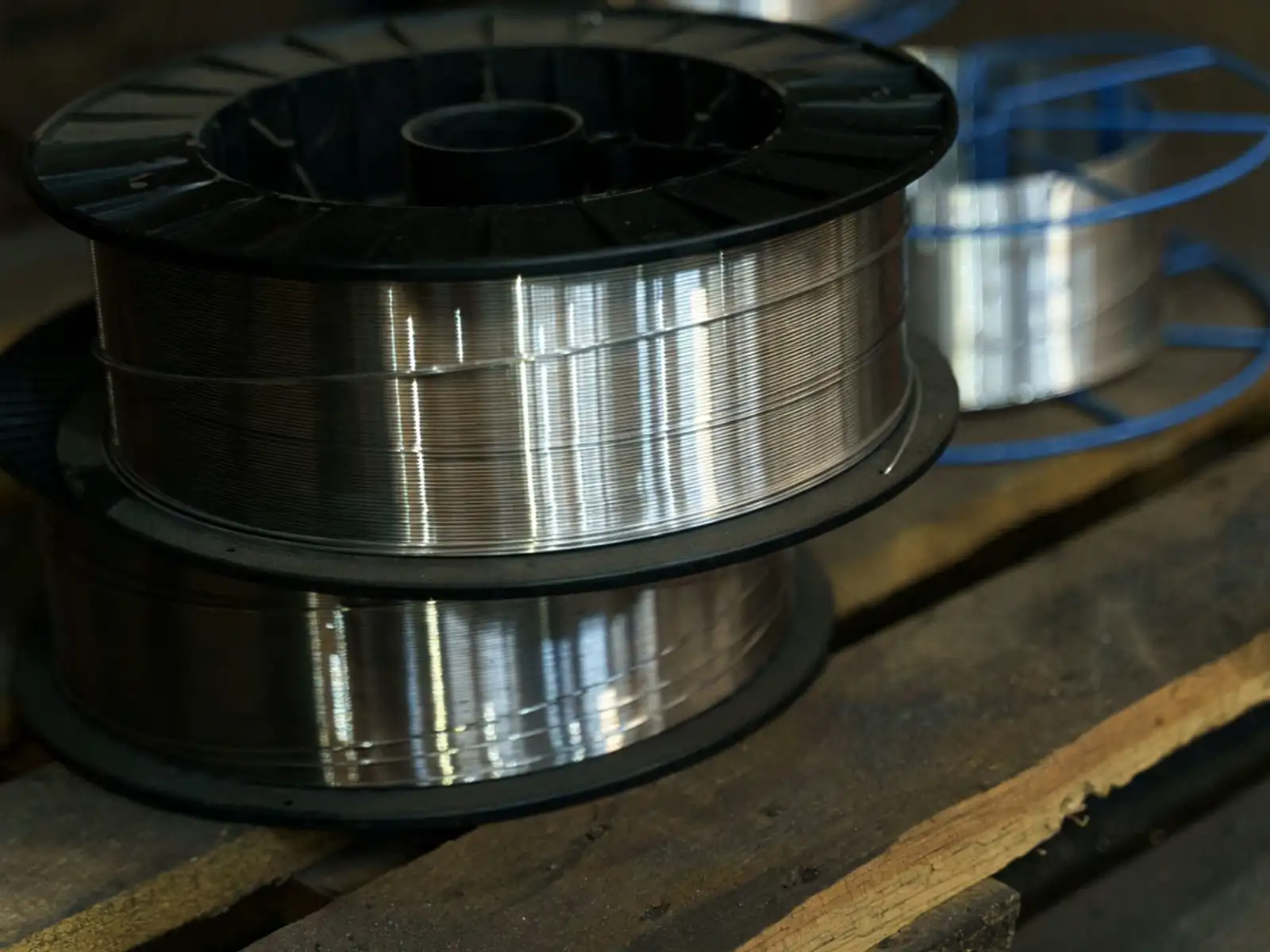
Before purchasing UNS R60705 zirconium wire, it is important to understand its core characteristics. This zirconium-niobium alloy wire contains 2.0-3.0% niobium element, which greatly improves the mechanical strength while maintaining the excellent corrosion resistance of pure zirconium. Compared with pure zirconium, R60705 can withstand higher stress loads and is particularly suitable for strong acid, wet chlorine and high-temperature corrosive environments. Its completely non-magnetic, high purity, excellent weldability and formability make it the material of choice in the fields of nuclear power, chemical industry, medical and precision instruments. Understanding material composition, corrosion resistance, processing boundaries and application limitations can help you make more accurate purchasing decisions and avoid the high costs of improper material selection.
1. What Should You Know About Alloy Composition and Strengthening Mechanism of R60705 Zirconium Wire?
(1) What Should You Know About the Key Role of Niobium?
Niobium is the core strengthening element in R60705 alloy. After adding 2.0-3.0% niobium, the zirconium matrix undergoes alloy strengthening, and the lattice distortion increases the dislocation movement resistance, significantly improving the material’s yield strength and tensile strength. Compared with pure zirconium R60702, the tensile strength of R60705 is increased by about 30-40%, which makes the wire less likely to deform or break when subjected to complex stresses such as stretching, bending, and torsion.
(2) What Should You Know About Low Impurity Content Ensures High Purity Performance?
Strictly controlling the content of impurity elements such as iron, carbon, oxygen, nitrogen, and hydrogen is the basis for ensuring that R60705 zirconium wire does not cause pollution in high-purity media. Iron content ≤ 0.20%, carbon ≤ 0.05%, oxygen ≤ 0.18%, and hydrogen ≤ 0.005%. These indicators directly affect the corrosion resistance stability and biocompatibility of the material. It is especially suitable for industries such as pharmaceuticals, semiconductors, and food processing that have zero tolerance for metal precipitation. It should be noted that the above data is based on the ASTM B550 standard. It is recommended to check the latest version of the standard requirements before purchasing.
(3) Why Is Hafnium Content and Nuclear Grade Applications Important?
Hafnium and zirconium have similar chemical properties, but have significantly different neutron absorption cross sections. The hafnium content in R60705 is ≤ 4.5%, which meets the requirements of nuclear power equipment for low neutron absorption. This kind of composition control allows zirconium wire to be used not only in the conventional chemical industry, but also in nuclear-level applications such as nuclear reactor fuel cladding tubes and heat exchange tubes.
element | Content range | Functional positioning |
Zr+Hf | margin | Base material, providing basic corrosion resistance |
Nb | 2.0-3.0% | Alloy strengthening to improve strength and toughness |
Hf | ≤ 4.5% | Control neutron absorption to meet nuclear-grade standards |
Fe | ≤ 0.20% | Impurity control to avoid pitting corrosion tendency |
O | ≤ 0.18% | Affects toughness and processing performance |
H | ≤ 0.005% | Prevent hydrogen embrittlement and ensure welding quality |
2. What Should You Know About Corrosion Resistance Performance Under Extreme Working Conditions?
(1) What Should You Know About Excellent Resistance to Hydrochloric Acid and Wet Chlorine Environments?
Stainless steel and conventional titanium alloys are prone to pitting corrosion and perforation in hydrochloric acid and wet chlorine environments. However, R60705 zirconium wire can resist the erosion of boiling hydrochloric acid, high-concentration wet chlorine and hypochlorite with its dense zirconium oxide passivation film on the surface. In scenarios such as chlor-alkali production lines in chemical plants and bleaching process pipelines, R60705 wire exhibits excellent corrosion resistance. It should be noted that if the fasteners of hydrochloric acid storage tanks are immersed in hydrochloric acid for a long time, the specific concentration and temperature conditions should be confirmed. High-concentration boiling hydrochloric acid may still corrode the zirconium wire. Under actual working conditions, the service life of R60705 is usually 3-8 times that of 316L stainless steel (the measured data range under typical working conditions is 3-8 times).
(2) What Should You Know About the Stability of Organic Acids and High Temperature Oxidizing Media?
Organic acids such as acetic acid and oxalic acid are extremely corrosive to metal materials under high temperature conditions. R60705 zirconium wire can still maintain the integrity of the passivation film in organic acid vapor at 150-200℃, and will not cause intergranular corrosion or stress corrosion cracking. It should be noted that formic acid may destroy the passivation film of zirconium at high temperatures. Not all organic acids are suitable. High-concentration formic acid environments should be used with caution. Equipment such as pharmaceutical synthesis reactors, fine chemical heat exchangers, and food-grade heating tubes use R60705 wire as heating elements or sealing springs, which can significantly reduce the frequency of equipment shutdowns and maintenance.
(3) What Should You Know About Seawater and Chloride Ions Are the Nemesis of Crevice Corrosion?
Marine engineering, seawater desalination, and salt spray testing equipment often face the problem of crevice corrosion induced by chloride ions. R60705 zirconium wire has a strong self-healing ability of the passivation film in a chlorine-containing environment, and can maintain long-term corrosion resistance stability even in stress-concentrated areas such as gaps, overlaps, and threaded connections. Seawater heat exchanger tube bundle fixing wires, offshore platform fasteners, and desalination equipment filters can all be made of R60705 material, which can effectively avoid system failure caused by local perforations. It should be noted that hydrogen embrittlement may still occur in long-term high-temperature seawater, and it is recommended that the operating temperature does not exceed 150℃.
corrosive medium | Working conditions | R60705 performance | Comparing Material Failure Modes |
Boiling hydrochloric acid 10% | 108℃, normal pressure | Corrosion rate <0.1 mm/year | 316L pitting and perforation |
wet chlorine | 75℃, saturated humidity | No stress corrosion cracking | Ti Grade 2 intergranular corrosion |
Acetic acid 80% | 180℃, reflow | Passivation film stability | Hastelloy grain boundary erosion |
Seawater 3.5% NaCl | Normal temperature, gap structure | No crevice corrosion | 304 Local pitting corrosion |
3. What Should You Know About Processing Performance and Dimensional Accuracy Control?
(1) What Should You Know About Multi-pass Cold Drawing and Intermediate Annealing Process?
R60705 zirconium wire is produced using a multi-pass cold drawing combined with intermediate annealing process. During the cold drawing process, the material undergoes work hardening and undergoes vacuum annealing to release internal stress and refine the grains before entering the next drawing pass. It should be noted that the recrystallization temperature of zirconium is about 550-650℃, and the annealing temperature should be controlled below the recrystallization temperature to prevent grain coarsening from affecting performance. The commonly used annealing temperature range in actual production is 550-650℃.
(2) What Should You Know About High-precision Dimensional Tolerances and Straightness?
Precision instruments, medical guide wires, and electronic connectors have extremely high requirements for wire dimensional accuracy. Using continuous rolling lines and precision wire drawing equipment, high-standard control of diameter tolerance and straightness can be achieved. The ultra-fine φ0.06-0.4 mm zirconium wire has been precision drawn and online laser diameter measured multiple times to ensure the size consistency of each batch of products. It should be noted that the tolerance of ± 0.01 mm for ultra-fine wire φ0.06 mm is relatively loose, and actual high-precision medical guidewires often require a tolerance of ± 0.002 mm or tighter.
(3) What Should You Know About Surface Treatment and Welding Suitability?
Different application scenarios have different requirements for the surface condition of wire materials. The pickled state provides a clean, oxide-free surface, suitable for welding wires and chemical accessories; the bright state obtains a mirror effect through mechanical polishing, and is used for medical implants and electronic contacts; the black state retains the rolled oxide layer, suitable for structural parts and wear-resistant springs. R60705 zirconium wire has good welding performance. The strength of the argon arc welding joint can reach more than 85% of the base material. The heat-affected zone is narrow and it is difficult to produce pores and slag inclusions. It should be noted that resistance welding is difficult and can easily produce brittle phases in the weld. It is recommended that argon arc welding be the preferred process, and resistance welding must be verified before use.
Wire specifications | Application areas | surface state | key performance indicators |
φ0.06-0.4mm | Medical guide wire, electronic connector | Bright, mirror polished | Tolerance ± 0.005 mm, no burrs |
φ0.8-3.0mm | Welding wire, seals | Pickled state, deoxidized layer | Weld strength ≥ 85% base metal |
φ4.0-8.0 mm | Structural parts, corrosion-resistant springs | Black leather, turning light | Straightness ≤ 1 mm/m, uniform surface hardness |
4. Why Is Unique Value of Non-magnetic and High Temperature Stability Important?
(1) What Should You Know About the Urgent Need for Nuclear Magnetic Resonance and Precision Measurement Equipment?
Magnetic materials can interfere with the normal operation of equipment such as magnetic resonance imaging (MRI), magnetometers, and precision balances. R60705 zirconium wire is completely non-magnetic and has a magnetic permeability close to that of vacuum (approximately 1.00002), making it a standard material for fasteners in medical MRI rooms, non-magnetic springs in precision laboratories, and support components for aviation gyroscopes. Compared with the weak magnetism of austenitic stainless steel, R60705 can completely eliminate the risk of magnetic field interference.
(2) What Should You Know About Tissue Stability in Long-term High-temperature Service?
Chemical reactors, nuclear power heat exchangers, and aerospace engine seals operate in high-temperature environments of 250-350℃ all year round. R60705 zirconium wire does not undergo phase transformation, grain growth or precipitation embrittlement within this temperature range, and its mechanical properties remain stable. Typical test data shows that after 10, 000 hours of continuous service at 350℃, the strength of the material decreases by no more than 5%, and the elongation does not deteriorate significantly, which is far better than the performance degradation of titanium alloys at high temperatures.
(3) What Should You Know About Thermal Expansion Coefficient Matching and Composite Structure Design?
The thermal expansion coefficient of R60705 (approximately 5.8×10⁻⁶/ C) is close to that of non-metallic materials such as ceramics and glass, and is suitable for making metal-ceramic composite seals and glass-metal sealed wires. For precision components such as semiconductor equipment vacuum cavity sealing rings and optical fiber connector metal sleeves, the use of R60705 zirconium wire can avoid interface cracking or sealing failure caused by differences in thermal expansion and contraction.
5. What Should You Know About Cost-Effectiveness and Compliance in Purchasing Decisions?
(1) Why Is Full Life Cycle Cost Advantage Important?
Although the unit price of R60705 zirconium wire is higher than that of stainless steel or titanium alloy, the overall cost advantage brought by its ultra-long service life and extremely low failure rate is significant. After a chemical company upgraded heat exchanger fasteners from 316L to R60705, the equipment overhaul cycle was extended from 2 years to more than 8 years, and downtime maintenance losses were reduced by 70%. In the field of nuclear power, the service life of the R60705 fuel assembly spring in an irradiation environment needs to be determined based on empirical data under specific working conditions. The actual replacement cycle is affected by factors such as irradiation creep and hydrogenation.
(2) What Should You Know About International Standards and Material Certification Documents?
The main implementation specification of R60705 zirconium wire is ASTM B550 standard. It should be noted that ASME SB550 is a non-nuclear grade standard. For nuclear grade applications, ASTM B353 or ASME SB353 is commonly used. The relevant standards for medical implant materials are ASTM F2384 or ISO 5832-11, not ISO 5832-3 (ISO 5832-3 is for titanium alloys). When purchasing, suppliers should be required to provide a 3.1 Mill Test Certificate containing chemical composition, mechanical properties, grain size, and ultrasonic flaw detection results to ensure material traceability and quality consistency.
(3) What Should You Know About Evaluation of Customized Processing Capabilities?
High-end applications often require non-standard sizes, special surfaces or heat treatments. Choosing suppliers with full-process production capabilities and flexible delivery systems can shorten the procurement cycle and reduce inventory pressure. Special attention needs to be paid to the supplier’s size coverage, quality certification system, lead time and technical support capabilities.
Assessment Dimensions | Key points to consider | Capability indicators |
quality compliance | ASTM B550, related medical standards certification | Provide 3.1 material certificate and third-party test report |
Size coverage | φ0.06-10.0 mm, tolerance meets application requirements | The production line supports full specification customization |
Lead time | Regular specifications in stock, customized products 4-6 weeks | Stable bulk supply |
Technical support | Material selection suggestions, welding process guidance | Provide corrosion test data and application cases |
6. What Is the Conclusion?
UNS R60705 zirconium wire has become an irreplaceable key material in chemical industry, nuclear power, medical, aviation and other fields due to its niobium-strengthened alloy design, extreme corrosion resistance, high-precision processing capabilities, and non-magnetic high-temperature stability. When purchasing, it is necessary to comprehensively evaluate composition control, corrosion resistance boundaries, dimensional accuracy, supplier qualifications and customization capabilities to avoid improper material selection or design redundancy. Mastering these core characteristics can significantly improve equipment reliability, reduce life cycle costs, and provide solid material support for enterprise process upgrades and high-end project acceptance.
FAQ
Q1: What is the difference in strength between R60705 zirconium wire and pure zirconium R60702?
R60705 achieves alloy strengthening by adding 2.0-3.0% niobium. Its tensile strength is 30-40% higher than that of pure zirconium R60702, and its yield strength is increased by about 50%. It is especially suitable for fasteners, springs and long-span wire applications under high stress conditions, effectively avoiding the risk of deformation or fatigue fracture.
Q2, How to Judge Whether the R60705 Zirconium Wire Provided by the Supplier Meets Nuclear Grade Standards?
Nuclear-grade applications need to meet the strict requirements of the ASTM B550 standard for hafnium content ≤ 4.5% and hydrogen content ≤ 0.005%, and pass the low neutron absorption cross-section test. When purchasing, you should request a 3.1 material certificate that includes spectral analysis, hydrogen, oxygen and nitrogen determination, and grain size inspection. If necessary, request a third-party nuclear certification agency to issue a compliance report.
Q3: What processing details should be paid attention to when using ultra-fine φ0.06-0.4 mm zirconium wire in medical guide wire applications?
Medical guide wires require a smooth surface without scratches, a dimensional tolerance of ± 0.005 mm, excellent bending properties, and no magnetism or precipitation. During processing, multi-pass precision drawing and vacuum annealing are required, and the drawing speed and mold finish are strictly controlled. The finished product must undergo endoscopic inspection and biocompatibility testing to ensure that it meets ASTM F2384 or ISO 5832-11 implant material standards.
How Should Looking for UNS R60705 Zirconium Wire Suppliers That Meet ASTM B550 Standards?
As a professional manufacturer, Baoji Titanium Nickel and Zirconium Materials Processing Co., Ltd. has vacuum consumable arc melting, multi-pass cold drawing and precision wire drawing full-process production lines. It can stably supply R60705 zirconium wire (Zr-2.5Nb) with φ0.06-10.0mm, and the niobium content is accurately controlled at 2.0-3.0%. The product has excellent resistance to hydrochloric acid, wet chlorine and high-temperature corrosion, is completely non-magnetic, and provides a variety of surface states such as pickling, bright, and black leather. We provide customized products that comply with ASTM B550 standards for global nuclear power, chemical industry, medical equipment and precision instrument customers, complete with 3.1 material certificates and third-party testing reports. Contact sales@titaniumvalleys.com immediately to obtain technical solutions and samples.
References
- Xu Zhiping, Zhao Zhigang. Research progress on the application and corrosion behavior of zirconium alloys in nuclear reactors [J]. Nuclear Science and Engineering, 2015, 35(2): 267-274.
- Liu Guohua, Zhang Yonggang. Research on mechanical properties and corrosion resistance of Zr-Nb alloy [J]. Materials Science and Technology, 2018, 26(3): 45-51.
- Li Mingyuan, Chen Xiaodong. Strengthening mechanism and engineering application of zirconium alloy [J]. Metal Heat Treatment, 2010, 35(8): 15-20.
- Wang Jianjun, Liu Zhiqiang. Processing, structure and performance optimization of zirconium and zirconium alloys [J]. Rare Metal Materials and Engineering, 2016, 45(5): 1234-1240.