
What Should You Know About Key Nickel 200 Foil Features to Know Before Buying?
- Nickel 200 Foil
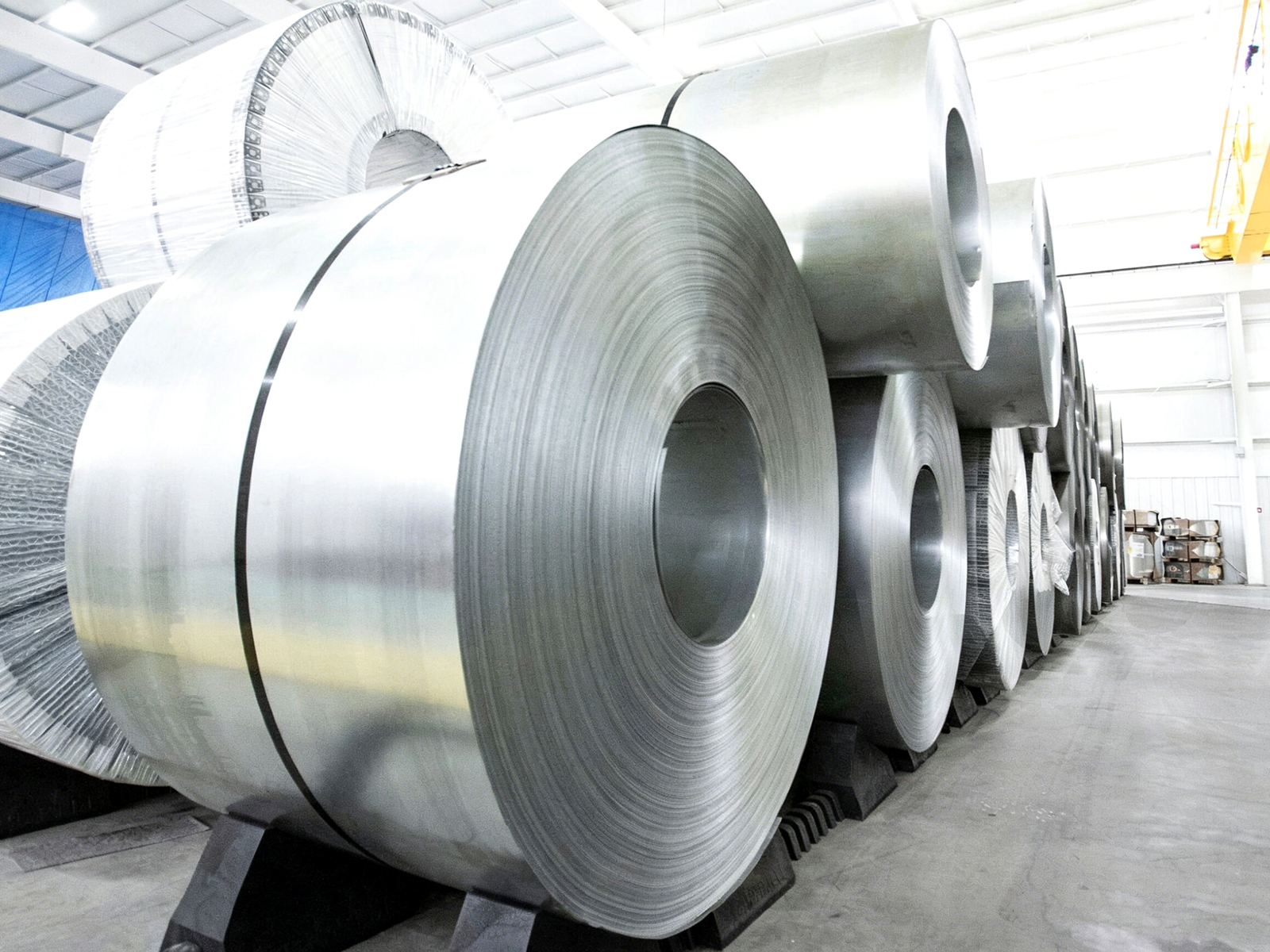
When purchasing Nickel 200 foil, the four core dimensions that need to be paid attention to are material purity, electrical conductivity, corrosion resistance and processing accuracy. As an industrial pure nickel material (Ni≥ 99.6%), it performs well in alkaline environments, and its conductivity far exceeds that of titanium foil. It is suitable for application scenarios such as electrodes, battery tabs, and electromagnetic shielding. Products with a thickness tolerance controlled at ± 0.001mm can ensure stable current transmission, and surface cleanliness (dyne value 44) directly affects welding quality. Mastering these characteristic parameters can help accurately match application requirements and avoid system failure or cost waste caused by material performance deviations.
1. How Material Purity and Composition Control Affect Performance?
(1) What Should You Know About Purity Grade’s Direct Effect on Conductivity?
Nickel 200 foil contains ≥ 99.6% nickel, a purity standard that directly determines its conductivity level. Impurity elements such as iron (≤ 0.40%) and manganese (≤ 0.35%) will increase the resistivity and reduce the current transmission efficiency. In battery tab applications, even a 0.1% purity difference may cause an increase in internal resistance of 15-20%, directly affecting charge and discharge performance. High-purity materials are more stable in the electrochemical environment, reduce the probability of side reactions, and extend the service life of the electrode. Compared with alloy materials, the electrical conductivity of commercial pure nickel reaches 20-25% of copper, which is much higher than 5% of titanium, making it an ideal choice for scenarios that require a balance between electrical conductivity and corrosion resistance.
(2) What Should You Know About Carbon and Sulfur Content Control Related to Surface Quality?
Strict control of carbon content (≤ 0.02%) and sulfur content (≤ 0.01%) is crucial to surface quality. Excessive carbon content will lead to an increase in grain boundary precipitates, reduce the ductility of the material, and easily produce microcracks during ultra-thin rolling. Sulfur element can cause thermal brittleness and affect the strength of welded joints. The vacuum melting process can control these harmful elements to extremely low levels, ensuring a smooth and uniform surface of the foil. After ultrasonic cleaning and alkali treatment, the surface dyne value is stable at 44. This indicator ensures good wettability and welding performance, and is especially suitable for precision connection processes such as laser welding.
(3) What Should You Know About Importance of Ingredient Uniformity to Batch Stability?
In mass production, ingredient uniformity directly affects product consistency. For this reason, the continuous annealing process (temperature tolerance ± 2℃) can ensure uniform structure of the entire roll of material and avoid local hardness differences. With 20-roll finishing equipment and multi-pass cold rolling, the thickness deviation can be controlled within the range of ± 0.001mm. This precise control is particularly critical in the 0.03-0.8mm specification range, and ultra-wide products with a width of 350-670mm can still maintain consistent lateral performance. With an annual production capacity of 3, 000 tons, through full-process automated testing (automation rate 90%), it can provide traceable and stable supply to the aerospace, medical and electronics industries.
2. What Should You Know About Technical Implementation Path for Dimensional Accuracy and Surface Quality?
(1) What Should You Know About Thickness Tolerance Control Technology in Ultra-thin Rolling?
Precision control in the thickness range of 0.03-0.8mm requires overcoming problems such as springback and plate distortion. The 750mm 20-high finishing mill achieves a thickness tolerance of ± 0.001mm through optimization of work roll diameter and precise distribution of reduction. During multi-pass rolling, intermediate annealing eliminates work hardening and restores material plasticity. For customized specifications of 0.01-0.03mm, it is necessary to increase the number of rolling passes and reduce the single reduction rate, and cooperate with online thickness gauge for real-time monitoring. The number of intermediate annealings and pass reduction rate need to be dynamically adjusted according to the material hardening behavior to ensure sufficient plastic recovery. This level of precision ensures that the battery tabs are of uniform thickness when stacked, avoiding localized overheating and ensuring uniform shielding effectiveness in EMI shielding applications.
(2) What Should You Know About Shape Control and Flatness Management of Wide-width Products?
The shape control of 350-670mm wide Nickel 200 foil is a technical difficulty. The crown-adjustable roller and transverse thickness control system are used to eliminate edge thickening and middle thinning. The flattening machine precisely adjusts the tension and bending amount to control the flatness within 0.5mm/m. Ultra-wide products are prone to burrs during the slitting process, which can be effectively solved by using precision shearing tools and optimized tool gaps (0.02-0.05mm). Surface treatment includes bright, pickling, matte and other options. The continuous cleaning and annealing line ensures that there is no oil residue on the surface, meeting the high cleanliness requirements of the electronics industry.
(3) What Should You Know About Quality Assurance System for Slitting and Surface Treatment?
High-precision slitting is a key step in ultra-thin foil processing. The slitting line is equipped with a tension control system to prevent the material from producing wavy edges or tower shapes during the slitting process. Regular tool replacement and edge inspection ensure that the cutting edge is burr-free, and the edge quality directly affects the subsequent stamping and forming effect. In terms of surface treatment, ultrasonic cleaning removes rolling grease, and alkali treatment improves surface activity. The vacuum annealing furnace is heated under the protection of argon gas to avoid oxidation and discoloration and ensure uniform surface color. The precise coordination of these process links enables the product to comply with ASTM B162 standards and meet the stringent requirements of international high-end customers.
Table 1: Comparison of precision control parameters for different thickness specifications
Thickness range (mm) | Thickness tolerance (mm) | Flatness (mm/m) | Rolling pass | Applicable scenarios |
0.03-0.10 | ± 0.001 | ≤ 0.5 | 15-20 | Precision electrodes, high-end batteries |
0.10-0.30 | ± 0.002 | ≤ 0.8 | 10-15 | Electromagnetic shielding, connecting piece |
0.30-0.80 | ± 0.003 | ≤ 1.0 | 6-10 | Structural parts, heating elements |
Note: Thickness boundary value attribution rules: 0.10mm belongs to the 0.03-0.10mm interval, 0.30mm belongs to the 0.10-0.30mm interval, and so on to avoid boundary overlap.
3. What Should You Know About Balance Optimization of Mechanical Properties and Processing Performance?
(1) What Are the Differences in Differences in Properties Between Annealed and Cold-worked States?
Annealed state (M) Nickel 200 foil has a tensile strength of 370-420 MPa, an elongation of ≥ 25%, and excellent stamping and bending properties. This state is suitable for applications requiring deep drawing or complex forming, such as battery cases, bellows, etc. In the cold working state (Y), by controlling the amount of deformation, the tensile strength can be increased to 500-600 MPa, but the elongation is reduced to ≥ 8%. This hardened state is suitable for elastic elements or supporting structures that require high strength. Users can select the appropriate delivery status according to specific applications, or adjust performance through subsequent heat treatment.
(2) What Should You Know About the Impact of Formability on Complex Parts Manufacturing?
Good ductility allows Nickel 200 foil to withstand 80-90° bending without cracking, which is critical for micro-joints and precision stampings. The anisotropy coefficient (r value) of the material affects the thickness uniformity during stretch forming. Controlling the rolling process can optimize the r value to the range of 1.0-1.2. Since Nickel 200 has a face-centered cubic structure, its r value is near 1.0, which is close to isotropy. However, the rolling texture may introduce slight directionality, and the range of 1.0-1.2 reflects a reasonable level of anisotropy. In the ultra-thin specification of 0.03mm, the balance between tensile strength and elongation is particularly critical. Too high a strength will cause increased mold wear, while too low a strength will affect the dimensional stability of the part. The continuous annealing process makes the structure uniform and avoids forming defects caused by local softening points.
(3) What Should You Know About Welding Performance and Connection Process Compatibility?
Nickel 200 foil has excellent weldability and is suitable for spot welding, laser welding, ultrasonic welding and other processes. Its melting point of 1455℃ is higher than common solder, and it is not easy to burn through during welding. Surface cleanliness directly affects welding quality, and a dyne value of 44 ensures good wetting of the solder. In battery tab welding, the conductivity of the material ensures that the contact resistance is less than 0.5mΩ, reducing heating losses. The strength of the weld can reach 80-85% of the base metal, meeting the load-bearing requirements. For automated welding production lines, material thickness consistency and surface condition stability are key. Only by controlling performance fluctuations between batches within 5% can production efficiency be ensured.
Table 2: Performance comparison of Nickel 200 foil and other metal foils
Performance indicators | Nickel 200 Foil | Gr2 titanium foil | Gr5 titanium alloy foil | Applicability analysis |
Density (g/cm³) | 8.9 | 4.51 | 4.43 | Nickel foil has high density and large mass per unit area |
Conductivity | Excellent | Poor | Poor | The conductivity of nickel foil is 4-5 times that of titanium foil |
Tensile strength (MPa) | 370-420 (annealing) | 345-410 | 860-950 | Titanium alloy has the highest strength, nickel foil is moderate |
Elongation (%) | ≥ 25 | ≥ 20 | ≥ 10 | Nickel foil has better plasticity than titanium alloy |
Alkali corrosion resistance | Excellent | good | good | Nickel foil performs best in strong alkali environments |
Note: The annealed tensile strength of Gr2 titanium foil is adjusted to 345-410 MPa according to industry standards.
4. What Should You Know About Corrosion Resistance Performance Under Different Working Conditions?
(1) Why Is Corrosion Resistance Mechanism and Application in Alkaline Environment Important?
Nickel 200 performs well in strong alkaline solutions such as sodium hydroxide and potassium hydroxide, with a corrosion rate of less than 0.05mm/year. This is because nickel forms a dense oxide film in alkaline media to prevent further corrosion. In an electrolytic hydrogen production device, materials in contact with alkaline electrolytes (such as 30% NaOH solution, 80-90℃) need to consider the anodic polarization conditions. Nickel 200 is suitable for cathodes in alkaline environments. If used in anodes (oxygen evolution environments), the risk of oxidative corrosion needs to be assessed. It is usually recommended to use nickel plating or nickel-based alloys. The negative electrode current collector of alkaline batteries uses nickel foil, which avoids the problem of rapid dissolution of aluminum in alkaline solution. It should be noted that in oxidizing alkali solutions (such as sodium hypochlorite solution), the corrosion resistance of nickel will decrease, and the specific medium conditions should be evaluated.
(2) What Should You Know About Stability in Reducing and Neutral Environments?
Nickel 200 maintains good stability in reducing atmospheres (such as hydrogen, ammonia) and neutral aqueous solutions. In seawater environment (3.5% NaCl solution), the passivation film has obvious protective effect and low pitting corrosion tendency. The heat exchanger uses nickel foil as the heat transfer element and operates stably in 70-120℃ water medium. In vacuum equipment, nickel’s low vapor pressure and oxidation resistance make it an ideal material for high-temperature components. It should be noted that when the chloride ion concentration is too high (>1000ppm) or the temperature exceeds 150℃, the risk of stress corrosion increases, and a stress relief annealing process needs to be combined.
(3) What Should You Know About High Temperature Oxidation and Electrochemical Stability?
Nickel 200 forms a NiO protective layer in an air environment of 300-600℃, and the oxidation weight increases slowly. The heating element can work continuously for more than 3, 000 hours at 500℃. In electrochemical applications, nickel has a moderate hydrogen evolution overpotential and is highly efficient as a cathode material. In the electrolysis of water to produce hydrogen, the current efficiency of nickel-based electrodes reaches 85-90%, and the energy consumption is 20-30% lower than that of platinum group metals. Although the density of 8.9 g/cm³ is higher than that of titanium, its overall cost performance is better in scenarios where conductivity is required. The weak magnetic characteristics make it suitable for use in magnetically sensitive equipment, such as non-magnetic structural parts of MRI equipment.
5. What Should You Know About Technical Parameter Verification and Supply Chain Considerations in Purchase Decisions?
(1) What Should You Know About the Importance of Material Certification and Third-party Testing?
When purchasing, the supplier should be asked to provide a material certificate that meets the ASTM B162 standard, including chemical composition analysis, mechanical property testing and grain size inspection reports. Certificates issued by third-party testing agencies (such as SGS, TÜV) are more credible. For bulk purchases, it is recommended to conduct sampling for conductivity testing, corrosion resistance evaluation (salt spray test) and microstructural analysis. The U.S. aviation medical industry requires traceability and full process records from raw materials to finished products. German high-end manufacturing customers often require DIN standard certification, and Japanese precision electronics companies focus on surface cleanliness and dimensional consistency data.
(2) What Should You Know About Customized Processing Capabilities and Lead Time Assessment?
The customized processing capabilities of ultra-thin specifications (0.01-0.03mm) and ultra-wide products (>600mm) are a reflection of the supplier’s technical strength. Ask if it is equipped with 20-roll finishing equipment, continuous annealing line and high-precision slitting system. The annual production capacity of 3, 000 tons can ensure the stable delivery of large-volume orders and avoid construction delays caused by insufficient production capacity. A production line with an automation rate of 90% has small quality fluctuations and is suitable for long-term cooperation. The Korean battery industry requires a quick response supply cycle (2-4 weeks), the Indian industrial upgrading market focuses on cost performance, and Vietnamese electronics manufacturers focus on logistics convenience. It’s equally important to understand your supplier’s inventory strategy and emergency response mechanisms.
(3) Why Is Technical Support and Application Guidance Service Value Important?
Quality suppliers should provide application scenario analysis, process parameter recommendations, and failure mode prevention guidance. In electrode design, thickness selection affects the balance between resistance and mechanical strength; electromagnetic shielding applications need to consider the relationship between frequency and thickness (skin effect). Forming process consultation includes bending radius recommendation, stamping die design, annealing system formulation, etc. Optimizing welding parameters can reduce the defect rate, such as matching laser power, welding speed, and shielding gas flow. For carbon neutrality and hydrogen energy projects in Europe and the United States, the application of nickel materials in electrolyzers, fuel cell bipolar plates and other fields is growing. The industry experience of suppliers can help customers shorten the development cycle. Choosing a manufacturer with R&D capabilities and certification qualifications can provide continuous technical iteration support.
Table 3: Key purchasing concerns of customers in different industries
Industry areas | Core parameters of concern | Typical specification requirements | Certification requirements | Delivery cycle |
New energy battery | Conductivity, thickness tolerance, surface cleanliness | 0.03-0.10mm × 350-500mm | ASTM B162, RoHS | 2-3 weeks |
Aerospace | Purity, batch consistency, traceability | 0.05-0.30mm × 400-600mm | AMS, EN standards | 4-6 weeks |
Chemical electrolysis | Alkali corrosion resistance, welding performance | 0.10-0.50mm × 500-670mm | ASTM B162, ISO 9001 | 3-4 weeks |
Precision electronics | Surface quality, dimensional stability | 0.01-0.05mm × 350-450mm | IPC standard, non-magnetic test | 3-5 weeks |
6. What Is the Conclusion?
When purchasing Nickel 200 foil, you need to systematically evaluate the material purity (Ni ≥ 99.6%), dimensional accuracy (thickness tolerance ± 0.001mm), mechanical properties (annealed elongation ≥ 25%) and corrosion resistance performance. Verify the supplier’s precision rolling capabilities, surface treatment process and quality control system to ensure that the products comply with ASTM B162 standards. Only by selecting the appropriate status and specifications based on specific application scenarios and paying attention to technical support and supply stability can the optimal balance between performance and cost be achieved.
FAQ
Q1: What is the difference in performance between Nickel 200 foil and nickel alloy foil?
Nickel 200 is commercially pure nickel (Ni≥ 99.6%), has excellent electrical conductivity and ductility, and is suitable for conductive and deep processing applications. Nickel alloys (such as Inconel, Monel) add elements such as chromium, iron, and copper, which have stronger strength and high temperature resistance, but have lower conductivity and higher costs. They are suitable for structural parts under extreme working conditions.
Q2: How to improve the 0.03mm ultra-thin nickel foil that is prone to cracking during stamping?
Cracking is usually caused by hardening of the material or improper mold clearance. Use annealed (M) materials to ensure elongation ≥ 25%, optimize the mold fillet radius (≥ 3 times the thickness), control the stamping speed at 10-30 times/minute, and use lubricants to reduce friction. If necessary, perform intermediate annealing to restore plasticity.
Q3: How to verify whether the alkali resistance of Nickel 200 foil meets the requirements of electrolytic cells?
A third-party organization can be entrusted to conduct an immersion corrosion test: the sample is placed in 30% NaOH solution and kept at a constant temperature of 80℃ for 168 hours. The measured corrosion rate should be <0.05mm/year. Check that the surface is free of pitting corrosion and stress corrosion cracking. Before actual application, it is recommended to conduct pilot testing to evaluate the corrosion resistance of the weld zone.
7. What Should You Know About Find Reliable Nickel 200 Foil Manufacturer?
Titanium Valley (Baoji Titanium Valley Titanium Nickel Zirconium Material Processing Co., Ltd.) specializes in precision processing of ultra-thin wide nickel foil. It is equipped with 750mm 20-roll finishing equipment, with an annual production capacity of 3, 000 tons and a thickness tolerance of ± 0.001mm. We provide high-purity Nickel 200 foil customized services for the global aerospace, new energy battery and chemical industries. Welcome to contact us for technical specifications and sample testing: sales@titaniumvalleys.com
References
- Zhang Wei, Wang Qiang. Preparation technology and application of industrial pure nickel materials[M]. Beijing: Metallurgical Industry Press, 2019.
- Liu Jianhua, Chen Zhigang. Research on the corrosion behavior of nickel and nickel alloys in alkaline media [J]. Corrosion Science and Protection Technology, 2020, 32(3): 185-194.
- Li Ming, Zhao Gang. Research progress in ultra-thin metal foil precision rolling technology [J]. Journal of Plastic Engineering, 2021, 28(2): 112-121.
- Wang Lei, Yang Hao. Application progress of high-purity nickel foil in lithium-ion battery current collectors [J]. Power Supply Technology, 2022, 46(4): 508-512.