
What Should You Know About Nickel 200 Foil, High-performance Material for Corrosive Environments?
- Nickel 200 Foil
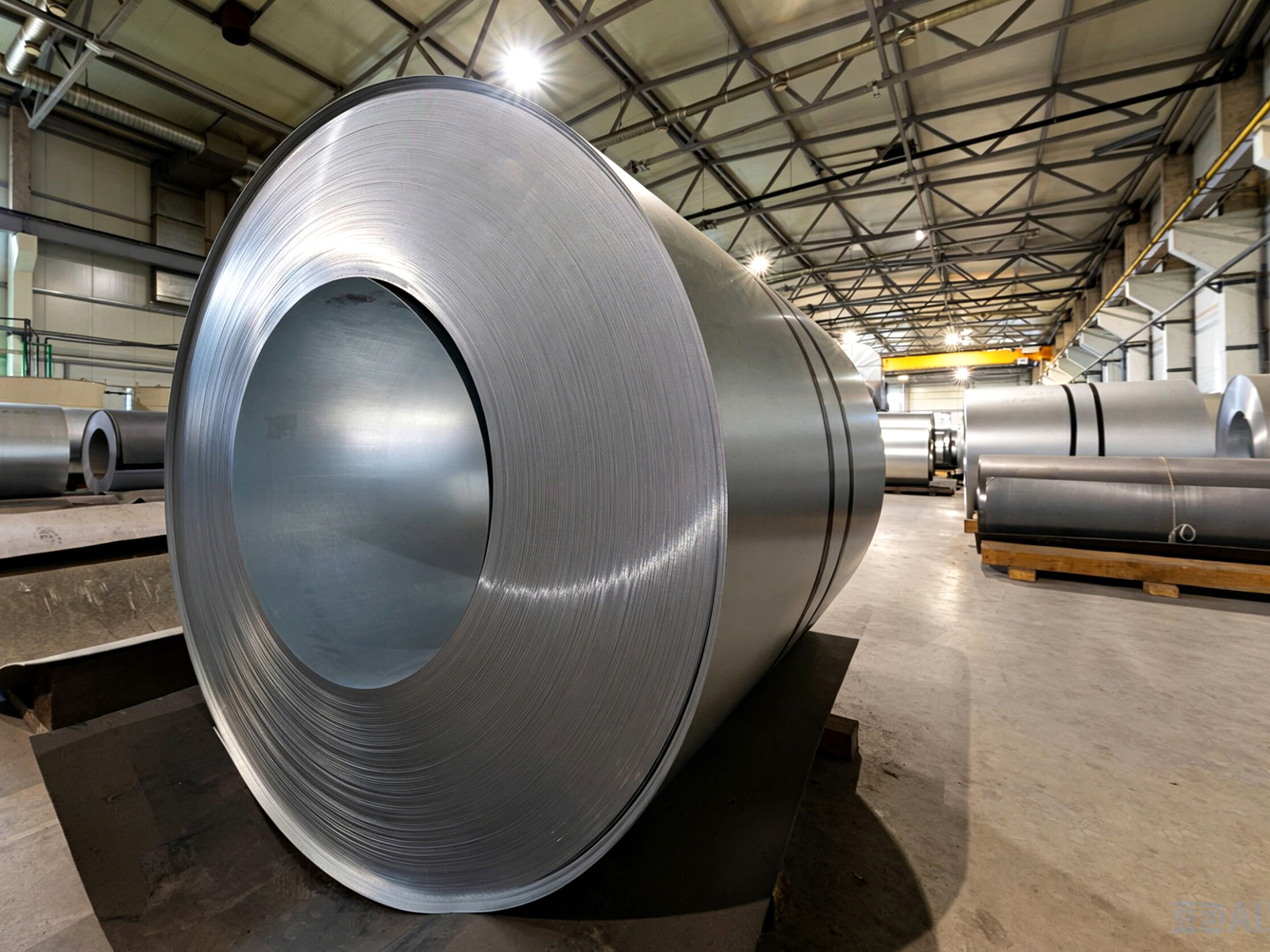
In the field of corrosion protection in modern industry, material selection directly determines the service life and operating costs of equipment. As a high-purity commercial pure nickel material (nickel content ≥ 99.6%), Nickel 200 foil has become the first choice material for chemical, battery, electronics and other industries to deal with harsh corrosive environments due to its excellent alkali corrosion resistance, excellent electrical and thermal conductivity and good processing ductility. The foil can not only maintain stable performance under strong alkali, reducing media and high temperature conditions, but can also meet the needs of miniaturization and high cleanliness applications through precision processing. With the continuous improvement of material performance requirements in new energy, precision manufacturing and other industries, Nickel 200 foil is showing irreplaceable technical value and broad application prospects.
1. What Should You Know About Material Properties?
(1) What Should You Know About Chemical Stability Due to High Purity?
The nickel purity of Nickel 200 foil reaches more than 99.6%. This high-purity composition ensures the material’s stable performance in complex chemical environments. Compared with ordinary nickel alloys, commercial pure nickel contains almost no alloying elements such as chromium and molybdenum, which avoids the risk of local corrosion caused by grain boundary precipitates. In strong alkaline solutions such as sodium hydroxide and potassium hydroxide, the surface of Nickel 200 foil can form a dense passivation film, which effectively prevents continued erosion of corrosive media. This material characteristic enables it to show far greater durability than stainless steel in alkaline electrolysis, chemical reactor lining and other scenarios.
(2) What Should You Know About Excellent Combination of Physical Properties?
The material has a density of 8.9 g/cm³ and a melting point as high as 1455℃, giving it good high-temperature stability. The tensile strength in the annealed state remains between 370-420 MPa, and the elongation (according to ASTM E8 standard, room temperature test) is ≥ 25%. This balanced configuration of strength and plasticity enables the foil to withstand certain mechanical stress and adapt to complex forming processes such as stamping and bending. In terms of conductivity, Nickel 200 foil reaches an excellent level and is suitable for applications such as battery tabs and conductive connectors that require stable current transmission. The weak magnetic properties prevent it from causing electromagnetic interference in precision electronic equipment. This is an advantage that low conductive materials such as titanium foil cannot match.
Performance indicators | Nickel 200 Foil | Gr2 titanium foil | Gr5 titanium alloy foil |
Density (g/cm³) | 8.9 | 4.5 | 4.4 |
conductivity | Excellent | Poor | Poor |
Alkali corrosion resistance | Excellent | medium | medium |
Elongation (annealed state, room temperature) | ≥ 25% | ≥ 20% | ≥ 10% |
Application focus | Conductive/alkali resistant | Lightweight/corrosion resistant | High strength structure |
(3) What Should You Know About Precision Machining Capabilities for Ultra-thin Specifications?
The standard specification Nickel 200 foil thickness range is 0.03-0.8 mm, and the width can be up to 350-670 mm. The stable production of this ultra-thin wide format relies on advanced 20-roll precision rolling technology. The thickness tolerance is controlled at ± 0.001 mm, which is much higher than the accuracy level of conventional metal foils. Through the combined process of multi-pass cold rolling and intermediate annealing, the material effectively controls the work hardening phenomenon while maintaining uniform thickness. Ultrasonic cleaning and alkali treatment ensure surface cleanliness and stable surface tension at 44 dynes, which is crucial for subsequent welding, coating and other processes. The continuous argon annealing process controls the temperature fluctuation within ± 2℃, making the foil structure uniform and the surface color consistent.
2. What Should You Know About Performance in Corrosive Environments?
(1) What Should You Know About Long-term Protection Against Strong Alkaline Environments?
In sodium hydroxide solutions with concentrations up to 50% (room temperature, without stirring), the corrosion rate of Nickel 200 foil is less than 0.1 mm/year, which is significantly better than the performance of 316 stainless steel under the same conditions. Strongly alkaline environments are typical working conditions in chemical, pharmaceutical, papermaking and other industries. Ordinary metal materials will quickly undergo intergranular corrosion or pitting failure in such media. The nickel oxide passivation layer formed on the surface of the nickel material has self-healing ability. Even if the local film layer is damaged, it can be quickly regenerated in the oxidizing medium. This property makes Nickel 200 foil ideal for critical components such as alkaline electrolyzer electrodes and evaporator linings.
(2) What Should You Know About Adaptability to Reducing and Neutral Media?
In addition to alkaline environments, the corrosion rate of Nickel 200 foil in reducing acids (such as dilute sulfuric acid, phosphoric acid) and neutral salt solutions (such as 3.5% NaCl solution, room temperature, air saturated) is less than 0.05 mm/year. The material has high resistance to stress corrosion cracking induced by chloride ions, which is of great value in fields such as seawater desalination and marine engineering. It is worth noting that this material is not suitable for strong oxidizing acids (such as concentrated nitric acid), which will accelerate the dissolution of nickel. When selecting application scenarios, it is necessary to accurately evaluate the redox characteristics of the medium and give full play to the corrosion resistance advantages of the material.
(3) What Should You Know About Antioxidant Ability Under High Temperature Conditions?
When the operating temperature rises to the range of 300-600℃, a dense oxide film will be formed on the surface of Nickel 200 foil, effectively blocking further penetration of oxygen. This antioxidant property enables long-term stable operation in applications such as vacuum furnace heating elements and high-temperature reactor inner walls. Unlike titanium materials, which are prone to hydrogen embrittlement at high temperatures, nickel materials maintain good mechanical strength and toughness. After the cold-processed foil is recrystallized and annealed, the grains are refined and evenly distributed, further improving the high-temperature creep resistance. This comprehensive performance enables Nickel 200 foil to gain application space in high-end fields such as aerospace and energy equipment.
Corrosive environment type | Typical media | Corrosion rate (reference conditions) | Suitability evaluation | Corrosion rate classification standard |
strong alkaline solution | 50% NaOH (room temperature) | <0.1 mm/year | Excellent | ≤ 0.1mm/year |
Neutral saline | 3.5% NaCl (room temperature, air saturated) | <0.05 mm/year | excellent | ≤ 0.05mm/year |
reducing acid | 10% H2SO4 (room temperature) | <0.2 mm/year | good | ≤ 0.2 mm/year |
hot air | 500℃ oxidation | Oxide film <5um | Stablize | Oxide film thickness ≤ 10um |
3. Why Is Technical Value in Key Application Areas Important?
(1) What Should You Know About Core Components of New Energy Battery Systems?
In the manufacturing of lithium-ion batteries and fuel cells, Nickel 200 foil is widely used as tab material and current collector substrate. Its excellent conductivity ensures current transmission efficiency and reduces internal resistance and heating problems. Compared with copper foil, nickel foil has better chemical stability in an alkaline electrolyte environment and will not contaminate the electrolyte with impurity ions due to corrosion. The ultra-thin specifications with a thickness of 0.03-0.1 mm not only meet the demand for lightweight batteries, but also achieve burr-free edges through precision slitting processes to avoid the risk of short circuits. Battery manufacturers use laser welding or ultrasonic welding processes to quickly and reliably connect the tabs to the cells, significantly improving production efficiency.
(2) Why Is Precision Applications in the Electronic and Electrical Industry Important?
Electromagnetic shielding is a technical problem that must be solved in modern electronic equipment. Nickel 200 foil is often made into functional parts such as shielding covers and grounding sheets due to its good conductivity and processability. The material’s weak magnetic properties ensure that it will not interfere with signal acquisition by precision sensors. In high-frequency circuits, the high cleanliness of the nickel foil surface (dual cleaning with ultrasonic and alkali solutions) ensures low contact resistance and reduces signal attenuation. In flexible circuit board substrate applications, the high elongation of annealed foil allows repeated bending without cracking, meeting the design needs of emerging products such as wearable devices and foldable screen mobile phones.
(3) What Should You Know About Durable Components for the Chemical and Electrolytic Industries?
Processes such as electrolytic chlorine production and electroplating of nickel require electrode materials to work stably for a long time in highly corrosive electrolytes. Anode plates or cathode substrates made of Nickel 200 foil have uniform surface current density distribution and small electrochemical polarization, which can significantly reduce electrolysis energy consumption. After the lining or stirring blades of chemical reactors are coated with nickel foil, the equipment maintenance cycle is extended from months to years, significantly reducing downtime and maintenance costs. In food processing and pharmaceutical equipment, high-purity nickel materials comply with international food safety standards such as the FDA (U.S. Food and Drug Administration) and will not precipitate harmful metal ions into the products, ensuring the stability of product quality.
(4) What Should You Know About Precision Manufacturing and High Temperature Equipment Fields?
The manufacturing of microelectromechanical systems (MEMS), precision sensors and other devices requires metal foils with micron thickness. Nickel 200 foil with customized specifications of 0.005-0.01 mm can achieve the formation of complex microstructures through photolithography and etching processes. The heating elements in vacuum coating equipment and molecular beam epitaxy furnaces are made of nickel foil, which uses its high melting point and oxidation resistance to maintain shape stability in ultra-high vacuum and high-temperature environments. In the application of fin materials for heat exchangers, although the thermal conductivity of nickel foil is lower than that of copper, its lifespan in corrosive flue gas environments is far longer than that of copper, and the overall economy is better.
Application areas | Typical parts | Specification requirements | core performance requirements |
battery system | lugs/current collectors | 0.03-0.1 mm | Conductivity, alkali resistance |
Electronic and electrical | Shielding cover/connector | 0.05-0.2 mm | Conductivity, formability |
Chemical electrolysis | Electrode/lining | 0.1-0.5 mm | Corrosion resistant, electrochemically stable |
Precision manufacturing | MEMS substrate | 0.005-0.03 mm | Ultra-thin precision, high cleanliness |
4. What Should You Know About Production Technology and Quality Assurance?
(1) What Should You Know About Ultra-thin Wide-width Rolling Technology?
When producing 0.03-0.3 mm grade nickel foil, the industry generally faces problems such as thickness fluctuation, difficulty in plate shape control, and severe work hardening. By introducing a 750 mm 20-roll precision rolling unit and combining it with multi-pass progressive reduction and intermediate softening annealing processes, the problems of springback and uneven extension in ultra-thin rolling can be effectively solved. The surface roughness of the roll is controlled within Ra 0.2 micron, and combined with the precise tension control system, the foil thickness deviation is stabilized within the range of ± 0.001 mm. The rolling unit is subsequently connected to an ultrasonic cleaning line, a continuous argon annealing furnace and precision slitting equipment to form an integrated process from rolling to finished products, ensuring that the material flow and process parameters between each process are continuously controllable.
(2) What Should You Know About Full-process Quality Control and Surface Treatment?
From raw materials entering the factory to finished products leaving the warehouse, a multi-level control system covering chemical composition testing, mechanical performance testing, and surface quality inspection has been established. The continuous cleaning and annealing line uses the combined action of ultrasonic waves and alkali liquid to remove rolling oil stains and surface oxides, and the cleanliness reaches electronic grade standards. The precise temperature control of the vacuum annealing furnace avoids the uneven structure problem caused by the temperature gradient of the traditional box furnace. The smoothing machine and slitting line are equipped with online thickness gauges and edge detection systems to monitor product quality in real time and automatically reject unqualified products. The production line automation rate reaches 90% (calculated based on the ratio of the number of equipment automatic control nodes to the total number of operating nodes), reducing human operating errors and controlling performance fluctuations between batches within 3%.
(3) What Should You Know About Customized Services and Large-scale Supply Capabilities?
In response to the needs of different industries, we provide full-specification customization services from 0.005 mm to 0.8 mm. The surface state can be bright surface, pickled surface or matt surface, and the supply state includes annealed state (M) and cold working state (Y). The cutting width accuracy is ± 0.5 mm, and the length can be flexibly adjusted according to the customer’s coiling equipment. With an annual production capacity of 3, 000 tons and an advanced inventory management system, it can respond to the rapid delivery needs of large-volume orders. All products comply with ASTM B162 and EN standard requirements, come with material certificates and third-party testing reports, and meet the access conditions for high-end markets such as Europe, the United States, Japan, and South Korea.
5. How Should Cost-benefit Analysis and Material Selection Suggestions?
(1) Why Is Advantages of Whole Life Cycle Cost Important?
Although the unit price of Nickel 200 foil is higher than that of ordinary stainless steel or copper foil, its economic advantages are obvious from the perspective of the whole life cycle. After chemical equipment is lined with nickel foil, the maintenance cycle is extended by 3-5 times, reducing production losses caused by frequent shutdowns and replacements. The battery system uses nickel foil tabs, which reduces the internal resistance by more than 15%, improves energy conversion efficiency, and reduces operating electricity costs. If nickel foil is used instead of multi-layer composite materials for shielding components in electronic products, the process will be simplified, the yield rate will be improved, and the overall manufacturing cost will be reduced.
(2) How Should Comparative Selection with Alternative Materials?
Titanium foil has low density and excellent corrosion resistance, but has poor conductivity and is expensive, making it suitable for weight-sensitive scenarios such as aerospace. Copper foil has the best electrical conductivity but weak corrosion resistance and requires additional surface plating protection. Nickel 200 foil strikes a balance between conductivity, alkali corrosion resistance and cost, and is the best choice for chemical electrolysis, alkaline batteries and other fields. When selecting materials, it is necessary to comprehensively consider the medium type, temperature range, mechanical stress and economic budget, and determine the most reasonable technical solution through the material performance database and actual working condition simulation.
6. What Is the Conclusion?
Nickel 200 foil has become a core material to meet the challenges of corrosive environments due to its chemical stability brought by high purity, excellent electrical and thermal conductivity and precision processing capabilities. From new energy batteries to chemical electrolysis, from precision electronics to high-temperature equipment, its wide application has verified the dual advantages of technical value and economic benefits. As manufacturing processes continue to advance and application fields continue to expand, this high-performance metal foil will play a more critical role in global industrial upgrading.
FAQ
Q1: What is the difference between Nickel 200 foil and Nickel 201 foil?
Nickel 201 is a low-carbon version (carbon content ≤ 0.02%), which has better graphitization resistance in high-temperature environments above 315℃ and avoids grain boundary embrittlement. Nickel 200 is suitable for normal to medium temperature corrosive environments, and Nickel 201 is recommended for high temperature conditions.
Q2: How to verify the surface cleanliness of Nickel 200 foil?
Surface tension can be evaluated by water droplet contact angle testing, and the standard value should be in the range of 42-46 dynes. In addition, ICP spectroscopy is used to analyze the residual ion concentration on the surface to ensure that electronic-grade or battery-grade cleanliness requirements are met.
Q3: What should we pay attention to when welding ultra-thin nickel foil?
It is recommended to use laser welding or resistance spot welding to control heat input to avoid burn-through. The welding area needs to be thoroughly degreased and protected with argon gas to prevent oxidation. Cold-worked foils should be recrystallized and annealed before welding to eliminate residual stress and prevent cracking.
Looking for a Professional Supplier of High Purity Nickel 200 Foil?
As a professional manufacturer, Baoji Titanium Nickel and Zirconium Materials Processing Co., Ltd. has a 750mm 20-roll precision rolling mill, a continuous argon annealing furnace and a full-process quality control system. It can stably supply Nickel 200 pure nickel foil (Ni≥ 99.6%) with a thickness of 0.03-0.8mm and a width of 670mm. It provides multiple supply states of annealed state (M) and cold working state (Y). The product shows excellent corrosion resistance in strong alkali, reducing media and high temperature conditions, excellent electrical conductivity, and elongation ≥ 25%. We provide customized products and complete material certificates that comply with ASTM B162 standards for global new energy battery, chemical electrolysis, electronic shielding and precision manufacturing customers. Contact sales@titaniumvalleys.com immediately to obtain technical solutions and samples.
References
- Li Yang, Wang Jianping. Corrosion resistance and applications of nickel and nickel alloys[J]. Corrosion Science and Protection Technology, 2019, 31(4): 345-352.
- Zhang Xiaodong, Liu Wei. Fundamentals of Metal Corrosion[M]. Beijing: Chemical Industry Press, 2015: 120-135.
- Yang Guohua, Zhao Zhigang. Effect of surface oxide film on wettability of nickel-based materials [J]. Journal of Materials Research, 2017, 31(6): 410-416.
- Chen Ming, Li Qiang. Ultra-thin metal foil rolling process and quality optimization[J]. Nonferrous Metal Processing, 2020, 49(2): 28-35.