
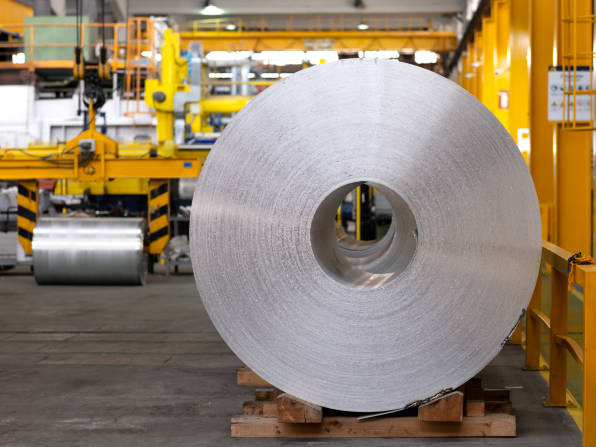
High-end global manufacturing has a high demand for qualified Gr2 titanium foil suppliers. Gr2 is a widely used grade of commercially pure titanium. It delivers balanced strength, excellent corrosion resistance and good workability. It sees extensive use in aerospace, chemical equipment, seawater desalination and new energy batteries. Major mass-production manufacturers of high-quality Gr2 titanium foil locate in China, the United States, Japan and Russia. This article analyzes core technical indicators and production capabilities for Gr2 titanium foil from a professional perspective.
1 Core Technical Indicators and Industry Standards for Gr2 Titanium Foil
1.1 Chemical Composition and Purity Control
Gr2 commercially pure titanium uses titanium as the base element. Its oxygen content stays below 0.25%. This index directly decides corrosion resistance and mechanical stability. Gr2 allows higher oxygen content than Gr1. Its tensile strength ranges from 345 MPa to 480 MPa, with elongation above 20%. Manufacturers keep iron content ≤ 0.30% and carbon content ≤ 0.08% to avoid material brittleness. Top producers adopt multiple vacuum arc remelting and real-time spectral monitoring. This ensures stable composition for long-term parts like seawater desalination heat exchangers and electrolytic electrodes.
1.2 Matching of Mechanical Properties and Microstructure
Gr2 titanium foil has yield strength between 275 MPa and 410 MPa. Annealed material features high ductility for deep drawing and bending. Cold worked material has higher strength for structural supports. Advanced manufacturers use continuous annealing furnaces with argon shielding and precise temperature control. The process forms uniform grains and reduces performance deviation between batches. It also guarantees high strength for welded joints.
1.3 Compliance with International Standards
Qualified Gr2 titanium foil needs to meet ASTM B265, JIS H4600 and EN 10095. Aerospace applications require UNS R50400 matching certificates. Chemical equipment and electronic products need valid material test reports. Reliable suppliers build full quality control systems covering raw material traceability to finished product testing. Every batch comes with complete inspection documents.
| Performance Index | Gr1 Titanium Foil | Gr2 Titanium Foil | Differences in Typical Applications |
|---|---|---|---|
| Tensile Strength (MPa) | 240 ~ 345 | 345 ~ 480 | Gr2 fits structural parts under medium load |
| Elongation (%) | ≥ 24 | ≥ 20 | Gr1 works better for superplastic forming |
| Oxygen Content (%) | ≤ 0.18 | ≤ 0.25 | Higher oxygen in Gr2 brings solid solution strengthening |
| Typical Working Conditions | Medical implants | Liners for chemical heat exchangers | Select grade based on service environment |
2 Comparison of Core Capabilities among Global High-quality Gr2 Titanium Foil Manufacturers
2.1 Advantages of Chinese Manufacturers
Baoji is a key titanium processing base worldwide. Local enterprises own large production capacity. They deploy advanced rolling mills and online thickness gauges for dynamic dimension control. Sophisticated cleaning lines eliminate oil contamination for follow-up processes. Chinese suppliers lead in output and delivery speed. They still need to improve global brand influence.
2.2 Features of Manufacturers in the United States and Japan
Most US factories focus on aerospace-grade Gr2 titanium foil. They adopt strict melting processes and control hydrogen content for good low-temperature toughness. Their products hold multiple international certifications but set high minimum order quantities and long lead times. Japanese companies specialize in ultra-thin foil production. They use mature annealing technology to achieve low surface roughness for electronic display parts. Their processes form high technical barriers, while capacity is limited and product prices stay high.
2.3 Position of Russian Manufacturers
Russian enterprises have abundant sponge titanium resources. They supply self-owned industrial systems with large-size titanium products. Their titanium foil products fall behind on certain performance indicators due to global geopolitical changes.
| Manufacturer Type | Core Advantages | Main Characteristics |
|---|---|---|
| Chinese Mass-production Manufacturers | Large capacity, relatively short lead time, cost-effective | Ongoing brand development |
| US Aerospace-grade Suppliers | Complete international certifications, good low-temperature performance | High MOQ, high product price |
| Japanese Precision Processors | Advanced technology for ultra-thin foil, high surface accuracy | Limited capacity, long delivery cycle |
| Russian Raw Material Enterprises | Integrated raw material supply | Relatively backward foil processing technology |
3 Key Criteria to Select Qualified Suppliers
3.1 Production Equipment Level
Traditional rolling mills struggle to control edge quality for ultra-thin foil. Multi-roll mills distribute force evenly and optimize edge conditions. Check production year, control system response and key component quality during equipment assessment. Modern production lines combine rolling mills and online thickness monitors for stable product quality.
3.2 Surface Cleaning Performance
Oil and dirt on titanium foil weaken corrosion resistance for chemical equipment. Top suppliers apply multi-stage cleaning and strict wettability tests. Special degreasing processes maintain high surface cleanliness for certified products.
3.3 Uniformity of Annealing Process
Continuous annealing furnaces run more efficiently than batch furnaces but require precise temperature regulation. Multi-zone heating and adjustable shielding gas avoid defects from improper heat treatment. Advanced lines equip real-time temperature monitors to keep uniform properties across full foil rolls.
3.4 Slitting and Edge Quality Control
Thin titanium foil easily develops burrs during slitting. High-precision slitters use premium blades and pressing systems for neat edges. Tight width tolerance acts as a key index for equipment performance. Visual inspection systems automatically detect surface and edge defects.
3.5 Full-process Quality Traceability
Aerospace and nuclear power industries require full traceability from ingot to finished foil. Each batch has exclusive codes linked to melting, rolling, annealing and testing records. Complete data tracking avoids quality risks for high-reliability projects.
3.6 Customization Capability
Many projects require non-standard sizes and surface finishes. Flexible manufacturers complete process verification and trial production quickly. Factories with modular production lines support small-batch custom orders.
3.7 Technical Service Support
Top suppliers provide working condition analysis, material selection and on-site inspection services. They run corrosion simulation and service life evaluation for complex environments.
4 Application-oriented Procurement Guidelines
4.1 Material Selection for Chemical Corrosion Control
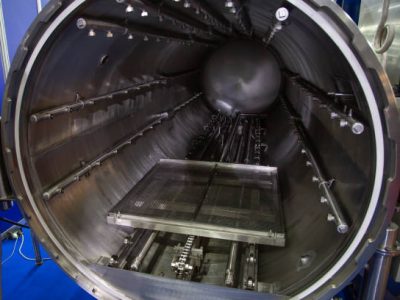
Gr2 titanium foil works for anode plates, heat exchanger liners and reaction vessel parts in chlor-alkali and chemical industries. It resists corrosion in sulfuric acid and hydrochloric acid. Proper foil thickness and welding technology cut equipment replacement and maintenance frequency.
4.2 Solutions for Seawater Desalination and Marine Engineering
Gr2 titanium foil serves as heat transfer material for multi-stage flash desalination units. It resists chloride erosion. Marine pressure shells and piping use this material to extend service intervals.
4.3 Lightweight Solutions for New Energy Batteries
Ultra-thin titanium foil forms casing parts for power batteries. Good stamping performance and corrosion resistance adapt to electrolyte environments. Optimized rolling and stamping parameters reduce cracking and prolong die service life.

4.4 Shielding Parts for Electronic and Precision Instruments
Ultra-thin Gr2 titanium foil features low magnetic permeability and stable resistivity. It acts as shielding material for electronic equipment. Its low thermal dimensional stability fits gyroscopes and optical barrels for precision instruments.

4.5 Composite Material Components
Titanium foil combines with carbon fiber and aramid fiber for composite laminates on aerospace fairings and satellite solar panels. Anodizing and coupling agent treatment improve interfacial bonding strength. Titanium-aluminum laminates deliver flame retardance and rigidity for aircraft floor parts.

Conclusion
Evaluate technical strength, production capacity, quality system and service when choosing Gr2 titanium foil suppliers. Manufacturers from different regions have distinct strengths. Match material performance with actual working conditions: prioritize corrosion resistance and weld quality for chemical projects; focus on surface cleanliness for electronic products; emphasize strength and forming performance for new energy batteries. Conduct sample tests, factory audits and small-batch trials to make rational procurement decisions.
FAQ
1. What are the differences between Gr1 and Gr2 titanium foil for chemical use?
2. How to prevent damage during slitting and transportation of ultra-thin titanium foil?
3. How to verify if Gr2 titanium foil complies with ASTM B265?
Find Reliable Gr2 Titanium Foil Manufacturers
Baoji Titanium Valley Titanium Nickel Zirconium Material Processing Co., Ltd. operates Italian Danieli rolling lines. Our annual output reaches 20,000 tons of titanium products. We supply customized Gr2 titanium foil complying with ASTM B348. Contact us for technical proposals and quotations: sales@titaniumvalleys.com
References
- Zhang Wei, Li Ming. Precision Rolling Technology and Application of Commercially Pure Titanium Foil [M]. Beijing: Metallurgical Industry Press, 2021.
- Wang Jianguo, Liu Fang. Corrosion Behavior and Protection of Titanium Alloys in Marine Engineering[J]. Corrosion Science and Protection Technology, 2023, 35(2): 145-158.
- Chen Zhiqiang, Zhao Yong. Research on Rolling Process of Titanium and Titanium Alloy Foil[J]. Rare Metal Materials and Engineering, 2022, 51(6): 2012-2018.
- ASTM International. ASTM B265-20 Standard Specification for Titanium and Titanium Alloy Strip, Sheet, and Plate [S]. West Conshohocken, PA: ASTM, 2020.
- Liu Zhenyu, Zhou Jian. Influence of Annealing Process on Microstructure and Properties of Ultra-thin Titanium Foil[J]. Transactions of Materials and Heat Treatment, 2021, 42(8): 88-94.