
Why Is ASTM B160 Nickel Rod Used in Chemical, Electronics, and Marine Engineering Applications
- ASTM B160 Nickel Rod
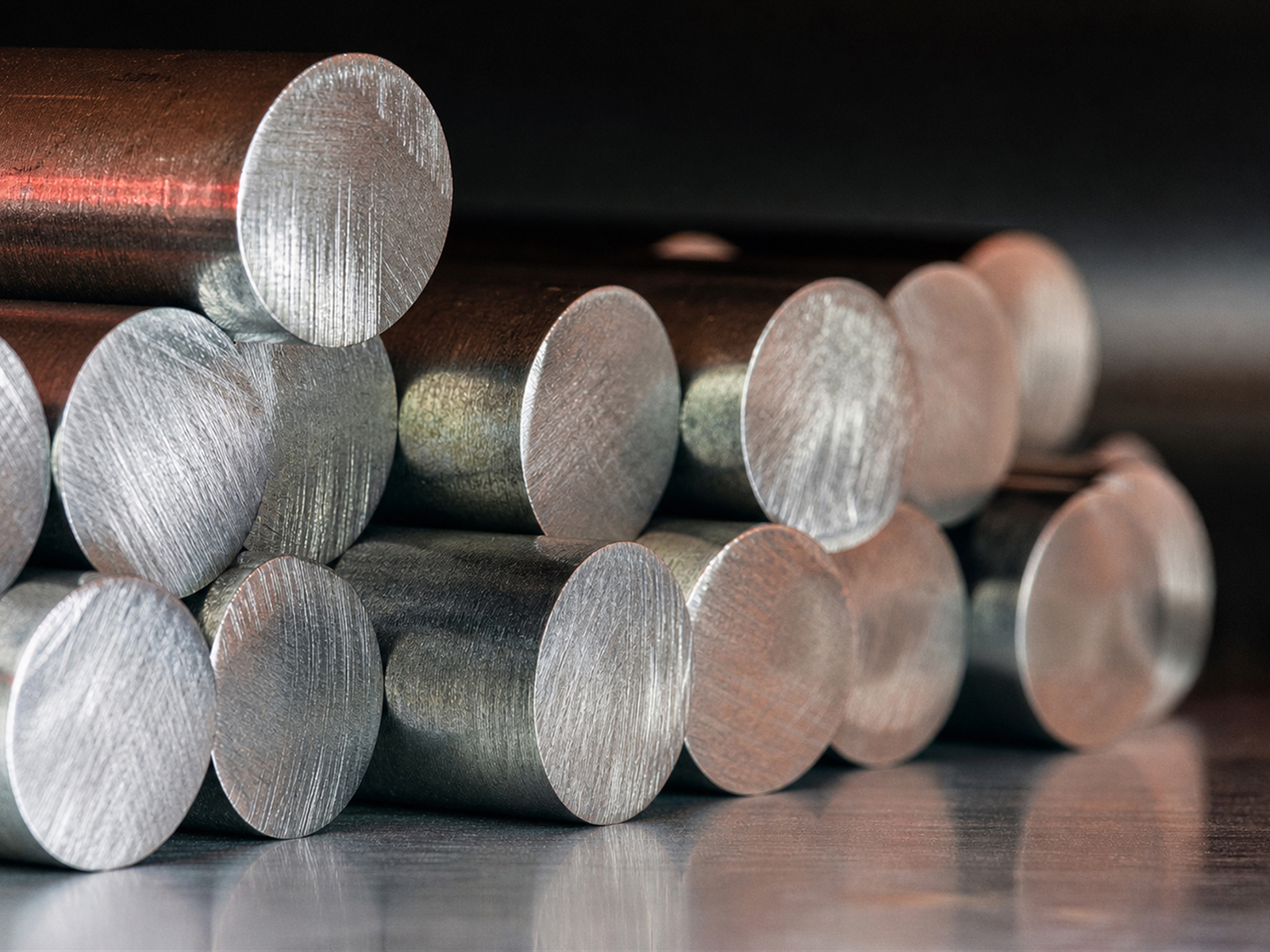
ASTM B160 Nickel Rod is a high-purity commercial nickel material that meets international standards. It mainly includes two grades: industrial pure nickel Ni200 (UNS N02200) and low carbon pure nickel Ni201 (UNS N02201). This material has become an indispensable key material in chemical industry, electronics, marine engineering, food and medicine and other fields due to its excellent alkali corrosion resistance, excellent electrical and thermal conductivity properties and good processing performance. ASTM B160 Nickel Rods are made through hot rolling, forging, cold drawing and other processes. They are available in various cross-sectional shapes such as round bars, square bars, and hexagonal bars. They are widely used in high-demand scenarios such as chlor-alkali electrolyzers, chemical reactors, electronic components, and seawater desalination equipment. It effectively solves the problem of rapid corrosion failure of ordinary metals under strong alkali, reducing media, and high-purity working conditions.
1. Material characteristics and core advantages of ASTM B160 nickel rod
(1) High-purity materials ensure process cleanliness
The nickel content of ASTM B160 Nickel Rod is usually ?99.0% (Ni200 typical value is 99.5~99.6%), and impurity elements such as iron, carbon, manganese, and silicon are strictly controlled at extremely low levels. This high-purity characteristic makes it excellent in industries such as pharmaceuticals, food processing, and semiconductor manufacturing that require extremely high media cleanliness. Compared with ordinary stainless steel or low-nickel alloys, ASTM B160 Nickel Rods do not precipitate harmful impurities into the process medium, avoiding product contamination and quality fluctuations. They are especially suitable for manufacturing key components such as high-purity chemical reactor linings, food-grade stirring shafts, and medical device sterilization equipment components.
(2) Excellent alkali corrosion resistance
In a strong alkaline environment, ASTM B160 Nickel Rod exhibits corrosion resistance far exceeding that of conventional materials. When exposed to corrosive alkali solutions such as high-concentration sodium hydroxide (NaOH) and potassium hydroxide (KOH), carbon steel and ordinary stainless steel will quickly undergo uniform corrosion or stress corrosion cracking, while nickel materials can form a stable passivation film to effectively block the erosion of corrosive media. This characteristic makes it a standard material for anode plates, alkali heating tubes, pump shafts and other components in chlor-alkali industrial electrolyzers, significantly extending the service life of equipment and reducing the frequency of shutdown maintenance and overall operating costs.
(3) Excellent electrical and thermal conductivity
Thanks to the physical properties of high-purity nickel, ASTM B160 Nickel Rod has good electrical and thermal conductivity. In the electrochemical industry, nickel rods are often used as conductive components such as electrolytic cell electrodes, electroplating anodes, and battery current collectors. Their stable electrical properties can reduce voltage loss and improve current efficiency, thereby reducing energy consumption costs. At the same time, the thermal conductivity of nickel materials makes it suitable for manufacturing heat exchanger tube bundles, heating element sheaths and other heat transfer components, and plays an important role in heat recovery systems in the chemical and energy industries.
2. Specification system and surface treatment of ASTM B160 Nickel Rod
(1) Rich selection of diameters and cross-section specifications
ASTM B160 Nickel Rods are available in a variety of sizes to meet the needs of different industries. The regular stock diameter range covers ?8 ~ ?200 mm, and small diameter cold drawn rods can be accurate to ?4~?30 mm, ?100 mm ~ ?300 mm. In addition to round bars, the specifications of square bars and hexagonal bars can be customized from 6?6 mm to 80?80 mm. Inch sizes such as 1/4?, 1/2?, 1?, 2?, 3?, etc. can also be supplied on demand. In terms of length, annealed (M) products are usually random sizes of 300-4000 mm, and hot-processed (R) and cold-processed (Y) can reach 300~6000 mm, when cutting to fixed length or multiple lengths, a cutting allowance of about 5 mm needs to be reserved.
(2) Diversified surface treatment processes
Depending on the application scenario, ASTM B160 Nickel Rod can choose from a variety of surface treatment states. The black skin/hot forged state retains the oxide layer on the surface, which is suitable for rough machining of blanks or structural parts with no special surface requirements; the peeling/turning state removes the oxide layer through centerless turning to present a semi-bright surface, which is suitable for general assembly parts and industrial pipeline connections; the cold drawn/bright state products have a smooth surface without oxide layer and high dimensional accuracy, widely used in occasions such as electronic components and anode rods that require clean surfaces; the polished state is centerless or cylindrically ground, with excellent straightness and roundness, which can meet high-precision requirements for precision shafts, molds, etc.; the mirror polished state is achieved through mechanical polishing and graded grinding, complying with the cleanliness standards of the food, medicine, and semiconductor industries.
(3) Delivery status and mechanical properties
ASTM B160 Nickel Rods can be supplied in three states: hot working (R), annealed (M), and cold working (Y). After recrystallization annealing treatment, the annealed material has a uniform structure, excellent plasticity, and low internal stress, and is suitable for subsequent deep processing such as cold forming and welding. The cold-processed product has high tensile strength and hardness, but relatively low elongation, and is suitable for direct machining or structural parts that require higher strength. The hot-processed product has higher strength and a balance between strength and toughness. The typical tensile strength of annealed Ni200 is 380~550 MPa and the elongation is ?30%, which can meet the needs of most industrial applications.
3. Application scenarios of ASTM B160 Nickel Rods in key industries
(1) Core materials in chemical and chlor-alkali industries
The chemical and chlor-alkali industries are the most important application fields of ASTM B160 Nickel Rod. In chlor-alkali electrolysis production, nickel rods are used to manufacture key components such as anode plates, cathode frames, heating tube bundles, and alkali pump shafts. Since the electrolyte contains high concentrations of NaOH or KOH and the temperature is usually between 80 and 100?C, ordinary stainless steel will quickly undergo stress corrosion cracking in this environment, while nickel materials can operate stably for a long time, extending the equipment replacement cycle from months to years. In the field of fine chemicals, nickel rods are used to manufacture stirring shafts for strong alkaline reactors, valve seats, pump body linings, etc., effectively avoiding the risk of alkali leakage and product contamination.
(2) Precision components for the electronics and semiconductor industry
The electronics industry has strict requirements on the purity, conductivity and magnetism of materials. ASTM B160 Nickel Rod is widely used in the manufacture of key components such as resistance heating elements, vacuum tube grids, electronic packaging leads, NiMH and NiCd battery conductive connectors, etc. due to its high purity and extremely low magnetic permeability. In semiconductor manufacturing equipment, nickel rods are used as heating element sheaths in chemical vapor deposition (CVD) furnaces, Faraday cups in ion implanters, etc. Their stable high-temperature performance and low impurity release characteristics ensure high yields in chip production. Battery manufacturers in South Korea and Japan use ASTM B160 Nickel Rods as conductive connectors for nickel-metal hydride batteries to improve battery cycle life and charge and discharge efficiency.
(3) Marine engineering and seawater desalination system
Seawater desalination equipment is exposed to corrosive environments with high chloride ion concentrations for a long time, which places extremely high requirements on the corrosion resistance of materials. ASTM B160 Nickel Rods are used in high-pressure pump shafts, heat exchanger tube bundles, seawater filter fasteners and other components in seawater desalination reverse osmosis (RO) systems to effectively resist chloride ion pitting and crevice corrosion. In ocean monitoring equipment, sensor housings and connectors made of nickel rods can work for a long time in the high-salt environment of the seabed without failure. Ship propeller components, valves and pump shafts of seawater cooling systems are also often made of nickel materials, which reduces maintenance costs of frequent parts replacement.
(4) Food, medicine and high-purity applications
Food processing equipment and pharmaceutical production lines have strict requirements on the non-toxicity and corrosion resistance of materials. ASTM B160 Nickel Rod is used to manufacture food-grade mixing shafts, molds, pressure rollers and other components. It will not precipitate harmful substances when handling acidic food media such as acetic acid and citric acid. In the pharmaceutical industry, nickel rods are used to manufacture heating tubes for autoclaves, pipe connectors for water for injection (WFI) systems, non-implantable surgical tools, etc. High-end medical device manufacturers in Germany and the United States prefer to use ASTM B160 Nickel Rods that comply with EN 10204 3.1 certification to ensure the integrity of the product quality traceability system.
(5) Aerospace and high temperature equipment
Although nickel rods are not used as much as nickel-based superalloys in the aerospace industry, they still play an important role in certain specific components. The valves, catalyst brackets, oxygen sensor probes, etc. of automobile high-performance exhaust systems use ASTM B160 Nickel Rods to utilize their high-temperature oxidation resistance and thermal fatigue resistance properties. Nickel materials are also often used for components such as conveyor belts, clamps, and thermocouple protection sleeves in industrial heat treatment furnaces to maintain structural stability in high-temperature environments of 600 to 800?C. Russian and French aero-engine manufacturers use nickel rods for some non-primary load-bearing high-temperature fasteners and sensor mounts to reduce weight and improve reliability.
4. Industry pain points and value creation solved by ASTM B160 Nickel Rods
(1) Solve the corrosion problem under strong alkali conditions
Traditional carbon steel and stainless steel are prone to rapid uniform corrosion or stress corrosion cracking in high-temperature and high-concentration alkali environments, leading to equipment perforations, leaks and even production shutdowns. ASTM B160 Nickel Rod can operate stably for several years in a 50% sodium hydroxide solution at 80~120?C with a corrosion rate of less than 0.1 mm/year due to its passivation film protection mechanism. According to typical application cases in the industry, after a large chlor-alkali company changed the anode material of the electrolytic cell from ordinary stainless steel to Ni200 nickel rod, the equipment maintenance cycle was extended from the original 6 months to 3 years, saving more than 2 million yuan in annual maintenance costs, while avoiding production interruption losses caused by equipment failure.
(2) Improve the energy efficiency and stability of electrochemical processes
Electrochemical processes such as electrolysis and electroplating have extremely high requirements on the conductivity and corrosion resistance of electrode materials. Ordinary metal electrodes increase voltage drop due to high resistance, and energy consumption costs remain high; anode plates made of ASTM B160 Nickel Rods can reduce the cell voltage by 0.2-0.5V. For a factory with an annual output of 100,000 tons of chlor-alkali, it can save about 5 million yuan in electricity bills every year. The corrosion resistance of nickel anodes also reduces electrolyte pollution caused by plate dissolution and improves product purity and yield. After an electroplating company adopted nickel anodes, the uniformity of the coating increased by 15% and the defective rate dropped by 8%.
(3) Ensure media cleanliness in high-purity processes
Processes such as pharmaceutical intermediate synthesis, electronic grade chemical production, and semiconductor wet etching are extremely sensitive to impurity content. Even PPM-level metal ion contamination can lead to product scrapping. The high purity characteristics of ASTM B160 Nickel Rod (total impurities <0.4%) ensure that harmful elements such as iron, copper, and manganese will not precipitate into the solution when in contact with strong corrosive media. After a semiconductor equipment manufacturer adopted nickel material pipelines and pump shafts in the chemical mechanical polishing (CMP) liquid circulation system, the metal contamination level on the silicon wafer surface dropped by 90%, and the yield rate increased from 92% to 98.5%, which has significant direct economic benefits.
(4) Extend equipment life and reduce life cycle costs
Although the initial purchase cost of ASTM B160 Nickel Rod is higher than that of ordinary stainless steel (about 2 to 3 times that of 316L), its excellent corrosion resistance and long life characteristics greatly reduce the whole life cycle cost. A petroleum refining company used nickel rods to make valve seats in hydrogenation reactors containing hydrogen sulfide (H?S). The service life of the valve was extended from 18 months to more than 5 years. Taking into account the downtime maintenance losses and spare parts inventory costs, the comprehensive return on investment increased by 40%. In seawater desalination projects, high-pressure pump shafts made of nickel rods have a longer maintenance-free operation cycle and are superior to materials such as duplex stainless steel. However, they need to be compared with titanium alloys in certain seawater environments.
5. Quality control and material selection suggestions for ASTM B160 Nickel Rods
(1) Strict chemical composition and mechanical properties testing
High-quality ASTM B160 Nickel Rods must be guaranteed by a full-process quality control system. The raw material is high-purity electrolytic nickel, and vacuum smelting is used to avoid the mixing of gas impurities; the temperature and deformation amount are precisely controlled during the hot forging and hot rolling processes to ensure a uniform and fine structure; the annealing process uses a protective atmosphere or vacuum environment to prevent surface oxidation; the finished product requires chemical composition spectrum analysis (to ensure nickel content ? 99.0%, carbon ? 0.15%, sulfur ? 0.01%), tensile testing (to verify tensile strength and elongation), hardness testing, etc. Key applications also require special inspection items such as intergranular corrosion testing, stress corrosion testing, and low-magnification structural inspection.
(2) Non-destructive testing to ensure material integrity
For applications with high reliability requirements such as nuclear power and aerospace, ASTM B160 Nickel Rods need to undergo non-destructive testing such as ultrasonic testing (UT) and eddy current testing (ET) to eliminate internal defects, cracks, inclusions and other defects. Forged rods with a diameter greater than 50 mm usually require 100% ultrasonic testing, and the defect detection rate must comply with ASTM E213 or EN 10308 standards. Surface quality inspection must ensure that there are no defects such as folds, cracks, pitting, scratches, etc. The surface roughness Ra of bright products should be ?1.6 ?m. A material certificate (MTC) complying with EN 10204 3.1 or 3.2 standards should be provided with the goods, including complete information such as furnace batch number, chemical composition, mechanical properties, heat treatment status, etc.
(3) Material selection suggestions adapted to working conditions
When selecting ASTM B160 Nickel Rod, comprehensive consideration must be given to the working conditions. For strongly alkaline environments of 80~200 ? (NaOH, KOH concentration >20%), Ni200 is the first choice material; if the temperature exceeds 315 ? and sulfur-containing media (H?S, SO?), you should consider adding chromium and molybdenum to nickel-based alloys to prevent sulfur embrittlement; in acidic environments containing chlorine ions (such as hydrochloric acid, seawater), nickel materials are prone to pitting corrosion, and you need to carefully evaluate or choose a more corrosion-resistant nickel-molybdenum alloy; nitric acid with a concentration higher than 65% and a temperature exceeding 100?C will significantly accelerate the corrosion of nickel materials, so titanium alloy or zirconium materials should be used instead. Low-carbon Ni201 (carbon content ?0.02%) is suitable for high-temperature working conditions of 300~600?C, which can avoid intergranular corrosion caused by the precipitation of carbides at grain boundaries.
(4) Supply chain reliability and customized services
It is crucial to choose a reputable ASTM B160 Nickel Rod supplier. High-quality suppliers should have complete production qualifications (such as ISO 9001, PED, ASME and other certifications), stable raw material supply channels, advanced processing equipment (such as Italian Danieli rolling mill, Swiss Schenck grinder, etc.), and complete detection methods (spectrometer, universal testing machine, ultrasonic flaw detector, etc.). As an important rare metal processing base in the world, the Baoji area has gathered a group of nickel manufacturing companies with strong technical strength. It can provide products with full specifications from ?4 mm to ?300 mm, and supports customized needs such as fixed-length cutting, special surface treatment, and small batch customization. The delivery cycle is usually 2-4 weeks.
in conclusion
ASTM B160 Nickel Rod has become an irreplaceable key material in chemical, electronics, marine engineering, food and medicine and other industries due to its high purity, strong alkali corrosion resistance, excellent electrical and thermal conductivity and good processing performance. Its successful application in chlor-alkali electrolysis, electronic components, seawater desalination, high-purity chemicals and other fields has effectively solved the pain points of rapid corrosion failure of ordinary materials, media pollution, and excessive energy consumption, creating significant economic value and safety guarantee for enterprises. As the global carbon neutrality process accelerates and the hydrogen energy industry rises, ASTM B160 Nickel Rods have broad application prospects in emerging fields such as electrolysis of water for hydrogen production and fuel cells.
FAQ
Q1: What is the difference in alkali resistance between ASTM B160 Nickel Rod and ordinary stainless steel?
The corrosion resistance of ASTM B160 Nickel Rod in high temperature and high concentration alkali environment far exceeds that of 300 series stainless steel. In 80?C, 50% sodium hydroxide solution, the annual corrosion rate of nickel materials is less than 0.1 mm, while 304 stainless steel will undergo rapid stress corrosion cracking, and 316L can only withstand medium-concentration alkali liquid. The passivation film of nickel material is more stable and can operate reliably for a long time in strong alkali conditions such as the chlor-alkali industry.
Q2: How to distinguish the application scenarios of Ni200 and Ni201 nickel rods?
Ni200 has a carbon content of ?0.15% and is suitable for alkaline and reducing media from normal temperature to 250?C. It is a standard material for normal temperature processes such as chlor-alkali electrolysis and electroplating. Ni201 has a carbon content of ?0.02% and can be used at high temperatures of 300 to 600?C without intergranular corrosion caused by the precipitation of grain boundary carbides. It is suitable for high-temperature heat treatment furnace components, high-temperature alkali heat exchangers and other scenarios.
Q3: Under what working conditions is ASTM B160 Nickel Rod not suitable?
Nickel materials are not suitable for high-temperature oxidizing acids (such as concentrated nitric acid >100?C), high-temperature sulfur-containing atmospheres (easy to sulfur embrittlement >315?C), strongly oxidizing chlorine salt solutions (easy to pitting) and hydrofluoric acid (HF will seriously corrode nickel). Under these working conditions, more corrosion-resistant materials such as titanium alloy, zirconium or nickel-molybdenum alloy should be used.
Contact us for high quality ASTM B160 Nickel Rod
Baoji Baoji Titanium Valley Titanium Nickel Zirconium Material Processing Co., Ltd., as a professional high-end rare metal processing manufacturer, has advanced automated production lines and a complete quality management system. It can provide full specifications of Ni200/Ni201 nickel rod products that comply with ASTM B160 standards, and supports customized processing and fast delivery. Customers from all over the world are welcome to inquire and cooperate, email: sales@titaniumvalleys.com.
References
Li Jingui, Zhao Jin. Corrosion and protection of nickel and nickel alloys[M]. Beijing: Chemical Industry Press, 2015.
Wang Rong, Chen Zhiqiang. Material selection and application of nickel materials for chemical equipment [J]. Chemical Equipment and Pipelines, 2018, 55(3): 45-50.
Zhang Zhen, Liu Hao. Research on the application and corrosion behavior of nickel in the chlor-alkali industry [J]. Corrosion Science and Protection Technology, 2020, 32(4): 367-372.