
Why Is Gr12 Titanium Wire Performance Analysis, Corrosion Resistance and High Strength Application Advantages Important?
- GR12 Titanium Wire
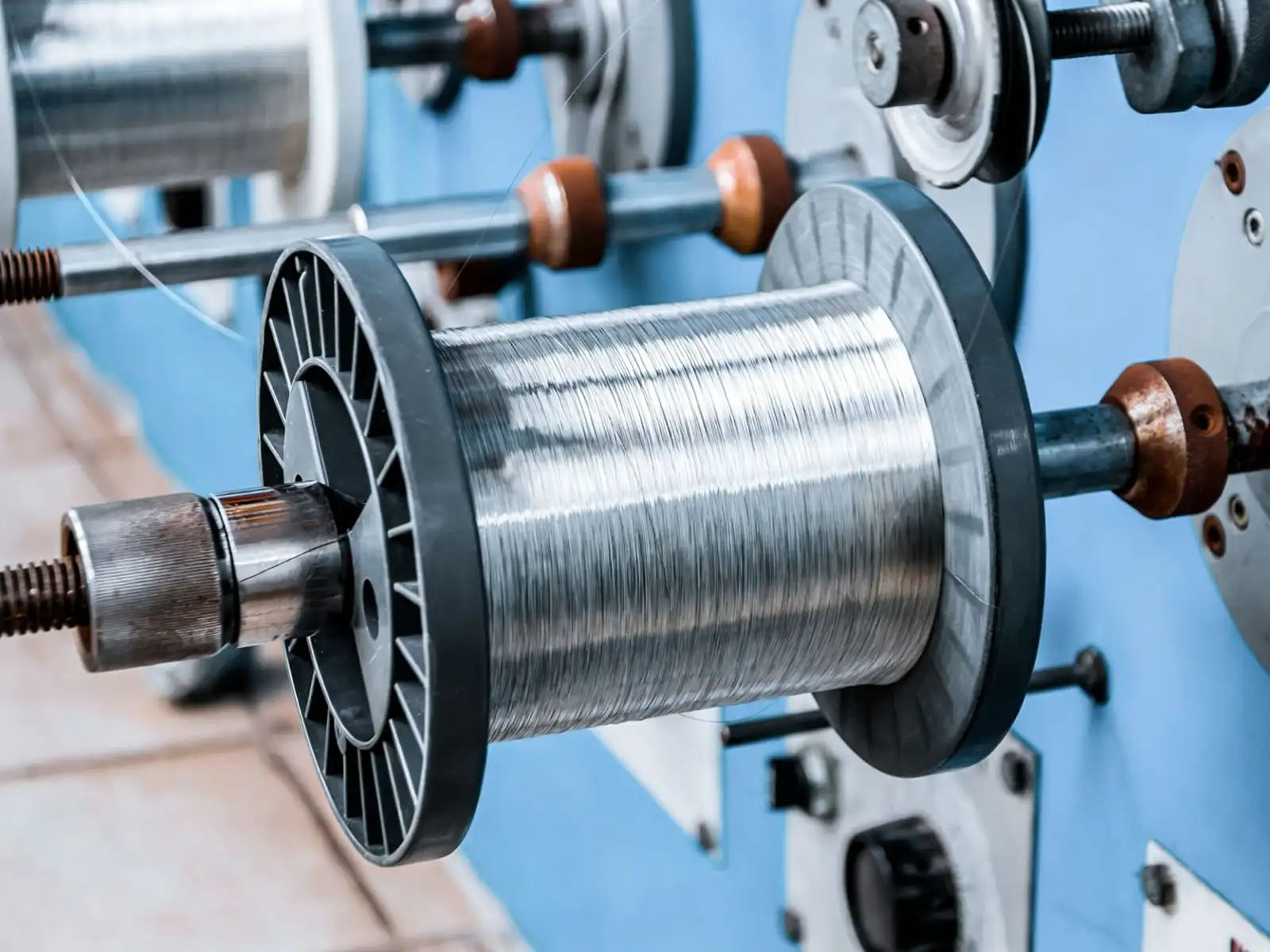
Gr12 titanium wire (Ti-0.3Mo-0.8Ni) is a nearly α-type corrosion-resistant titanium alloy that achieves a performance balance between industrial pure titanium and high-strength titanium alloys through molybdenum-nickel alloying. While maintaining excellent ductility, this material exhibits excellent resistance to corrosion by reducing media, especially in harsh environments such as chloride ions, sulfuric acid, and hot chlorides. Its resistance to crevice corrosion and pitting corrosion far exceeds that of TA1/TA2 pure titanium, and it also has medium and high strength properties, making it an ideal material for harsh service environments such as chemical equipment, marine engineering, oil and gas exploration, and flue gas desulfurization. The alloy design takes into account both weldability and formability, providing reliable guarantee for the manufacturing of complex structural parts.
1. What Should You Know About Alloy Design and Microstructural Properties of Gr12 Titanium Wire?
(1) What Should You Know About Molybdenum-nickel Synergistic Alloying Mechanism?
Gr12 titanium wire is added with 0.2%-0.4% molybdenum and 0.6%-0.9% nickel to form a unique corrosion-resistant microstructure. The molybdenum element is integrated into the titanium matrix, which significantly improves the passivation ability of the material in a reducing acidic environment. The addition of nickel further strengthens the stability of the alloy in a medium containing chlorine ions. The two have a synergistic effect, forming a dense oxide protective film on the surface of the material.
(2) What Should You Know About Phase Composition and Grain Control?
The alloy maintains a near-α phase structure, and obtains fine and uniform equiaxed grains through vacuum melting and continuous rolling processes. This microstructure not only ensures the plastic processing performance of the material, but also ensures isotropic mechanical properties. Strictly controlled oxygen content (≤ 0.25%) avoids increased brittleness caused by over-strengthening.
(3) What Should You Know About Effect of Heat Treatment Status on Performance?
Annealed Gr12 titanium wire exhibits the best ductility and stress corrosion resistance, and is suitable for applications that require bending and coiling. Cold worked state improves strength through work hardening to meet the mechanical requirements of pressure-bearing structural parts. The cooling rate control during the heat treatment process directly affects the precipitation morphology of α phase, thereby regulating the overall performance balance of the material.
2. What Should You Know About In-depth Analysis of Multi-dimensional Corrosion Resistance Performance?
(1) What Should You Know About Microscopic Mechanism of Resistance to Chloride Ion Erosion?
In chlorine-containing environments such as sea water, salt spray, and hot chloride, a TiO2/MoO₃ composite passivation film spontaneously forms on the surface of Gr12 titanium wire, and the thickness of the film can reach the nanometer level. The presence of molybdenum oxide enables the passivation film to maintain its regeneration ability under the attack of chlorine ions, effectively preventing the initiation of pitting pits. Compared with TA2 pure titanium, its critical pitting potential is increased by about 150-200mV.
corrosive medium | Gr12 titanium wire corrosion rate | TA2 pure titanium corrosion rate | 316L stainless steel corrosion rate |
Natural sea water (25℃) | <0.005 mm/year | 0.015mm/year | 0.35mm/year |
10% hydrochloric acid (60℃) | 0.08mm/year | >2.5 mm/year | severe corrosion |
5% sulfuric acid (boiling) | 0.12mm/year | 1.8mm/year | completely dissolved |
(2) What Should You Know About Resistant to Crevice Corrosion and Stress Corrosion Cracking?
In gap areas such as flange connections and threaded fits, Gr12 titanium wire can maintain a passivation state in oxygen-poor and acidified local environments. The presence of nickel inhibits the tendency of hydrogen-induced cracking, allowing the material to exhibit excellent safety in oil and gas well environments containing H₂S/CO₂. After 10, 000 hours of salt spray testing, no obvious accumulation of corrosion products was observed in the crevice area.
(3) What Should You Know About Long-term Stability in High-temperature Corrosive Environments?
Under industrial high-temperature corrosion conditions of 80-150℃, the thermal stability of the oxide film of Gr12 titanium wire is better than that of pure titanium. The strengthening effect of molybdenum slows down the creep rate at high temperatures, allowing the material to serve for a long time in flue gas desulfurization scrubbers, heat exchangers and other equipment without performance degradation. Equipment maintenance data after five years of continuous operation show that the surface finish retention rate of the wire exceeds 92%.
3. What Should You Know About Mechanical Properties and Processing Technology Compatibility?
(1) What Should You Know About Balanced Design of Strength and Plasticity?
The tensile strength of Gr12 titanium wire reaches 480-620 MPa, the yield strength is 380-520 MPa, and the elongation remains above 18%. This combination of properties enables it to withstand structural loads and meet plastic processing requirements such as cold drawing, coiling, and bending. Compared with Gr5 titanium alloy, Gr12 maintains 70% strength while increasing ductility by 40%.
Wire diameter specifications | Tensile strength (MPa) | Yield strength (MPa) | Elongation (%) | Hardness(HV) |
φ0.5mm | 580-620 | 480-520 | 15-18 | 220-240 |
φ2.0mm | 520-580 | 420-480 | 18-22 | 200-220 |
φ5.0mm | 480-540 | 380-440 | 20-25 | 190-210 |
(2) What Should You Know About Welding Performance and Joint Quality?
Gr12 titanium wire adopts TIG, MIG, plasma arc welding and other processes, and high-quality welds can be obtained without preheating. The tensile strength of the welded joint can reach more than 90% of the base material, and the tendency of grain growth in the heat-affected zone is small. Welding wire diameter specifications of 0.8-3.0mm cover automated welding and manual welding scenarios, with excellent molten pool stability and a spatter rate of less than 0.3%.
(3) What Should You Know About Precision Control of Continuous Rolling Process?
The Italian Danieli short stress finishing rolling unit is used to achieve high-precision forming through alternating vertical and horizontal rolling. The induction heating system uniformly heats the billet to 800-900℃ for hot rolling, and then dynamically controls the ovality within ± 0.015mm during the multi-pass cold drawing process. The online inspection system implements full-process monitoring of diameter and surface defects, and the performance fluctuation coefficient of a single batch is less than 3%.
4. Why Is Cross-industry Application Scenarios and Technological Breakthroughs Important?
(1) Why Is Key Component Applications in Chemical Equipment Important?
In highly corrosive processes such as chlor-alkali production, pesticide synthesis, and hydrometallurgy, tube bundles, heat exchange tubes, and stirring shafts made of Gr12 titanium wire show long-lasting resistance to failure. A chlor-alkali plant uses an anode screen woven with Gr12 titanium wire, which has been running continuously for 8 years without any perforation, while the average replacement period of traditional materials is only 2.5 years. The material’s service record in specific extreme media such as concentrated sulfuric acid has verified its reliability in complex chemical environments.
(2) What Should You Know About Deep Anti-corrosion Solution for Marine Engineering?
The evaporator tube bundle of the seawater desalination device, the fasteners of the ocean platform, and the flexible connectors of the submarine pipelines all use Gr12 titanium wire as the core material. In an offshore environment with a water depth of 40 meters and a high sand content, the material has withstood the multiple tests of tidal scouring, biological adhesion, and electrochemical corrosion. The Gr12 titanium wire cable system of an offshore oil platform has no wire breakage during the 10-year maintenance cycle, and the maintenance cost has been reduced by 68%.
(3) Why Is Precision Applications in Aerospace and Medical Devices Important?
The locking spring of the aircraft landing gear and the return spring of the hydraulic pipeline utilize the high specific strength and fatigue resistance of Gr12 titanium wire to achieve lightweight design. In the medical field, φ0.1-0.4mm ultra-fine wire is used in non-implantable devices such as surgical instruments and endoscopic guide wires. Its excellent mechanical properties and processability meet the requirements of precision medical devices.
(4) What Should You Know About Long-term Operation and Maintenance Guarantee of Environmental Protection Equipment?
The spray pipes of flue gas desulfurization towers, aerators of sewage treatment plants, and filters of landfill leachate treatment systems, in extreme environments with pH 2-11 and chloride ion concentrations exceeding 2000ppm, Gr12 titanium wire components can maintain a maintenance-free period of more than 10 years. In a power plant desulfurization system renovation project, after the entire system was replaced with Gr12 titanium, the average annual maintenance downtime was reduced from 180 hours to 12 hours, with significant economic benefits.
5. What Should You Know About Quality Control System and Technical Service Capabilities?
(1) What Should You Know About Whole Process Quality Traceability System?
From blank selection to finished product packaging, digital files are created for each process. The chemical composition is tested batch by batch using a direct-reading spectrometer, and the mechanical properties are fully verified through tensile, hardness, and bending tests. Metallographic structure inspection confirms the α phase morphology and grain size grade, and ultrasonic flaw detection eliminates internal defects. Each batch of products comes with a material certificate, dimensional inspection report, and corrosion resistance test data to meet international project acceptance requirements.
Test items | Testing standards | Detection frequency | Qualification indicators |
chemical composition | ASTM E1447 | per heat | Mo: 0.2-0.4%, Ni: 0.6-0.9% |
Mechanical properties | ASTM E8 | per batch | Rm≥ 480MPa, A≥ 18% |
surface quality | Visual + 10x magnifying glass | 100% inspected | No cracks, folds or pits |
Diameter accuracy | Laser caliper | Online monitoring | Tolerance ± 0.02mm |
(2) What Should You Know About Customized Processing Service Capabilities?
We provide customization in the full range of φ0.1-φ6.5mm, the coiled wire weight is adjustable from 500-3000 meters per roll, and the straight wire length is cut according to the customer’s equipment parameters. Surface treatment includes pickling (removing oxide scale), bright (roller die drawing), sandblasting (enhancing adhesion), and passivation (strengthening protective film). For automatic welding needs, we can provide high-precision welding wire with a straightness of ≤ 1/1000, and cooperate with the robot welding system to achieve stable wire feeding.
(3) Why Is Technical Support and Application Development Important?
The engineering team provides technical services such as material selection consultation, welding process parameter optimization, and corrosion environment assessment. Work with customers to conduct verification of new application scenarios and establish a material performance database. When a chemical company was developing a new reactor, it confirmed the applicability of Gr12 titanium wire in specific media through corrosion tests under simulated working conditions, shortening the equipment development cycle by 6 months.
6. What Is the Conclusion?
Gr12 titanium wire achieves an optimized balance between corrosion resistance and mechanical properties through molybdenum-nickel alloying, and shows excellent service stability under multiple working conditions such as chloride ions, reducing acids, and high-temperature corrosion. The precision rolling process ensures the dimensional accuracy and batch consistency of materials, and the full-process quality control system ensures that each batch of products is traceable and verifiable. From chemical anti-corrosion to marine engineering, from aviation manufacturing to environmental protection equipment, this material is becoming a key option to solve the problem of material selection in harsh working conditions.
FAQ
Q1: What is the essential difference in corrosion resistance between Gr12 titanium wire and TA2 pure titanium?
Gr12 forms a composite passivation film by adding molybdenum and nickel elements, and its resistance to pitting corrosion and crevice corrosion in reducing acid and chloride ion environments is significantly better than that of TA2 pure titanium. In a 10% hydrochloric acid environment, the corrosion rate of Gr12 is only 3% of that of TA2. It also has higher mechanical strength and is suitable for working conditions with dual requirements of pressure bearing and corrosion resistance.
Q2: How to choose the appropriate wire diameter and surface condition of Gr12 titanium wire?
For welding applications, φ0.8-3.0mm bright welding wire is preferred to ensure the stability of the molten pool; φ0.5-2.0mm cold-worked wire is used for spring elastic components, and work hardening is used to increase the elastic modulus; φ3.0-6.0mm annealed pickled wire is used for corrosion-resistant components such as heat exchange tube bundles to take into account both ductility and corrosion resistance. The specifics need to be comprehensively evaluated based on service temperature, medium concentration, and stress state.
Q3: What are the key control points that need to be paid attention to during the welding process of Gr12 titanium wire?
Use pure argon or argon-helium mixture for protection to avoid hydrogen embrittlement of the weld; control the line energy within the range of 0.8-1.5 kJ/mm to prevent grain coarsening in the heat-affected zone; naturally cool after welding, and water cooling or forced cooling is strictly prohibited; the interlayer temperature during multi-layer welding shall not exceed 150℃. Correct welding process can make the joint strength reach 95% of the base metal without reducing the corrosion resistance.
7. How Should Get Professional Material Selection Support Now?
As a professional Gr12 titanium wire manufacturer and supplier, Titanium Valley has an Italian Danieli production line with an annual output of 20, 000 tons of titanium rod wire, and provides full-specification customized services from φ0.1 to φ6.5mm. Our technical team can provide comprehensive technical support for your project such as material suitability assessment, corrosion environment analysis, and welding process optimization. Welcome to contact sales@titaniumvalleys.com for detailed technical information and sample testing services.
References
- Zhao Yongqing, Hong Quan, Xi Zhengping. “Titanium and Titanium Alloy Materials and Processes”. Science Press, 2015.
- Zhang Zhu, Wang Qunjiao, Mo Wei. “Metallurgy and Heat Treatment of Titanium”. Metallurgical Industry Press, 2009.
- Zhou Lian, Zhao Yongqing, Wang Xiangdong. “China’s Titanium Alloy Materials and Application Development Strategy”. Chemical Industry Press, 2010.
- Li Heng, Wang Bin. “Titanium Alloy Welding Process and Application”. National Defense Industry Press, 2018.