
Why Is Gr4 Titanium Wire Manufacturer Selection Guide, Analysis of Quality Standards and Application Capabilities Important?
- Gr4 titanium wire
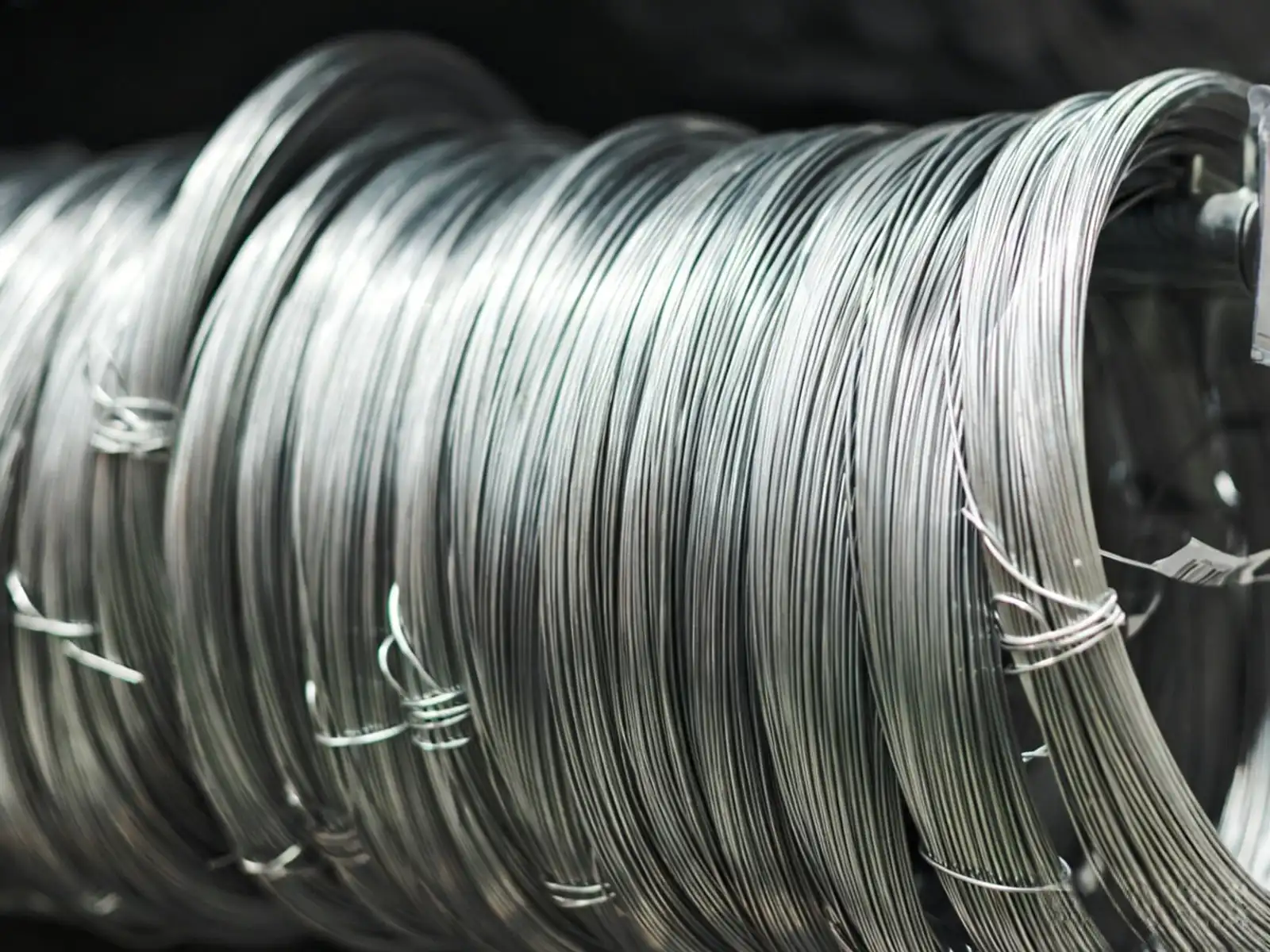
When choosing a Gr4 titanium wire manufacturer, the core focus is on its quality control system and application adaptability. High-quality manufacturers need to have complete composition control capabilities (oxygen content ≤ 0.40% determines strength stability), precision processing equipment (such as Italy’s Danieli continuous rolling line to ensure straightness ≤ 2/1000), full-process inspection systems (from vacuum smelting to non-destructive testing), and customized service capabilities for different working conditions. As the grade with the highest strength among industrial pure titanium (tensile strength ≥ 550MPa), Gr4’s material properties directly affect its service life under high load scenarios. This article helps procurement decision-makers establish a scientific supplier evaluation framework from the four dimensions of material essence, production process, quality certification and practical application, and reduce the risk of increased comprehensive costs caused by material failure.
1. What Should You Know About Material Properties and Grade Positioning of Gr4 Titanium Wire?
(1) What Should You Know About Strength Benchmark in Commercially Pure Titanium Systems?
Gr4 belongs to α single-phase industrial pure titanium and is defined as a non-heat treatment strengthened material in the ASTM B863 standard. Its tensile strength is more than 40% higher than that of Gr1, and its yield strength reaches 485MPa. This is due to its oxygen content being controlled in the range of 0.30%-0.40% – oxygen element significantly improves the matrix strength through the gap strengthening mechanism. Compared with Gr2 titanium wire, Gr4 can withstand higher cyclic stress while maintaining good plasticity (elongation ≥ 15%), and is especially suitable for working conditions that require dual guarantees of strength and corrosion resistance.
(2) What Should You Know About the Decisive Role of Alloying Elements in Performance?
The microstructural stability of titanium wire depends on the precise ratio of interstitial elements. The upper limit of 0.40% oxygen content in Gr4 titanium wire is the critical value for performance balance: too low will result in insufficient strength, and too high will lead to increased brittleness. Controlling the iron content below 0.50% can avoid beta phase precipitation, the nitrogen content ≤ 0.05% prevents nitride embrittlement, and the hydrogen content is strictly limited to 0.015% to avoid the risk of hydrogen embrittlement. High-quality manufacturers use inductively coupled plasma spectroscopy (ICP) to detect each batch to ensure that the component fluctuation range of each batch is ≤ ± 0.02%.
(3) Why Is Application Boundaries with Titanium Alloy Wire Important?
Compared with heat-treated titanium alloys such as TC4, Gr4 has obvious economic advantages and welding convenience. Its non-magnetic and biocompatibility make it irreplaceable in the fields of medical devices and electronic components. However, when tensile strength exceeding 600MPa or high temperature environment above 200℃ is required, β titanium or α+β titanium alloy should be selected. Understanding the applicable boundaries of materials is the key to avoiding over-design and insufficient performance – Gr4 covers more than 80% of scenarios requiring medium and high strength corrosion resistance.
2. What Should You Know About the Profound Impact of Production Technology on the Quality of Titanium Wire?
(1) What Should You Know About Purity Control of Vacuum Melting Technology?
In the conversion process from titanium sponge to titanium ingots, vacuum consumable arc melting (VAR) is the basis for ensuring material purity. Three times of remelting can reduce impurity elements to the ppm level and avoid stress concentration points caused by inclusions. Some high-end manufacturers are equipped with electron beam melting (EBM) equipment to completely remove low-melting point impurities through a vacuum environment of ≤ 5×10⁻³Pa. The β grain size of the ingot needs to be controlled below 500 um to provide a uniform structural basis for subsequent deformation.
(2) What Should You Know About Tissue Control of Multi-pass Cold Drawing?
Titanium wire needs to go through 15-25 passes of cold drawing from the bar blank to the finished product, and the deformation amount in each pass is controlled at 20%-30%. Intermediate annealing between passes is crucial: controlling the temperature at 650-750℃ can achieve alpha phase recrystallization without causing abnormal grain growth. Using roller die drawing technology to replace traditional molds can reduce the risk of surface scratches, and combine with graphite emulsion lubrication to avoid mold adhesion. The advanced production line is equipped with an online laser diameter gauge, which feeds back diameter data to the rolling mill in real time to achieve closed-loop control, and the tolerance can be stabilized at ± 0.01mm.
(3) Why Is Application Suitability of Surface Treatment Processes Important?
The pickling treatment uses HF-HNO3 mixed acid to remove oxide scale to form a matte silver-gray surface, which is suitable for welding and chemical anti-corrosion scenarios. The electropolishing process can reduce the surface roughness to Ra≤ 0.4um, improve the fatigue strength by 15%-20%, and is used for precision elastic parts. The sandblasted surface increases the roughness to Ra 3.2-6.3um, providing strong adhesion for the coating. Passivation treatment generates a dense TiO2 protective film on the surface, and the salt spray resistance time can be extended to more than 1, 000 hours. When choosing a manufacturer, you need to confirm whether it can provide stable batch supply of various surface states.
Table 1: Comparison of different surface treatment processes
surface type | Roughness Ra (um) | Corrosion resistance | Typical applications | cost factor |
pickling | 0.8-1.6 | ★★★★☆ | Welding wire, chemical equipment | 1.0× |
bright/polished | ≤ 0.4 | ★★★★★ | Medical equipment, electronic components | 1.5× |
sandblasting | 3.2-6.3 | ★★★☆☆ | Coating pretreatment | 1.2× |
passivation | 0.6-1.2 | ★★★★★ | Marine engineering, salt spray environment | 1.3× |
3. What Should You Know About Interpretation of Quality Inspection System and Certification Standards?
(1) What Should You Know About Key Parameters for Mechanical Property Testing?
The tensile strength test requires an electronic universal testing machine, the tensile speed is controlled at 5mm/min, and the specimen gauge length is ≥ 50mm. The yield-to-strength ratio of Gr4 titanium wire is usually around 0.88. If it is too high, it indicates the risk of material brittleness, and if it is too low, it indicates insufficient strengthening. The fatigue performance test should perform rotational bending or axial loading, the number of cycles is ≥ 10⁷ times, and the fatigue limit should reach more than 50% of the tensile strength under the condition of stress ratio R=-1. Vickers hardness tester (HV) is used for hardness testing. The typical value of Gr4 is 200-240. The uniformity deviation ≤ 5% indicates that the structure is stable.
(2) What Should You Know About Composition Analysis and Microstructure Evaluation?
Direct-reading spectrometers are suitable for rapid detection of conventional elements, but light elements such as oxygen, nitrogen, and hydrogen require the inert gas pulse melting-infrared/thermal conductivity method. Metallographic examination requires the preparation of longitudinal and transverse slices, and the α grain morphology is observed after corrosion: the equiaxed crystal structure indicates sufficient annealing, and the basket structure indicates that the processing stress is not completely released. Electron backscattered diffraction (EBSD) technology can quantitatively analyze texture intensity. For precision elastic parts, it is necessary to ensure that there is no obvious preferred orientation to ensure isotropy.
(3) What Should You Know About Non-destructive Testing and Batch Traceability Capabilities?
Eddy current flaw detection can detect cracks within 0.5mm depth on the surface and near the surface. The detection speed reaches 20m/min, which is suitable for large-scale online screening. Ultrasonic flaw detection is used to detect internal defects. The frequency of 5-10MHz can identify inclusions with a diameter of ≥ 0.3mm. High-quality manufacturers have established a complete batch traceability system. Each roll of wire is marked with the melting furnace number, rolling batch, and heat treatment record. It is combined with the material list, mechanics report, and corrosion resistance test data to form a complete quality file. Complying with ASTM B863, NACE MR0175 (sulfide stress corrosion), and RoHS environmental directives are the basic entry thresholds.
Table 2: Key testing items and standard requirements
Detection type | Detection method | Gr4 standard value | Detection frequency | Judgment basis |
tensile strength | ASTM E8/E8M | ≥ 550MPa | per batch | ASTM B863 |
Yield strength | ASTM E8/E8M | ≥ 485MPa | per batch | ASTM B863 |
Elongation | ASTM E8/E8M | ≥ 15% | per batch | ASTM B863 |
oxygen content | Pulse melting-infrared method | ≤ 0.40% | per heat | ASTM E1409 |
hardness | Vickers hardness HV | 200-240 | Random inspection 10% | ASTM E92 |
surface defects | Eddy current flaw detection | No cracks | 100% online | ASTM E243 |
4. Why Is Application Capability Assessment, the Entire Link From Materials to Service Important?
(1) What Should You Know About Welding Performance and Joint Quality Assurance?
Gr4 welding wire is widely used in welding scenarios that require high strength, and its welding performance is better than high-strength titanium alloys. Pure argon protection (purity ≥ 99.99%) must be used during TIG welding, with a welding current of 80-150A and a speed of 8-12cm/min. The weld strength coefficient can reach more than 0.95, which is much higher than 0.7-0.8 for dissimilar titanium alloy welding. MIG welding is suitable for thick-walled parts, and the wire feed speed and base metal thickness need to be accurately matched. When evaluating the manufacturer, a welding process evaluation report should be required, including joint metallographic, tensile, and bending test data.
(2) What Should You Know About Verification of Corrosion Resistance in Complex Working Conditions?
Although titanium has strong self-passivation ability, Gr4 titanium wire has limitations in specific media: the corrosion rate increases sharply when the hydrofluoric acid concentration is >5%, and anhydrous chlorine will cause a combustion reaction above 300℃. The NACE MR0175 test is required to verify sulfide stress corrosion cracking (SSC) resistance in sulfide environments. The salt spray test should be performed for more than 1000 hours, and only slight discoloration of the surface is allowed. If the manufacturer can provide corrosion databases under different pH values, temperatures, and medium concentrations, it means that the depth of its application research has reached the engineering level.
(3) What Should You Know About Customized Processing and Delivery Capabilities?
Precision electronic connectors require ultra-fine wire with a diameter of φ0.1-0.3mm and a tolerance of ± 0.005mm, which places extremely high requirements on the precision of the drawing equipment and the control of the annealing process. Long-distance suspension wires for marine engineering require a large supply of 3, 000 meters without intermediate joints, which tests the continuous operation capability of the production line. Wire materials for medical devices are required to provide biocompatibility test reports and FDA DMF filing documents. When evaluating a manufacturer’s customization capabilities, attention should be paid to its equipment investment scale, technical team configuration, and historical project cases.
Table 3: Material performance requirements for typical application scenarios
Application areas | key performance indicators | Specification requirements | surface state | Additional certification |
Chemical welding | Tensile strength ≥ 550MPa, acid and alkali resistance | φ1.2-3.0mm | pickling | NACE MR0175 |
Marine Engineering | Salt spray 1000h, fatigue strength | φ2.0-5.0mm | passivation | DNV classification society |
medical device | Biocompatibility, polish | φ0.3-1.0mm | bright | ISO 13485 |
Precision spring | Modulus of elasticity, fatigue life | φ0.5-2.0mm | Bright/Acid Wash | AMS 4928 |
fastener | Yield strength, thread workability | φ3.0-6.5mm | pickling | ASTM F67 |
How Should Verification Method of Supplier’s Comprehensive Strength?
What Should You Know About Generational Gap in Production Equipment and Technology?
Italy’s Danieli continuous rolling line represents the current highest level of titanium wire processing. Its GCC short stress rolling mill can achieve φ5mm wire straightness ≤ 2/1000, far exceeding the 5/1000 of traditional multi-stand rolling mills. The temperature control system equipped with induction heating + auxiliary furnace can accurately control the temperature of ± 5℃ at 1200℃ to avoid grain coarsening caused by local overheating. Production lines with an automation rate of >90% eliminate fluctuations in human factors through closed-loop control, and performance consistency between batches is improved by more than 60%. During the inspection, the focus should be on verifying hardware evidence such as equipment purchase invoices and technology introduction contracts.
What Should You Know About R&D Investment and Technical Research Capabilities?
There are seven major technical problems in the cold drawing process of Gr4 titanium wire, including mold adhesion, rapid cooling deformation, and uneven structure. Breaking through these bottlenecks requires continuous material science research and process optimization. Companies with an annual R&D investment of >5% usually have the ability to independently solve process problems. Pay attention to whether the manufacturer has intellectual property rights such as titanium alloy heat treatment patents, surface modification technology, and precision drawing processes. The depth of cooperation with universities or research institutions and the proportion of technical personnel (should be ≥ 20%) are all explicit indicators of innovation capabilities.
What Should You Know About Quality System and Customer Service Response?
ISO 9001 is the basic threshold. Aerospace suppliers need to pass AS9100 certification, and the medical device field requires the ISO 13485 system. Consult the manufacturer’s internal quality manual to confirm whether a three-level quality inspection system has been established from incoming material inspection, process control to finished product inspection. The after-sales service response time should be ≤ 24 hours, and the technical support team can provide value-added services such as welding process guidance, failure analysis, and material selection suggestions. The authenticity of customer cases can be verified through third-party factory inspection reports or industry association certifications.
5. What Is the Conclusion?
Choosing a Gr4 titanium wire manufacturer requires establishing a four-dimensional evaluation framework of “material essence-process capabilities-quality system-application services”. Focus on verifying the manufacturer’s composition control accuracy (ICP furnace-by-heat testing), equipment generation level (international first-line equipment such as Danieli), inspection system integrity (non-destructive testing + mechanics + corrosion resistance full coverage), and customized response capabilities for specific working conditions. High-quality suppliers can provide full-link technical support from material sheets to application guidance, helping customers achieve the economic goals of extending equipment life by 50% and reducing overall costs by 40%.
FAQ
Q1: How to choose between Gr4 titanium wire and Gr2 titanium wire in actual use?
The tensile strength of Gr4 is 40% higher than that of Gr2 (550MPa vs 390MPa), and it is suitable for high-load mechanical parts, heavy-load springs and high-stress welding scenarios. Gr2 has better ductility and is suitable for deep drawing forming and general corrosion-resistant applications. When working conditions include both >400MPa stress and strong corrosive media, Gr4 is the only industrial pure titanium choice that can take both into consideration.
Q2: How to judge whether the oxygen content of titanium wire meets the standard?
The material sheet provided by a regular manufacturer should clearly indicate the oxygen content value (Gr4 is 0.30%-0.40%) and the detection method (pulse melting-infrared method). It can be indirectly verified through hardness: Gr4 Vickers hardness should be between 200-240HV. Below 180HV indicates excessive annealing or low oxygen content. Higher than 260HV indicates the risk of brittleness caused by peroxidation. Requiring manufacturers to provide ICP spectrum analysis raw data is the most reliable way of verification.
Q3: Is it normal for the strength of titanium wire to decrease after welding?
The Gr4 weld strength coefficient is usually 0.90-0.95, and a slight decrease is normal. If it is lower than 0.85, check the purity of the shielding gas (should be ≥ 99.99% argon), welding current matching and heat input control. Post-weld heat treatment (500-600℃ for 1 hour) can restore some strength. Choosing a titanium wire supplier that has passed welding process assessment can control joint performance fluctuations within 5%.
6. What Should You Know About Call to Action?
Titanium Valley (Baoji Titanium Valley Titanium Nickel and Zirconium Material Processing Co., Ltd.) is a professional Gr4 titanium wire manufacturer, equipped with Italian Danieli continuous rolling line and complete quality inspection system, with an annual production capacity of 20, 000 tons, and provides full specification customized services of φ0.1-6.5mm. We provide high-performance titanium wire products compliant with ASTM B863 standards for the aerospace, medical and chemical industries. Welcome to contact our technical team for detailed specifications and application guidance: sales@titaniumvalleys.com
References
- Zhang Jianjun, Li Minghua. Research on strengthening mechanism and processing technology optimization of industrial pure titanium [J]. Rare Metal Materials and Engineering, 2021.
- Wang Xiaodong, Liu Wensheng. Microstructure evolution rules of titanium and titanium alloy wires during cold drawing [J]. Chinese Journal of Nonferrous Metals, 2020.
- Chen Ronghua, Zhao Yongqing. Titanium alloy welding technology and quality control[J]. Journal of Aeronautical Materials, 2019.
- Yang Rui, Sun Jun. Corrosion behavior and protection strategies of titanium materials in marine engineering [J]. Corrosion Science and Protection Technology, 2022.