
Why Is Gr5 Titanium Foil One of the Most Popular Titanium Materials?
- Gr5 Titanium Foil
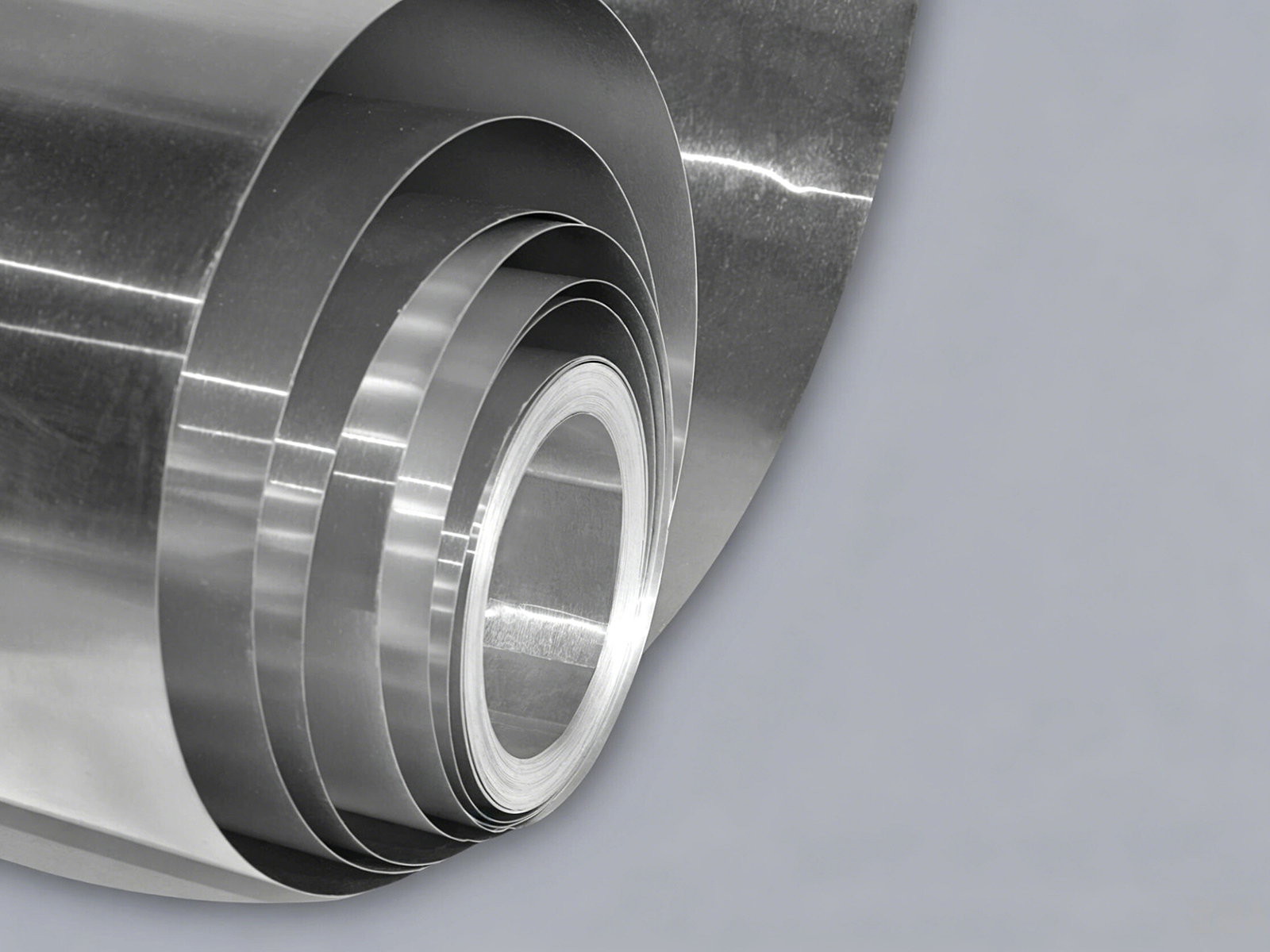
Today, with the rapid development of high-end manufacturing, material selection directly determines the competitiveness of products. Gr5 titanium foil has become the material of choice in aerospace, medical equipment, new energy batteries and other fields due to its excellent strength-to-weight ratio, excellent corrosion resistance and stable performance in extreme environments. This ultra-thin foil based on Ti-6Al-4V alloy not only breaks through the bottleneck of limited strength of pure titanium, but also significantly improves the load-bearing capacity of structural parts while maintaining the inherent advantages of titanium. Globally, from the honeycomb structure of Boeing 787 to the heat dissipation components of power battery packs, Gr5 titanium foil is redefining the application standards of lightweight and high-strength materials with its irreplaceable performance advantages.
1. Why Is Material Properties and Advantages of Gr5 Titanium Foil Important?
(1) What Should You Know About Strength Jump Due to Dual-phase Alloy Structure?
Gr5 titanium foil uses an α+β dual-phase titanium alloy system. The α phase is stabilized by aluminum elements and the β phase is stabilized by vanadium elements, forming a unique two-phase mixed structure at room temperature. This microstructure makes its tensile strength reach ≥ 895 MPa and yield strength ≥ 825 MPa, which is more than 150% higher than that of pure titanium Gr2. It should be noted that the above strength values are typical values for Gr5 plate and strip; for foils with a thickness less than 0.1mm, the strength may be higher due to work hardening and size effects. In load-bearing parts such as aircraft engine heat shields, this strength advantage can reduce the thickness of the component by 40% while still meeting the load requirements.
(2) Why Is Lightweight Potential Due to Density Advantage Important?
Gr5 titanium foil with a density of only 4.43 g/cm³ is 45% lighter than stainless steel and 3 times stronger than aluminum alloy. In the design of electric vehicle battery packs, Gr5 titanium foil with a thickness of 0.1mm is used instead of 0.5mm aluminum plates, which not only effectively reduces weight, but also improves the collision safety factor due to its high strength characteristics. Taking a typical medium-sized electric vehicle as an example, after adopting this solution in the battery pack heat dissipation structure, the weight of the bicycle can be reduced by about 8 kilograms. This perfect balance of density and strength makes it a key material for weight reduction in aircraft structures.
(3) What Should You Know About High Temperature Stability Meets Harsh Working Conditions?
The material can serve for a long time in an environment of 300℃ without creep, and can withstand temperatures up to 400℃ in the short term. The physical properties with a melting point as high as 1668℃ make it excellent in hot-end components around turbine engine combustion chambers. The uniform α+β phase structure brought about by the vacuum annealing process gives the material stable mechanical properties during temperature cycles and avoids the high-temperature softening problem that is prone to conventional materials.
2. How Does the Manufacturing Process Ensure Performance Consistency?
(1) What Should You Know About Multi-pass Cold Rolling Breaks Through Thickness Limit?
A 750mm 20-roll precision rolling mill is used for ultra-thin rolling. Through precise tension control and roll profile optimization, stable production in the thickness range of 0.03-0.8mm is achieved. The reduction rate of each pass is controlled at 15%-25%, and the cumulative cold deformation reaches more than 85%. This progressive processing avoids the risk of edge cracks and belt breakage of high-strength materials. The thickness tolerance is controlled at an accuracy level of ± 0.001mm, meeting the needs of precision applications such as microelectronics packaging.
(2) What Should You Know About Vacuum Annealing Achieves Tissue Homogenization?
The continuous vacuum annealing furnace performs heat treatment under a vacuum degree of 10⁻⁴Pa, and the temperature uniformity is controlled at ± 5℃ to ensure the stability of the ratio of α phase to β phase. The annealing temperature curve is dynamically adjusted according to the thickness of the foil. Foils below 0.05mm adopt a rapid annealing process to restore plasticity and avoid grain coarsening. This controlled atmosphere treatment controls the oxygen content on the surface of the material below 0.18% to ensure subsequent welding processing performance.
(3) What Should You Know About Surface Treatment Technology Improves Cleanliness?
The ultrasonic cleaning system is combined with the electrochemical pickling process to remove oil stains and oxide layers attached during the rolling process. The surface roughness Ra value can be controlled between 0.4-1.2um, meeting different requirements from chemical equipment linings to semiconductor process chambers. The sanding processing line uses an adjustable pressure roller system to achieve directional control of surface texture and improve the adhesion of subsequent coatings or coatings.
3. Why Is Performance in Different Application Scenarios Important?
(1) What Should You Know About Structural Innovation in Aerospace?
In the honeycomb sandwich structure of commercial aircraft, the honeycomb core material made of 0.05mm thick Gr5 titanium foil has a load-bearing capacity of 45 MPa per unit area, which is 60% higher than that of aluminum honeycomb. After the protective layer of the rocket fuel tank is made of this material, it still maintains good toughness in a liquid hydrogen environment of -253℃. The support frame of the satellite solar panel is made of wide-width foil and formed by laser welding to achieve the optimal ratio of stiffness and lightweight.
Application site | Thickness range | critical performance requirements | Advantages of Gr5 titanium foil |
Honeycomb core material | 0.03-0.08mm | High specific strength, formability | Increase strength by 60% and reduce weight by 35% |
heat shield | 0.15-0.3mm | High temperature resistance, antioxidant | Long-term stability at 300℃, no oxide layer |
Piping system | 0.1-0.5mm | Corrosion resistance, weldability | Resistant to stress corrosion, TIG/laser weldable |
(2) What Should You Know About Thermal Management Breakthrough of New Energy Batteries?
The heat dissipation foil in the power battery pack is made of 0.08mm thick material with a thermal conductivity of about 6.7-7.0 W/(m·K). Although it is lower than copper, its corrosion resistance makes it unnecessary to require an additional protective layer in the liquid cooling system. Referring to the test data of a certain domestic electric vehicle model, after using the Gr5 titanium foil heat sink, the temperature difference of the battery pack dropped from 12℃ to 5℃, and the cycle life was extended by 28%. Its non-magnetic properties avoid interference with battery management system sensors and improve charge and discharge control accuracy.
(3) What Should You Know About Corrosion Resistance Solutions for Chemical Equipment?
The anode substrate of the electrolytic cell uses 0.3mm titanium foil. The annual corrosion rate under 40% sulfuric acid and normal temperature environment is less than 0.02mm, and the service life is more than 15 years. However, it should be noted that the corrosion rate will increase significantly in a high-temperature sulfuric acid environment, and the working temperature must be clearly defined during design. The heat exchanger of the seawater desalination device is rolled into a tube from wide-width foil, and the tensile strength of the weld reaches more than 90% of the base material. Compared with Hastelloy, the material cost is reduced by 35%, the weight is reduced by 50%, and the basic equipment investment is reduced.
4. What Should You Know About Processing and Forming Technology Challenges?
(1) What Should You Know About Cold Forming Limit of High-strength Materials?
The elongation of Gr5 titanium foil is ≥ 10%. Although it can meet basic stamping needs, complex deep drawing forming requires a warm forming process. Under heating conditions of 200-300℃, the plasticity of the material increases by about 40% compared with normal temperature, and the amount of springback is reduced to 1/3 of normal temperature forming. Multi-station progressive forming technology decomposes complex parts into multiple simple deformation steps to avoid cracking caused by excessive single deformation. A medical device manufacturer used this process to increase the implant pass rate from 62% to 94%.
(2) What Should You Know About Burr Control for Precision Slitting?
During the slitting process of ultra-thin foil, the tool angle, cutting speed and support roller hardness need to be accurately matched. Using a carbide disc cutter, the edge radius is controlled within 5um, and with a cutting accuracy of ± 0.02mm, the edge burr height is ≤ 0.005mm. The vacuum adsorption winding system avoids wrinkles and scratches on the thin strip during the winding process, ensuring the accuracy requirements of subsequent laser cutting or etching processes.
Processing technology | Technical parameters | Quality control points | Equipment requirements |
cold rolled | Reduction rate 15-25%/pass | Plate shape C40≤ 15 I unit, thickness difference ± 0.001mm | 20-roll mill, tension ± 2% |
annealing | Vacuum degree 10⁻⁴Pa, temperature ± 5℃ | Grain size 8-10, hardness HB270-330 | Continuous annealing furnace, argon protection |
Cut | Speed ≤ 80m/min, accuracy ± 0.02mm | Burr ≤ 0.005mm, edge straightness | Disc knife, servo tension control |
(3) What Should You Know About Joint Performance of Welding Process?
High-purity argon gas hood protection is required during TIG welding, and the welding speed is controlled at 15-25 cm/min to avoid grain coarsening caused by excessive heat input. Laser welding can achieve overlapping or butt jointing of foils with a thickness of 0.1mm, the width of the heat-affected zone is ≤ 0.3mm, and the joint strength reaches more than 85% of the base material. An aerospace structural part uses laser welding of honeycomb core and panels. The length of a single weld is more than 2 meters, and the air tightness reaches the 10⁻⁹Pa·m³/s level.
5. Why Is Economics and Supply Chain Advantages Important?
(1) What Should You Know About Whole Life Cycle Cost-effectiveness?
Although the unit price of Gr5 titanium foil is 8-12 times that of stainless steel, in aircraft applications, every 1 kilogram of weight reduction can save fuel costs by about US$3, 000 per year. A wide-body passenger aircraft using a titanium foil honeycomb structure can save more than US$5 million in fuel costs over a 20-year operating cycle. Titanium equipment in chemical plants can be maintenance-free for 30 years under normal temperature conditions, far exceeding the 5-8 year replacement cycle of ordinary alloys, and the overall cost is reduced by more than 40%.
(2) What Should You Know About Supply Chain Stability Guarantee?
The automated production line with an annual output of 3, 000 tons, coupled with the vertical integration capabilities from titanium sponge to finished foil, ensures the stability of delivery of large-volume orders. The thickness tolerance of ± 0.001mm and the performance fluctuation of ≤ 3% between batches meet the Six Sigma quality standards of the automotive industry. The products comply with international standards such as ASTM B265 and AMS 4911, and provide EN 10204 3.1 material certificates, which can meet the entry threshold for European and American high-end markets.
(3) What Should You Know About Customized Service Responsiveness?
Supports customization of specifications within the range of 0.03-0.8mm thickness and 350-670mm width, and the delivery cycle is compressed to 4-6 weeks. The surface treatment can be pickled, bright or matte to meet the differentiated needs from electromagnetic shielding to decorative panels. The 0.04mm×500mm specification foil customized by a Japanese electronics company has a surface roughness of Ra≤ 0.3um, enabling precision application in 5G base station filters.
FAQ
Q1: What is the difference in strength between Gr5 titanium foil and pure titanium foil?
The tensile strength of Gr5 titanium foil is ≥ 895 MPa, which is more than 2.6 times that of pure titanium Gr2 (≥ 340 MPa). This difference in strength allows the material thickness to be reduced by 60% under the same load, significantly reducing the structural weight. The dual-phase alloy structure also provides better fatigue resistance and increases cycle life by 3-5 times.
Q2: Why is it difficult to deep draw Gr5 titanium foil?
The elongation of this material is about 10%-15%, which is lower than the 20%-30% of pure titanium. Coupled with the high yield strength ratio (yield strength/tensile strength ≥ 0.92), the plastic deformation window is narrow. The use of 200-300℃ warm forming or multi-station progressive forming technology can effectively improve it, but it is still not suitable for stretching beyond 3 times the material thickness.
Q3: How to verify whether Gr5 titanium foil meets aviation grade standards?
It is necessary to check whether the material certificate indicates the ASTM B265 Grade 5 or AMS 4911 standard. The Al content in the chemical composition should be 5.5-6.75% and the V content 3.5-4.5%. The mechanical property test report must show that the tensile strength is ≥ 895 MPa and the elongation is ≥ 10%. An EN 10204 3.1 certificate issued by a third-party certification body such as TÜV or SGS can provide additional endorsement.
6. What Should You Know About Get Aviation Grade Gr5 Titanium Foil Now?
As a professional manufacturer and supplier of Gr5 titanium foil (Ti-6Al-4V), Baoji Titanium Valley Titanium Nickel and Zirconium Material Processing Co., Ltd. is equipped with a 750mm 20-roll precision finishing unit, a continuous vacuum annealing furnace and a fully automatic slitting system. The annual production capacity reaches 3, 000 tons, and can provide full-specification customization services for 0.03-0.8mm thickness and 350-670mm width. The product fully complies with ASTM B265 and AMS 4911 standards, and its surface supports pickling, bright and matte treatments. It is widely used in aerospace honeycomb structures, new energy battery thermal management, chemical corrosion-resistant equipment and medical equipment. Each batch of products comes with a complete chemical composition analysis, mechanical property test report and EN 10204 3.1 material certificate. Welcome to send technical requirements to sales@titaniumvalleys.com to obtain selection suggestions, sample testing and professional technical support.
References
- Zhang Xiaoming, Zhou Lian. Titanium Alloy Engineering Materials and Applications (2nd Edition). Beijing: Chemical Industry Press, 2019.
- Wang Jinyou, Li Chenggong. Titanium Alloy Technical Manual. Shanghai: Shanghai Science and Technology Press, 2018.
- Zhao Yongqing, Hong Quan. Titanium and Titanium Alloy Materials Handbook. Beijing: National Defense Industry Press, 2020.
- Huang Xu, Zhu Zhishou. Titanium alloys for aerospace. Xi’an: Northwestern Polytechnical University