
Why Is Zirconium Wire Selection Guide in Highly Corrosive Environments, Chemical Equipment Application Solutions Important?
- Zirconium wire
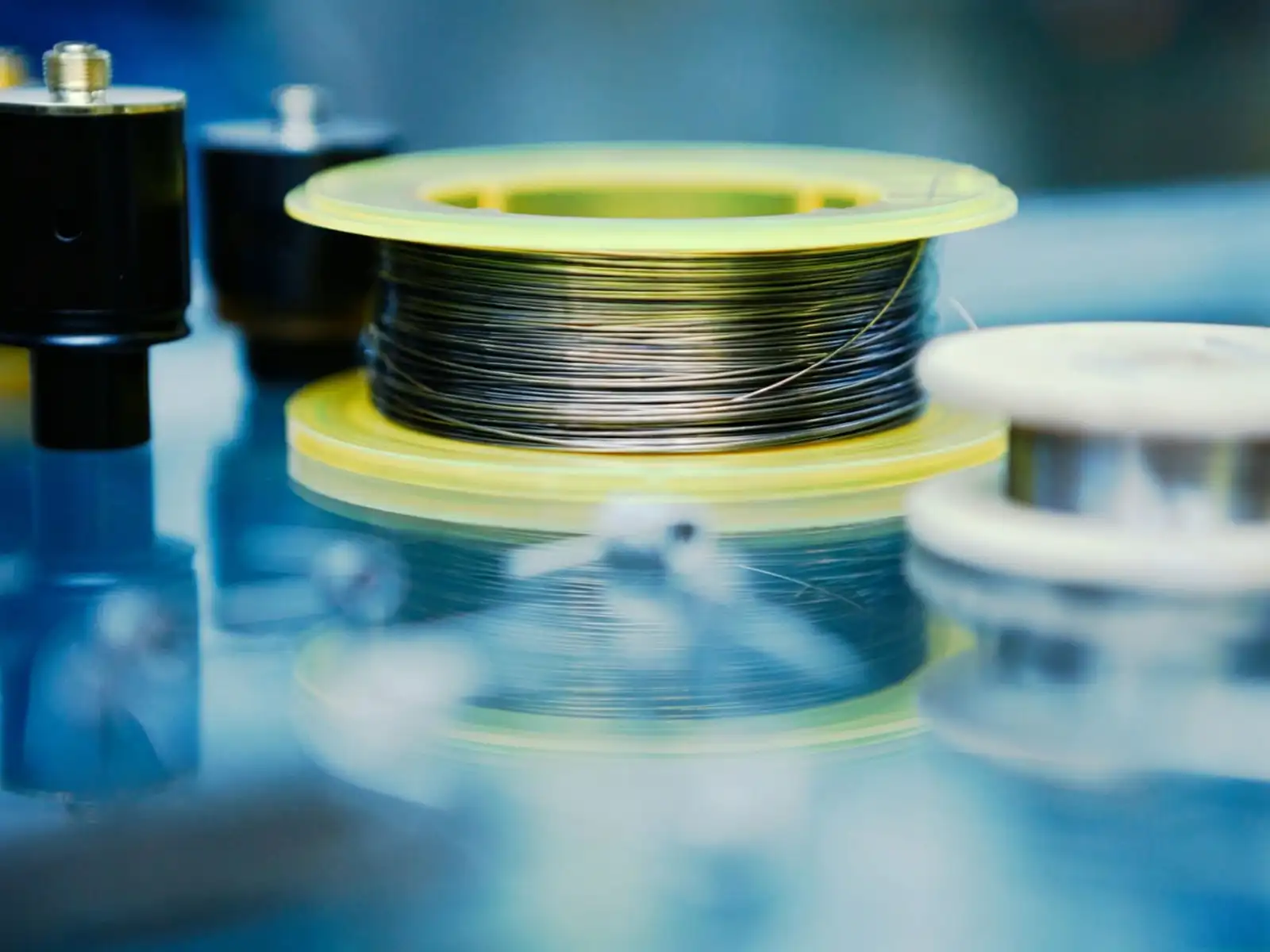
In chemical production, the corrosion resistance of equipment materials directly determines the operating cycle and safety of the device. When faced with extreme media such as hydrochloric acid, wet chlorine, and organic acids, traditional stainless steel and even pure titanium materials often perform poorly. Frequent equipment failures and shutdowns for maintenance have become the norm in the industry. UNS R60705 zirconium wire (Zr705), as a representative of zirconium-niobium alloy wire, is becoming the preferred material for key components of chemical equipment due to its excellent corrosion resistance and high strength properties. This article will systematically sort out the selection logic of zirconium wire under high corrosion conditions, helping engineers accurately match material properties according to actual application scenarios, and fundamentally improve equipment reliability and economic benefits.
1. What Should You Know About Common Corrosion Challenges and Material Failure Modes in Chemical Installations?
(1) Why Is Risk of Uniform Corrosion and Perforation Caused by Strong Acidic Media Important?
Strong acid media such as hydrochloric acid, sulfuric acid, and nitric acid are widely used in chemical production. Conventional materials such as 316 stainless steel can still cope with oxidizing acids, but in reducing acid (especially hydrochloric acid) environments, the corrosion rate increases sharply. The wall thickness of the equipment gradually decreases over time, eventually leading to leakage through holes, causing safety accidents and environmental pollution. Although pure titanium has certain acid resistance, it is also unable to withstand high-concentration hydrochloric acid (>5%) or high-temperature acidic conditions.
(2) What Should You Know About Chloride Ion-induced Pitting and Crevice Corrosion Mechanisms?
In industries such as seawater desalination, chlor-alkali chemicals, and hydrometallurgy, high chloride ion concentration environments pose a huge threat to local corrosion of materials. Pitting corrosion usually originates from the weak points of the passivation film on the surface of the material. After the chloride ions penetrate, a blocked cell is formed inside the metal matrix. The corrosion develops in depth, and the components that appear to be intact may be riddled with holes inside. Crevice corrosion mostly occurs in structural gaps such as flange connections and threaded joints. The retention of the medium causes differences in pH and dissolved oxygen gradients, accelerating local damage. UNS R60705 zirconium wire has excellent application value in these harsh working conditions due to its excellent chloride ion corrosion resistance.
(3) What Should You Know About Intergranular Corrosion and Strength Attenuation Under High Temperature Conditions?
Chemical reactors and heat exchangers often operate at high temperatures of 150-350℃. High temperatures not only accelerate corrosion reaction kinetics but may also activate the material’s susceptibility to intergranular corrosion. In ordinary alloys in high-temperature acidic environments, grain boundary carbides precipitate or grain boundary chromium depletion causes the grain boundaries to dissolve preferentially, and the material loses integrity. The superposition of problems such as high-temperature oxidation, creep, and thermal fatigue significantly shortens the life of the equipment.
2. Why Is Core Performance Advantages of UNS R60705 Zirconium-niobium Alloy Wire Important?
(1) What Should You Know About Alloying Design: Strengthening Effect and Corrosion Resistance Mechanism of Niobium Element?
By adding 2.0-3.0% niobium element to R60705 alloy, the mechanical strength and creep resistance of the material are significantly improved while retaining the excellent corrosion resistance of pure zirconium. Niobium forms alloying reinforcement in the zirconium matrix, refines the grain structure, and increases the recrystallization temperature. More importantly, the addition of niobium stabilizes the passivation film structure of zirconium at high temperatures, allowing it to maintain a dense protective layer in organic acids, oxidizing and reducing mixed media, and the corrosion rate is as low as less than 0.01mm/year.
Table 1: Performance comparison between R60705 and common corrosion-resistant materials
Material grade | Density(g/cm³) | Tensile strength (MPa) | Hydrochloric acid resistance | Resistance to wet chlorine | High temperature stability (≤ 350℃) |
316 stainless steel | 8.0 | 520 | Difference | Difference | medium |
Pure titanium TA2 | 4.51 | 345 | medium | good | good |
Pure Zirconium R60702 | 6.49 | 380 | excellent | excellent | excellent |
R60705 zirconium niobium alloy | 6.51 | 550 | excellence | excellence | excellence |
(2) What Should You Know About Medium Tolerance: Practical Performance in Dealing with Complex Corrosive Environments?
In hydrochloric acid with a concentration of ≤ 37%, the annual corrosion rate of R60705 is still less than 0.13mm even if the temperature rises to the boiling point. In the face of wet chlorine, hypochlorite, organic acids (acetic acid, formic acid, oxalic acid) and alkaline media, the alloy shows durability far exceeding that of titanium alloys and stainless steel. In chloride ion-enriched environments such as seawater and salt spray, its passivation film stability avoids the initiation of pitting corrosion and has extremely low sensitivity to crevice corrosion. It is especially suitable for fasteners, filters, heat exchanger tube bundles and other components of marine engineering and seawater desalination equipment.
(3) What Should You Know About High Purity and Non-magnetic Properties: Meet the Stringent Requirements of Special Processes?
UNS R60705 zirconium wire produced using vacuum smelting technology has strictly controlled impurity element (iron, carbon, oxygen, nitrogen, hydrogen) content at very low levels, avoiding the risk of heavy metal precipitation contaminating high-purity media, and is perfectly suitable for clean scenarios such as pharmaceutical intermediate synthesis, semiconductor wet etching, and food-grade chemicals. The material itself is non-magnetic and will not cause electromagnetic interference to nuclear power instruments, precision sensors, and magnetic resonance equipment. It has become a designated material in the field of special equipment manufacturing.
3. How Should Key Parameters and Specification Matching Strategies for Zirconium Wire Selection?
(1) Why Is Diameter Specification Selection: Span Applications From Ultra-fine Wire to Structural Parts Important?
The diameter of zirconium wire ranges from φ0.06mm to φ10mm, covering diversified industrial needs. Ultra-fine specifications (0.06-0.4mm) are mainly used for micro-components such as medical guide wires, precision filters, and electronic leads, which require extremely high surface finish and dimensional accuracy. Medium specifications (0.5-3.0mm) are widely used in welding wires, elastic components, fasteners and other scenarios, taking into account processing performance and structural strength. Large diameter specifications (4.0-10mm) are used for load-bearing components such as pump shafts, valve stems, and support rods under high stress conditions. The balance between material strength and toughness is crucial.
Table 2: Recommended zirconium wire specifications for different application scenarios
Application areas | Recommended diameter (mm) | surface state | Typical parts |
Chemical welding | 1.0, 1.6, 2.4 | shiny side | Pipe butt welding wire, repair welding wire |
heat exchanger | 0.5-2.0 | pickled noodles | Heat exchange tube bundle, support wire |
Filtration device | 0.06-0.4 | polished surface | Ultra-fine filter, filter element |
Pump valve parts | 3.0-6.0 | Car glossy surface | Pump shaft, valve stem, fastening bolts |
elastic element | 0.8-2.5 | bright annealing | Spring, elastic clip, sealing ring |
(2) What Should You Know About Analysis of the Impact of Surface Treatment Methods on Performance?
The surface condition of the wire directly affects its performance and life. The black skin state retains the rolling oxide film, has the lowest cost but has a rough surface, and is suitable for structural parts that do not have high requirements for appearance. After removing the oxide scale in the pickling state, it presents a uniform matte surface with good corrosion resistance and welding performance. It is the standard choice for chemical equipment. The bright state has been cold drawn and polished, with a smooth and flawless surface and high dimensional accuracy, making it suitable for precision instruments and elastic components. The mirror polished state reaches Ra≤ 0.2um and is used in high-cleanliness scenarios to avoid media retention and microbial adhesion.
(3) What Should You Know About Balance Between Mechanical Properties and Dimensional Tolerances?
In engineering design, the appropriate heat treatment state needs to be selected based on the actual stress level. The annealed material has the best plasticity and an elongation of 20-30%. It is easy to bend, form and weld, but its strength is relatively low. Half-hard state improves strength while maintaining a certain plasticity by controlling the amount of cold working deformation. It is suitable for elastic parts that require a certain stiffness. Hard state has the highest strength but limited plasticity, and is mostly used for load-bearing structural parts. The dimensional tolerance is usually controlled at ± 0.01mm, and can reach ± 0.005mm for precision applications, ensuring assembly accuracy and sealing reliability.
4. Why Is Typical Application Scenarios and Material Selection Suggestions for Chemical Equipment Important?
(1) What Should You Know About Heat Exchanger and Condenser: Both Pitting Corrosion Resistance and Heat Transfer Efficiency?
Shell-and-tube heat exchangers, plate heat exchangers, and condensers in chemical equipment are often in high chloride ion and acidic medium circulation conditions. R60705 zirconium wire can be woven into support nets and anti-collision plates for heat exchange tube bundles, replacing easily corroded stainless steel materials to avoid medium cross-linking and shutdown maintenance caused by pitting and perforation. Its excellent thermal conductivity (although lower than copper, but higher than stainless steel) and low thermal expansion coefficient ensure the structural stability of the equipment under temperature fluctuations and extend the heat exchanger overhaul cycle to 8-10 years.
(2) What Should You Know About Pump and Valve Fasteners and Sealing Components: Eliminating the Risk of Stress Corrosion Cracking?
The valve stems, bolts, springs and other components of chemical pumps, regulating valves, and safety valves are subjected to static or alternating stress and are exposed to corrosive media. Traditional high-strength alloy steel is prone to stress corrosion cracking (SCC) in a chloride ion environment, leading to sudden fracture accidents. Fasteners and elastic components made of UNS R60705 zirconium wire are completely resistant to stress corrosion and still maintain structural integrity under superimposed conditions of high stress and high corrosion, significantly improving the intrinsic safety level of the equipment.
(3) What Should You Know About Filtration and Separation Device: High-purity Medium Zero Pollution Guarantee?
The production of pharmaceutical intermediates, electronic grade chemicals, and food additives has strict requirements on the purity of the medium. Any precipitation of metal ions may lead to product scrapping. R60705 ultra-fine zirconium wire woven filter mesh and sintered filter element have smooth and burr-free surfaces, uniform and controllable pores (5-200 um), and are resistant to high temperature and high pressure sterilization (≤ 200℃). There is no material fatigue or impurity loss after repeated cleaning, ensuring zero pollution during the filtration process and meeting the certification requirements of international standards such as GMP and FDA.
Table 3: Comparison of zirconium wire application locations and failure modes in chemical equipment (typical empirical values)
Equipment parts | traditional materials | Common failure modes | R60705 Alternative | Life extension multiple |
heat exchange tube bundle | 316L stainless steel | Pitting, perforation, crevice corrosion | Zirconium wire braided support mesh | 3-5 times |
pump shaft seal | Titanium alloy | Wear, stress corrosion | Zirconium wire elastic sealing ring | 4-6 times |
valve fasteners | high strength steel | stress corrosion cracking | Zirconium alloy bolts | 5-8 times |
Precision filter | Nickel-based alloy | metal precipitation pollution | Ultra-fine zirconium wire filter | Long-term maintenance-free |
(4) What Should You Know About Hydrometallurgy and Electroplating Tanks: Long-lasting Performance Under the Double Test of Corrosion and Wear?
Hydrometallurgy (copper, nickel, zinc leaching), electroplating tanks, pickling tanks and other working conditions are harsh. The medium often contains high concentrations of sulfuric acid, hydrochloric acid, hydrofluoric acid and suspended solid particles. Corrosion and wear work together to accelerate equipment damage. Heating tube brackets, stirrer blades, electrode hangers and other components made of R60705 zirconium wire have both surface hardness and corrosion resistance. They can operate continuously for several years in a strongly acidic mud environment without significant thinning, significantly reducing the frequency of parts replacement and production interruption losses.
(5) What Should You Know About Nuclear Power and Specialty Chemicals: Meeting Radioactive and Extreme Working Conditions Certifications?
Nuclear power plant cooling systems and nuclear fuel reprocessing devices have strict requirements for materials with low neutron absorption cross-section, radiation damage resistance, and high temperature corrosion resistance. R60705 alloy complies with ASTM B551 nuclear grade standards and can be used to manufacture key components such as reactor internals, heat exchange tube bundles, and fasteners. Specialty chemicals (rocket fuel synthesis, fluorine chemicals, high-purity chlor-alkali) also rely on the extreme stability of zirconium materials to ensure process safety and product quality controllability.
5. How Should Selection Decision-making Process and Full Life Cycle Cost Assessment?
(1) How Should Sorting Out Working Condition Parameters: Establishing a Material Selection Decision Matrix?
Before selecting materials, it is necessary to systematically collect equipment operating condition data: medium composition (acid-base type, concentration, impurity ions), temperature range (minimum/maximum/average), pressure level (normal pressure/negative pressure/high pressure), flow rate and scouring intensity, stress type (static/dynamic/alternating), service life expectation (short-term test/mid-term production/long-term strategic device). Based on the above parameters, a material performance benchmarking matrix is established to screen out candidate materials that meet multi-dimensional requirements. R60705 often wins in the comprehensive score.
(2) What Are the Differences in Technical and Economic Comparison: Trade-off Between Initial Investment and Operation and Maintenance Costs?
The cost of zirconium wire materials is higher than that of stainless steel and pure titanium, but the economy needs to be examined from a full life cycle perspective. Assume that the heat exchanger of a chemical plant uses 316 stainless steel tube bundles with a service life of 3 years. Frequent replacement leads to high indirect costs such as downtime losses, labor costs, and waste material disposal. After switching to UNS R60705 zirconium wire support structure, the equipment has been running for 10 years without major maintenance, and the overall cost has been reduced by 40-60%. High initial investment is exchanged for low operation and maintenance expenses and high reliability, which has significant economic advantages in long-cycle, high-load, safety-sensitive devices.
How Should Supplier Qualification and Quality Traceability System Verification?
Zirconium is a special metal, and product quality is directly related to equipment safety. When choosing a supplier, you should focus on the following inspections: traceability of raw material sources (purity of zirconium sponge, stability of niobium content), advanced production equipment (vacuum smelting furnace, multi-pass cold drawing machine, online annealing furnace), completeness of quality inspection (spectral analysis, mechanical testing, grain size inspection, surface quality inspection), completeness of the certification system (ISO9001, ASTM, ASME, PED, etc.), technical support capabilities (working condition suitability analysis, welding process guidance, failure analysis services). International advanced suppliers such as Baoji Titanium Valley Titanium Nickel Zirconium Material Processing Co., Ltd. have Italian Danieli production lines and complete quality traceability systems, and their products are stably supplied to the global high-end market.
6. What Is the Conclusion?
The highly corrosive chemical environment poses multi-dimensional challenges to material selection. UNS R60705 zirconium-niobium alloy wire has become an ideal alternative to traditional materials due to its excellent corrosion resistance, high strength, non-magnetic and high purity characteristics. Engineers should systematically match zirconium wire specifications, surface conditions, and heat treatment conditions based on specific working condition parameters, and evaluate the economics from a full life cycle cost perspective, ultimately achieving dual improvements in equipment reliability and operational benefits.
FAQ
Q1: What are the essential differences between R60705 zirconium wire and pure zirconium wire in chemical applications?
By adding 2-3% niobium element, R60705’s strength is about 45% higher than that of pure zirconium, and its high-temperature creep resistance is stronger, making it suitable for high-stress conditions. The corrosion resistance of the two is similar, but the zirconium-niobium alloy has better structural stability during long-term high-temperature operation, avoiding the risk of α→β phase transformation of pure zirconium.
Q2: What are the key process points that need to be paid attention to when welding zirconium wire?
TIG or MIG welding must be performed in an argon-protected environment to prevent high-temperature oxidation. Before welding, the surface oil and oxide layer must be thoroughly cleaned, and the welding current should be controlled at a low level to avoid grain coarsening. Annealing treatment is required after welding to eliminate residual stress and ensure that the corrosion resistance of the joint is no worse than that of the base metal.
Q3: How to judge whether existing equipment is suitable for upgrading to zirconium wire components?
When the equipment suffers from frequent corrosion failures (an average of more than 2 repairs per year), the purity of the medium is contaminated, and stainless steel/titanium materials can no longer meet the requirements of working conditions, zirconium wire replacement should be considered. It is necessary to evaluate the remaining life of the equipment, modification costs and downtime losses. Usually the modification of high-value long-term equipment is the most economical.
How Should Looking for Reliable Zirconium Alloy Wire Suppliers?
Baoji Titanium Valley Titanium Nickel Zirconium Material Processing Co., Ltd. (Titanium Valley) is a professional zirconium wire manufacturer and supplier. It has a world-class Danieli production line with an annual production capacity of 5, 000 tons. We provide R60705 zirconium wire customization services that comply with ASTM B550 standards, ranging from φ0.06mm ultra-fine wire to φ10mm structural parts, meeting the stringent needs of chemical, nuclear power, medical and other industries. Contact email: sales@titaniumvalleys.com
References
- Wang Xiaoming, Li Chunhua. Application and material selection of zirconium and zirconium alloys in chemical equipment[M]. Beijing: Chemical Industry Press, 2019.
- Zhang Guoqiang, Liu Weidong. Special metal material corrosion and protection technology[M]. Shanghai: Shanghai Science and Technology Press, 2020.
- Zhao Zhigang, Chen Jianguo. Research on the corrosion resistance of zirconium alloys in chemical equipment [J]. Chemical Machinery, 2018, 45(3): 256-262.
- Sun Haibo, Yang Ming. Selection and application practice of zirconium materials in highly corrosive environments [J]. Corrosion and Protection, 2021, 42(6): 78-84.