
What Are the Typical Applications of Nickel 200 Wire in Manufacturing?
- Nickel 200 Wire
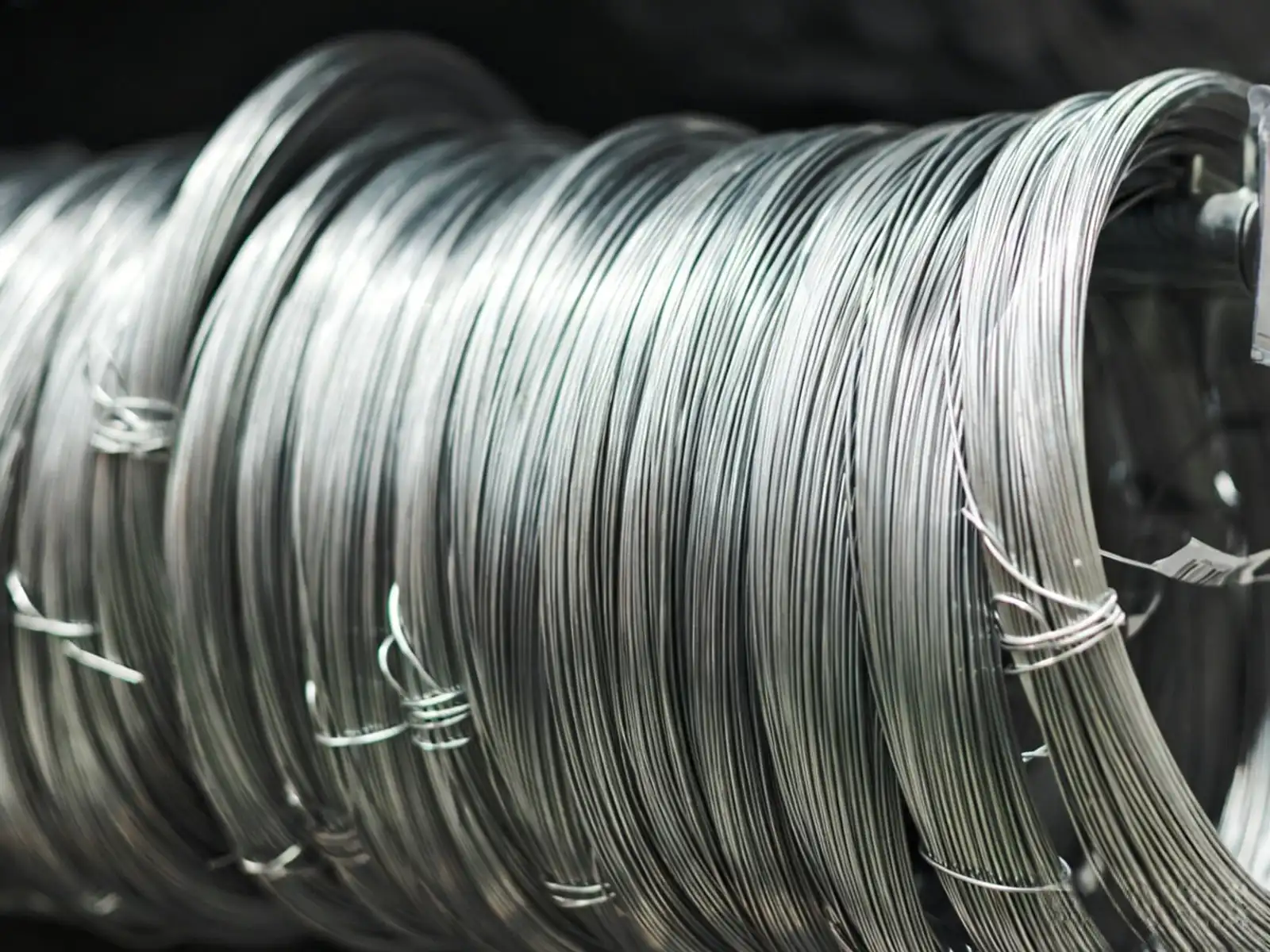
Nickel 200 Wire is a high-purity industrial pure nickel wire with a nickel content of over 99.5% and plays an irreplaceable role in modern manufacturing. With its excellent alkali corrosion resistance, excellent electrical and thermal conductivity and good plastic processing capabilities, this material has been widely used in chemical industry, electronics, medical, precision machinery and other fields. From electrolytic plates in the chlor-alkali industry to precision leads in the semiconductor industry, from guidewire brackets in medical equipment to heating elements in high-temperature conditions, nickel 200 wire has helped manufacturing companies solve many technical problems such as highly corrosive environments, high-precision conductivity, and no magnetic interference due to its unique physical and chemical properties, significantly improving equipment service life and production stability.
1. How Is Key Applications in the Chemical and Energy Sectors?
(1) What Should You Know About Electrolytic Plate Manufacturing in the Chlor-alkali Industry?
The chlor-alkali industry is one of the most important application scenarios for nickel 200 wire. In the process of electrolyzing brine to produce chlorine and caustic soda, the electrolytic cell needs to be immersed in a high-concentration alkaline solution for a long time. Nickel 200 wire has excellent alkali corrosion resistance and can remain stable in strong alkaline environments with a pH value of up to 14. Manufacturers use this wire to weave it into a mesh structure or process it into plate electrodes, which can withstand continuous high-intensity electrochemical reactions without corrosion failure. Compared with ordinary stainless steel materials, the service life of nickel 200 electrodes can be extended by 3-5 times, significantly reducing the company’s maintenance costs and downtime.
(2) What Should You Know About Filter Components for Petrochemical Plants?
In the process of petroleum refining and chemical synthesis, many processes require filtration and separation in high-temperature, highly corrosive media. The filter mesh woven with nickel 200 wire can withstand the erosion of a variety of reducing acids and organic solvents. This type of filter is usually woven from φ0.5mm to φ2mm filaments and has precise pore size control and excellent mechanical strength. In hydrogenation reaction units and catalyst recovery systems, these filters can operate stably for a long time at an operating temperature of 200-400℃ to ensure the purity of the process medium.
(3) What Should You Know About Desalination and Salt Water Treatment Equipment?
As global freshwater resources become increasingly scarce, seawater desalination technology is developing rapidly. Nickel 200 wire has good corrosion resistance to seawater and salt spray, and is often used to manufacture heat exchanger tube bundles, evaporator internal components, and electrode wires in brine pretreatment systems in seawater desalination plants. The high purity characteristics of the material ensure that harmful ions will not be introduced into the desalinated water and comply with drinking water hygiene standards. In large-scale desalination projects in the Middle East, the application of such components has significantly improved the operational reliability of the equipment.
Chemical application scenarios | working environment | Typical specifications | Main advantages |
Chlor-alkali electrolyzer | pH≥14 strong alkali solution | φ3-8mm wire | Resistant to alkali corrosion, long life |
Petrochemical filter | 200-400℃ reducing medium | φ0.5-2mm woven mesh | Resistant to high temperatures and reducing acids |
Desalinator | High salinity corrosive environment | φ1-4mm tube bundle wire | Resistant to seawater, high purity |
2. How Is Precision Applications in Electronics and Semiconductor Manufacturing?
(1) What Should You Know About Lead Materials in Semiconductor Processes?
The semiconductor chip packaging process requires the use of ultra-fine diameter lead materials to achieve electrical connections. Nickel 200 wire can be processed into ultra-fine wire from φ0.05mm to φ0.3mm through a special drawing process. The surface is smooth and non-oxidized, and the resistivity is stable at 6.84×10⁻⁸ Ω·m. This kind of lead plays an important role in chip packaging, LED chip welding, and microelectronic component interconnection. The high-purity nature of the material avoids the interference of impurity elements on semiconductor performance, while the good welding performance ensures the reliability of the connection. Precision electronics manufacturers in Japan and South Korea make heavy use of these materials.
(2) What Should You Know About Transformer and Inductor Coil Winding?
In power electronics and communication equipment, magnetic components such as transformers and inductors require winding materials with stable conductive properties. Nickel 200 wire has excellent electrical conductivity and low temperature coefficient, and is suitable for winding precision coils with strict requirements. The non-magnetic characteristics of the material prevent it from disturbing the magnetic field distribution, making it particularly suitable for high-frequency transformers and filter inductors. Nickel 200 wire with a diameter of φ0.3mm to φ1.5mm is often processed into enameled wire form and is used in switching power supplies, communication base stations, medical imaging equipment and other fields.
(3) What Should You Know About Auxiliary Conductive Components for Lithium Batteries and Fuel Cells?
The rapid development of the new energy industry has created a demand for high-performance battery materials. It should be noted that in lithium-ion batteries, the mainstream current collector materials are copper foil (negative electrode) and aluminum foil (positive electrode). Nickel 200 wire is usually not used as a direct current collector; however, in tab connections, conductive frames or special structural supports, nickel 200 wire is used because of its good conductivity and corrosion resistance. In the field of hydrogen fuel cells, the gas diffusion layer usually uses carbon fiber paper or carbon cloth as the skeleton material. Nickel 200 wire mesh is mainly used as a supplementary conductive component in some auxiliary conductive layers or support structures, and is not a mainstream solution. In the new energy vehicle supply chain in Europe and the United States, the application of such auxiliary conductive nickel materials is gradually being explored.
Electronic application type | Diameter range | Performance requirements | Application equipment |
Chip leads | φ0.05-0.3mm | High purity, low resistance | Semiconductor packaging, LED |
coil winding | φ0.3-1.5mm | Stable conductivity, non-magnetic | transformer, inductor |
Battery auxiliary conductive parts | φ0.1-0.5mm wire/mesh | Corrosion resistant, highly conductive | Tabs, conductive frame, support structure |
3. How Is Professional Applications in the Field of Medical Devices?
(1) What Should You Know About Guide Wire System for Minimally Invasive Surgical Instruments?
Modern minimally invasive medical technology relies on a variety of precision catheter and guidewire devices. Nickel 200 wire has become an ideal material for manufacturing vascular interventional guide wires and neurosurgery guide wires due to its excellent biocompatibility, non-magnetic characteristics and good elasticity. After surface polishing, the nickel 200 wire with a diameter of φ0.2mm to φ0.8mm has an extremely low friction coefficient and excellent flexibility, and can be flexibly advanced within the blood vessel without damaging the blood vessel wall. This type of guidewire is indispensable in cardiac stent implantation and cerebral embolism treatment. Medical device manufacturers in the United States and Germany are the main users.
(2) What Should You Know About Non-magnetic Components of NMR Equipment?
Medical imaging equipment, especially nuclear magnetic resonance (MRI) systems, have strict requirements on the magnetic properties of materials. Nickel 200 is a completely non-magnetic material and will not cause magnetization in a strong magnetic field environment to interfere with imaging quality. Equipment manufacturers use this wire to process precision parts such as fixed brackets, spring buckles, and connecting pins. These components need to remain stable in strong magnetic fields of 1.5T to 3T while having sufficient mechanical strength and corrosion resistance. Nickel 200 wire has good processing performance and is easy to cold heading, turning, and welding, which meets the complex structural design needs of medical equipment.
(3) How Is Short-term and Ancillary Applications of Implantable Medical Devices?
For medical devices that are implanted into the human body for long periods of time, high-purity nickel needs to be carefully evaluated. Nickel 200 wire may slowly release nickel ions in the human environment, and some people may be at risk of allergic or toxic reactions. Therefore, direct use for long-term implantation (such as vascular stents, pacemaker leads) requires strict biocompatibility evaluation and surface modification (such as gold plating, platinum plating, etc.), and materials such as nickel-titanium alloys and cobalt-chromium alloys are more commonly used in clinical practice. Nickel 200 wire is more commonly used for short-term implantation tools (such as temporary stent push rods, surgical auxiliary guide wires) or in vitro medical devices (such as surgical instruments, diagnostic catheters). Its biocompatibility description should be realistic and should not be overly optimistic. After surface coating treatment and compliance with FDA and CE requirements, it can be used in specific short-term application scenarios.
4. How Is Special Applications in High Temperature Industry and Precision Machinery?
(1) What Should You Know About Heating Elements for Heat Treatment Furnaces?
In industrial heat treatment, laboratory high temperature experiments and material synthesis processes, it is necessary to use high temperature resistant and oxidation resistant heating materials. The melting point of nickel 200 wire reaches 1453℃. Although it is not as good as nickel-chromium alloy in high-temperature oxidizing environment, it performs well in reducing atmosphere or vacuum conditions. Nickel 200 wire with a diameter of φ2mm to φ5mm is processed into a spiral heating coil and is used in vacuum annealing furnaces, atmosphere protection furnaces and heat treatment equipment for special materials. The thermal conductivity of the material is about 90 W/(m·K) (a common value at room temperature), which can achieve uniform heating and improve the stability of the heat treatment process.
(2) What Should You Know About Precision Instruments and Watch Parts?
The watchmaking and precision instrument industries have extremely high requirements on the dimensional accuracy, surface quality and mechanical properties of materials. After precision cold drawing of nickel 200 wire, the diameter tolerance can be controlled within +/-0.01mm, and the surface finish reaches mirror level. Tiny parts such as hairsprings, springs, and pins processed from this material have stable elastic modulus and extremely low creep rate. In high-end Swiss mechanical watches and German precision measuring instruments, such parts ensure the long-term accuracy, stability and reliability of the equipment. The material’s non-magnetic properties also make it suitable for use in anti-magnetic watches and navigation instruments.
(3) What Should You Know About Sensor Components for the Automotive Industry?
Modern automotive electronic systems integrate a large number of sensors to monitor various operating parameters. Nickel 200 wire is used as the wire or skeleton of sensitive components in temperature sensors, pressure sensors, and oxygen sensors. The material’s resistance temperature coefficient is stable and can accurately reflect temperature changes; and its corrosion resistance enables it to work for a long time in harsh environments such as engine exhaust and fuel systems. Nickel 200 wire with a diameter of φ0.5mm to φ1.5mm is surface-coated and then welded to a ceramic substrate or packaged in a protective tube to form the core component of the sensor.
Physical performance parameters | numerical value | Application significance |
density | 8.90 g/cm³ | Moderate quality, easy to process |
melting point | 1453-1455℃ | High temperature applications |
Resistivity | 6.84×10⁻⁸Ω·m | Stable conductive properties |
thermal conductivity | About 90 W/(m·K) | Good heat conduction |
Tensile strength (soft state) | ≥350 MPa | Sufficient mechanical strength |
Elongation | ≥30% | Excellent plastic processing |
5. What Are the Surface Treatment Technology and Performance Optimization?
(1) What Should You Know About Bright Surface Treatment Process?
The surface condition of nickel 200 wire directly affects its performance and application occasions. Bright surface treatment is achieved through precision polishing and electrochemical polishing processes, and the surface roughness can reach Ra≤0.2um. This surface is suitable for applications such as medical guide wires and electronic leads that have high requirements for cleanliness and aesthetics. The bright surface reduces the friction coefficient, reduces microbial adhesion, and facilitates cleaning and disinfection. Some high-end equipment manufacturers use multi-pass cold drawing and online polishing technology to stably produce high-quality bright wire.
(2) What Should You Know About Pickling and Passivation Treatment Technology?
For nickel 200 wire that needs to be used in corrosive environments, pickling and passivation treatment are necessary surface pretreatment processes. The surface oxide scale and oil stains are removed through hydrochloric acid or sulfuric acid solution, and then treated with passivation solution to form a dense oxidation protective film. This treatment improves the corrosion resistance of the material and prevents pitting corrosion during subsequent use. The nickel 200 wire on the pickled surface shows a uniform silvery white color, and the surface is clean and pollution-free. It is especially suitable for applications such as chemical filters and electrolytic plates. Precise control of process parameters ensures consistent performance from batch to batch.
(3) What Are the Heat Treatment Status and Performance Control?
Nickel 200 wire can obtain different mechanical properties through different heat treatment processes. The soft annealing treatment temperature needs to be determined according to the degree of cold deformation: for wires with large cold deformation, the recrystallization annealing temperature is usually in the range of 800-1000℃; while 600-800℃ is only suitable for slight cold working or stress relief annealing. In actual production, it needs to be adjusted based on the specific deformation amount to ensure that the material reaches the best plasticity. The semi-hard treatment retains a certain work hardening effect, and the tensile strength is increased to 450-500 MPa, which is suitable for spring parts that require higher elasticity. Hard materials are strengthened by cold working, and the hardness can reach more than HB 120. They are used for wear-resistant and pressure-resistant parts. Professional heat treatment equipment and atmosphere protection technology ensure the uniformity of material structure and stability of performance.
6. What Should You Know About Quality Control and International Standard Certification?
(1) What Are the Precise Control of Chemical Composition?
The production of high-quality nickel 200 wire depends first on the purity control of raw materials. The nickel content must reach more than 99.5% (Ni+Co), and the content of harmful impurities such as sulfur and phosphorus must be strictly limited to 0.005% and 0.002%. During the production process, a spectrum analyzer is used to fully inspect each batch of raw materials and finished products to ensure that the chemical composition complies with international standards such as ASTM B161 and JIS H4551. High-purity materials avoid brittleness caused by impurity elements and reduce corrosion tendencies, which are the basis for ensuring product performance.
(2) What Are the Batch Stability of Mechanical Properties?
The mechanical properties such as tensile strength, elongation, and hardness of nickel 200 wire must be within the specified range and have small fluctuations between batches. Sampling inspection of each batch of products is carried out through tensile test, hardness test, bending test and other means. The application of automated production lines enables precise control of process parameters such as rolling reduction, annealing temperature, and cold drawing speed, ensuring the consistency of product performance. For products exported to high-end markets such as the United States, Germany, and Japan, an EN 10204 3.1 material certificate is also required to record in detail the testing data and traceability information of each batch of materials.
(3) What Should You Know About Dimensional Accuracy and Surface Quality Inspection?
Precision applications require extremely high dimensional accuracy and surface quality from Nickel 200 wire. A laser caliper is used to monitor diameter dimensions online to ensure that the tolerance is within +/-0.01mm; a surface defect detection system is used to identify defects such as cracks, scratches, and pits. The straightness is inspected by a special measuring platform to ensure ≤1mm/m. The finished product undergoes 100% eddy current testing or ultrasonic testing to eliminate internal defects. Conduct visual inspection and dimensional review before packaging to ensure that the products delivered to customers meet the technical agreement requirements. This full-process quality control system is an important basis for high-end manufacturing customers to select suppliers.
7. What Should You Know About Conclusion?
From corrosion-resistant components in chemical equipment to precision leads in electronic equipment, from short-term auxiliary components in medical equipment to heating elements in high-temperature industries, this high-purity material helps companies solve many technical challenges such as corrosion, conductivity, and processing, and significantly improves equipment performance and production efficiency. As the global manufacturing industry develops towards high-end and precision, the application scope of nickel 200 wire will continue to expand.
FAQ
Q1: What is the difference between nickel 200 wire and nickel-based alloy wire?
Nickel 200 is high-purity industrial pure nickel with a nickel content of ≥99.5%. It has excellent alkali corrosion resistance and electrical conductivity, but has weak high-temperature strength and oxidation resistance. Nickel-based alloys (such as Inconel, Monel) improve high-temperature strength and oxidation resistance by adding elements such as chromium, copper, and molybdenum, but their electrical conductivity and alkali resistance are not as good as pure nickel. The choice depends on the specific working conditions requirements.
Q2: How to judge whether the quality of nickel 200 wire is qualified?
Key indicators include chemical composition (nickel content ≥99.5%, impurity elements comply with standards), mechanical properties (tensile strength ≥350MPa, elongation ≥30%), dimensional accuracy (diameter tolerance +/-0.01mm) and surface quality (no cracks, oxide scale). Regular suppliers should provide material certificates and third-party testing reports, and have traceability.
Q3: Under what circumstances is nickel 200 wire not suitable for use?
Nickel 200 is not resistant to high-temperature oxidizing acids (such as high-temperature nitric acid), high-temperature sulfur-containing atmospheres (>315℃ will cause sulfur embrittlement) and strongly oxidizing chlorine salt environments (easy to pit corrosion). Nickel-based alloys or other corrosion-resistant materials should be selected for these conditions. When selecting materials, material suitability needs to be evaluated based on parameters such as specific media, temperature, and pressure.
How Can You Contact Us?
As a professional nickel 200 wire manufacturer and supplier, we have a complete nickel precision drawing production line and a strict quality management system. Provide one-stop service from chemical composition customization, surface treatment to technical selection support to ensure that products comply with international standards such as ASTM B161 and JIS H4551. Annual production capacity ensures stable delivery of your bulk orders. Welcome to inquire: sales@example. com
References
- China Nonferrous Metals Industry Association. (2019). “Nickel and Nickel Alloy Processing Technology”. Beijing: Metallurgical Industry Press.
- Liu Zhiguo, Zhang Junxi. (2015). “Corrosion and Protection of Industrial Pure Nickel”. Shanghai: Shanghai Science and Technology Press.
- Chen Zhenhua, Li Jianguo. (2018). “Handbook of High-Temperature Alloys and Corrosion-Resistant Alloys”. Beijing: Chemical Industry Press.
- Wang Jianxin, Zhao Yongfeng. (2020). “Application and Evaluation of Metal Materials in Medical Devices”. Beijing: Science Press.
- Yang Zhigang, Wang Lei. (2016). “Metal Materials and Surface Treatment Technology for New Energy Batteries”. Beijing: Machinery Industry Press.