
How Is Nickel 200 Wire Manufactured and Applied in Precision Industries?
- Nickel 200 Wire
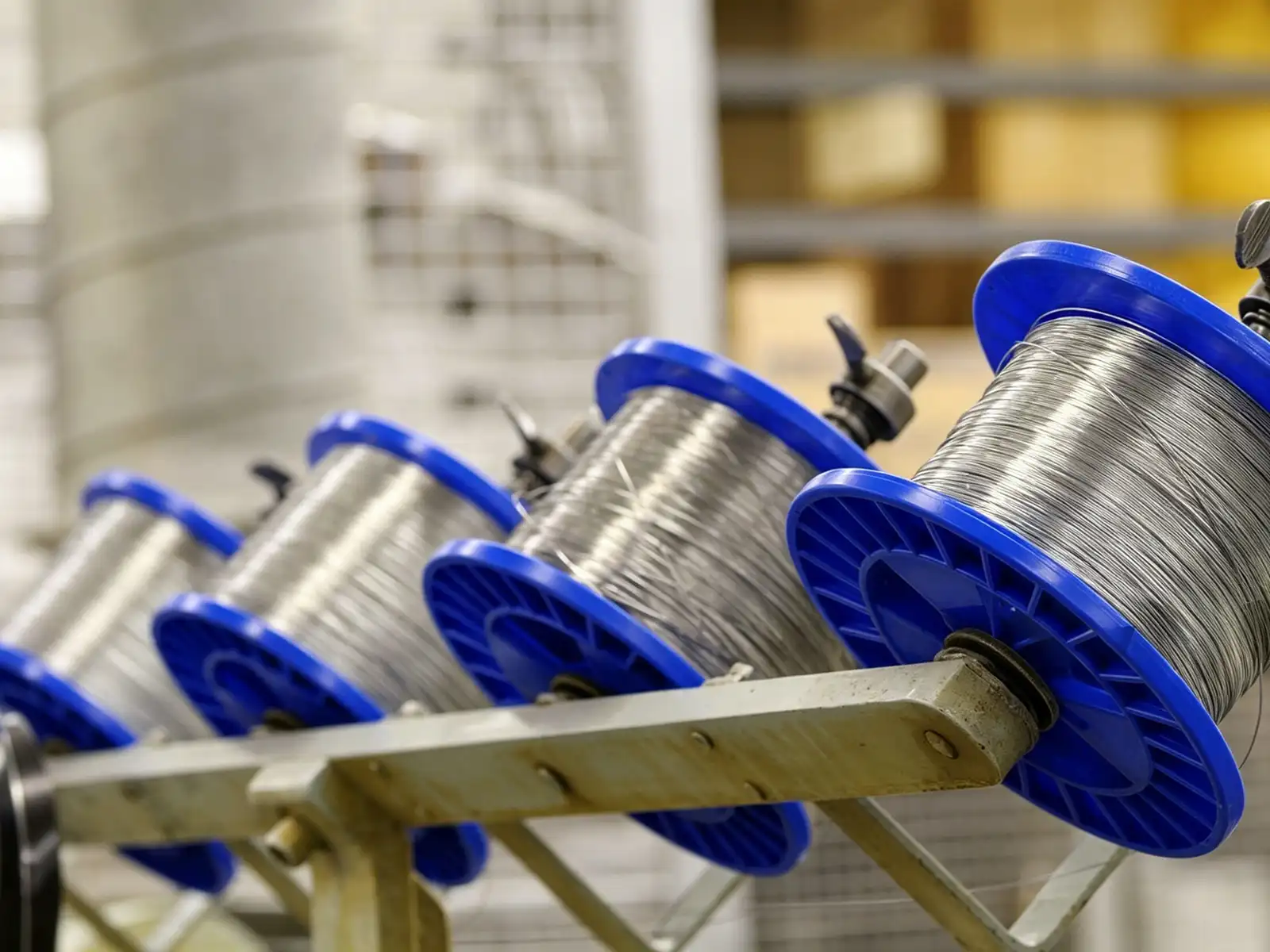
Nickel 200 Wire is a high-purity industrial-grade nickel wire with a nickel content of ≥99.5%. With its excellent alkali corrosion resistance, excellent electrical and thermal conductivity and good processing ductility, it has become a key functional material in the fields of chemical industry, electronics, medical and high-temperature equipment. Whether it is electrolytic plates in the chlor-alkali industry, conductive leads in semiconductor equipment, or non-magnetic precision components in medical equipment, Nickel 200 Wire provides irreplaceable material support for high-end manufacturing with its stable batch quality and wide adaptability. This article will provide an in-depth analysis of the material characteristics, process advantages, application scenarios and material selection strategies of Nickel 200 Wire to help readers fully understand the core value of this material.
1. The material nature of Nickel 200 nickel wire: Why does purity determine the performance boundary?
(1) Comparison of chemical composition with international standards
Nickel 200 Wire corresponds to multiple international standard systems: American standard UNS N02200, European standard Ni99.5 (2.4060), and Japanese standard JIS H 4551. Its core chemical composition requirements are: nickel + cobalt content ≥99.5%, iron ≤0.10%, copper ≤0.10%, carbon ≤0.10%, sulfur ≤0.005%. It is worth noting that Nickel 201 (UNS N02201) has a lower carbon content (≤0.02%) and is suitable for reducing environments above 315 °C, while Ni200 is more suitable for normal temperature and medium and low temperature conditions., while minimizing the negative impact of impurities on corrosion resistance.
| element | Ni+Co | Fe | Cu | C | S | P |
| content(%) | ≥99.5 | ≤0.10 | ≤0.10 | ≤0.10 | ≤0.005 | ≤0.005 |
Compared with low-purity nickel alloys, the low-carbon and low-sulfur characteristics of Nickel 200 significantly improve the welding performance and avoid the problem of grain boundary embrittlement in the heat-affected zone, which is particularly critical for chemical equipment that requires complex welding and assembly.
(2) Synergistic advantages of physical and mechanical properties
Nickel 200 Wire has a density of 8.90 g/cm³, a melting point as high as 1453~1455 °C, a resistivity of only 6.84×10⁻⁸ Ω·m, and a thermal conductivity of 90 W/(m·K). Under soft condition, its tensile strength is ≥350 MPa, yield strength is ≥130 MPa, elongation is ≥35%, and hardness range is 85-95 HB. This combination of “high strength + high plasticity” allows the material to withstand mechanical loads and be formed into precision parts through cold drawing, stamping and other processes.
In electrochemical applications, the stable resistance characteristics of Ni200 ensure the consistency of energy efficiency in the electrolysis process; in thermal conductive components, its excellent heat conduction ability can quickly equalize the temperature field and avoid equipment failure caused by local overheating.
(3) “Adaptation principle” of corrosion resistance
Nickel 200 Wire performs well in alkaline solutions (such as sodium hydroxide, potassium hydroxide) and can maintain long-term stability even under high concentration and high temperature conditions. The material also has good corrosion resistance for reducing acids (such as dilute sulfuric acid, hydrochloric acid) and seawater environments. However, please note: Ni200 may suffer pitting corrosion or sulfur embrittlement failure in high-temperature oxidizing acids (such as high-temperature nitric acid), high-temperature sulfur-containing atmospheres (>315 °C) or strongly oxidizing chlorine salt environments. In such working conditions, nickel-based alloys (such as Monel or Inconel) should be used instead.
2. From raw materials to finished products: the precision manufacturing process of Nickel 200 Wire
(1) Cold drawing process: How to achieve micron-level precision control?
The production of Nickel 200 Wire starts from high-purity nickel rods, which are gradually reduced in diameter to the target size (φ0.3 mm~φ200 mm) through multiple passes of cold drawing. Using a continuous rolling line, the automation rate exceeds 90%. Through real-time tension monitoring and mold temperature control technology, the diameter tolerance is controlled within ±0.01 mm, and the straightness is ≤1 mm/m. This high precision ensures stable feeding of subsequent automated production lines and reduces the risk of downtime such as wire breakage and material jamming.
The work hardening phenomenon during the cold drawing process will increase the material strength and reduce the plasticity, and the grain structure needs to be restored through intermediate annealing. The precise control of annealing temperature, holding time and cooling rate directly affects the final uniformity of mechanical properties.
(2) Heat treatment and surface treatment: dual optimization of performance and appearance
Heat treatment is divided into two categories: soft annealing (to restore plasticity) and stress relief (to improve dimensional stability). After soft annealing, the material elongation can reach more than 35%, which is suitable for parts that require deep drawing and bending; light annealing retains part of the work hardening effect, taking into account both strength and toughness.
Four surface treatment options are available:
Bright surface: no post-processing required, directly used for electronic components with high appearance requirements
Semi-glossy surface: taking into account both aesthetics and cost, suitable for conventional conductive leads
Pickling surface: remove oxide scale and improve welding wettability
Electropolished surface (EP)
Each surface state has been fully inspected and verified to be free of oxidation, cracks, and burrs to ensure consistency between batches.
(3) Quality control: full traceability from chemical analysis to mechanical testing
Each batch of Nickel 200 Wire must pass spectral analysis to verify the chemical composition, tensile testing to confirm the mechanical properties, and ultrasonic flaw testing to check for internal defects. The product comes with an EN 10204 3.1 material certificate, which records the heat number, inspection data and production parameters in detail, meeting the traceability requirements of high-standard industries such as aerospace and medical devices.
| Test items | Standard value | Actual measurement range | Detection method |
| Nickel content | ≥99.5% | 99.6~99.8% | Spectral analysis |
| tensile strength | ≥350MPa | 360~380MPa | Tensile test |
| Elongation | ≥35% | 35~40% | Tensile test |
| Diameter tolerance | ±0.01 mm | ±0.005 mm | Laser diameter measurement |
3. Typical application scenarios: How does Nickel 200 Wire solve industry pain points?
(1) Chlor-alkali and chemical industry: the first choice material to resist strong alkali corrosion
As for the cathode structural parts and cathode mesh of the electrolytic cell, ordinary stainless steel will undergo severe intergranular corrosion within a few months. The electrode mesh made of Nickel 200 Wire can operate stably for 3 to 5 years, significantly reducing replacement frequency and downtime costs. In chlorine compressors, alkali pumps and other equipment, Ni200 fasteners and sealing rings also show excellent durability.
Ni200 material is also widely used in heat exchanger tube bundles and filters in the chemical industry. Its good thermal conductivity improves heat exchange efficiency while avoiding the risk of media contamination.
(2) Electronics and Semiconductors: A Reliable Choice for Precision Conductive Leads
In transformers and inductors, the stable resistance characteristics of Nickel 200 Wire ensure the uniformity of magnetic field distribution; in lithium battery tab welding, Ni200’s low contact resistance and high strength characteristics reduce energy loss and improve battery cycle life. The electrostatic chucks and heating table wires of semiconductor manufacturing equipment require materials to maintain non-magnetic properties and low outgassing properties at high temperatures. The high purity of Ni200 perfectly meets this requirement.
(3) Medical devices: non-magnetic, non-toxic, high-precision key materials
. The biocompatibility of the material has been certified by ISO 10993 and will not cause allergic or inflammatory reactions after implantation in the human body. Precision components such as springs and buckles of minimally invasive surgical instruments use the high ductility of Ni200 to form complex geometric shapes while ensuring sufficient fatigue strength.
(4) High temperature and aerospace: stable performance under extreme working conditions
The ignition electrodes and flame detector leads of aircraft engines still maintain reliable electrical connections in high-temperature and high-vibration environments. Ni200 is also widely used in the evaporation boats and racks of vacuum coating equipment. Its low vapor pressure characteristics avoid contamination of the coating.
(5) Electroplating and electrolysis: practical solutions to reduce plate loss
The anode plates in the electroplating industry use Nickel 200 Wire braided mesh. Compared with lead alloy or iron-based materials, its dissolution rate is lower and the impurity content of the coating is less. According to industry experience, the service life of the plate can be 3 to 5 times that of ordinary materials. In hydrometallurgical processes such as electrolytic copper and electrolytic zinc, the high conductivity of the Ni200 cathode plate helps reduce the cell voltage, thereby saving electricity.
4. Material selection and customization strategy: How to match your specific needs?
(1) Comprehensive coverage of size specifications
Nickel 200 Wire provides full spectrum coverage of standard sizes (φ0.3~30 mm), large sizes (φ8~200 mm) and ultra-fine wires (<1 mm). Special-shaped sections such as round wires, square wires, and hexagonal wires can be customized to meet special assembly requirements. Coiled supply is suitable for automated continuous production, while fixed-length straight bars are convenient for batch stamping or welding processing.
| Application type | Recommended diameter | Supply form | surface state |
| electrolytic plate | φ3~6mm | Coil | pickled noodles |
| Conductive leads | φ0.5~2mm | Coil | shiny side |
| fastener | φ8~20mm | Fixed length straight strip | Semi-glossy side |
| medical guide wire | φ0.3~1 mm | Coil | polished surface |
(2) Flexible selection of performance status
Soft materials are suitable for parts that require large deformation (such as springs, bellows), while hard materials are used for structural parts that bear load (such as shaft pins, bolts). The semi-hard state takes into account the advantages of both and is widely used in automotive sensors and precision instruments. Customers can choose the initial state according to the subsequent processing technology (stamping, drawing, welding), or ask the supplier to preprocess to the target hardness.
(3) Flexible arrangement of batches and cycles
Small batch trial orders (≥10kg) support rapid verification of material performance, and standard specifications can be delivered within 2 weeks; large batch orders (≥5 tons) provide price concessions, and the production cycle is 4 to 6 weeks. Urgent orders can be allocated from spot inventory and shipped within 72 hours. The long-term supply agreement locks in the risk of price fluctuations and ensures that project costs are controllable.
(4) Technical support and supporting services
Suppliers provide material selection consultation, process optimization suggestions and failure analysis services. For special working conditions (such as high temperature + corrosion composite environment), the technical team can collaborate with customers to conduct material comparison tests and issue detailed performance evaluation reports. After the product is delivered, regular follow-up visits will be conducted to review the usage results and continuously improve the material quality.
5. Market Trends and Future Outlook: Growth Drivers of Nickel 200 Wire
(1) Rigid demand from the new energy industry
The global carbon neutrality goal has promoted the rapid development of hydrogen energy, fuel cells and energy storage systems. Nickel 200 Wire is widely used in the bipolar plates and current collectors of the proton exchange membrane electrolyzer (PEM). Its corrosion resistance and conductivity directly affect the electrolysis efficiency. The expansion of lithium battery production capacity has led to a surge in demand for tab welding materials. The average annual growth rate of Ni200 in the battery field is expected to exceed 20% from 2023 to 2028.
(2) Domestic substitution opportunities for high-end manufacturing
Traditional markets such as aerospace, medical, and precision electronics continue to upgrade material standards, placing higher requirements on the purity and dimensional accuracy of Ni200. At the same time, emerging markets are rising rapidly, and the cost advantages of localized supply chains are emerging. Through technological breakthroughs (such as ultra-thin foil rolling and wide-width wrinkle-free control), Chinese companies have the ability to compete with European and American products.
(3) The green value of circular economy
The high purity of Nickel 200 Wire makes it easy to recycle and regenerate. Waste materials can be restored to their original properties after smelting and refining, with a recovery rate of over 95%. In the context of resource constraints, the establishment of a “production-use-recycling” closed-loop system will become an industry consensus, and suppliers’ reverse logistics capabilities will become a new dimension of competition.
in conclusion
Nickel 200 Wire has become a core functional material in chemical industry, electronics, medical, high-temperature equipment and other fields due to its ultra-high purity, excellent corrosion resistance, excellent electrical and thermal conductivity and good processing performance. Precision manufacturing technology, full-link quality control and flexible customization capabilities ensure the stability and reliability of materials. Facing the growth opportunities of new energy, high-end manufacturing and circular economy, Ni200 pure nickel wire will continue to expand its application boundaries and provide solid support for global industrial upgrading.
FAQ
Q1: Can Nickel 200 Wire be used in sulfur-containing environments above 300 °C?
Not recommended. When the temperature exceeds 315 °C and sulfides are present, Ni200 is prone to sulfur embrittlement failure and the grain boundary strength decreases sharply. Nickel-based alloys with added molybdenum or chromium, such as Monel 400 or Inconel 600, should be used for such conditions.
Q2: How to distinguish Ni200 from Ni201?
Ni201 has lower carbon content (≤0.02%), better resistance to graphitization at high temperatures, and is suitable for reducing environments above 315 °C. In normal temperature and medium and low temperature applications, the performance difference between the two is not obvious, and Ni200 is more cost-effective.
Q3: Does the welding of Nickel 200 Wire require special processes?
It is recommended to use argon arc welding or resistance welding, and the surface oil and oxide layer must be thoroughly cleaned before welding. The welding material should be ERNi-1 or nickel wire of the same composition, and avoid using carbon-containing electrodes. For thick-walled parts or complex structures, it is recommended to perform stress relief annealing after welding; however, in the welding of thin plates or small parts, if the residual stress is controllable, annealing may not be performed, and the specifics need to be evaluated according to the working conditions.
call to action
Baoji Baoji Titanium Valley Titanium-Nickel-Zirconium Materials Processing Co., Ltd. is your trustworthy professional manufacturer and supplier of Nickel 200 Wire. We have advanced Italian Danieli rolling lines and automated foil production lines, with an annual production capacity of over 20,000 tons, and can provide full specifications of φ0.3~200 mm. Welcome to request samples, technical information or obtain exclusive quotations, email: sales@titaniumvalleys.com.
References
Chinese Mechanical Engineering Society. Nickel and Nickel Alloy Materials Handbook[M]. Beijing: Machinery Industry Press, 2016.
Liu Daoquan, Yang Ruicheng. Corrosion and protection of nickel-based alloys[M]. Beijing: Chemical Industry Press, 2012.
Huang Jiali, Liu Min. Research on optimization of pure nickel wire cold drawing process parameters [J]. Rare Metal Materials and Engineering, 2019, 48(5): 1572-1577.
Wang Lei, Zhang Yongqiang. Application and failure analysis of Nickel 200 in the chlor-alkali industry [J]. Corrosion Science and Protection Technology, 2020, 32(3): 245-250.