
What Standards Apply to GR1 Titanium Wire?
- Gr1 Titanium Wire
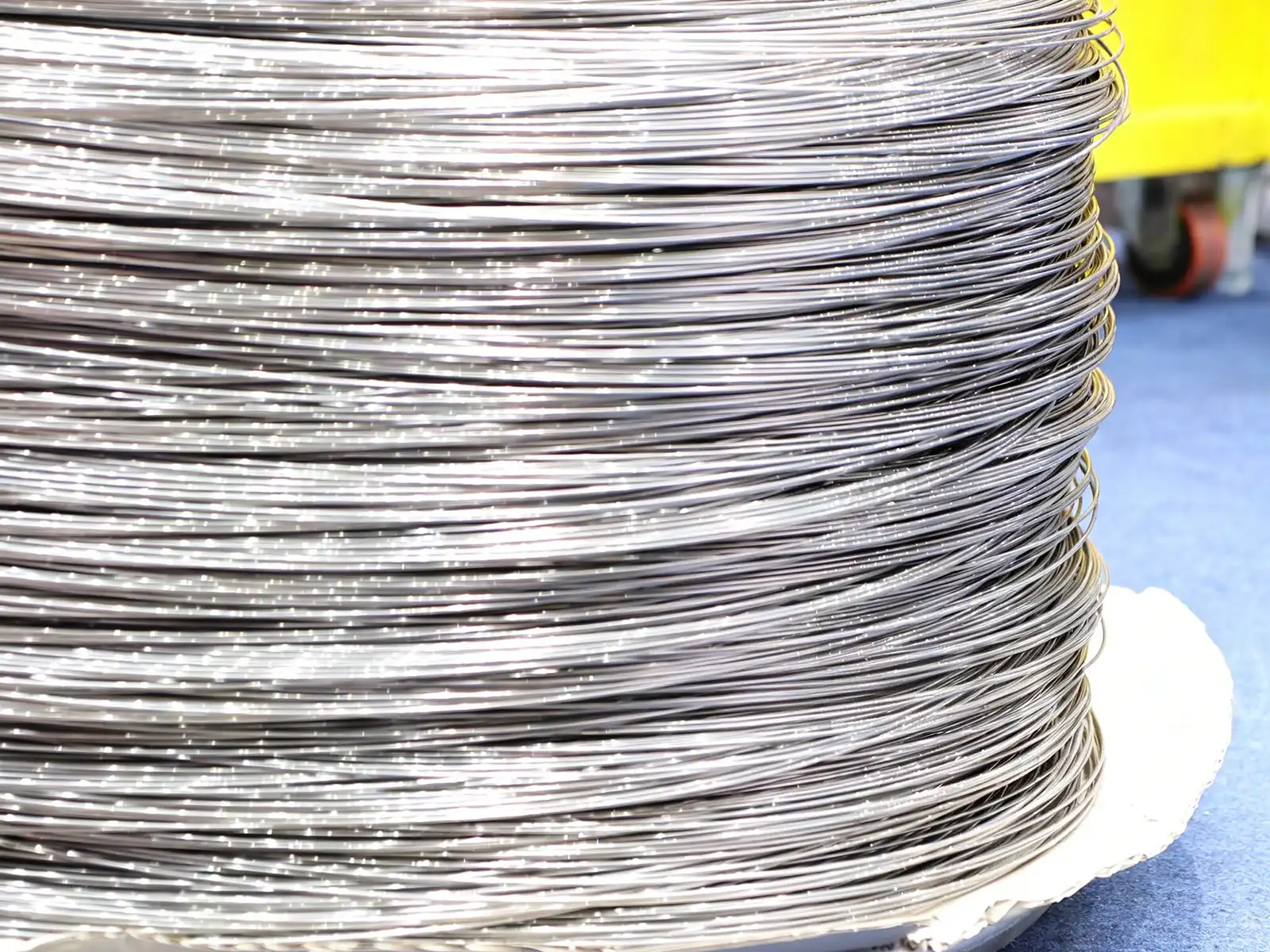
GR1 titanium wire (Grade 1 Titanium Wire), as the representative of industrial pure titanium wire products, has quality standards primarily governed by multiple authoritative specifications including ASTM B863 of the United States, European EN standards, Japanese JIS H4630, and the international ISO system. These standards provide comprehensive constraints on chemical composition, mechanical properties, surface quality, and dimensional accuracy, ensuring material performance in critical applications including aerospace, medical implants, and chemical anti-corrosion.
1. ASTM B863: The Core Certification Standard for GR1 Titanium Wire
Authoritative Position of ASTM B863 Standard
The B863 standard published by the American Society for Testing and Materials (ASTM) is globally recognized as the benchmark specification for titanium and titanium alloy wire. The standard covers four grades of commercial pure (CP) titanium, among which GR1, with the lowest impurity content and optimal ductility, is the preferred choice for precision applications. ASTM B863 not only specifies upper limits for chemical composition but also sets clear requirements for production processes, inspection methods, packaging, and marking, ensuring quality control from melting through final delivery.
Chemical Element | ASTM B863 GR1 Limit | Impact on Properties |
Ti (Titanium) | >= 99.5% | Determines material purity baseline |
O (Oxygen) | <= 0.18% | Affects ductility and weldability |
Fe (Iron) | <= 0.20% | Directly influences corrosion resistance |
C (Carbon) | <= 0.08% | Affects welding performance |
N (Nitrogen) | <= 0.03% | Excess causes aging embrittlement |
Strict Limitation of Chemical Composition
According to ASTM B863, the chemical composition of GR1 titanium wire must meet the following requirements: titanium content (Ti) of 99.5 percent or greater, oxygen (O) up to 0.18 percent, iron (Fe) up to 0.20 percent, carbon (C) up to 0.08 percent, and nitrogen (N) up to 0.03 percent. These values are established through extensive experimental validation. Reduction of oxygen content significantly improves material ductility and weldability, while iron control directly affects corrosion resistance. Vacuum melting technology further eliminates gas impurities and inclusions, ensuring chemical composition variation across individual wires is minimal.
Quantified Metrics for Mechanical Properties
ASTM B863 explicitly specifies that annealed GR1 titanium wire must achieve tensile strength of 240 MPa or greater, yield strength of 170 MPa or greater, and elongation of 24 percent or greater. These indicators are determined through standard tensile testing at room temperature, ensuring the material possesses adequate load-bearing capacity and deformability in practical use. For higher strength grades such as GR2, GR3, and GR4, half-hard (Y2) and hard (Y) temper states provide correspondingly higher strength, though with reduced ductility.
2. Complementary Certification of Major International Standard Systems
EN 10204-3.1 Material Certificate Requirements
European standard EN 10204-3.1 requires manufacturers to provide material test certificates verified by independent inspection bodies, which carries greater legal weight than standard 3.0 certificates (manufacturer self-inspection only). The certificate must include melting heat number, actual measured chemical composition values, mechanical property test data, and inspector signatures. This traceability mechanism is particularly critical in medical device and aerospace fields, enabling tracing of each titanium wire back to its raw material source and ensuring accountability in the event of quality issues.
Application Field | Key Standard Requirement | Performance Verification Method |
Aerospace | ASTM B863 + EN 10204-3.1 | Weld tensile testing, melting heat traceability |
Medical Implants | ISO 5832-2 + ISO 10993 series | Biocompatibility testing, surface cleanliness inspection |
Chemical Processing | ASTM B863 + corrosion standards | Salt spray testing, acid immersion testing |
Electronics | JIS H4630 + surface specs | Surface roughness measurement, conductivity testing |
Special Specifications of ISO 5832-2 for Medical Grade
When GR1 titanium wire is used for medical implants, it must comply with additional requirements of the ISO 5832-2 standard. This standard adds biological compatibility testing (ISO 10993 series), endotoxin control, and sterile packaging on top of ASTM requirements. Medical-grade titanium wire typically controls oxygen content at 0.10 percent or less (below the conventional standard), and requires cytotoxicity, sensitization, and implantation reaction testing. Surface roughness requirements are stricter, with Ra at or below 0.2 micrometers for biomedical applications.
Japanese Industrial Standard JIS H4630
The Japanese JIS H4630 standard is fundamentally compatible with the ASTM system but imposes more detailed requirements on dimensional tolerances and surface quality. JIS classifies titanium wire into welding-grade, spring-grade, and general-purpose categories, each corresponding to different combinations of tensile strength and elongation. For example, spring-grade titanium wire requires higher yield-to-tensile ratios, while welding wire emphasizes chemical uniformity of deposited metal. Japanese manufacturers generally employ roller-die cold drawing processes, achieving diameter tolerance controlled within plus or minus 0.02mm for fine-diameter wire.
3. Performance Parameter Comparison and Selection Under Different Standards
Balancing Tensile Strength and Elongation
Although requirements for GR1 titanium wire mechanical properties are similar across standards, practical applications require selecting appropriate temper states based on specific scenarios. Annealed (M) state with elongation above 24 percent is suitable for precision springs and woven meshes requiring complex forming. For higher strength grades such as GR2, GR3, and GR4, half-hard (Y2) and hard (Y) temper states provide higher strength with reduced elongation, suitable for applications requiring higher elastic modulus. Selection requires balancing strength and formability based on end-use requirements.
Impact of Surface Treatment on Standard Compliance
ASTM B863 permits three surface conditions: mill finish, pickled, and bright. Mill finish retains the oxide layer with lower cost but is unsuitable for precision welding. Pickled finish removes oxide scale with surface roughness Ra at or below 0.8 micrometers, meeting most chemical anti-corrosion requirements. Bright finish achieved through roller-die bright drawing attains Ra of 0.4 micrometers or less with no oil residue, complying with cleanliness requirements of medical and electronics industries. Vacuum annealing further reduces surface oxygen content, preventing porosity during welding.
Precision Levels of Dimensional Tolerances and Straightness
Standard diameter tolerance is typically plus or minus 0.05mm, but premium applications demand tighter control. Continuous rolling lines can control ovality of phi 5mm wire within 0.15 to 0.2mm (market conventional value 0.3mm), with straightness at 2mm per meter (i.e., 2 per 1000), which is critical for feeding stability in automated welding equipment. Ultra-fine specifications such as phi 0.1mm present exponentially greater tolerance control challenges, requiring multi-pass precision drawing.
4. Practical Impact of Standard Certification on Application Scenarios
Stringent Requirements of the Aerospace Industry
Titanium alloy welding filler wire for aircraft engines must comply with ASTM B863 and carry EN 10204-3.1 certificates, ensuring each batch is traceable to the vacuum melting heat number. Weld tensile strength must reach 90 percent or greater of the base material, with elongation not below 15 percent. GR1 titanium wire is widely used in aerospace structural fasteners, electronic shielding components, and precision filter meshes where high purity and excellent formability are paramount.
Corrosion Resistance Requirements of the Chemical Industry
Chemical industry applications demand titanium wire with exceptional corrosion resistance in aggressive media. GR1 titanium wire, with oxygen content controlled at 0.18 percent or less and iron at 0.20 percent or less, forms a stable TiO2 passive film that resists attack from most acids, alkalis, and salt solutions. Vacuum melting processes controlling iron content below 0.12 percent, combined with multi-pass pickling and passivation, ensure surface quality suitable for demanding chemical processing environments including electrolytic cells and heat exchangers.
Biocompatibility Demands of Medical Device Manufacturing
Medical device applications require titanium wire meeting ISO 5832-2 biocompatibility standards. GR1 titanium wire demonstrates excellent cytocompatibility with zero cytotoxicity ratings in ISO 10993 testing. Pacemaker leads, surgical sutures, and orthopedic fixation devices utilize GR1 wire for its combination of strength, corrosion resistance, and non-toxicity. Surface finishing to Ra of 0.2 micrometers or less minimizes bacterial adhesion risk, while strict control of heavy metal impurities ensures patient safety.
5. How to Verify Standard Compliance of GR1 Titanium Wire
Spectral Analysis Technology for Chemical Composition
X-ray fluorescence spectrometers (XRF) or glow discharge mass spectrometers (GDMS) accurately determine trace element content in titanium wire. XRF is suitable for rapid detection of metallic impurities such as iron and nickel with accuracy of plus or minus 0.01 percent. GDMS can detect interstitial elements including oxygen, nitrogen, and hydrogen with sensitivity at the ppb level. Reputable manufacturers issue spectral analysis reports from third-party testing institutions for each production batch, attached as appendices to EN 10204-3.1 certificates.
Standard Tensile Testing for Mechanical Properties
Specimens with 50mm gauge length are prepared according to ASTM E8 and tested on a universal tensile testing machine at a loading rate of 10mm per minute until fracture. Yield point, maximum force, and elongation at break are recorded to calculate tensile strength, yield strength, and elongation. Testing is conducted in a constant temperature environment of 20 to 25 degrees Celsius, with at least 3 specimens per batch averaged. The typical stress-strain curve of annealed GR1 titanium wire should exhibit a distinct yield plateau and considerable uniform elongation.
Microscopic Inspection Methods for Surface Quality
Metallographic microscopy at 100 to 500x magnification checks titanium wire surface for cracks, laps, inclusions, and other defects. Roughness is measured with a profilometer; medical-grade titanium wire requires Ra of 0.2 micrometers or less and Rz (maximum peak-to-valley height) of 1.5 micrometers or less. Pickled titanium wire should show no yellow spots from acid residue; bright-finish surfaces should present uniform silver-white metallic luster. Scanning electron microscopy (SEM) further observes grain size and oxide film thickness, ensuring compliance with application-specific requirements.
Conclusion
The quality standard system for GR1 titanium wire covers the basic specifications of ASTM B863, traceability requirements of EN 10204-3.1, medical certification of ISO 5832-2, and precision details of JIS H4630. Selecting titanium wire compliant with target market standards not only ensures product performance meets requirements but also avoids trade barriers and quality disputes. Purchasers should pay close attention to actual measured chemical composition values, mechanical property test reports, and surface quality inspection data.
Standard/Specification | Core Focus | Applicable Region |
ASTM B863 | Chemical composition and basic properties | North America, International |
EN 10204-3.1 | Material traceability and certificate management | European Union market |
ISO 5832-2 | Medical biocompatibility certification | Global medical devices |
JIS H4630 | Dimensional tolerance and surface quality | Japan and Asia |
FAQ
Q1: What standards must GR1 titanium wire comply with?
GR1 titanium wire primarily needs to comply with international standards including ASTM B863, EN 10204-3.1, JIS H4630, and ISO 5832-2. Among these, ASTM B863 is the most core standard for titanium and titanium alloy wire, primarily specifying GR1 titanium wire chemical composition, mechanical properties, manufacturing processes, and inspection requirements. EN 10204-3.1 is mainly used for material quality traceability, requiring suppliers to provide complete material certificates with heat number traceability.
Q2: What chemical composition requirements does ASTM B863 impose on GR1 titanium wire?
According to ASTM B863, GR1 titanium wire belongs to industrial pure titanium materials with titanium content reaching 99.5 percent or greater, while strictly controlling impurity elements including oxygen, iron, carbon, and nitrogen. Oxygen content is limited to 0.18 percent or less, iron to 0.20 percent or less, carbon to 0.08 percent or less, and nitrogen to 0.03 percent or less. These chemical composition restrictions ensure GR1 titanium wire possesses excellent ductility, weldability, and corrosion resistance, meeting aerospace, medical, and chemical industry requirements.
Q3: What standard requirements exist for mechanical properties of GR1 titanium wire?
Per ASTM B863, annealed GR1 titanium wire typically requires tensile strength of 240 MPa or greater, yield strength of 170 MPa or greater, and elongation of 24 percent or greater. Due to high elongation and good ductility, GR1 titanium wire can satisfy bending, drawing, welding, and complex forming processing needs. Compared with GR2, GR3, and GR4 industrial pure titanium materials, GR1 has relatively lower strength but superior formability and processing performance.
Contact Us
Baoji Titanium Valley Titanium Nickel Zirconium Material Processing Co., Ltd. as a professional GR1 titanium wire producer and supplier, is equipped with advanced Italian Danieli production lines with annual capacity of 5,000 metric tons, providing full-specification customization from phi 0.06 to 6.5mm. We serve global customers across aerospace, medical, chemical, and electronics industries.
For a broader view of available grades, supply forms, and related specifications, explore our Titanium Wire category.
For product-level details and supply options, you can also review our ASTM F67 Medical Gr1 Titanium Wire page.
References
Standardization Administration of China. GB/T 3623-2022 Titanium and Titanium Alloy Wire. Beijing: Standards Press of China, 2022.
Standardization Administration of China. GB/T 13810-2017 Titanium and Titanium Alloy Machined Products for Surgical Implants. Beijing: Standards Press of China, 2017.
Standardization Administration of China. GB/T 3624-2010 Titanium and Titanium Alloy Seamless Pipes. Beijing: Standards Press of China, 2010.
Standardization Administration of China. GB/T 2965-2007 Titanium and Titanium Alloy Bar Stock. Beijing: Standards Press of China, 2007.
Standardization Administration of China. GB/T 8180-2007 Packaging, Marking, Transport and Storage of Titanium and Titanium Alloy Products. Beijing: Standards Press of China, 2007.