
Why Is Gr4 Titanium Foil, a High-Strength Material Suitable for Industrial Applications Important?
- Gr4 Titanium Foil
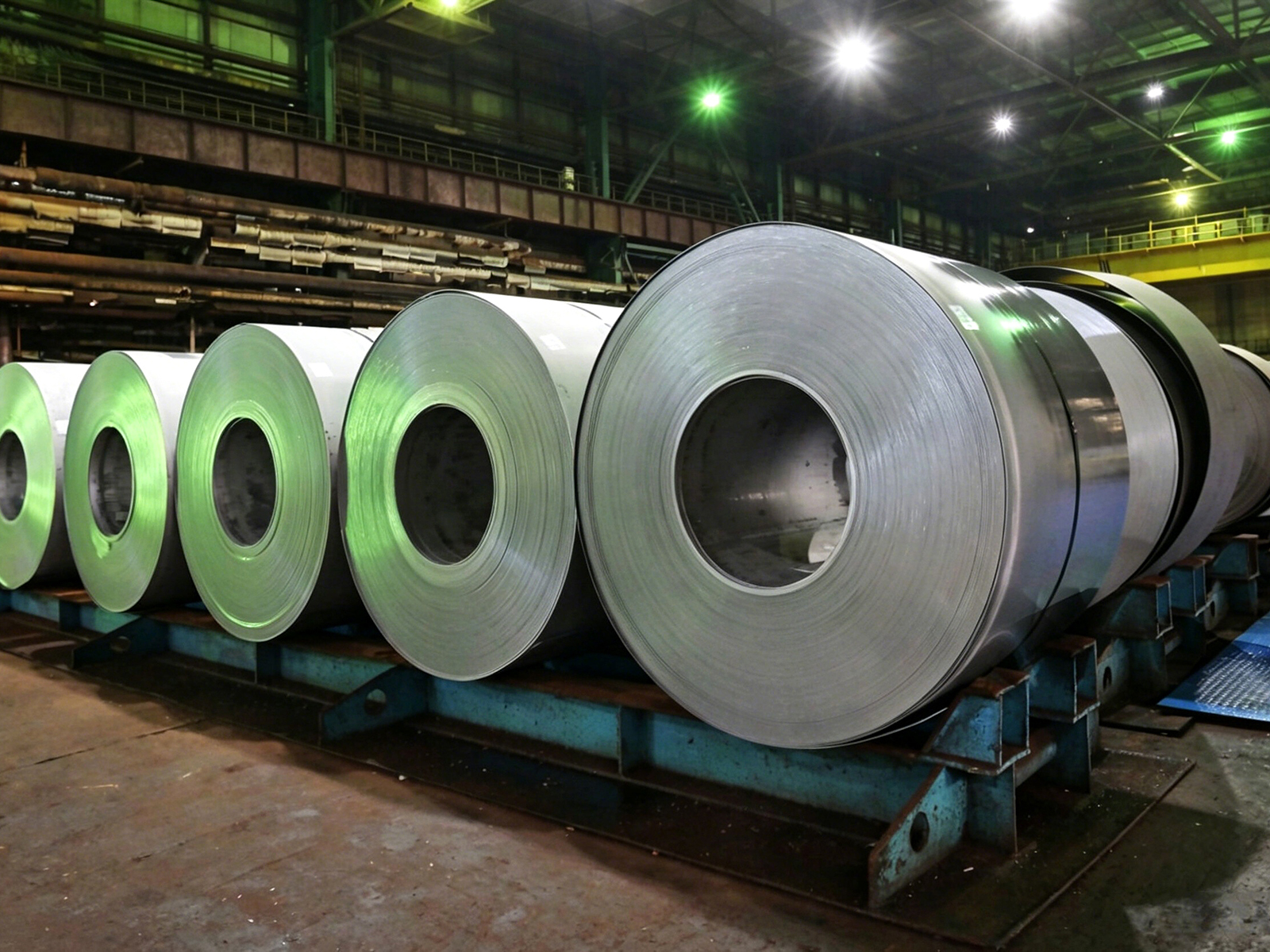
Gr4 titanium foil is a high-strength material that lies between commercially pure titanium and titanium alloys, with a tensile strength usually exceeding 550 MPa, an improvement of about 40% in mechanical performance compared to Gr2 titanium foil. Thanks to its excellent strength-to-weight ratio, outstanding corrosion resistance, and good formability, this material has become an ideal choice for aerospace, chemical equipment, marine engineering, and new energy fields. Gr4 titanium foil maintains the good ductility of pure titanium while increasing strength through moderate oxygen content control, making it particularly suitable for industrial applications that require bearing moderate loads and are weight-sensitive. Against the backdrop of global carbon neutrality and hydrogen energy industry development, it shows broad market prospects.
1. Why Is Material Characteristics and Technical Advantages of Gr4 Titanium Foil Important?
(1) What Should You Know About Chemical Composition and Microstructure?
The chemical composition of Gr4 titanium foil is precisely controlled, with oxygen content usually maintained within the range of 0.25-0.40%, a parameter that directly affects the balance between the material’s strength and toughness. Compared to Gr2 titanium foil, which has an upper limit of about 0.25% oxygen content, Gr4 improves strength by moderately increasing the concentration of interstitial elements. The α-phase grain structure of the material is uniformly distributed, with grain sizes controlled between 20-50 microns, and this microstructure endows the titanium foil with excellent fatigue resistance. Iron content is strictly limited to below 0.50%, and the precise control of impurity elements such as carbon and nitrogen ensures that the material possesses stable mechanical properties and processing characteristics.
(2) What Should You Know About Comparative Analysis of Mechanical Performance Parameters?
The table below shows a comparison of key performance indicators of industrial pure titanium foils of different grades:
Performance indicators | Gr2 Titanium Foil | Gr4 Titanium Foil | Performance variation range |
Tensile Strength (MPa) | 345-480 | 550-680 | +59% |
Yield Strength (MPa) | 275-410 | 485-585 | +76% |
Elongation (%) | 20-30 | 15-25 | -20% |
Density (g/cm³) | 4.51 | 4.51 | Unchanged |
Hardness (HV) | 140-180 | 200-240 | +35% |
Gr4 titanium foil, while maintaining the advantage of lightweight, significantly enhances load-bearing capacity, making it particularly suitable for structural applications that require both weight reduction and strength. Its elastic modulus is approximately 105 GPa, consistent with Gr2 titanium foil, ensuring continuity in design calculations.
(3) What Should You Know About Corrosion Resistance and Environmental Adaptability?
The surface of Gr4 titanium foil spontaneously forms a dense oxide film with a thickness of approximately 2-7 nanometers, exhibiting good chemical stability in neutral and mildly acidic or alkaline environments (pH 4-10). However, its suitability under extreme conditions, such as strong alkalis or high-concentration hydrochloric acid, needs to be evaluated. The corrosion rate of this material in seawater is less than 0.01 mm/year, superior to the vast majority of stainless steel materials. In oxidizing acidic solutions containing chloride ions, the pitting potential of Gr4 titanium foil is about 400 mV higher than that of ordinary stainless steel, making it a preferred material for chemical equipment manufacturing. High-temperature oxidation experiments indicate that the material can work stably for long periods under environments below 600℃, with the oxidation weight gain rate following a parabolic law, and the surface oxide layer tightly bonded to the substrate.
2. What Should You Know About High-end Manufacturing Processes and Quality Control Systems?
(1) What Should You Know About Technical Features of Ultra-Thin Wide Foil Rolling?
Modern titanium foil production faces multiple challenges, including controlling thickness uniformity, ensuring surface quality, and improving production efficiency. By addressing seven key technical issues, such as the uniformity of raw billet structure, stability of rolling oil film, and dynamic tension compensation, large-scale stable production of Gr4 titanium foil has been achieved. The multi-pass cold rolling process (including intermediate annealing) controls thickness accuracy within ± 0.005 mm, with a width of up to 1200 mm and single roll lengths exceeding 500 meters. The equipment is equipped with a laser thickness measurement system that monitors thickness deviation in real time, and the hydraulic automatic thickness control system has a response time of less than 0.1 seconds, ensuring dimensional consistency across the entire length.
(2) What Should You Know About Full-process Quality Inspection Standards?
Test items | Testing method | Technical indicators | Detection frequency |
Chemical composition | Spectral analysis | Meets Gr4 standards | Each batch |
Mechanical properties | Tensile test | Yield ≥ 485 MPa | per volume |
Surface quality | Visual eddy | No crack porosity | 100% inspection |
Thickness accuracy | Laser measurement | Tolerance ± 0.005mm | Online continuous |
Grain size | Metallographic analysis | Level 6-8 | Each shift |
The quality management system runs through the entire process from raw material entry to finished product shipment, using statistical process control methods to monitor key process parameters. Each batch of products comes with a complete material certificate, including chemical composition, mechanical properties, nondestructive testing reports, and 27 other quality data items, meeting the strict requirements of high-end fields such as aerospace.
(3) What Should You Know About Precision Cutting and Surface Treatment Process?
Finished titanium foil needs to undergo precise longitudinal and transverse cutting processing to meet customer customization requirements. The cutting equipment uses carbide tools with edge roughness Ra ≤ 0.2 um to ensure straight and burr-free edges. Surface treatment processes include alkaline cleaning, acid pickling, and passivation, removing rolling oil and oxide scale, with surface roughness controllable within the range of Ra 0.4-1.6 um. For electronic industry applications, ultrasonic cleaning and vacuum annealing services can be provided, with surface particulate matter controlled below 10 ppm, ensuring the reliability of subsequent chemical plating or welding processes.
3. Why Is Analysis of Multi-Field Industrial Application Scenarios Important?
(1) Why Is Lightweight Applications of Aerospace Structural Components Important?
Gr4 titanium foil, with a strength of over 550 MPa and a density of 4.51 g/cm³, achieves a specific strength 1.8 times that of some high-strength aluminum alloys (such as 7075-T6), demonstrating unique value in the manufacturing of aircraft skins, thermal shields, ducts, and other components. After a certain model of commercial aircraft adopted Gr4 titanium foil to replace traditional aluminum alloy skin, the structural weight was reduced by 18%, and fatigue life increased by 40% (based on ASTM E466 standard testing). The material’s excellent creep resistance allows it to perform long-term service at 300℃, meeting the usage requirements of high-temperature areas in engine compartments. In satellite thermal control systems, multi-layer insulation components made of Gr4 titanium foil have extremely low thermal conductivity and excellent stability in the space environment.
(2) What Should You Know About Key Components of Anti-Corrosion Chemical Equipment?
The chemical industry has strict requirements for material corrosion resistance. Gr4 titanium foil is widely used in equipment such as heat exchangers, reactor linings, and cathode plates of electrolytic cells. A certain chlor-alkali company uses Gr4 titanium foil to manufacture the cathodes of ion membrane electrolytic cells, achieving a service life of over 8 years, far exceeding the 3-5 year cycle of nickel-based materials. It should be noted that titanium may face the risk of hydrogen embrittlement in a chlor-alkali environment, so it is recommended to reduce hydrogen adsorption by controlling the cathode potential or using surface treatments. The material’s excellent performance in corrosion media such as medium-concentration sulfuric acid, hydrochloric acid, and nitric acid reduces equipment maintenance costs by more than 60%. In the field of seawater desalination, plate heat exchangers made of Gr4 titanium foil have outstanding resistance to chloride ion corrosion, with heat transfer efficiency 15% higher than that of stainless steel and an overall equipment weight reduction of 35%.
(3) Why Is Innovative Applications of the New Energy Industry Important?
The table below summarizes the typical applications of Gr4 titanium foil in the new energy field:
Application field | Specific components | Performance advantage | Average annual growth rate |
Hydrogen energy industry | Proton Exchange Membrane Bipolar Plate | Good conductivity, corrosion-resistant | 45% |
Fuel cell | Flow field plate substrate | Lightweight and high-strength, easy to process | 38% |
Lithium battery | Current Collector Foil | Resistant to electrolyte corrosion | 28% |
Photovoltaic equipment | Electrode support structure | High-temperature stability | 22% |
In the proton exchange membrane fuel cell system, Gr4 titanium foil, after surface modification treatment, has its contact resistance reduced to below 10 mΩ·cm² while maintaining excellent corrosion resistance. Driven by carbon neutrality strategies, the European and North American markets have an annual growth rate of over 40% in demand for high-performance titanium foil, and the global market size is expected to exceed 1.2 billion USD by 2030.
4. What Should You Know About Global Market Structure and Regional Demand Characteristics?
(1) Why Is High-end Application Demand in Mature Markets Important?
In the U.S., the demand for Gr4 titanium foil in the medical aviation field is concentrated in implantable medical devices and aerospace structural components, with an annual demand of about 800 tons. The products must comply with ASTM B265 standards and obtain FDA certification. Germany’s high-end manufacturing industry focuses on chemical equipment and automotive lightweight applications, with extremely strict requirements for foil surface quality and dimensional accuracy, and single batch orders typically range from 5 to 20 tons. The Japanese precision electronics industry requires ultra-thin specifications of Gr2 and Gr4 titanium foil, with thickness requirements as low as 0.02mm, used in capacitor electrodes, electromagnetic shielding, and other fields, with an annual consumption of about 600 tons.
(2) What Should You Know About Opportunities for Industrial Upgrading in Growth Markets?
The process of industrial upgrading in India is accelerating, with the demand for high-performance titanium materials in fields such as chemicals, energy, and marine engineering growing at an annual rate of 32%. Local manufacturers are gradually replacing imported materials, and the acceptance of cost-effective Gr4 titanium foil continues to increase. The market size is expected to reach approximately 450 tons by 2025. Vietnam’s electronics manufacturing industry is developing rapidly, taking on the global shift of consumer electronics production, leading to a surge in demand for titanium foil used in battery casings and heat dissipation components, with an annual demand growth rate of over 40%. South Korea’s battery industry holds an important share of the global market, and the demand for corrosion-resistant current collector materials from power batteries and energy storage systems drives the annual consumption of Gr4 titanium foil to exceed 1, 200 tons.
(3) What Should You Know About Green Energy Drive in Potential Markets?
Europe’s carbon-neutral strategy is promoting the construction of hydrogen infrastructure, and the demand for titanium materials for water electrolysis hydrogen production equipment and hydrogen fuel cell systems is growing explosively. Green hydrogen projects planned by countries such as Germany, France, and the Netherlands have a total investment of over 50 billion euros, which is expected to drive an annual demand increase of more than 2, 000 tons for Gr4 titanium foils. The North American market, driven by clean energy policies, is seeing accelerated adoption of fuel cell commercial vehicles and distributed power generation systems, rapidly increasing the application proportion of titanium foils in core components such as bipolar plates and flow plates.
5. What Should You Know About Technology Development Trends and Industry Collaborative Innovation?
(1) What Should You Know About Ultrathinization and Surface Functionalization Technology Pathways?
In the future, Gr4 titanium foil will develop towards an ultra-thin specification of 0.01-0.05mm, meeting the needs of emerging fields such as flexible electronics and miniature sensors. Surface nano-coating technology can further enhance conductivity, hydrophilicity, or biocompatibility, expanding the application boundaries. A research institution has developed a titanium nitride coating treatment process that increases the surface hardness of Gr4 titanium foil to over HV 800, and improves wear resistance by five times. Laser micro-nano processing technology can create microchannels and lattice structures on the foil surface, providing new approaches for the manufacturing of biomedical chips and microreactors.
(2) What Should You Know About Intelligent Manufacturing and Digital Quality Management?
The application of Industry 4.0 technology in titanium foil production is becoming increasingly in-depth. More than 1, 200 process parameters, such as rolling force, temperature, and speed, are collected in real-time through IoT sensors. Machine learning algorithms are used to optimize the production process, and the yield rate has increased to over 98.5%. Digital twin technology constructs a virtual production line to simulate the impact of different combinations of process parameters on product performance, shortening the new product development cycle by 40%. Blockchain technology is applied to the quality traceability system, with the entire process data for each roll of titanium foil, from raw material smelting to product delivery, stored on the blockchain, ensuring supply chain transparency and product traceability.
(3) What Should You Know About Industry Chain Collaboration and Customer Customized Services?
High-end titanium foil suppliers are transforming from single material providers into integrated solution service providers, establishing joint laboratories with downstream equipment manufacturing enterprises to jointly develop specialized specification products. For the fuel cell industry, they offer integrated services including foil supply, surface modification, stamping and forming, and welding processes, helping customers shorten time-to-market. A global technical service network has been established, with application technology centers in the United States, Germany, and Japan, staffed with professional teams for material testing, failure analysis, and process optimization, reducing response time to within 24 hours. With an annual production capacity of 3, 000 tons of automated foil and over 20, 000 tons of rod and wire material processing capacity, stable supply and rapid delivery are ensured.
6. What Is the Conclusion?
Gr4 titanium foil, as a high-strength industrial material, demonstrates irreplaceable value in aerospace, chemical equipment, and new energy fields due to its excellent mechanical properties, corrosion resistance, and lightweight advantages. With the global manufacturing industry transitioning towards high-end and green development, the market demand for Gr4 titanium foil will continue to grow. Companies that have mastered core technologies such as ultra-thin rolling and surface modification, and engage in intelligent manufacturing and collaborative innovation across the industry chain, are bound to occupy a leading position in the global high-end rare metal processing sector.
FAQ
Q1: How should Gr4 titanium foil and Gr2 titanium foil be selected in practical applications?
The tensile strength of Gr4 titanium foil is about 60% higher than that of Gr2, making it suitable for structural applications that bear medium to high loads, such as aerospace fasteners and pressure vessels. Gr2 titanium foil has better ductility and is suitable for deep drawing and the manufacturing of complex curved parts. When choosing, it is necessary to comprehensively consider strength requirements, processing technology, and cost factors.
Q2: What technical challenges does Gr4 titanium foil face in the field of hydrogen energy?
The main challenges include improving surface conductivity, controlling hydrogen embrittlement sensitivity, and optimizing costs. Through nitriding treatment or noble metal coatings, the contact resistance can be reduced to below 10 mΩ·cm², and strictly controlling the hydrogen content within 0.0125% can prevent hydrogen embrittlement. Large-scale production and process optimization are gradually reducing application costs.
Q3, How to Evaluate the Technical Capability and Supply Stability of Titanium Foil Suppliers?
Focus on examining the scale of equipment investment, annual production capacity, quality certification system, and industry service experience. High-quality suppliers should have automated production lines, full-process inspection capabilities, and a technical service team that responds quickly. Check key indicators such as typical customer cases, capacity utilization rate, and on-time delivery rate to ensure the reliability of long-term cooperation.
7. What Should You Know About Looking for a Reliable Gr4 Titanium Foil Manufacturer?
As a professional titanium foil supplier, we possess world-class production equipment and a full-process quality system, with an annual production capacity of 3, 000 tons. Our products are widely used in aerospace, medical, and new energy fields. Welcome to contact us for technical support and customized services: sales@titaniumvalleys.com
References
- Titanium and Titanium Alloy Processing Technology and Applications, edited by the Chinese Society for Materials Research, Chemical Industry Press, 2019
- Study on the Relationship between Mechanical Properties and Microstructure of Industrial Pure Titanium, Zhang Wei et al., Journal of Materials Science and Engineering, 2020, Vol. 38, No. 4
- Research Progress on Titanium-Based Bipolar Plate Materials for Fuel Cells, Li Ming et al., Rare Metal Materials and Engineering, 2022, Vol. 51, No. 3
- “Current Status and Trends in the Development of High-Performance Titanium Alloys for Aerospace,” Wang Qiang et al., Journal of Aeronautical Materials, 2023, Vol. 43, No. 2