
Applications of TB13 Titanium Alloy Bars in Next-Generation Military Industry
- TB13 Titanium Alloy
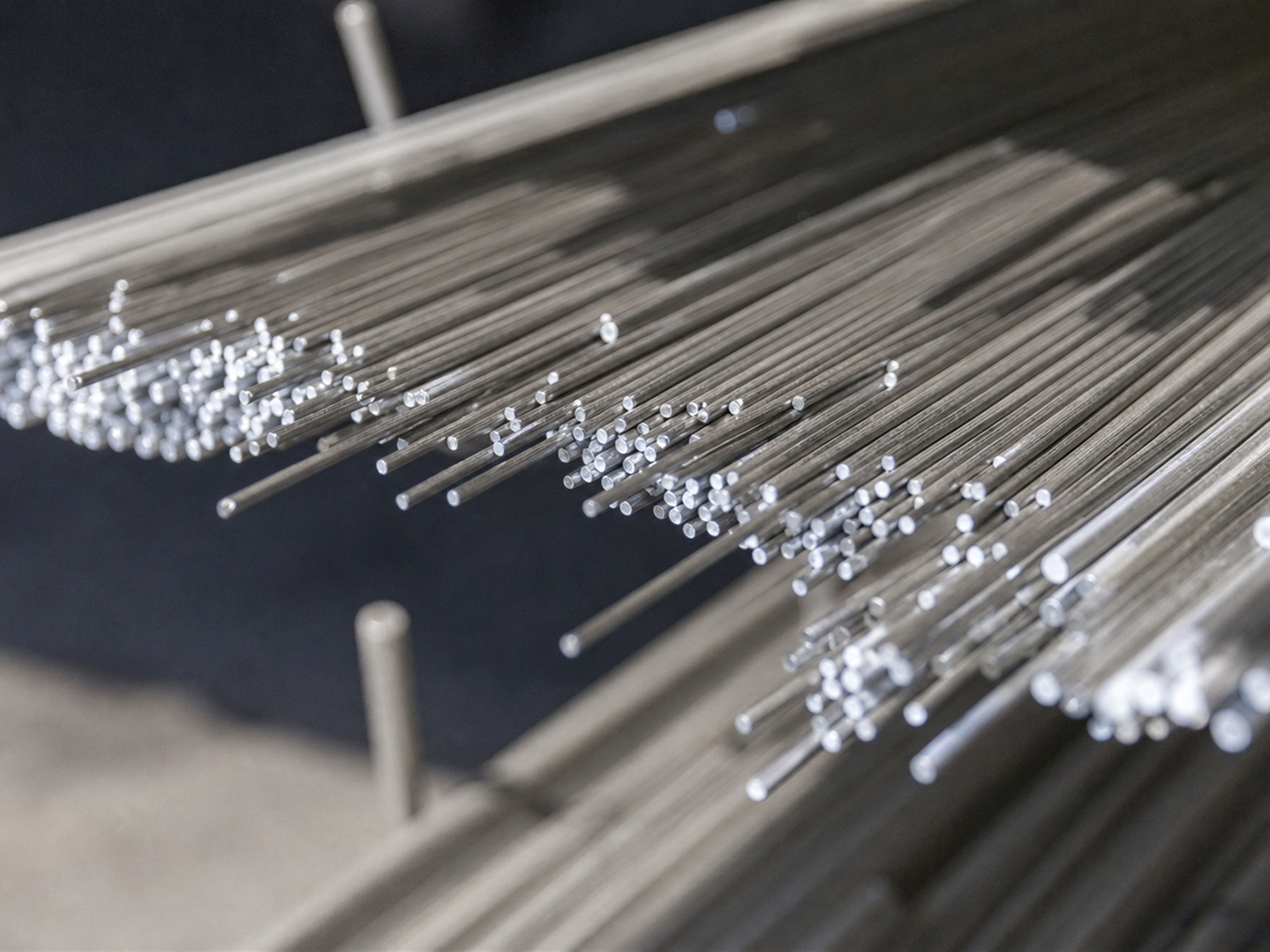
TB13 titanium alloy (~Ti-10Nb-2.5Mo), a novel beta-type titanium alloy, demonstrates significant application potential in next-generation military industries due to its high strength, low elastic modulus, excellent shape memory effect, and non-magnetic characteristics. Compared with conventional Grade 5 (Gr5) titanium alloy, TB13 reduces the elastic modulus by 40–50% while maintaining comparable strength levels, offering unique advantages in aerospace, naval equipment, and individual weapon systems. This article examines the material properties, military application directions, technical challenges, and future prospects of TB13 titanium alloy bars in defense applications.
1. Core Material Properties of TB13 Titanium Alloy
(1) Optimal Combination of Low Elastic Modulus and High Strength
The elastic modulus of TB13 titanium alloy is approximately 65–75 GPa, significantly lower than the 110–115 GPa of Gr5 titanium alloy. This characteristic enables TB13 to exhibit greater elastic deformation capacity under identical loads, effectively absorbing impact energy. Meanwhile, TB13 achieves a tensile strength of 950–1,050 MPa and a yield strength of ≥850 MPa, realizing a rare combination of low modulus and high strength.
(2) Shape Memory Effect
TB13 titanium alloy exhibits a pronounced shape memory effect, producing recoverable strain of up to 8% within the martensitic transformation temperature range (Ms approximately −50°C to −80°C). This property gives it unique value in military deployable structures, such as satellite antennas and missile control surfaces.
(3) Non-Magnetic Characteristics
As a non-magnetic material, TB13 titanium alloy generates no interference in strong magnetic field environments. This feature is of critical importance for submarine equipment, mine countermeasure systems, and stealth aircraft.
Table 1. Mechanical Property Comparison
| Property | TB13 Ti Alloy | Gr5 Ti Alloy | 316L Stainless Steel |
| Tensile Strength (MPa) | 950–1,050 | 895–950 | 515–620 |
| Elastic Modulus (GPa) | 65–75 | 110–115 | 200 |
| Density (g/cm³) | 4.6 | 4.43 | 8.0 |
| Non-Magnetic | Yes | Yes | No |
2. Military Application Directions of TB13 Titanium Alloy
(1) Aerospace
- Aircraft Landing Gear: The high strength and low elastic modulus of TB13 titanium alloy bars provide superior energy absorption during landing impacts, enhancing flight safety.
- Engine Compressor Blades: TB13’s high-temperature strength and fatigue resistance make it a candidate material for next-generation aircraft engine compressor blades.
- Missile Airframe Structures: TB13’s low density (4.6 g/cm³) and high specific strength can significantly reduce missile weight, increasing payload capacity and range.
(2) Naval Equipment
- Submarine Propeller Shafts: TB13’s non-magnetic property makes it ideal for submarine propeller shafts, effectively reducing the vessel’s magnetic signature.
- Deep-Sea Probe Pressure Hulls: The low elastic modulus of TB13 enables better deformation adaptability in deep-sea high-pressure environments.
- Mine Countermeasure Equipment: TB13’s non-magnetic characteristic is widely applied in mine countermeasure hull structures to prevent triggering magnetic mines.
(3) Individual Weapon Systems
- Firearm Suppressors: TB13 titanium alloy bars can be machined into high-performance firearm suppressors, with weight reduction exceeding 60% compared to steel suppressors due to low density.
- Optic Mount Brackets: TB13’s low elastic modulus minimizes the impact of shooting vibration on aiming accuracy.
- Exoskeleton Structures: The high strength-to-weight ratio of TB13 titanium alloy plays a key role in individual exoskeleton structural components.
Table 2. Military Application Performance Improvements
| Military Application | TB13 Advantage | Replacement Material | Performance Improvement | |
| Aircraft Landing Gear | Low modulus + high strength | 4340 Steel | Weight reduction: 40% | |
| Submarine Propeller Shaft | Non-magnetic + seawater corrosion resistant | Cu-Ni Alloy | Magnetic signal reduced by 90% | |
| Missile Airframe | High specific strength | Aluminum Alloy | Range increase: 15% |
3. Technical Challenges of TB13 Titanium Alloy
(1) Smelting and Processing Difficulty
TB13 titanium alloy contains high proportions of molybdenum and niobium, requiring strict control of interstitial elements such as oxygen, nitrogen, and hydrogen during smelting. The hot-working temperature window is narrow (900–1,000°C), imposing demanding requirements on processing techniques.
(2) Weldability
TB13 titanium alloy exhibits poorer weldability compared to Gr5. Special shielding gases and welding parameters are required during welding. The mechanical properties of the welded joint area may need to be restored through subsequent heat treatment.
(3) Cost Considerations
Molybdenum and niobium in TB13 titanium alloy are precious metals, resulting in high raw material costs. Currently, TB13 titanium alloy costs approximately 2–3 times that of Gr5, limiting its application in large-scale military equipment.
Table 3. Technical Challenges and Solutions
| Technical Challenge | Current Status | Solution | Expected Outcome | |
| Smelting Difficulty | Interstitial element control challenging | Vacuum consumable arc melting | Purity improvement: 50% | |
| Weldability | Weld joint strength below target | Electron beam welding + heat treatment | Weld strength recovery: 90% | |
| Cost Control | Price is 2-3x Gr5 | Alloy composition optimization | Cost reduction: 30-50% |
4. Future Development Trends
(1) Low-Cost Alloying Improvements
By partially substituting molybdenum and niobium with alternative elements (e.g., iron, chromium), developing low-cost TB13 variant alloys could potentially reduce material costs by 30–50%.
(2) Additive Manufacturing Technologies
Three-dimensional (3D) printing technology offers new pathways for manufacturing complex military components from TB13 titanium alloy. Selective laser melting (SLM) processes can directly fabricate complex structural parts with shape memory effects.
(3) Multi-Functional Integrated Design
Leveraging TB13 titanium alloy’s shape memory effect, low elastic modulus, and non-magnetic characteristics, multi-functional military materials integrating structural load-bearing, energy absorption, and signal stealth capabilities can be developed.
5. Conclusion
With its unique combination of low elastic modulus, high strength, shape memory effect, and non-magnetic characteristics, TB13 titanium alloy demonstrates broad application prospects in next-generation military industry. From aerospace to naval equipment, from individual weapons to stealth technology, TB13 titanium alloy is emerging as a new favorite in the field of military materials. With advancements in smelting and processing technologies and reductions in cost, TB13 titanium alloy will play an increasingly important role in national defense construction.
FAQ
Q1: What advantages does TB13 titanium alloy offer over Gr5?
TB13 has a 40-50% lower elastic modulus than Gr5, exhibits significant shape memory effect, and possesses stronger non-magnetic properties. However, Gr5 offers better weldability, formability, and lower cost.
Q2: Can TB13 titanium alloy be used for underwater equipment?
Yes. TB13 titanium alloy demonstrates excellent corrosion resistance in seawater environments. Its non-magnetic property makes it particularly suitable for submarines and underwater exploration equipment.
Q3: What is the mass production capacity of TB13 titanium alloy?
Currently, the annual production capacity of TB13 titanium alloy is approximately 500-1,000 metric tons, primarily serving aerospace and military defense sectors. With technological advancement, production capacity is expected to increase significantly.
Finding a Reliable TB13 Titanium Alloy Supplier
Baotou Titanium Valley Titanium Nickel Zirconium Materials Processing Co., Ltd. is a professional manufacturer of high-end rare metal processing. Equipped with a Danieli rolling production line from Italy, the company achieves an annual titanium alloy output exceeding 5,000 metric tons, providing full-size customization and EN 10204 3.1 certification services. Contact us immediately for technical support and quotation:
For a broader view of available grades, supply forms, and related specifications, explore our Titanium Rod category.
For product-level details and supply options, you can also review our TB13 Titanium Rod page.
References
- GB/T 3621-2021 Titanium and Titanium Alloy Bars [S]. Beijing: Standards Press of China, 2021.
- Wang Jianguo. “Application Research of Novel Beta-Type Titanium Alloys in the Military Defense Sector.” Journal of Aeronautical Materials, 2022, 42(3): 55-63.