
Understanding Grade 4 Titanium Foil Composition Strength and Applications
- Grade 4 Titanium Foil
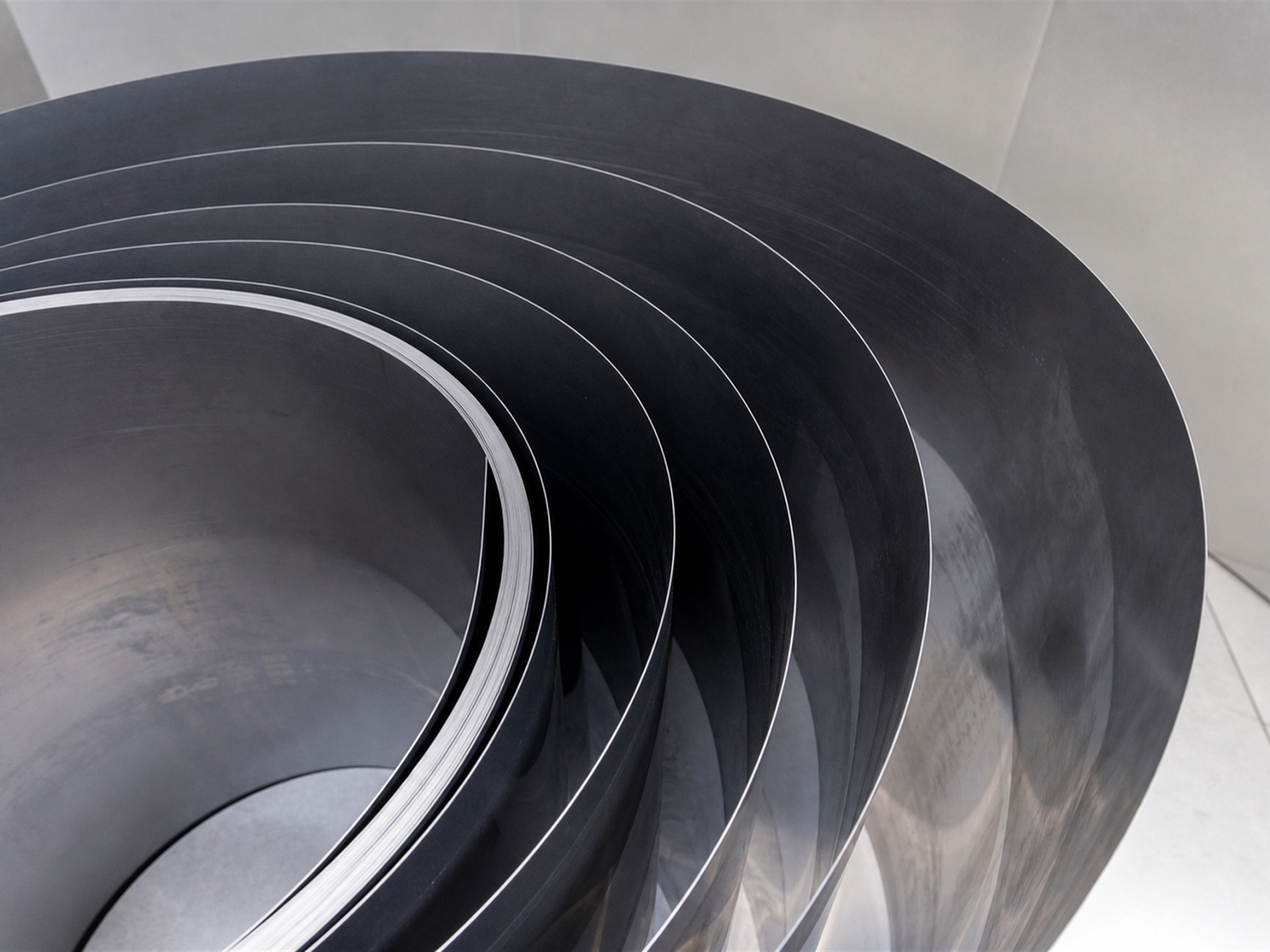
Grade 4 (Gr4) titanium foil is the highest-strength grade among commercially pure titanium alloys. It has earned widespread adoption across numerous industrial sectors due to its outstanding combination of properties. By increasing the oxygen content (up to 0.40%), Gr4 achieves significant solid-solution strengthening, with a yield strength exceeding 450 MPa—approximately 1.6 times that of Gr2 titanium foil. At the same time, Gr4 retains the inherent corrosion resistance, biocompatibility, and non-magnetic characteristics of commercial-purity titanium. This article examines the properties of Gr4 titanium foil from five perspectives: chemical composition, mechanical performance, corrosion resistance, processing techniques, and typical applications.
1. Chemical Composition of Gr4 Titanium Foil
The chemical composition of Gr4 titanium foil strictly conforms to the requirements of ASTM B265:
| Element | Symbol | Content (%) | Role / Notes |
| Titanium | Ti | Balance | Base element |
| Oxygen | O | 0.20 – 0.40 | Primary strengthening element |
| Iron | Fe | ≤ 0.30 | Impurity |
| Carbon | C | ≤ 0.08 | Impurity |
| Nitrogen | N | ≤ 0.05 | Impurity |
| Hydrogen | H | ≤ 0.015 | Impurity |
| Each Other Element | — | ≤ 0.10 | Individual impurity limit |
| Total of Other Elements | — | ≤ 0.40 | Cumulative impurity limit |
Oxygen is the key element enabling the high-strength characteristics of Gr4 titanium foil. Compared to Gr2 (oxygen ≤ 0.18%), the oxygen content in Gr4 is nearly doubled, delivering substantial strength enhancement.
2. Mechanical Properties of Gr4 Titanium Foil
Typical mechanical properties of annealed Gr4 titanium foil:
| Property | Value |
| Tensile Strength | ≥ 550 MPa |
| Yield Strength | ≥ 450 MPa |
| Elongation | ≥ 15% |
| Hardness | HB 250–320 (or HV 250–310) |
The strength–ductility balance of Gr4 titanium foil surpasses that of the titanium alloy Gr5 (Ti-6Al-4V). Although Gr5 can achieve tensile strengths above 900 MPa, its elongation is limited to only 10–15%, and its corrosion resistance is inferior to that of Gr4. Gr4 maintains high strength while retaining 15% elongation, meeting the forming and processing requirements for most applications.
Comparison of Mechanical Properties Across Titanium Grades
| Performance Indicator | Gr1 | Gr2 | Gr3 | Gr4 | Gr5 (Ti-6Al-4V) |
| Tensile Strength (MPa) | ≥ 240 | ≥ 340 | ≥ 450 | ≥ 550 | ≥ 895 |
| Yield Strength (MPa) | ≥ 170 | ≥ 275 | ≥ 345 | ≥ 450 | ≥ 825 |
| Elongation (%) | ≥ 24 | ≥ 20 | ≥ 18 | ≥ 15 | ≥ 10 |
| Oxygen Content (%) | ≤ 0.10 | ≤ 0.18 | ≤ 0.25 | 0.20 – 0.40 | ≤ 0.20 |
| Density (g/cm³) | 4.51 | 4.51 | 4.51 | 4.51 | 4.43 |
3. Corrosion Resistance of Gr4 Titanium Foil
Gr4 titanium foil exhibits excellent corrosion resistance in the following media:
| Corrosive Medium | Corrosion Rate |
| Seawater | < 0.001 mm/year |
| Chloride solutions | No pitting or crevice corrosion |
| Nitric acid (any concentration) | < 0.001 mm/year |
| Organic acids (acetic, formic) | < 0.05 mm/year |
| Sodium hydroxide (concentration ≤ 50%) | < 0.01 mm/year |
The corrosion resistance of Gr4 is comparable to that of Gr2. The addition of oxygen does not compromise the stability of the passive oxide film.
Corrosion Rate Comparison (mm/year)
| Corrosive Medium | Gr4 | Gr2 | 316L Stainless Steel |
| Seawater | < 0.001 | < 0.001 | 0.1 |
| 5% H₂SO₄ | 0.05 – 0.1 | 0.05 – 0.1 | > 2 |
| 30% HNO₃ | < 0.001 | < 0.001 | 0.5 |
4. Processing Techniques for Gr4 Titanium Foil
(1) Cold Forming
Gr4 titanium foil can undergo cold forming processes such as bending, stamping, and flanging. For complex forming operations, intermediate annealing at 700–800 °C is recommended to restore ductility.
(2) Welding
Gr4 titanium foil is compatible with TIG (Tungsten Inert Gas), MIG (Metal Inert Gas), and laser welding. Weld joint strength can reach 85–90% of the base material.
(3) Machining
Due to the relatively poor thermal conductivity of Gr4 titanium foil, heat accumulation can occur during cutting. Adequate cutting fluid and sharp cutting tools are strongly recommended.
5. Typical Applications of Gr4 Titanium Foil
Application Overview for Gr4 Titanium Foil
| Application Field | Gr4 Foil Components | Key Performance Requirements | Alternative Materials |
| Chemical Equipment | Reactor linings | Resistance to strong corrosion | 316L stainless steel |
| Marine Engineering | Seawater desalination tube plates | Seawater corrosion resistance | Titanium-aluminum bronze |
| Medical Devices | Orthopedic implant plates | Biocompatibility + high strength | Cobalt-chromium alloy |
| Aerospace | Aircraft interior panels | Lightweight + corrosion resistance | Aluminum alloys |
Additional application areas include:
- Chemical equipment: High-pressure reaction vessels, heat exchanger linings, and piping systems.
- Marine engineering: Seawater desalination equipment, ship components, and subsea pipelines.
- Medical devices: Orthopedic implants, surgical instruments, and dental restorations.
- Aerospace: Aircraft skin panels, interior components, and engine parts.
6. Conclusion
With its high strength, excellent corrosion resistance, and favorable processability, Gr4 titanium foil plays a vital role across a wide range of industrial sectors. For applications requiring a balanced combination of strength and corrosion resistance, Gr4 titanium foil represents the optimal choice among commercially pure titanium materials.
FAQ
Q1: What is the difference between Gr4 titanium foil and Gr5 titanium alloy?
Gr4 is a commercially pure titanium grade (oxygen content 0.20–0.40%), whereas Gr5 is a titanium alloy (Ti-6Al-4V). Gr5 offers higher strength (tensile strength ≥ 895 MPa), but Gr4 provides superior corrosion resistance and formability.
Q2: Can Gr4 titanium foil be surface-colored?
Yes. Gr4 titanium foil can undergo anodization to produce colored oxide films on its surface (gold, blue, purple, etc.). This treatment not only enhances aesthetics but also further improves corrosion resistance.
Q3: What is the minimum thickness available for Gr4 titanium foil?
The standard minimum thickness for Gr4 titanium foil is 0.05 mm. Special specifications can be customized down to 0.025 mm.
Finding a Reliable Gr4 Titanium Foil Supplier
Baoti Titanium Valley Titanium, Nickel & Zirconium Material Processing Co., Ltd. is a professional manufacturer of high-end rare metal processed products. Equipped with a Danieli rolling production line from Italy, the company produces over 2,000 metric tons of titanium foil annually and offers full-size customization along with EN 10204 3.1 certification services. Contact us immediately for technical support and quotation:
For a broader view of available grades, supply forms, and related specifications, explore our Titanium Foil category.
For product-level details and supply options, you can also review our AMS 4983 Ti-15V-3Al-3Cr-3Sn Titanium Foil page.
References
ASTM International. ASTM B265-21 Standard Specification for Titanium and Titanium Alloy Sheet and Plate. West Conshohocken: ASTM International, 2021.
GB/T 3622.1-2017 Titanium and Titanium Alloy Plates and Sheets — Part 1: Dimensions, Tolerances and Allowances. Beijing: Standards Press of China, 2017.