
What Are the Key Material Properties of Nickel 200 Wire?
- Nickel 200 Wire
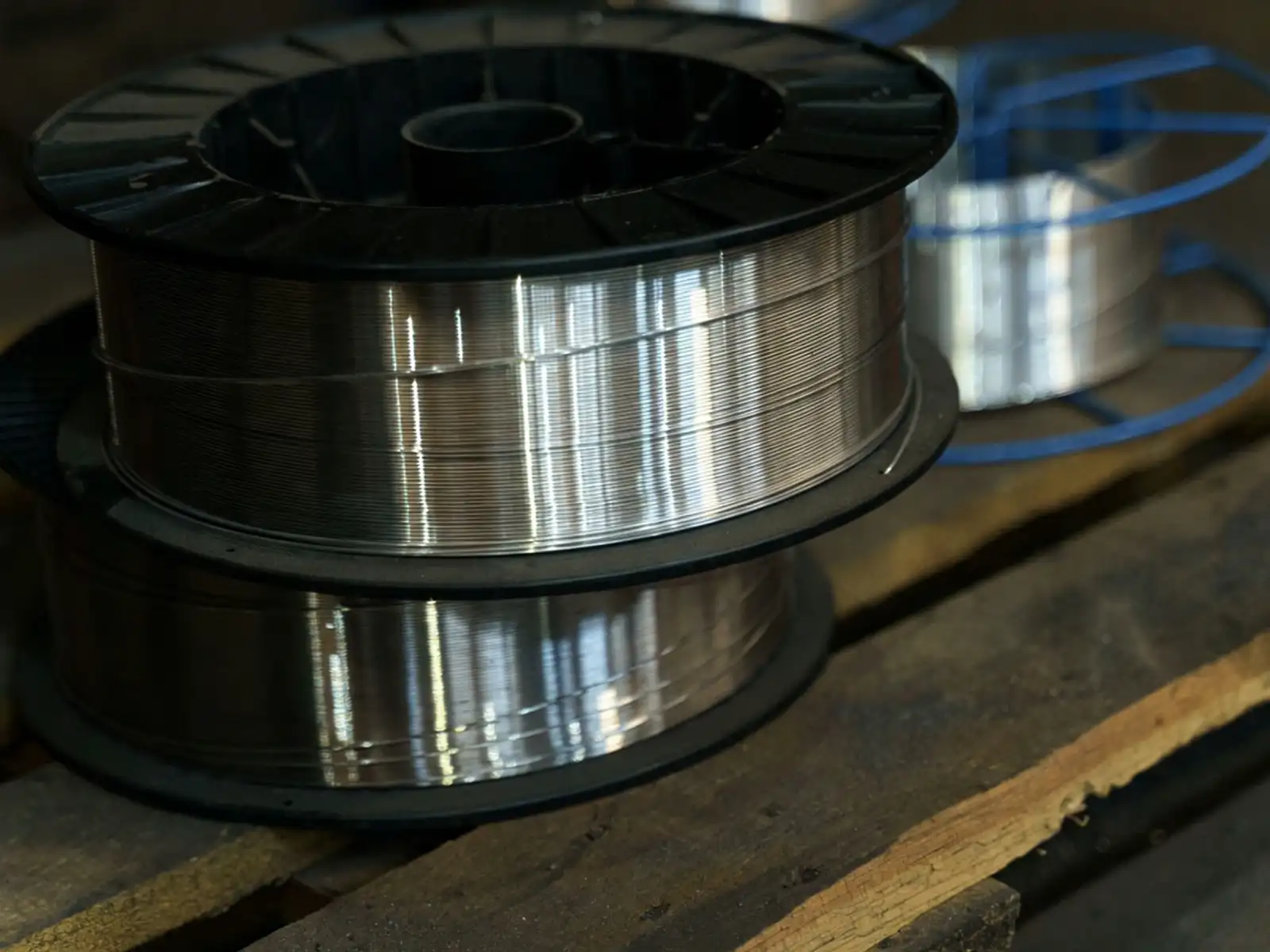
When you are choosing a corrosion-resistant conductive material, Nickel 200 Wire stands out for its excellent overall performance. This high-purity industrial pure nickel wire contains ≥99.5% nickel and exhibits impressive material properties: super alkali corrosion resistance, excellent electrical and thermal conductivity, good low-temperature toughness, and ferromagnetism (magnetic permeability is about 100-200). In chemical equipment, electronic components, medical equipment and high-temperature working conditions, these key performance parameters directly determine the service life and production efficiency of the equipment. An in-depth understanding of the core performance indicators of nickel 200 wire can help engineers make more accurate material selection decisions and avoid equipment failure and cost losses caused by material mismatch.
1. What Are the Chemical Composition and Purity Control of Nickel 200 Wire?
(1) What Should You Know About Strict Requirements for Core Ingredients?
The chemical composition control of Nickel 200 Wire is extremely strict, and the main component nickel + cobalt content must be ≥99.5%. Impurity elements are strictly limited: iron ≤ 0.10%, copper ≤ 0.10%, manganese ≤ 0.05%, silicon ≤ 0.05%, carbon ≤ 0.10%, sulfur ≤ 0.005%, phosphorus ≤ 0.002%. This ultra-high purity composition control ensures that the material will not cause electrochemical corrosion due to impurity elements in chemical media.
(2) What Are the Purity’s Direct Impact on Performance?
Material purity directly affects conductivity and corrosion resistance. When the nickel content is less than 99.0%, the resistivity will increase significantly and the conductive performance will decrease significantly. Excessive carbon and sulfur content can lead to grain boundary embrittlement, especially in high temperature environments, which is prone to cracks. Controlling the phosphorus content below 20ppm can effectively prevent thermal embrittlement and ensure the processing performance and welding quality of the wire.
(3) What Should You Know About Batch Stability and Quality Traceability?
Professional manufacturers use dual testing of full-process spectral analysis and chemical analysis to ensure that the fluctuation of the main element nickel content in each batch is controlled within +/-0.02% (absolute value of mass fraction). This stability is critical for electronic component manufacturing and electrochemical applications. The complete quality traceability system can provide EN 10204 3.1 material certificates to meet the strict certification requirements of the aerospace and medical device industries.
element | Content standard | Performance impact |
Ni+Co | ≥99.5% | Determines basic corrosion resistance and electrical conductivity |
Fe | ≤0.10% | Excessive reduction in alkali resistance |
C | ≤0.10% | Affect high temperature stability |
S | ≤0.005% | Exceeding the standard causes thermal brittleness |
2. What Are the Mechanical Performance Parameters and Processing Adaptability?
(1) What Are the Balanced Design of Strength and Plasticity?
The tensile strength of soft Nickel 200 Wire is ≥350 MPa, the yield strength is ≥130 MPa, and the elongation is ≥30%. This strength-plasticity combination enables it to withstand complex cold working deformations. The hardness range of 85-95 HB is medium hardness, which not only ensures a certain mechanical strength, but also facilitates subsequent winding, stamping and welding operations.
(2) What Are the Cold Work Hardening Properties?
Nickel 200 wire has a significant work hardening effect. After 30% cold deformation, the tensile strength can be increased to more than 550 MPa, but the elongation will drop to about 15%. Through intermediate annealing treatment (temperature 700-800℃), the plasticity of the material can be restored and multi-pass deep processing can be achieved. This controlled hardening-softening cycle makes it suitable for manufacturing precision springs, complex grids and microscopic coils.
(3) What Should You Know About Dimensional Accuracy and Surface Quality?
The advanced multi-pass cold drawing process combined with precision molds can achieve a diameter tolerance of +/-0.01mm (for specific specifications, such as φ0.1~0.5mm filaments, special processes can be used). Surface treatment methods include bright surface, semi-bright surface, pickled surface and polished surface, and the roughness can be controlled at Ra 0.2-0.8um. Good surface quality reduces stress concentration points, prevents the initiation of fatigue cracks, and extends the working life of electrical contact components.
(4) What Are the Fatigue Performance and Long-term Reliability?
Under the action of alternating stress, the fatigue strength of nickel 200 wire is about 30-40% of the tensile strength. Reasonable control of stress levels can extend the working life of parts to more than 10⁷ cycles. This fatigue resistance ensures the long-term stability of spring components and connectors in vibration environments and thermal cycling conditions, reducing maintenance frequency and replacement costs.
3. What Are the Electrical and Thermal Performance?
(1) What Are the Conductivity and Resistance Stability?
The resistivity of Nickel 200 Wire is 6.84×10⁻⁸ Ω·m. Although it is not as good as copper, it has obvious advantages in conductive scenarios that require corrosion resistance. The temperature coefficient of resistance is about 6000 ppm/ C, and the resistance change is predictable and reversible in the range of -50℃ to +300℃. This property makes it suitable for manufacturing precision resistive components and temperature sensors.
(2) What Are the Thermal Conductivity and Thermal Management?
The thermal conductivity of the material is 70 W/(m·K), which is about 18% of copper, but it is irreplaceable in corrosion-resistant heat exchange applications. The higher volume heat capacity brought by the density of 8.90 g/cm³ is beneficial to heat buffering. In heat exchanger tube bundles, heating coils and cooling components, Nickel 200 wire can withstand temperature fluctuations over time without performance degradation.
(3) What Are the Magnetic Performance Description?
Nickel 200 is a ferromagnetic material at room temperature, with a magnetic permeability of about 100 to 200. It is not suitable for use in environments that require completely non-magnetic materials (such as MRI equipment, precision electronic compasses, etc.). Special attention should be paid to the selection. If a non-magnetic scene is required, nickel 201 or nickel-based alloy (such as Hastelloy C-276) should be selected. This characteristic also makes it have certain applications in the field of electromagnetic shielding, but it needs to be distinguished from non-magnetic requirements.
Performance parameters | numerical value | Application advantages |
Resistivity | 6.84×10⁻⁸Ω·m | stable conductivity |
thermal conductivity | 70 W/(m·K) | Moderate heat conduction |
melting point | 1453-1455℃ | High temperature resistance |
4. What Should You Know About Corrosion Resistance and Environmental Adaptability?
(1) What Are the Excellent Performance in Highly Alkaline Media?
The corrosion rate of Nickel 200 Wire in strong alkaline solutions such as sodium hydroxide and potassium hydroxide is <0.05 mm/year, which is far superior to stainless steel materials. It remains stable for a long time even in boiling 50% sodium hydroxide solution. This alkali resistance makes it the material of choice for chlor-alkali industrial electrolysers, alkaline cleaning equipment and degreasing units.
(2) What Should You Know About Adaptability to Reducing Acid Environments?
In reducing acids such as dilute sulfuric acid and phosphoric acid, nickel 200 shows good corrosion resistance, especially under deoxidation conditions. However, it should be noted that the corrosion resistance is poor in strong oxidizing acids such as high-temperature concentrated nitric acid. When selecting materials, the redox properties of the medium must be accurately judged to avoid misunderstandings.
(3) What Should You Know About Long-term Protection From Seawater and Salt Spray Environments?
In marine atmosphere and 3.5% NaCl solution, the corrosion rate of nickel 200 is <0.1 mm/year. The dense passivation film formed on the surface can effectively block chloride ion erosion. This corrosion resistance makes it suitable for manufacturing desalination equipment, offshore platform instruments and ship electrical connections, reducing maintenance frequency and life cycle costs.
(4) What Should You Know About High Temperature Oxidation and Special Atmosphere?
Nickel 200 can be used for a long time below 315℃ in dry air. The oxide film grows slowly and adheres firmly. However, in a sulfur-containing atmosphere, the temperature must be strictly controlled below 315℃, otherwise sulfur corrosion will occur and the material will embrittle. In reducing or neutral atmospheres, the operating temperature can be extended to 600℃ to meet the requirements of medium-temperature heating elements.
corrosive environment | Corrosion resistance grade | Typical applications |
sodium hydroxide solution | excellent | Chlor-alkali electrolysis |
dilute sulfuric acid | good | Chemical pipeline |
sea water/salt spray | good | Marine equipment |
high temperature oxidizing acid | Not recommended | Need to use other materials |
5. What Are the Low Temperature Performance and Adaptability to Special Working Conditions?
(1) What Are the Low Temperature Toughness Retention Ability?
Unlike many metallic materials, Nickel 200 Wire does not undergo brittle transition at low temperatures. At the liquid nitrogen temperature of -196℃, the material still maintains an elongation of more than 20% and good impact toughness. This low-temperature plasticity makes it an ideal material for cryogenic vessels, liquefied gas pipelines and cryogenic equipment.
(2) What Should You Know About Temperature Cycling Stability?
After repeated thermal cycles of the material in the range of -100℃ to +400℃, the organizational structure remains stable without phase change or embrittlement. This thermal stability is critical for aerospace thermal control systems, thermal cycling test equipment and temperature sensors. The thermal expansion coefficient of 13.3×10⁻⁶/ C is at a medium level, and appropriate space for thermal deformation must be reserved during design.
(3) What Should You Know About Vacuum and Ultra-pure Environment Adaptability?
High-purity nickel 200 evaporates at a very low rate in a vacuum environment and does not pollute the vacuum system. In semiconductor manufacturing, electron beam equipment and mass spectrometers, this material purity ensures product quality. The low gas content also makes it suitable for ultra-high vacuum seals and electron tube grid materials.
(4) What Are the Radiation Environment Tolerance?
Nickel 200 degrades slowly under neutron irradiation and gamma ray environments. Although certain radiation hardening and hydrogen embrittlement effects will occur, reasonable design margins can meet the requirements for use in nuclear power plant instruments and medical radiation equipment. The properties of irradiated materials can be partially restored by annealing.
6. What Is the Conclusion?
Nickel 200 Wire has become an indispensable functional material in the chemical, electronic, medical and high-temperature fields with its high purity of ≥99.5%, excellent alkali corrosion resistance, stable electrothermal performance, ferromagnetic properties (magnetic permeability about 100~200) and good low-temperature toughness. Accurate understanding of its chemical composition, mechanical properties, electrothermal characteristics, corrosion resistance mechanism and special environmental adaptability can help engineers optimize design, extend equipment life, reduce maintenance costs, and achieve precise matching of material performance and application requirements.
FAQ
Q1: What is the difference between nickel 200 wire and nickel 201, and how to choose?
The carbon content of nickel 200 is ≤0.10%, and the carbon content of nickel 201 is ≤0.02%. For working conditions above 315℃, low-carbon nickel 201 is preferred to avoid embrittlement caused by graphite precipitation. The performance of the two is close in normal to medium temperature environments, and the cost of nickel 200 is more economical. Electronic and chemical applications often use Nickel 200 to meet the requirements.
Q2: What should we pay attention to when welding nickel 200 wire?
It is recommended to use nickel-based welding materials (such as ERNi-1), and argon arc welding has the best effect. Oil dirt and oxides must be thoroughly removed before welding, and the interlayer temperature should be controlled below 150℃. Avoid welding in high temperature oxidizing atmosphere to prevent carbide precipitation. After welding, annealing at 600℃ can be performed to eliminate residual stress and improve joint toughness.
Q3: How to judge whether nickel 200 wire meets quality standards?
Spectroscopic analysis verifies chemical composition (especially nickel content and impurity elements), tensile testing confirms mechanical properties, resistivity testing evaluates electrical conductivity, and metallography examines grain size and inclusions. Qualified suppliers should provide complete material certificates (EN 10204 3.1), dimensional inspection reports and surface quality inspection records.
7. What Should You Know About Get Professional Support Now?
As a professional nickel wire manufacturer, Baoji Titanium Valley Titanium Nickel and Zirconium Material Processing Co., Ltd. is equipped with Italian Danieli continuous rolling production lines and advanced heat treatment equipment, with an annual production capacity of over 20, 000 tons. It can provide customized processing of φ4-200mm full specification Nickel 200 Wire, supporting small batch trial orders and large-scale mass production. Welcome to contact us for technical consultation and sample testing: sales@titaniumvalleys. com
References
- Wang Jianping, Li Zhigang. Handbook of Nickel and Nickel-based Alloys[M]. Beijing: Chemical Industry Press, 2015.
- National Technical Committee for Standardization of Nonferrous Metals. GB/T 2072-2020 Nickel and Nickel Alloy Plate[S]. Beijing: China Standards Press, 2020.
- Zhang Yulin, Liu Zhiquan. Corrosion and protection of nickel-based alloys[M]. Beijing: Metallurgical Industry Press, 2012.
- China Nonferrous Metals Industry Association. GB/T 15007-2017 Nickel and Nickel Alloy Bars[S]. Beijing: China Standards Press, 2017.