
Where Can I Buy Nickel 200 Wire for Industrial Use?
- Nickel 200 Wire
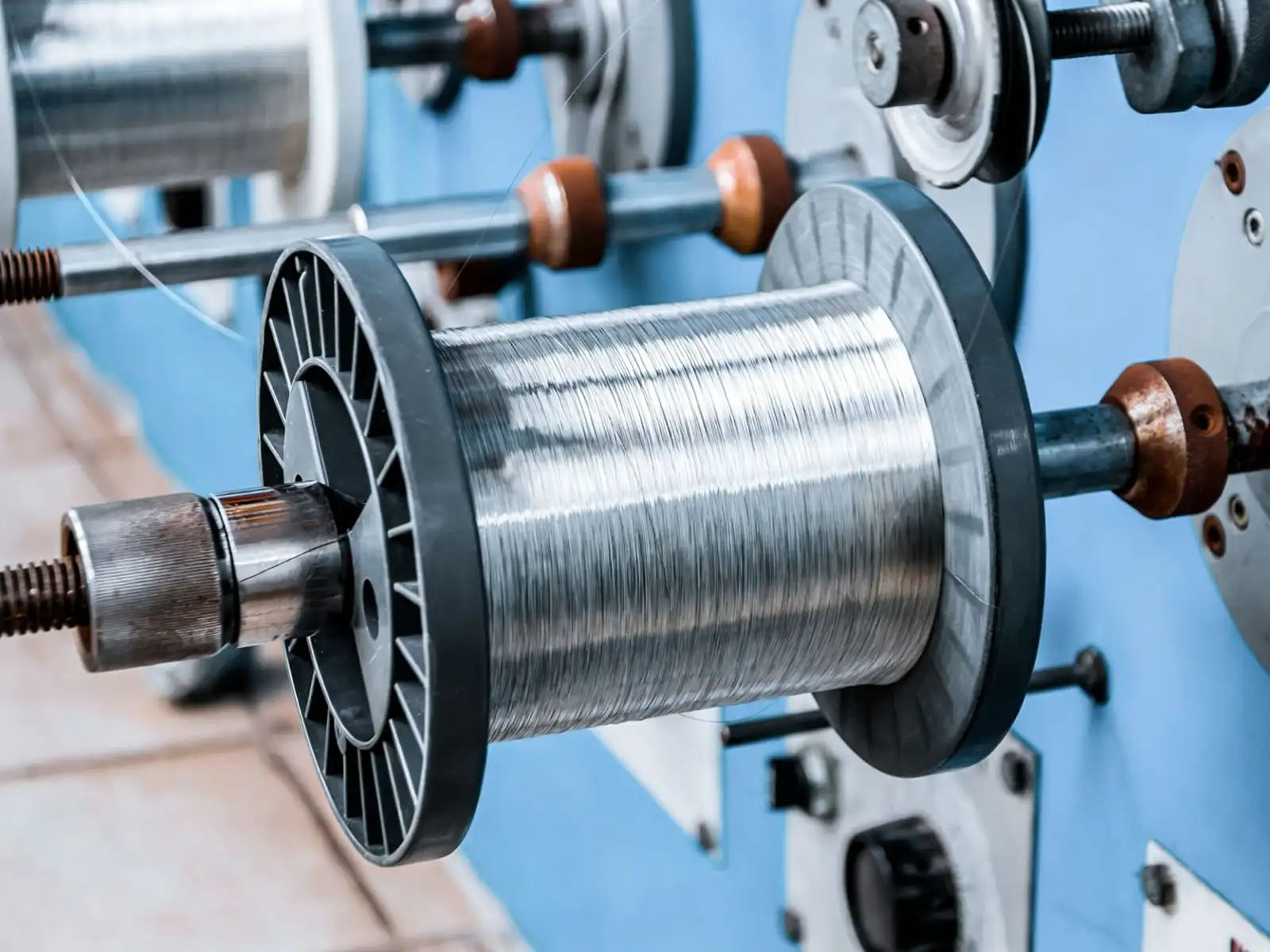
Industrial nickel 200 wire is widely used in chemical industry, electronics, medical and other fields. Finding reliable suppliers is crucial. Baoji Titanium Valley Titanium Nickel Zirconium Material Processing Co., Ltd., as a professional high-end rare metal processing enterprise, provides high-quality products that comply with international standards such as ASTM B161. We are equipped with an Italian Danieli continuous rolling production line with an annual production capacity of more than 5, 000 tons, focusing on precision nickel wire processing. Product purity ≥99.5%, diameter range φ0.1mm-φ12mm can be customized. We serve high-demand fields such as North American aerospace, European high-end manufacturing, Japanese precision electronics and Korean battery industry, providing a complete quality traceability system and EN 10204 3.1 material certification. Whether you need small batches of samples or large-scale supply, we can provide stable quality and professional technical support.
1. What Are the Industrial Standards and Material Properties of Nickel 200 Wire?
(1) What Should You Know About Interpretation of the Global Unified Standards System?
Nickel 200 wire has multiple equivalent grade systems around the world. It is called Nickel 200 or UNS N02200 in the American standard, the European standard corresponds to Ni99.5 (material number 2.4060), and the Japanese industrial standard is JIS H 4551. The core feature of this material is that the nickel + cobalt content is no less than 99.5%, and impurity elements such as iron and copper are strictly controlled. The uniformity of international standards ensures the consistency of products in cross-border procurement and application, and avoids technical risks caused by differences in standards.
(2) What Are the Chemical Composition and Purity Control?
High purity is the core competitiveness of Nickel 200 filament. The total amount of nickel and cobalt in the material must reach more than 99.5%, iron content ≤0.10%, copper ≤0.10%, manganese ≤0.05%, silicon ≤0.05%, and carbon ≤0.15%. Sulfur and phosphorus, as harmful elements, are strictly limited to less than 0.005% and 0.002%. This strict composition control ensures the material’s excellent corrosion resistance in highly alkaline environments and its stable performance in electrochemical applications. Each batch of products must verify its composition through spectral analysis and be equipped with complete material certification documents.
element | Ni+Co | Fe | Cu | Mn | Si | C | S | P |
content(%) | ≥99.5 | ≤0.10 | ≤0.10 | ≤0.05 | ≤0.05 | ≤0.15 | ≤0.005 | ≤0.002 |
(3) What Are the Physical and Mechanical Property Parameters?
Nickel 200 wire has a density of 8.90 g/cm³, a melting point range of 1453-1455℃, a resistivity of 6.84×10⁻⁸ Ω·m, and a thermal conductivity of 70 W/(m·K). The tensile strength of the annealed material is ≥350 MPa, the yield strength is ≥130 MPa, the elongation is ≥30%, and the Brinell hardness is 80-100 HB. These performance parameters make it excellent in electrical and thermal conductivity, high temperature resistance, plastic processing, etc. Being completely non-magnetic makes it the material of choice in precision electronics and medical devices.
2. How Is Core Application Scenarios of Industrial Grade Nickel 200 Wire?
(1) What Should You Know About Corrosion Resistance Needs of Chemical and Chlor-alkali Industries?
The chlor-alkali industry faces the challenge of highly corrosive media. Traditional materials are prone to intergranular corrosion in concentrated alkali solutions. Nickel 200 wire shows excellent corrosion resistance in strong alkali environments such as sodium hydroxide and potassium hydroxide, and can be used to manufacture electrode plates, alkali filters, and pump valve components. It is also stable in reducing acid media such as dilute sulfuric acid. The heat exchanger tube bundles in seawater desalination and salt spray environments are braided with nickel 200 wire, which can effectively extend the service life of the equipment and significantly reduce downtime maintenance costs.
(2) What Should You Know About Conductive Requirements for the Electronics and Battery Industry?
In lithium battery manufacturing, the conductive properties of the current collector directly affect battery efficiency and cycle life. Nickel 200 wire is widely used to make battery tabs and conductive connectors due to its low resistivity and stable electrochemical properties. Transformer windings and electromagnetic coils require materials with excellent conductivity and processing stability. Precision resistors and heating elements utilize the controllable resistance characteristics of nickel wire to achieve temperature regulation. The lead frame in the semiconductor package uses high-purity nickel wire to prevent impurities from contaminating the chip.
(3) What Are the Non-magnetic Properties of Medical and Precision Machinery?
Medical guidewires need to remain non-magnetic in magnetic resonance imaging (MRI) environments to avoid imaging interference and safety hazards. The completely non-magnetic nature of Nickel 200 wire makes it an ideal material for interventional medical devices, stents, and probes. Hairsprings and precision springs in watch manufacturing require materials with high elasticity and fatigue resistance. Temperature sensors and high-temperature fasteners in the aerospace field utilize the high-temperature stability and oxidation resistance of nickel wire to ensure reliable operation under extreme working conditions.
Application areas | Typical products | core performance requirements |
Chemical chlor-alkali | Electrode plates, filters, pump valves | Resistant to strong alkali corrosion and reducing media |
electronic battery | Battery tabs, conductive sheets, electromagnetic coils | Low resistivity, high conductivity stability |
Medical precision | Interventional guide wires, MRI instruments, precision springs | Non-magnetic, high purity, anti-fatigue |
High temperature working condition | Furnace components, heating elements, sensors | High temperature oxidation resistance, thermal stability |
3. What Should You Know About Production Process and Quality Control of Nickel 200 Wire?
(1) What Should You Know About Advanced Rolling and Drawing Technology?
Modern nickel wire production adopts a multi-pass cold drawing process, starting from the nickel rod blank and going through continuous rolling, intermediate annealing, precision drawing and other links. The automation rate of Italy’s Danieli continuous rolling production line exceeds 90%, and it can achieve full-size coverage from φ4mm to φ200mm in diameter (the diameter range of wire products is φ0.1mm-φ12mm, and rods can be customized). The precision drawing equipment is equipped with a real-time online diameter measuring system. The tolerance for fine wires is controlled within +/-0.005mm, and the thick wires are controlled according to international standard percentages. Stress relief and grain refinement during multi-pass processing ensure that the material has excellent plasticity and uniform structure.
(2) What Should You Know About Heat Treatment and Surface Treatment Process?
Annealing treatment is a key process for regulating the performance of nickel wire. By controlling the heating temperature (usually 600-900℃) and holding time, work hardening can be eliminated and the material plasticity can be restored. Atmosphere protected annealing avoids surface oxidation and maintains material purity. Surface treatment includes four types: glossy surface, semi-glossy surface, pickled surface, and polished surface. The bright surface is suitable for decoration and precision electronics, the pickled surface is suitable for welding to remove oxide scale, and the polished surface is used for medical devices with high cleanliness requirements. Surface quality directly affects subsequent processing and service life.
(3) What Should You Know About Whole Process Quality Traceability System?
Quality control runs through the entire process of raw materials entering the factory, production process, and finished product inspection. The chemical composition is verified by spectral analysis, the mechanical properties are confirmed by tensile testing and hardness testing, and the dimensional accuracy is verified by a three-dimensional coordinate measuring instrument. Each batch of products is equipped with EN 10204 3.1 material certificate, recording the melting batch number, chemical composition, mechanical properties, and heat treatment parameters. The traceability system ensures that when problems occur, the root cause can be quickly located. The product undergoes 100% visual inspection before leaving the factory to ensure that there is no scale, no cracks, no burrs, and the straightness is up to standard.
4. How to Choose a Reliable Nickel 200 Wire Supplier?
(1) What Should You Know About Equipment Capability and Capacity Assessment?
The supplier’s production equipment directly determines the product quality and delivery capacity of nickel 200 wire. Enterprises equipped with internationally advanced rolling lines and precision drawing equipment can provide stable batch consistency. A production line with an annual production capacity of more than 5, 000 tons shows that the company has large-scale supply capabilities and can meet the demand for large-scale long-term orders. Production lines with an automation rate of more than 90% reduce human interference and improve product accuracy. Check whether the supplier has complete heat treatment and surface treatment equipment, as well as online inspection systems.
(2) What Should You Know About Quality Certification and Standard Enforcement?
International certification is an important symbol of quality assurance. Suppliers should be able to provide implementation capabilities of international standards such as ASTM and JIS, as well as ISO 9001 quality management system certification. Material certification documents must include complete chemical composition, mechanical properties, and heat treatment records. Third-party testing reports add credibility. Examine the supplier’s quality control process, including raw material inspection, process monitoring, and finished product testing for completeness. Whether it can provide small batch samples and technical support services reflects the company’s professional capabilities and customer service awareness.
(3) What Should You Know About Customized Services and Technical Support?
Industrial applications often require non-standard sizes and special properties. High-quality suppliers should have flexible customization capabilities, including adjustment of diameter, length, surface condition, and mechanical properties. The technical team can provide material selection suggestions based on customer working conditions and solve technical problems in processing and use. Small batch trial order service reduces customers’ trial and error costs. Stable supply cycle and reasonable inventory management ensure that project progress is not affected. After-sales services include quality traceability, anomaly analysis, improvement suggestions and other value-added services.
Assessment Dimensions | key indicators | Quality supplier standards |
production capacity | Equipment advancement, annual production capacity, automation rate | Internationally advanced equipment, annual production capacity >5, 000 tons, automation >90% |
Quality system | Standard implementation, certification qualifications, testing capabilities | Multi-standard certification, EN 10204 3.1 certificate, full testing |
Service capability | Customization scope, technical support, delivery cycle | Full-size customization, professional team, stable supply |
5. What Should You Know About Cost Optimization Strategy for Purchasing Nickel 200 Wire?
(1) What Are the Specification Selection and Inventory Management?
Reasonable specification selection can reduce material loss. Standard diameters such as φ6mm, φ8mm, and φ10mm are in sufficient stock, with fast delivery and excellent prices. Non-standard specifications require customized mold opening, and the minimum order quantity and lead time requirements are high. Large-scale heavy supply is suitable for automated continuous production and reduces joint loss. Develop purchasing plans based on annual usage to balance inventory costs and supply risks. Establish strategic partnerships with suppliers to obtain volume discounts and priority supply rights.
(2) What Should You Know About Full Life Cycle Costing?
The purchase price is only a portion of the cost. Although high-purity materials have a high unit price, they have a long service life in highly corrosive environments and have lower overall costs. Inferior materials cause equipment failure due to excessive impurities, and downtime losses far exceed material savings. Materials with good machinability reduce tool wear and scrap rates. Stable batch quality reduces quality inspection and return and exchange costs. Choosing localized service providers shortens the transportation cycle and reduces logistics and warehousing costs.
(3) What Should You Know About Supply Chain Risk Management and Control?
There is a risk of supply interruption from a single supplier. Establish a list of alternative suppliers and conduct small batch verification. Pay attention to the supplier’s raw material source stability and capacity expansion plans. Sign a long-term framework agreement to lock in price and supply priority. Monitor international nickel price fluctuations and stock up appropriately when prices are low. Establish a supplier evaluation mechanism to regularly review quality, delivery, and service performance. Participate in industry association activities to obtain market information and technology trends.
6. What Is the Conclusion?
The purchase of industrial nickel 200 wire requires comprehensive consideration of material standards, application requirements, supplier capabilities and cost control. Choosing suppliers with advanced equipment, complete quality systems and professional service capabilities can help you obtain stable quality and long-term value. Baoji Titanium Valley relies on its internationally advanced production lines and full-process quality management to provide high-performance Nickel 200 wire to global customers, assisting technological upgrades in chemical industry, electronics, medical, aerospace and other fields.
FAQ
Q1: Can Nickel 200 wire be used in high temperature nitric acid environment?
Not recommended. Nickel 200 has poor corrosion resistance in high-temperature oxidizing acids (such as high-temperature nitric acid) and is prone to rapid corrosion. For such working conditions, chromium-containing nickel alloy or titanium materials should be selected. Nickel 200 performs well in reducing acid environments.
Q2: How to distinguish Nickel 200 and Nickel 201 materials?
The main difference is the carbon content. The carbon content of Nickel 200 is ≤0.15%, and the carbon content of Nickel 201 is ≤0.02%. The low-carbon 201 grade is more resistant to intergranular corrosion under high temperature conditions and is suitable for use in the 315-650℃ range, while 200 is suitable for normal to medium temperature applications.
Q3: Can I obtain material certification documents for small batch purchases?
Regular suppliers provide complete material certificates regardless of batch size. The EN 10204 3.1 certificate contains chemical composition, mechanical properties and heat treatment records. It is a legal certificate of product quality and a required document for export customs declaration and customer acceptance.
7. What Should You Know About Consult Baoji Titanium Valley Now?
As a professional nickel 200 wire manufacturer and supplier, Baoji Titanium Valley Titanium Nickel and Zirconium Material Processing Co., Ltd. provides you with high-purity products that comply with international standards such as ASTM and JIS. We support customized services and technical consultation, welcome to inquire: sales@titaniumvalleys. com
References
- Wang Yongkang, Li Xiaogang. “Handbook of Nickel and Nickel Alloy Materials”. Beijing: Machinery Industry Press, 2018.
- Wu Shusen, Yan Youwei. “Material Corrosion”. Beijing: Chemical Industry Press, 2015.
- Heat Treatment Branch of the Chinese Mechanical Engineering Society. “Heat Treatment Engineer’s Handbook”. Beijing: Mechanical Industry Press, 2016.