
Why Choose Gr4 Commercially Pure Titanium Foil?
- Gr4 Titanium Foil
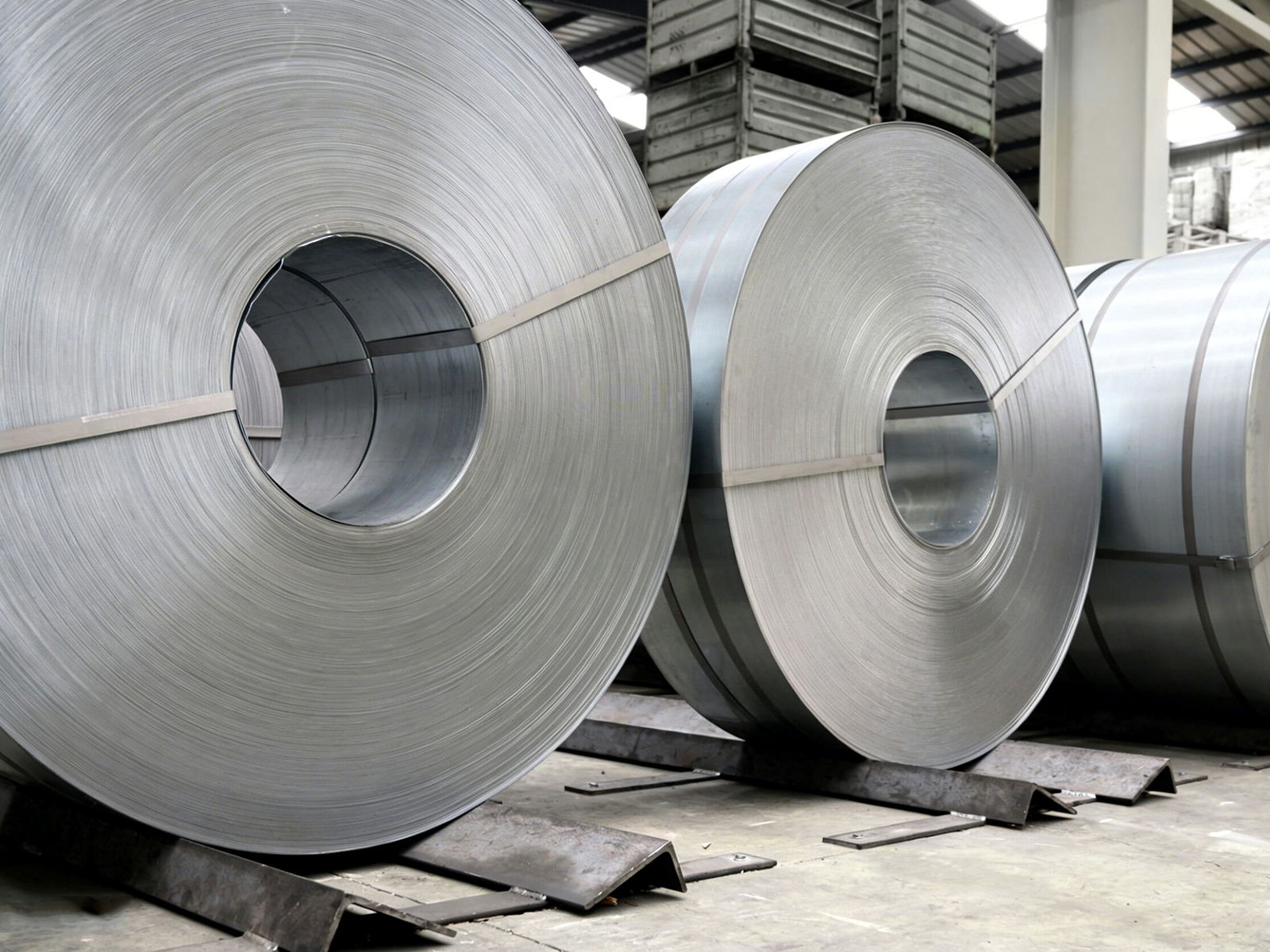
In the industrial pure titanium series, Gr4 titanium foil fills the performance gap between ordinary pure titanium and titanium alloys with its comprehensive properties of high strength, lightweight and corrosion resistance. For high-end application scenarios such as aerospace, medical equipment, and marine engineering, Gr4 titanium foil can provide structural strength close to low-end titanium alloys (tensile strength ≥ 550 MPa), while maintaining the excellent corrosion resistance and processing adaptability of industrial pure titanium, and the cost is significantly lower than complex alloy systems. When projects face the dual challenges of high load and strong corrosion, Gr4 titanium foil is an ideal choice to achieve a balance between reliability and economy.
1. Why Is Core Performance Advantages of Gr4 Titanium Foil Important?
(1) What Should You Know About Outstanding Strength?
The tensile strength of Gr4 titanium foil reaches more than 550 MPa, and the yield strength ranges from 480-665 MPa (typical values under different specifications or testing conditions), far exceeding Gr1 (240 MPa) and Gr2 (345 MPa). This level of strength allows it to withstand higher structural loads, extending the service life of equipment in high-stress environments.
(2) What Should You Know About Excellent Corrosion Resistance?
Despite the increased strength, Gr4 titanium foil still retains the chemical stability of industrial pure titanium. It performs stably in seawater, acidic media, alkaline environments and chloride ion corrosion conditions, and is suitable for components exposed to harsh chemical environments for a long time.
(3) Why Is Lightweight Design Value Important?
The density is only 4.51 g/cm³, which is about 60% of steel. It is slightly heavier than aluminum alloy but significantly stronger. This high specific strength characteristic provides dual guarantees of weight reduction and load-bearing capacity for aerospace and medical equipment.
Table 1: Performance comparison of industrial pure titanium foil (data source: Reference [1])
grade | tensile strength | Yield strength | Elongation (Typical) | Main features |
Gr1 | ≥ 240MPa | 140-310 MPa | ≥ 24% | Extremely high ductility, suitable for deep forming |
Gr2 | ≥ 345 MPa | 275-450 MPa | ≥ 20% | Balance of strength and ductility |
Gr4 | ≥ 550MPa | 480-665 MPa | ≥ 15% | Highest strength, suitable for load-bearing structures |
2. Which Application Scenarios Require Gr4 Titanium Foil the Most?
(1) What Should You Know About Aerospace Lightweight Structures?
Aircraft skins, honeycomb core materials, sealing gaskets and other components need to meet both lightweight and high-strength requirements. Gr4 titanium foil can significantly reduce the overall weight and improve fuel efficiency and flight performance while maintaining structural rigidity.
(2) What Should You Know About High Load Components for Marine Engineering?
Desalination modules, deep-sea sensor housings, and offshore platform support structures face the dual test of high salt spray corrosion and mechanical stress. Gr4 titanium foil can withstand pressure and fatigue loads without failure while being immersed in seawater for a long time.
(3) What Should You Know About Medical Device Load-bearing Implants?
Orthopedic implants, dental restorative materials, and surgical instruments require materials that are both biocompatible and provide sufficient mechanical strength. The high strength of Gr4 titanium foil ensures the long-term stability and safety of the implant in the human body.
(4) What Should You Know About Corrosion-resistant Linings for Chemical Equipment?
The anode foil of the electrolytic cell, the lining of the corrosive medium container, and the membrane module work in strong acid and alkali environments. Gr4 titanium foil can ensure structural strength while resisting chemical erosion and extending equipment maintenance cycles.
(5) What Should You Know About New Energy Battery Components?
Components such as fuel cell bipolar plates require materials with electrical conductivity, corrosion resistance and mechanical strength. The stable performance of Gr4 titanium foil improves the reliability and cycle life of the battery system.
Table 2: Typical application fields of Gr4 titanium foil (data source: Reference [1][4])
Industry areas | Typical applications | critical requirements |
Aerospace | Honeycomb core materials, seals | High strength, lightweight, anti-fatigue |
Marine Engineering | Dilute module, sensor housing | Resistant to seawater corrosion and high load |
medical device | Implants, surgical tools | Biocompatible, high strength |
Chemical equipment | Electrolyzer, reactor | Acid and alkali resistant, structurally stable |
new energy | fuel cell bipolar plate | Conductivity, corrosion resistance |
3. How Should Selection Logic of Gr4, Gr1 and Gr2?
(1) What Are the Differences in Differences in Formability?
Gr1 titanium foil has the best cold forming performance and is suitable for deep drawing, complex bending and other processes. Gr2 titanium foil strikes a balance between formability and strength and is suitable for medium-complexity processing. Although Gr4 titanium foil has relatively low ductility (elongation ≥ 15%, typical value), it can still complete stamping, bending and welding operations under preheating or controlled deformation rate conditions. It should be noted that there are differences in the expansion rate range between Gr4 and Gr4 ELI (ultra-low clearance) versions, and the selection should be confirmed according to the specific grade.
(2) What Should You Know About Mechanical Property Matching?
When the design load exceeds 400 MPa, Gr1 and Gr2 titanium foil may not provide sufficient safety margin, and the material thickness needs to be increased, resulting in increased weight and cost. Gr4 titanium foil can meet strength requirements at a thinner thickness and achieve structural optimization.
(3) What Should You Know About Cost-benefit Trade-off?
Compared with titanium alloys (such as Ti-6Al-4V), the cost of Gr4 titanium foil is 30%-40% lower (based on raw material cost comparison) and does not require complex heat treatment processes. For scenarios that do not require extreme strength (>900 MPa) but require high corrosion resistance, Gr4 titanium foil is the most cost-effective choice.
4. How Does the Production Process Ensure the Performance of Gr4 Titanium Foil?
The performance of Gr4 titanium foil relies on precise production processes. The following process links jointly ensure that the material meets the dual requirements of high strength and corrosion resistance.
(1) What Should You Know About Precision Cold Rolling Technology?
A 20-roll precision rolling mill is used, with a maximum rolling force of 3500 kN and a rolling speed of up to 400 m/min. The multi-pass cold rolling process gradually thins the titanium ingot to 0.02-1.0 mm, and the thickness tolerance is controlled at ± 0.001 mm to ensure material uniformity and flatness.
(2) What Should You Know About Continuous Annealing?
7-zone electric heating control system, maximum operating temperature 1100℃, temperature accuracy ± 2℃. Continuous annealing without stopping is performed under an argon protective atmosphere to eliminate the residual stress of cold working and restore the toughness of the material. By precisely controlling the annealing temperature (usually in the range of 600-750℃) and grain size, toughness can be restored while retaining high strength properties.
(3) What Should You Know About Ultrasonic Cleaning Process?
The independently developed degreasing formula, combined with the ultrasonic cleaning line (maximum line speed 30 m/min), makes the surface dyne value reach more than 40 mN/m. The high cleanliness of the surface ensures the reliability of subsequent coating, lamination and welding processes.
(4) What Should You Know About Surface Polishing Treatment?
The titanium foil surface is functionally treated through a grinding line to improve surface consistency and adhesion. The bright surface is suitable for electronic devices, and the matte surface enhances the friction coefficient to meet different application needs.
(5) What Should You Know About High-precision Slitting Technology?
The slitting line is suitable for the thickness range of 0.02-1.0 mm, and the width tolerance is controlled at ± 0.1 mm. High-precision cutting reduces edge burrs and deformations, improving material utilization and subsequent processing stability.
Table 3: Key process parameters for Gr4 titanium foil production (data source: Reference [2])
Process link | key equipment | Control indicators |
Precision cold rolling | 750 mm 20-high rolling mill | Thickness tolerance ± 0.001 mm, rolling force 3500 kN |
continuous annealing | 7 zone electric heating annealing line | Temperature accuracy ± 2℃, maximum temperature 1100℃ |
Ultrasonic cleaning | Ultrasonic cleaning line | Surface dyne value >40 mN/m, line speed 30 m/min |
Precision slitting | High precision slitting line | Width tolerance ± 0.1 mm, applicable thickness 0.02-1.0 mm |
5. How to Verify the Reliability of Gr4 Titanium Foil?
(1) What Should You Know About Standards Compliance Verification?
Gr4 titanium foil complies with international standards such as ASTM B265 (USA), JIS H4600 (Japan), EN 10263-4 (Europe). Material grade correspondence: American R50700, Japanese Class 4, European Ti4. Material reports and mechanical property testing data are provided for each batch of products.
(2) What Should You Know About Mechanical Performance Testing?
Verify whether the tensile strength, yield strength and elongation meet the standard requirements through tensile testing. Fatigue testing and impact toughness testing can further evaluate the durability of materials under cyclic loading and impact conditions.
(3) What Should You Know About Corrosion Performance Assessment?
Conduct immersion tests in simulated seawater and acid-base solutions to detect corrosion rate and surface state changes. Electrochemical testing evaluates the material’s stability in an electrolytic environment. The salt spray test verifies the corrosion resistance of long-term exposure to high-salt environments. It should be noted that after welding of Gr4 titanium foil, the corrosion resistance of the heat-affected zone may decrease due to grain coarsening or residual stress. It is recommended to control it through post-weld heat treatment or optimizing welding parameters.
(4) What Should You Know About Surface Quality Inspection?
Visually inspect the surface for cracks, inclusions, and oxidation color differences. Surface roughness measurement ensures compliance with subsequent processing requirements. Dyne value testing verifies cleanliness and adhesion.
(5) What Should You Know About Dimensional Accuracy Control?
Laser thickness gauges monitor full width thickness uniformity. Width and length measurements ensure tolerances meet customer requirements. Flatness testing ensures that materials will not deform during transportation and processing.
6. What Is the Conclusion?
Gr4 titanium foil has become an irreplaceable material choice in the high-end manufacturing field due to its excellent strength, excellent corrosion resistance and lightweight advantages. Through precise production technology and strict quality control, we can stably provide high-performance products with a thickness of 0.02-1.0 mm and a maximum width of 680 mm, meeting the stringent requirements of aerospace, medical, marine engineering and other industries.
FAQ
Q1: What are the advantages of Gr4 titanium foil compared with titanium alloy?
The strength of Gr4 titanium foil is close to that of some titanium alloys, but the raw material cost is 30%-40% lower (compared to Ti-6Al-4V), the corrosion resistance is better, and no complex heat treatment is required. Suitable for applications where the strength requirement does not exceed 700 MPa and long-term corrosion resistance is required.
Q2: Can ultra-thin Gr4 titanium foil (0.02 mm) be welded?
It can be welded by argon arc welding, laser welding and other methods. It is necessary to control the welding parameters to avoid burn-through and use the same grade of welding wire to ensure the strength of the joint. Preheating and shielding atmosphere can improve welding quality and consistency. After welding it is recommended to evaluate the corrosion resistance of the heat affected zone.
Q3: How to judge whether Gr4 titanium foil is suitable for my project?
Evaluate the project’s strength requirements (whether >450 MPa), corrosive environment (seawater, acid-base), weight restrictions and cost budget. If high strength and corrosion resistance are required, Gr4 titanium foil is better than Gr1/Gr2; if extreme formability is required, it is recommended to choose Gr1. At the same time, consider whether key parameters such as fatigue limit and impact toughness meet the design requirements.
What Should You Know About Contact Us?
As a professional Gr4 titanium foil manufacturer, Titanium Valley is equipped with world-class production lines with an annual production capacity of 3, 000 tons, supporting OEM customization and stable supply in large quantities. We provide one-stop processing services from raw materials to finished products, ensuring that each roll of titanium foil meets international standards. For more product information or technical support, please contact us: sales@titaniumvalleys.com
References
- “Titanium and Titanium Alloy Material Properties Manual”, compiled by China Nonferrous Metals Industry Association, Metallurgical Industry Press, 2019
- Li Ming, Wang Hui. Optimization and performance research of cold rolling process of industrial pure titanium foil [J]. Rare Metal Materials and Engineering, 2021, 50(3): 812-819
- Zhang Zhiqiang, Liu Jianrong. Application progress of high-strength pure titanium foil in the aerospace field [J]. Journal of Aeronautical Materials, 2020, 40(6): 45-52
- Chen Jun, Zhao Yongqing. Research on the structure and properties of industrial pure titanium Gr4 [J]. Progress in Titanium Industry, 2018, 35(4): 21-26