
Why Is Nickel 200 Nickel Foil Production Process Analysis, From Precision Cold Rolling to High-Performance Applications Important?
- Nickel 200 Nickel Foil
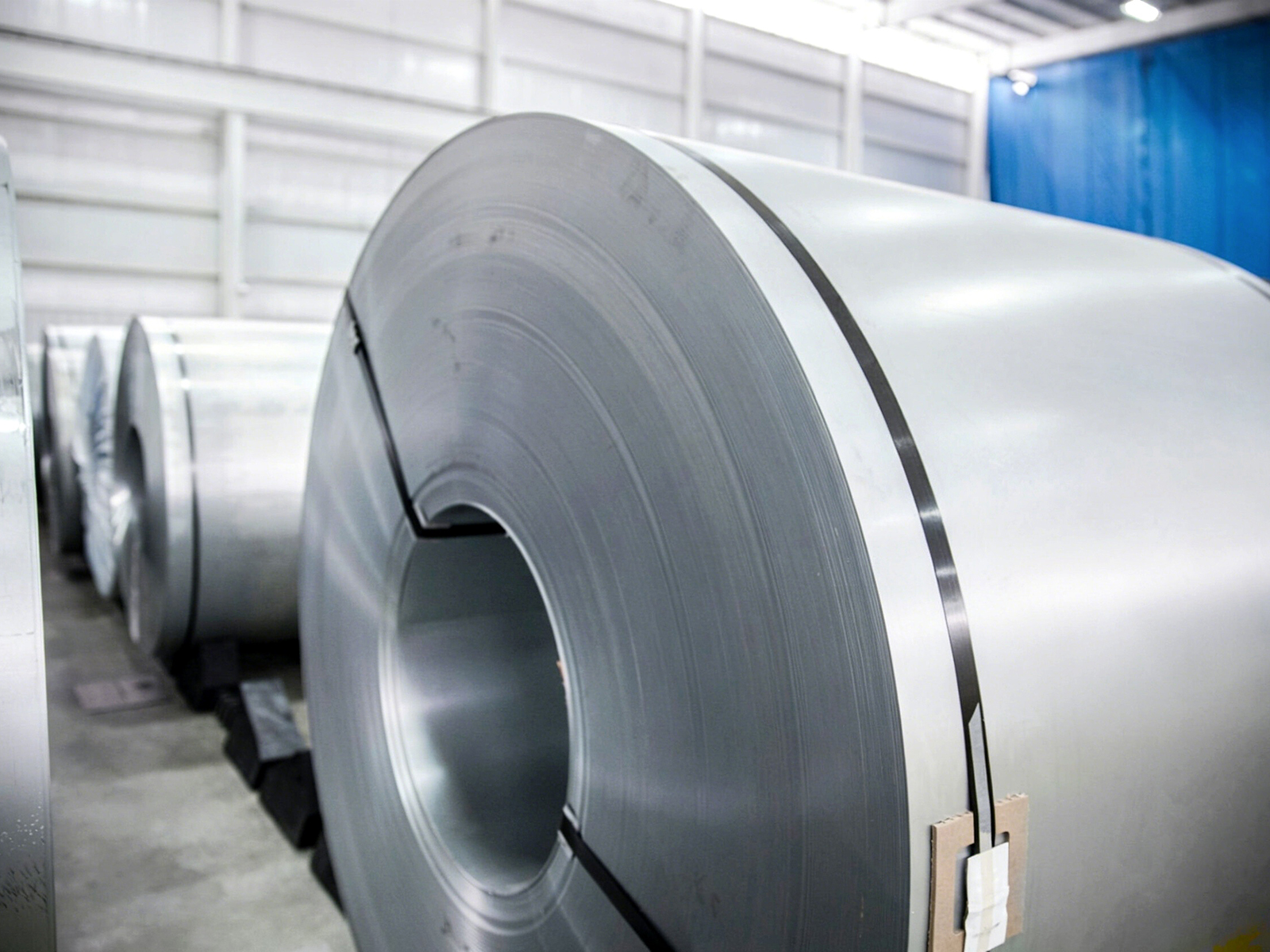
The production process of Nickel 200 nickel foil is a precision manufacturing process that converts high-purity industrial nickel into ultra-thin wide-width foil. This process integrates key technical links such as multi-pass cold rolling, intermediate annealing, surface cleaning treatment and precision slitting. The thickness control of ± 0.001mm is achieved through the 20-roll finishing equipment, and the continuous argon annealing is used to ensure the uniformity of the structure. Finally, high-performance nickel foil with a thickness of 0.03-0.8mm and a width of 670mm is produced. This material plays an irreplaceable role in battery tabs, electrolytic electrodes, electromagnetic shielding and other fields. Its production process needs to overcome multiple technical difficulties such as work hardening, shape control, and surface cleanliness to achieve stable batch supply.
1. What Should You Know About Material Properties and Industrial Positioning of Nickel 200 Nickel Foil?
(1) Why Is Core Advantages of Pure Nickel Materials Important?
Nickel 200 is a commercial pure nickel material with a nickel content of ≥ 99.6%. This high-purity characteristic gives it excellent electrical conductivity. Compared with structural metal foils such as titanium foil, nickel foil has several times higher electrical conductivity, which can significantly reduce contact resistance in current transmission scenarios. Although the density of 8.9 g/cm³ is higher than that of titanium, this quality disadvantage is offset by its functional advantages in applications that require stable electrical properties. The melting point of 1455℃ enables it to withstand medium to high temperature conditions and maintain structural stability in heating elements and vacuum equipment.
(2) What Should You Know About Corrosion Resistance and Environmental Adaptability?
Nickel foil performs well in alkaline environments, a property that titanium and stainless steel cannot match. In strong alkaline solutions such as sodium hydroxide and potassium hydroxide, Nickel 200 can maintain a passivation state for a long time and has an extremely low corrosion rate. This characteristic makes it the first choice material for electrolytic alkali production, alkaline batteries and chemical anti-corrosion equipment. At the same time, nickel foil also has good chemical stability in seawater, neutral salt solutions and reducing media, broadening its application scope in marine engineering and chemical treatment systems.
(3) What Are the Differences in Performance Comparison with Other Metal Foils?
Material type | Density(g/cm³) | conductivity | Alkali corrosion resistance | Strength performance | Typical application directions |
Nickel 200 Foil | 8.9 | Excellent | Extremely strong | medium | Conductive Connections/Electrodes/Electrochemistry |
Gr2 titanium foil | 4.5 | Difference | powerful | medium | Structural anti-corrosion/lightweight |
Gr5 titanium alloy foil | 4.4 | Difference | powerful | high | High Strength Structure/Aerospace |
304 stainless steel foil | 8.0 | medium | medium | Middle to high | General Corrosion Resistant/Food Equipment |
This comparison table clearly demonstrates the unique advantages of Nickel 200 foil in electrochemical applications. Although titanium foil is superior in weight and general corrosion resistance, nickel foil is an irreplaceable choice in scenarios where high conductivity and alkali resistance are required.
2. What Should You Know About Precision Cold Rolling Technology: the Key to Forming Ultra-thin Nickel Foil?
(1) Why Is Working Principle and Advantages of 20-high Rolling Mill Important?
The 750mm 20-roll precision rolling mill is the core equipment for the production of ultra-thin wide nickel foil. This equipment adopts a multi-layer roll system structure to evenly distribute the rolling force through the synergistic effect of work rolls, intermediate rolls and backup rolls. This design can significantly reduce single-point pressure and avoid perforations or cracks in ultra-thin materials during the rolling process. The stiffness control of the roll system enables the thickness tolerance to be stabilized within the range of ± 0.001mm, which is a level of accuracy that is difficult to achieve with traditional 4-high or 6-high rolling mills. The processing capacity of 670mm width meets the demand for large-format foil materials in the battery and electronics industries.
(2) What Should You Know About Work Hardening Control in Multi-pass Rolling?
During the cold rolling process, the metal grains are flattened and elongated, and the dislocation density increases sharply, causing the material’s hardness to increase and its plasticity to decrease. This work hardening phenomenon is particularly noticeable in the production of ultra-thin foils. In order to maintain the machinability of the material, an intermediate annealing link needs to be inserted during the rolling process. The annealing temperature is usually controlled at 700-900℃, and the holding time is adjusted according to the thickness of the foil to re-crystallize the grains and restore plasticity. This “rolling-annealing-re-rolling” cycle process is the technical basis for achieving 0.03mm or even thinner specifications.
(3) What Should You Know About Shape Control and Surface Quality Management?
Shape control of ultra-thin foils is a technical difficulty in the rolling process. Due to the extremely small thickness of the material, any slight unevenness in the roll gap will lead to defects such as edge waves and middle waves. Through hydraulic roll bending and roll profile optimization, the roll gap distribution can be adjusted in real time to ensure consistent thickness across the entire width. Surface quality management relies on precision grinding and cleaning maintenance of the rolls. The surface roughness of the roll directly affects the surface condition of the foil. The bright surface requires the roll to be mirror-level polished, while specific application scenarios may require matte or suede treatment.
3. What Should You Know About Heat Treatment and Surface Treatment: Key Processes for Performance Optimization?
(1) What Should You Know About Tissue Regulation by Continuous Argon Annealing?
Precise control of annealing temperature is critical to nickel foil performance. The continuous annealing furnace uses argon gas protective atmosphere to avoid high-temperature oxidation. The temperature fluctuation is controlled within ± 2℃ to ensure that the entire roll of material obtains a uniform recrystallized structure. The annealed nickel foil has fine and uniform grains, a tensile strength of 400-550 MPa, an elongation of ≥ 40%, and has both strength and plasticity. Materials in this state are suitable for stamping, bending and welding. For applications requiring higher strength, it can be supplied in a cold-worked state, at which time the tensile strength can reach 500-600 MPa.
(2) What Should You Know About Ultrasonic and Alkali Cleaning Surface Cleaning Technology?
Oil stains, oxides and particles on the surface of Nickel 200 nickel foil will seriously affect its conductive performance and welding quality. Ultrasonic cleaning uses high-frequency vibration to create a cavitation effect that strips away surface contaminants. The alkaline washing process uses alkaline solution to dissolve grease and slight oxidation layer to increase surface activity. After cleaning treatment, the surface dyne value of Nickel 200 nickel foil is stable at around 44 (mN/m), which means that the surface has good wettability and coatability. This highly clean surface has a decisive impact on the welding reliability of battery tabs and the control of contact resistance of electronic devices.
(3) What Should You Know About Customized Treatment of Surface Conditions?
surface type | Processing technology | surface features | Applicable scenarios |
shiny side | Precision cold rolling + smooth roller polishing | High reflectivity, low roughness | Decorative applications, optical reflection |
pickled noodles | Mixed acid soak + water washing | Uniform matte, no oxide layer | Subsequent coating, chemical processing |
Matt surface | Special roll type rolling | Diffuse reflection, anti-glare | Electromagnetic shielding, display devices |
suede | Mechanical drawing/chemical etching | Directional texture, high friction | Bonding base and friction parts |
The choice of surface condition needs to be determined based on the final application. Battery tabs usually require bright or pickled surfaces to ensure a clean welding interface; electromagnetic shielding is more suitable for matte surfaces to reduce internal light reflection interference.
4. What Should You Know About Quality Control System and Production Stability Guarantee?
(1) What Should You Know About Full-process Automated Inspection System?
The automation rate of the production line reaches 90%, and key control points are monitored in real time online. Thickness measurement uses a laser or X-ray thickness gauge with an accuracy of micron level, and the data is automatically fed back to the rolling mill control system for closed-loop adjustment. Surface defect detection is completed through high-speed cameras and image recognition algorithms, which can identify tiny defects such as pinholes, indentations, and scratches. Mechanical performance testing is carried out on a batch-by-batch basis, and tensile testing, hardness testing and bending testing ensure that each roll of foil meets the technical requirements.
(2) What Should You Know About Dimensional Accuracy and Batch Consistency Management?
Dimensional control of ultra-thin foils involves multiple steps. Taking Nickel 200 nickel foil as an example, the rolling stage realizes dynamic adjustment through thickness gauge feedback, the annealing process controls the shrinkage rate, and the slitting process ensures edge quality. The width tolerance is controlled within ± 1mm, and the length is customized according to customer needs. Batch consistency management is achieved through strict process standardization and raw material batch traceability. Each roll of Nickel 200 nickel foil has a unique production batch number, which records key information such as raw material sources, rolling parameters, and annealing curves to ensure that problems can be traced and performance can be predicted.
(3) What Should You Know About Engineering Breakthroughs in Technical Problems?
The seven major technical problems faced by ultra-thin nickel foil production include: thickness fluctuation control, work hardening management, plate shape stability, surface cleanliness, slitting burr suppression, performance batch differences, and ultra-wide yield. Through the introduction of 20-roll finishing equipment, the thickness fluctuation problem has been fundamentally improved; the multi-pass annealing process has solved the hardening problem; hydraulic roll bending and tension control technology have stabilized the plate shape; ultrasonic alkali washing has improved the surface quality; precision slitting tools and process optimization have eliminated burrs; process standardization and automated control have reduced batch differences; equipment upgrades and the accumulation of operating experience have improved the wide-width yield rate. These engineering breakthroughs have enabled the annual production capacity to reach 300 tons, enabling stable supply of large-volume orders.
5. Why Is High-performance Application Scenarios and Market Value Important?
(1) What Should You Know About the Key Role in the Field of New Energy Batteries?
Nickel 200 foil is mainly used as tab material and current collector in lithium-ion batteries. The tab is the connection part between the positive and negative electrodes of the battery and the external circuit. The material is required to have high conductivity, good weldability and corrosion resistance. Nickel foil has low resistivity, which can reduce internal resistance loss and improve battery charging and discharging efficiency. The ultra-thin specification of 0.03-0.1mm not only ensures mechanical strength but also minimizes weight, which is crucial to improving battery energy density. In power batteries and energy storage systems, the reliability of nickel foil tabs directly affects battery life and safety.
(2) Why Is Electronic and Electromagnetic Shielding Applications Important?
The electromagnetic compatibility design of electronic equipment is inseparable from efficient shielding materials. Nickel 200 foil has weak magnetism and good electrical conductivity, which can effectively attenuate electromagnetic waves. Compared with copper foil, nickel foil has stronger corrosion resistance and is less prone to oxidation and failure in humid environments. In the manufacture of precision connectors, flexible circuit boards and sensors, nickel foil is used as a conductive substrate or connecting pad. The customized ultra-thin specifications of 0.005-0.03mm meet the needs of miniaturized and integrated electronic products and are widely used in the fields of 5G communications, wearable devices and medical electronics.
(3) What Should You Know About Chemical Electrolysis and Corrosion Protection?
The electrolysis industry is the traditional application field of nickel foil. In the chlor-alkali industry, electrolytic cell anodes need to work in high-concentration sodium hydroxide solutions for a long time. The alkali resistance of Nickel 200 makes it an ideal electrode material. In water electrolysis hydrogen production technology, the nickel-based electrode catalyst carrier also relies on high-purity nickel foil. Anti-corrosion linings, pipe connections and valve sealing surfaces of chemical equipment can all be laminated or plated with nickel foil to improve corrosion resistance. Compared with solid nickel materials, foil materials can significantly reduce costs while ensuring performance.
(4) Why Is Applications in High Temperature and Vacuum Equipment Important?
The high temperature stability of nickel foil makes it suitable for use in heating elements and vacuum furnace internals. In resistance heating systems, nickel foil can be made into heating sheets or heating strips, and the operating temperature can reach over 800℃. Nickel has low vapor pressure in a vacuum environment and will not contaminate the surface of the workpiece, making it suitable as a support frame or heat shield material. Nickel foil components are widely used in vacuum heat treatment furnaces in laboratory equipment, semiconductor manufacturing and aerospace. The medium-thickness specification of 0.1-0.3mm combines strength and thermal response speed in these scenarios.
(5) What Should You Know About Precision Manufacturing and Micro-machining Fields?
Precision stamping, laser cutting and chemical etching processes can process nickel foil into tiny parts with complex shapes. Micro springs in medical devices, shielding covers for electronic products, and sensitive components of sensors may all be made of nickel foil. Good ductility makes it suitable for deep drawing forming, weak magnetism avoids interference in magnetic field environments, and high-clean surface meets the hygienic requirements of the medical and food industries. Customized processing services include slitting, stamping, welding and surface treatment, providing customers with one-stop supply from materials to semi-finished products.
6. What Is the Conclusion?
The production process of Nickel 200 nickel foil is an integrated expression of precision manufacturing technology. From the micron-level thickness control of 20-roll cold rolling, to the structural optimization of continuous annealing, to the surface purification of ultrasonic alkali cleaning, every link directly affects the performance of the final product. This high-purity, highly conductive, corrosion-resistant ultra-thin foil plays an irreplaceable role in new energy, electronics, chemical industry and other fields. Market demand continues to grow, and technology upgrading and production capacity expansion are advancing simultaneously.
FAQ
Q1: What are the main differences between Nickel 200 nickel foil and ordinary nickel materials?
Nickel 200 is commercially pure nickel with nickel content ≥ 99.6% and impurity content strictly controlled. The foil shape has been precision cold rolled and annealed. The thickness can be as thin as 0.03mm or even lower. The surface is clean and the structure is uniform. Compared with cast or forged nickel materials, foil has significant advantages in conductivity, formability and surface quality.
Q2: Why does ultra-thin nickel foil production require a 20-roll mill instead of a traditional rolling mill?
The unit pressure is extremely high when rolling ultra-thin foils. Traditional 4-roll or 6-roll mills can easily cause deformation of the roll system and thickness fluctuations. The 20-roller structure disperses pressure through a multi-layer roller system to improve stiffness, making micron-level thickness control possible. This equipment can also effectively suppress edge and mid-wave waves and improve the shape quality of wide-width foils.
Q3: What are the advantages and limitations of nickel foil compared to copper foil in battery applications?
Nickel foil has stronger corrosion resistance than copper foil, is more stable in alkaline electrolytes, and has good high-temperature strength. But copper foil has higher conductivity and lower cost. In practical applications, aluminum foil is usually used for the positive electrode, and copper foil is often used for the negative electrode. Nickel foil is mainly used for the tab welding parts or special chemical system batteries to take advantage of its corrosion resistance and reliable connection.
7. What Should You Know About Call to Action?
Baoji Titanium Nickel Zirconium Material Processing Co., Ltd., as a professional Nickel 200 Foil manufacturer and supplier, has a world-class 20-roll finishing production line and a stable production capacity of 300 tons per year. We provide standard specifications with thickness 0.03-0.8mm and width 350-670mm, as well as customized ultra-thin solutions with 0.005-0.03mm. If you need high-performance nickel foil materials or technical consultation, please contact us: sales@titaniumvalleys.com
References
[1] Wang Jinbo, Liu Jianhua. Research on cold rolling process and microstructure properties of high-purity nickel foil [J]. Rare Metal Materials and Engineering, 2019, 48(5): 1523-1528.
[2] Zhang Liwen, Chen Gang. Nickel and nickel alloy strip production technology[M]. Beijing: Metallurgical Industry Press, 2017.
[3] Li Minghui, Zhao Dewen. Ultra-thin metal foil plate shape control theory and technology[M]. Changsha: Central South University Press, 2020.
[4] Yang Rui, Xu Jian. Fundamentals of Metallic Materials Science[M]. Beijing: Chemical Industry Press, 2018.