
What Are the Applications of Gr4 Titanium Wire in Precision Watch Components and Micro-Mechanisms?
- Gr4 titanium wire
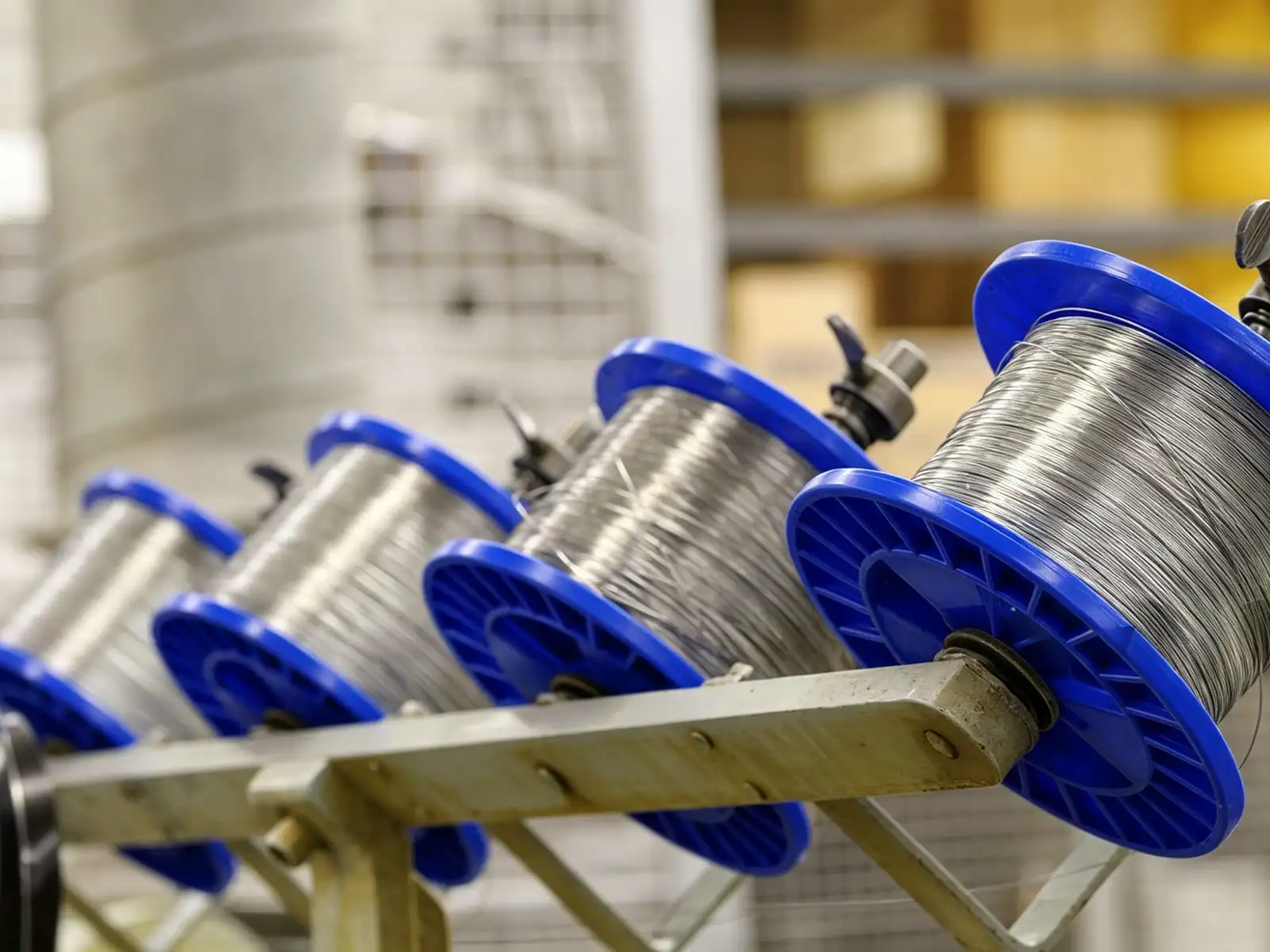
Gr4 Titanium Wire (Ti-6Al-4V per ASTM B863) has emerged as a premium material for precision watch components and micro-mechanical systems, offering an optimal combination of high strength, lightweight, corrosion resistance, and biocompatibility. As watchmakers pursue lighter, more durable, and more innovative timepiece designs, Gr4 titanium wire enables components that are impossible to manufacture with traditional steel or brass. This article explores the specific applications, manufacturing considerations, and performance advantages of Gr4 titanium wire in horology and micro-mechanical engineering.
1. Watch Component Applications
(1) Crown and Stem Assemblies
Gr4 titanium wire is drawn to precise diameters (0.5-3.0 mm) and machined into watch crowns, stems, and pushers. The material’s high strength (tensile strength 895-950 MPa in cold-worked condition) ensures durability during repeated winding and setting operations, while its low density (4.43 g/cm3) reduces overall watch weight by 30-40% compared to stainless steel equivalents. The natural satin finish of titanium provides an attractive aesthetic that requires no plating or coating, eliminating concerns about coating wear or nickel allergy.
(2) Balance Wheels and Hairsprings
Ultra-thin Gr4 titanium wire (0.05-0.2 mm) is used to manufacture balance wheels and spiral hairsprings for high-precision mechanical movements. Titanium’s low elastic modulus (110 GPa vs. 200 GPa for steel) combined with high strength enables balance wheels with optimized moment of inertia and energy storage. Titanium hairsprings are non-magnetic, resistant to corrosion from sweat and humidity, and maintain consistent elasticity across temperature variations from -20 to +60 degrees C, improving timekeeping accuracy and long-term reliability.
(3) Case Backs and Lugs
Gr4 titanium wire formed into watch case back threads and lug attachments provides secure component fastening with excellent fatigue resistance. The material’s resistance to chloride-induced corrosion ensures long-term integrity in marine sports watches and diving instruments exposed to seawater. Thread-forming capabilities of titanium wire enable integral threaded features that reduce part count and assembly time.
2. Micro-Mechanical System Applications
(1) MEMS Structures and Micro-Springs
Gr4 titanium wire in ultra-fine diameters (25-100 um) serves as feedstock for micro-electromechanical systems (MEMS) including micro-springs, flexure hinges, and resonant sensors. The material’s high fatigue limit (550 MPa) ensures micro-spring lifetimes exceeding 10 million cycles, critical for actuators, valves, and sensing elements in automotive, medical, and aerospace MEMS devices. Titanium’s biocompatibility makes it ideal for implantable medical MEMS devices requiring long-term reliability.
(2) Precision Gears and Pinions
Gr4 titanium wire blanked and ground into watch gears and pinions offers strength-to-weight ratios unmatched by traditional materials. Reduced rotating mass decreases energy consumption of the mainspring, potentially extending power reserve by 10-15%. Titanium gears demonstrate wear rates 50% lower than brass counterparts in dry-running conditions, reducing maintenance intervals in precision instruments.
(3) Surgical Instrument Components
Beyond horology, Gr4 titanium wire serves critical roles in micro-mechanical surgical instruments including endoscopic grippers, catheter steering wires, and robotic surgery actuation cables. The material’s combination of high strength, flexibility, and biocompatibility enables instruments that are both precise and gentle on tissue, with sterilization resistance to repeated autoclave cycles.
3. Processing and Manufacturing Considerations
(1) Precision Wire Drawing
Watch-grade Gr4 titanium wire requires multi-stage drawing through polished tungsten carbide or diamond dies with intermediate annealing to maintain dimensional consistency. Diameter tolerances of +/-0.005 mm for wires below 1.0 mm ensure uniform performance in precision components. Surface finish targets of Ra <= 0.1 um prevent stress concentration sites that could initiate fatigue cracks in cyclic-loaded watch components.
(2) Forming and Machining
Gr4 titanium wire is formed using CNC Swiss-type lathes, precision stamping, and laser cutting. Carbide tooling with optimized geometries (positive rake angles, polished flutes) minimizes cutting forces and extends tool life. Coolant delivery must be filtered to sub-micron particulate levels to prevent abrasive wear on both tool and workpiece surfaces.
(3) Surface Treatment and Finishing
Watch components require specific surface aesthetics. Bead blasting produces matte finishes, while polishing achieves mirror surfaces (Ra <= 0.02 um). Sandblasting with ceramic media creates uniform textured surfaces. PVD coating in gold, black, or blue tones provides decorative coloration without affecting dimensional tolerances or mechanical properties.
Conclusion
Gr4 titanium wire has established itself as a premium material for precision watch components and micro-mechanical systems, delivering performance advantages that traditional materials cannot match. Its unique combination of high strength, low density, corrosion immunity, biocompatibility, and aesthetic versatility enables watchmakers and micro-engineers to push the boundaries of innovation. As manufacturing capabilities for fine titanium wire continue to improve and costs decrease, Gr4 titanium wire will play an increasingly prominent role in horology and precision micro-mechanics.
FAQ
Q1: Is titanium watch material hypoallergenic?
Yes. Gr4 titanium is biocompatible and hypoallergenic, meeting USP Class VI and ISO 10993 standards for skin contact. It contains no nickel or cobalt allergens, making it suitable for users with metal sensitivities who cannot wear stainless steel or alloy watches.
Q2: How does titanium watch weight compare to stainless steel?
Titanium weighs approximately 43% less than stainless steel (4.43 g/cm3 vs. 7.9 g/cm3). A titanium watch case and bracelet can weigh 30-40% less than an equivalent steel design, providing superior comfort for daily wear without sacrificing durability.
Q3: Can Gr4 titanium wire components be repaired or resized?
Titanium watch components can be repaired, but require specialized tools and skilled technicians. Ring resizing is possible but more labor-intensive than steel. Component replacement with custom-machined titanium parts is the recommended repair pathway for most watch service centers.
Contact Titanium Valley
Baoji Titanium Valley Titanium Nickel Zirconium Material Processing Co., Ltd. supplies watch-grade Gr4 titanium wire with precision diameter control, surface finishes, and EN 10204 3.1 certification. Custom diameters 0.05-6.0 mm available for horological and micro-mechanical applications. Contact us for technical data and quotations:
References
Bovton, G. The Watch Book: Technical Information for Horologists [M]. Independent publisher, 2019.
ASM International. Biomaterials and Biocompatibility [M]. ASM Handbook Volume 23, 2001.
ASTM International. ASTM B863-20 Standard Specification for Titanium and Titanium Alloy Wire [S]. 2020.