
Gr4 Titanium Wire Purchasing Guide for Medical Devices, How to Choose a Reliable Supplier?
- Gr4 titanium wire
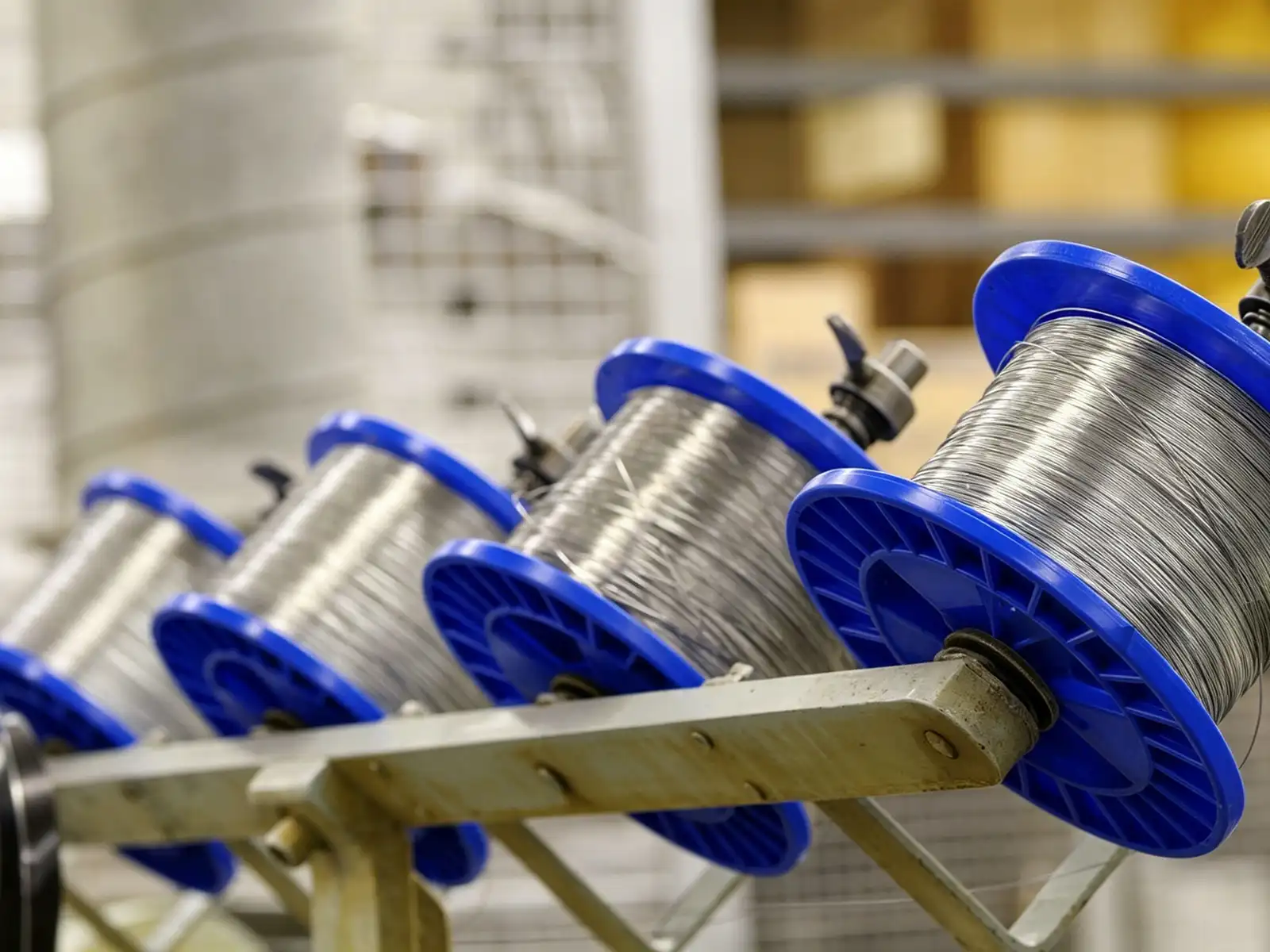
In the field of medical device manufacturing, choosing the right Gr4 titanium wire supplier directly affects product quality, production cost and market competitiveness. Reliable suppliers not only need to provide high-strength materials that meet ASTM B863 standards, but also have stable mass production capabilities, a complete quality traceability system, and customized service capabilities. This article will help you establish systematic supplier selection criteria from four dimensions: technical parameter verification, production process inspection, quality certification system, and delivery capability assessment, to avoid production risks caused by substandard material performance, poor batch stability, or delivery delays, and ensure that each batch of titanium wire can meet the stringent requirements of high-precision medical applications such as implants and surgical instruments.
1. What Should You Know About Interpretation of Core Technical Indicators of Medical Grade Gr4 Titanium Wire?
(1) What Should You Know About Mechanical Property Requirements and Verification Methods?
Medical devices require titanium wire to have a tensile strength of ≥ 550MPa and a yield strength of ≥ 485MPa. This is a significant advantage of Gr4 compared to Gr1 and Gr2. When purchasing, the supplier needs to provide batch-by-batch mechanical test reports, including room temperature tensile test, fatigue strength test and fracture toughness data. High-quality suppliers will use electro-hydraulic servo testing machines for testing to ensure data repeatability. Pay special attention to the elongation index: According to the ASTM B863 standard, the elongation of Gr4 titanium wire changes with diameter. For wires with a diameter of ≤ 3.2mm, the common requirement is ≥ 12% or higher (the specific diameter range needs to be specified), which directly affects the forming performance of the titanium wire during precision processing and avoids accidental breakage during cold forming.
(2) What Should You Know About Purity Control and Impurity Element Limits?
Controlling the oxygen content of Gr4 titanium wire below 0.40% is the key to achieving high strength, but too high oxygen content can lead to embrittlement. Medical applications require strict control of interstitial elements such as iron (≤ 0.50%), carbon (≤ 0.08%), nitrogen (≤ 0.05%) and hydrogen (≤ 0.015%). It is recommended to require suppliers to provide ICP spectrum analysis reports to verify the stability of the chemical components of each batch. Especially hydrogen content, exceeding the standard can cause delayed cracking, which is a fatal flaw in implant applications.
(3) What Should You Know About Surface Quality and Microstructure Inspection?
The surface of titanium wire for medical devices must not have defects such as cracks, folds, pitting, etc. The surface roughness Ra should be determined according to the specific application: for general implants and surgical instruments, Ra should be ≤ 0.6um; for precision medical implants (such as vascular stents, bone nails), it is recommended that Ra≤ 0.4um. Check the uniformity of α-phase structure through a metallographic microscope, and the grain size should be within the range of ASTM 5-7. Acid-washed surfaces provide optimal biocompatibility and welding performance, while electropolished surfaces are suitable for applications requiring an ultra-low coefficient of friction. Suppliers are required to provide scanning electron microscope (SEM) photos and surface roughness testing data to ensure batch consistency.
How Should Supplier Production Process and Equipment Capability Assessment?
What Should You Know About Effect of Smelting Process on Material Properties?
Vacuum consumable arc melting (VAR) is a standard process for producing medical-grade titanium materials, which can effectively remove gas impurities and high-density inclusions. High-quality suppliers will use three VAR meltings to ensure the uniformity and purity of chemical composition. The electron beam melting (EBM) process can further reduce the gap element content, but the cost is higher. When inspecting suppliers, you need to understand the tonnage, vacuum degree (should be ≤ 1×10⁻³Pa) and cooling rate control capabilities of their melting furnaces. These parameters directly determine the quality of the ingots.
What Should You Know About Cold Drawing and Heat Treatment Process Control?
The pass compression rate control (usually 15-25%) and intermediate annealing temperature (650-750℃) during the multi-pass cold drawing process directly affect the final properties of Gr4 titanium wire. Advanced suppliers use roller die drawing technology, which can reduce surface defect rates by more than 60% compared to traditional die drawing. The annealing process uses vacuum or protective atmosphere to avoid surface oxidation. Suppliers are required to provide detailed process cards, including processing rates for each pass, annealing temperature-time curves and cooling rate records.
What Should You Know About Precision Molding and Dimensional Control Technology?
Medical devices have extremely high requirements for titanium wire diameter tolerances, usually ± 0.01mm, and high-quality suppliers can reach ± 0.002mm. This requires a laser online caliper and an automatic feedback adjustment system. Ovality control ≤ 0.002mm is crucial for automated assembly. The straightness index ≤ 2/1000 ensures that the titanium wire will not get stuck in the high-speed wire feeding system. During the inspection, the supplier’s online testing equipment configuration and statistical process control (SPC) data should be checked to confirm the dimensional stability of its mass production.
Process link | key equipment | Core parameters | Impact on medical applications |
Vacuum melting | VAR furnace | Vacuum degree≤ 1×10⁻³Pa | Reduce gas impurities and improve biocompatibility |
Cold drawing | Roller die drawing machine | Pass compression rate 15-25% | Control surface quality and mechanical properties |
heat treatment | Vacuum annealing furnace | 650-750℃ protective atmosphere | Eliminate internal stress and optimize ductility |
Dimensional inspection (inspection link) | Laser caliper | Accuracy ± 0.002mm | Ensure automation processing compatibility |
2. What Should You Know About Quality Management System and Certification Qualification Verification?
What Should You Know About Special Certification Requirements for the Medical Industry?
Those who supply titanium wire to medical device manufacturers must hold ISO 13485 medical device quality management system certification, which is the threshold for entering the European and American markets. The US FDA has registration requirements (FDA Establishment Registration) for material suppliers, while the EU needs to comply with MDR (Medical Device Regulation) 2017/745 requirements. During the inspection, you need to check the validity period and certification scope of the certificate to confirm whether titanium wire products are covered. Some high-end applications also require AS9100 aerospace quality system certification.
What Should You Know About Material Traceability and Batch Management?
Each batch of titanium wire should have a unique batch number, which can be traced to the raw material sponge titanium, smelting furnace number and processing records. A complete material certification document (MTR) should include chemical composition analysis, mechanical property testing, heat treatment records and non-destructive testing reports. High-quality suppliers will provide a 3.1 certificate (EN 10204 standard) and the test results will be verified by an independent third party. It is recommended that suppliers be asked to demonstrate the batch traceability function in their ERP system and confirm that complete records of any historical batch can be retrieved within 2 hours.
What Should You Know About Process Quality Control and Continuous Improvement Capabilities?
When inspecting the quality control laboratory configuration of Gr4 titanium wire suppliers, it should have basic equipment such as spectrometers, universal testing machines, hardness testers, roughness meters and metallographic microscopes. Key processes should be monitored by Statistical Process Control (SPC) charts, and the Cpk value should be ≥ 1.33. Ask about the supplier’s defective product rate and customer complaint handling mechanism. The number of annual quality improvement projects can reflect its continuous optimization capabilities. ISO 9001 certification is the foundation, but more attention should be paid to actual quality culture and data-driven improvement systems.
Certification type | Scope of application | Verification points | value to purchasing decisions |
ISO 13485 | Medical device quality system | The scope of certification includes titanium wire products | Meet global medical market access requirements |
ASTM B863 | Titanium welding wire material standards | Gr4 composition and performance compliance | Ensure that the basic performance of materials meets standards |
NACE MR0175 | Corrosion resistance | Sulfur stress corrosion test report | Suitable for long-term implantation in body fluid environment |
EN 10204 3.1 | Material supporting documents | Third-party verification test data | Provide legal quality assurance |
3. What Should You Know About Supply Chain Stability and Service Capability Considerations?
What Should You Know About Production Capacity Scale and Delivery Cycle Guarantee?
Medical device production has extremely high requirements on the continuity of material supply. Examine the supplier’s annual production capacity (high-quality suppliers should be above 3, 000 tons) and inventory management capabilities. Inquire about stock quantities for regular specifications and production lead times for custom specifications. High-quality suppliers usually promise delivery in 2 weeks for regular diameter products and 4-6 weeks for customized specifications. Understand the degree of automation of its production line (should be ≥ 90%). A high degree of automation means less influence from human factors and better batch stability.
What Should You Know About Customized Processing and Technical Support Services?
Medical applications often require special surface treatments (such as passivation, sandblasting), non-standard diameters or specific coil forms. Suppliers should have flexible production capabilities and can order in small quantities (recommended to be ≤ 50 kg) without significantly increasing costs. It is equally important whether the technical support team can provide welding process parameter suggestions, material selection consultation and failure analysis services. Ask if there is a resident engineer or quick response mechanism. The response time for complex technical issues should be ≤ 24 hours.
Why Is Price Stability and Long-term Cooperation Value Important?
While price should not be the only decision factor, the supplier’s cost structure needs to be evaluated for reasonableness. Quotations that are too low may mean that the source of raw materials is questionable or that quality control is insufficient. It is recommended to include a price fluctuation clause when signing a long-term supply agreement and link it to the titanium sponge international price index. Examine the supplier’s customer structure. If it has served many well-known medical device companies for a long time, it means that its quality and services have been verified by the market. For Gr4 titanium wire, you should also ask about the customer retention rate and average length of cooperation, which can reflect the stability of the supply chain.
4. What Should You Know About On-site Inspection and Sample Verification Process Recommendations?
What Should You Know About Production Site Audit Key Points List?
When arranging an on-site inspection, focus on observing: the environmental control (temperature, humidity, cleanliness) of the smelting workshop, the degree of automation of the drawing production line, the temperature uniformity record of the annealing furnace, and the validity of the equipment calibration certificate of the quality inspection laboratory. Check the on-site 5S management level and employee operation standardization, which reflects the company’s basic management capabilities. It is required to see recent production records and original quality inspection reports, and compare the consistency with the provided samples.
What Should You Know About Sample Testing and Performance Verification Plan?
Request samples from at least three different batches for comparative testing to verify batch stability. In addition to conventional mechanical property testing, medical applications should add: corrosion resistance testing (it is recommended to refer to ASTM F1089 or YY/T 0643 standards. Generally, the neutral salt spray test duration is recommended to be determined according to specific application standards, such as 48 to 720 hours to avoid excessive requirements), biocompatibility preliminary screening (cytotoxicity test), surface cleanliness testing (organic carbon residue), and welding performance evaluation (weld tensile strength should be ≥ 90% of the base material). It is recommended to entrust a third-party testing agency to conduct blind testing to prevent suppliers from optimizing samples in a targeted manner.
What Should You Know About Small Batch Trial and Risk Control Strategy?
After the sample verification is passed, it is recommended to conduct small batch trial production (100-500 kg) to verify the processing performance, equipment compatibility and final product quality of the titanium wire in the actual production environment. Set clear acceptance criteria and return terms. Establish a dual supplier or “primary + backup” strategy to avoid the risks of a single supplier. For key medical products, suppliers are required to provide sample retention and traceability capabilities for more than 10 years to meet long-term quality responsibility requirements for medical devices.
5. What Is the Conclusion?
Selecting a medical grade Gr4 titanium wire supplier is a systematic project that requires a comprehensive evaluation of technical capabilities, quality system, production stability and service response speed. Priority will be given to suppliers that hold ISO 13485 certification, are equipped with advanced production equipment (such as Danieli continuous rolling line), have a complete traceability system and have an annual production capacity of more than 3, 000 tons. Through rigorous sample testing, on-site audits and small batch verification, we establish long-term strategic partnerships to ensure the quality stability and market competitiveness of medical device products.
FAQ
Q1: What are the main differences between Gr4 titanium wire and Gr2 titanium wire in medical applications?
The tensile strength of Gr4 is about 40% higher than that of Gr2 (≥ 550MPa vs ≥ 390MPa), making it more suitable for high-load surgical instruments and implant skeletons. Although Gr2 has slightly better ductility, Gr4 provides higher fatigue strength while maintaining good formability, making it suitable for long-term implantation and repeated stress environments.
Q2: How to Verify the Authenticity of the Material Certification Documents Provided by the Supplier?
EN 10204 3.1 certificate (third-party verification) is required to check the qualifications of the testing agency and the report number. Entrust an independent laboratory to conduct blind testing and comparison of samples. The chemical composition deviation should be ≤ 10% and the mechanical property deviation should be ≤ 5%. Check the original supplier’s quality system certification certificate and verify its validity through the official website of the certification body.
Q3: What are the special requirements for inventory management of titanium wire for medical devices?
Titanium wire should be stored in vacuum packaging to avoid surface oxidation and hydrogen adsorption. The shelf life is usually 36 months. If it exceeds the shelf life, the mechanical properties and surface quality must be re-inspected. Adopting the first-in-first-out (FIFO) principle, samples from each batch should be retained until 10 years after the expected life of the product to meet medical device traceability requirements.
How Should Consult a Professional Supplier Now?
As a professional Gr4 titanium wire manufacturer, Titanium Valley (Baoji Titanium Valley Titanium Nickel and Zirconium Material Processing Co., Ltd.) is equipped with an Italian Danieli continuous rolling production line with an annual production capacity of over 10, 000 tons. The full-process quality control system ensures that each batch of materials meets ASTM B863 and ISO 13485 standards. Welcome to contact us for detailed technical information and sample testing: sales@titaniumvalleys.com
References
- General Administration of Quality Supervision, Inspection and Quarantine of the People’s Republic of China, National Standardization Administration of China. Titanium and titanium alloy processed materials for surgical implants: GB/T 13810-2017[S]. Beijing: China Standards Press, 2017.
- State Food and Drug Administration. Titanium and titanium alloy wires for surgical implants: YY/T 0643-2022[S]. Beijing: China Standards Press, 2022.
- Wang Haijun, Li Ming. Quality control and testing technology of medical titanium alloy materials [J]. China Medical Device Information, 2023, 29(6): 45-50.
- China Nonferrous Metals Industry Association. Titanium and titanium alloy wire: GB/T 3623-2022[S]. Beijing: China Standards Press, 2022.